Nơi sự sống được sẻ chia bằng dòng máu nóng

Hoàng Thiên Nga

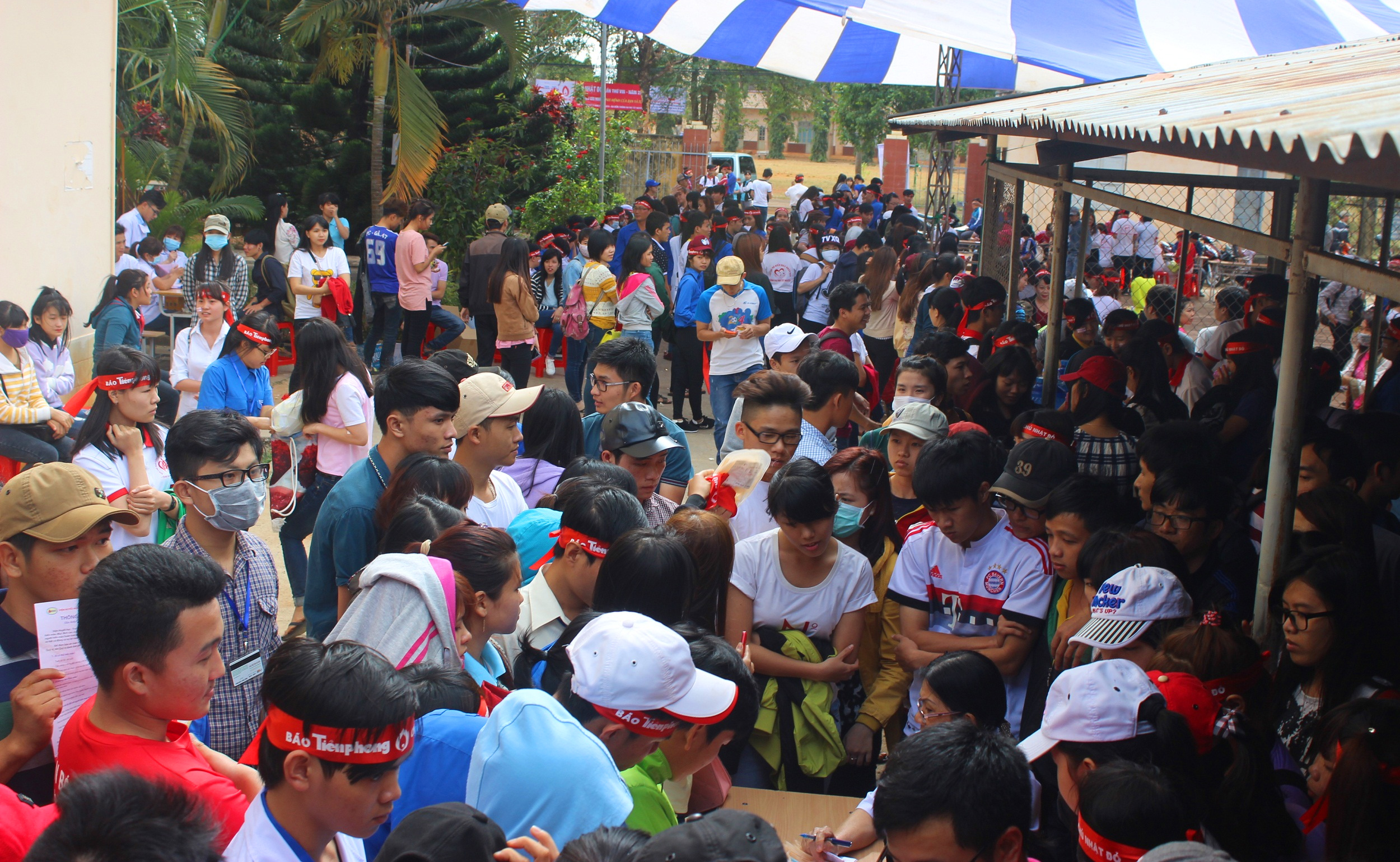
Nhiều năm qua, lượng máu hiến trên địa bàn tỉnh Đắk Lắk không chỉ đáp ứng được nhu cầu chữa bệnh cứu người tại địa phương, mà còn chuyển cho Viện Huyết học và Truyền máu trung ương điều tiết giúp các địa phương thiếu máu. Việc hiến máu cứu người trên Tây Nguyên càng lan tỏa, khi chương trình Chủ Nhật Đỏ vận động đồng bào từ các huyện xã, buôn làng cùng hưởng ứng, để “dòng máu các dân tộc hòa chung”.
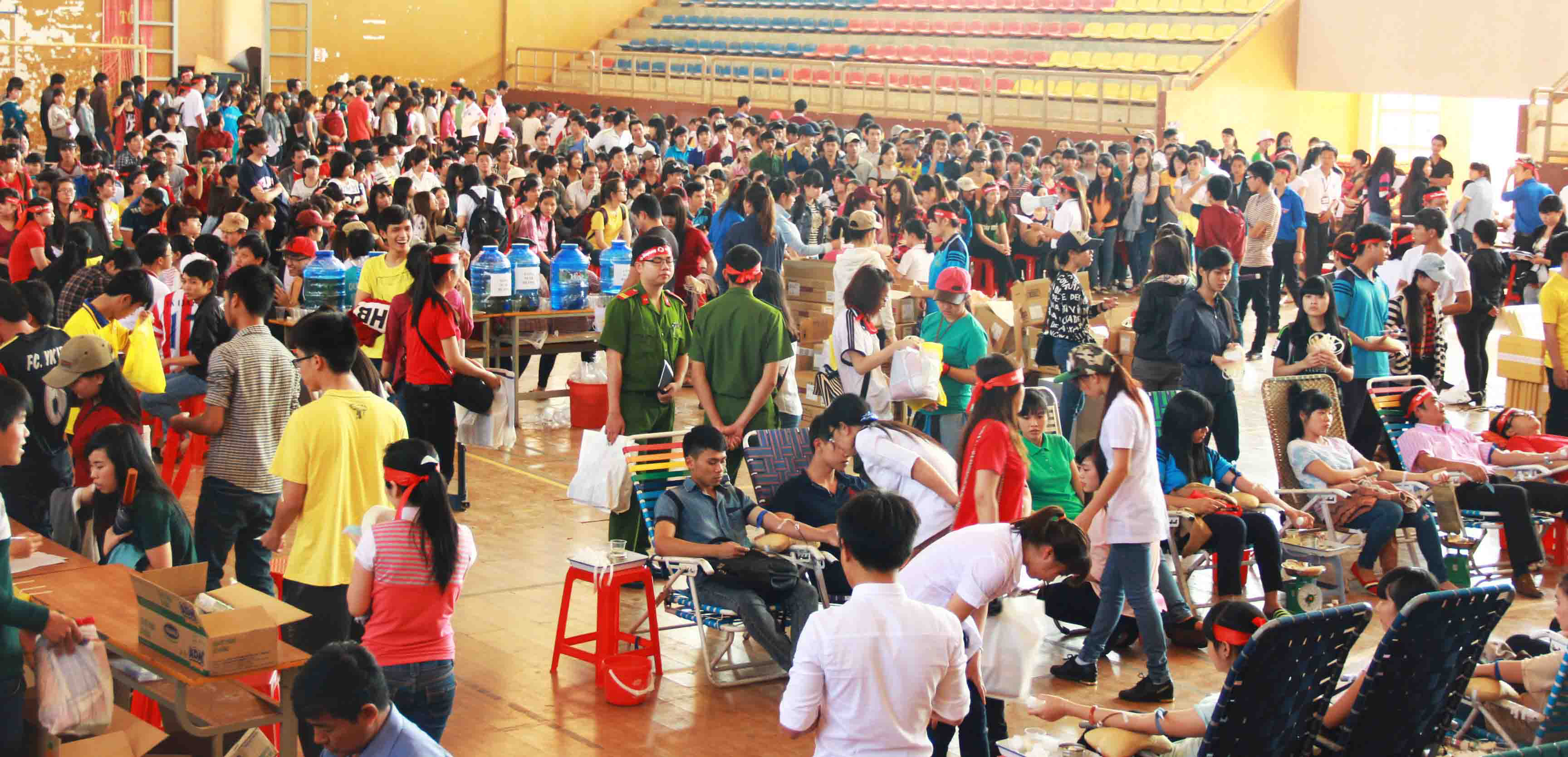
Chủ Nhật Đỏ đông vui như ngày hội tại trường Đại học Tây Nguyên

Cứu người, là lo trước cho mình!

Là một trong những đơn vị đi đầu trong phong trào hiến máu tình nguyện (HMTN) mạnh mẽ của tỉnh Đắk Lắk 1,9 triệu dân, huyện Ea Kar đã tuyên truyền sâu rộng ý nghĩa của việc làm nhân ái này đến tận thôn xã. Tiếp tục đọc “Nơi sự sống được sẻ chia bằng dòng máu nóng”
Đại học Tây Nguyên: Lá cờ đầu của phong trào hiến máu

Là đơn vị đầu tiên của tỉnh Đắk Lắk triển khai sâu rộng phong trào hiến máu tình nguyện, suốt 15 năm qua trường Đại học Tây Nguyên đã nuôi bền bỉ hoạt động thường xuyên này với những sáng kiến hay, góp phần cứu rất nhiều sinh mạng thoát khỏi lưỡi hái tử thần.

Sinh viên ĐHTN đăng ký hiến máu Chủ Nhật Đỏ 2017

Khi Ban chỉ đạo vận động hiến máu tình nguyện (HMTN) tỉnh Đắk Lắk được thành lập vào năm 2003, đơn vị đầu tiên được đề nghị gây dựng phong trào HMTN trong sinh viên, giáo chức, chính là trường Đại học Tây Nguyên.   Tiếp tục đọc “Đại học Tây Nguyên: Lá cờ đầu của phong trào hiến máu”

More Vietnamese households adopt integrated aquaculture systems as a climate-smart practice

cgiar.org

Coastal communities are learning about the benefits of climate-smart aquaculture and integrated coastal farming systems. More quantitative evidence of these practices is now being documented.

Many coastal communities in Vietnam’s North and North Central Coast (NNCC), one of the poorest regions in the country, rely on coastal aquaculture, particularly integrated aquaculture farming systems for their livelihoods and sustenance. However, climate change and its impacts have negatively affected coastal aquaculture recently by increasing the risks of disease outbreaks and crop failures.

For example, tiger shrimp, the major culture species of many farms in the NNCC, are sensitive to changes in the climate and the environment, such as the salinity level of the water. The shrimp crops are at high risk for failure when the salinity level of cultured pond drops below five parts per thousand (ppt). For farmers, depending solely on one type of crop could therefore be disastrous, especially in the context of increased extreme weather events. Integrated aquaculture systems ensure farmers have more diverse crops on which to depend and earn stable income to enhance their adaptive and resilient capacity to cope with climate change impacts. Tiếp tục đọc “More Vietnamese households adopt integrated aquaculture systems as a climate-smart practice”

10 things to know about the future of water and sanitation

The world is transforming in many different ways.

These shifts – from climate change, to migration, to new technology and urbanisation – will have a significant impact on the management of water resources and related services such as sanitation. This impact will be both positive and negative, throwing up a variety of new opportunities and challenges, for people and economies.

But how can we make the most of the opportunities and face the challenges?

Here, we outline 10 things to know about the future of water and sanitation up to 2030, to do just that.

This publication is accompanied by the working paper Future flows: global trends to watch on water and sanitation. Tiếp tục đọc “10 things to know about the future of water and sanitation”

Long-Term Clean Energy Optimism, Short-Term Caution

By Michael Liebreich, Chairman of the Advisory Board 
and Angus McCrone, Chief Editor
Bloomberg New Energy Finance

At the beginning of 2017, we drew an analogy between the clean energy sector and the great explorers of the 15th and 16th centuries, embarking on epic journeys, driven by the scale the opportunities they knew awaited them, but facing quite extraordinary danger and uncertainty.

Well, our battle-hardened fleet managed during 2017 to make some good progress towards Eldorado, despite all the storms thrown at it.

2017 looks certain to be the eighth successive year in which global clean energy investment has been in the range of $250 billion to $350 billion; there is a good chance that it will end up a touch higher than last year’s figure of $287.5 billion. Once again, we have seen substantial reductions in the cost of renewable energy, so that 2017 will certainly see another record for new capacity installations. Tiếp tục đọc “Long-Term Clean Energy Optimism, Short-Term Caution”

Clean energy and rare earths: Why not to worry

Amory Lovins

“Rare earths” are 17 chemical elements with awkward names and unusual properties. Their atomic numbers are 57–71, 21, and 39. Their two subfamilies, one scarcer and hence more valuable than the other, have similar chemistries, so they’re generally found and mined together.

Despite their name, rare earths are not geologically rare but are widely dispersed throughout the Earth’s crust. They are mined in few places and by few firms, though, because they tend not to occur in highly concentrated form. Further raising miners’ costs and risks, the world market for rare earths is modest (several billion dollars a year), volatile, complex, and dominated by China, where not all mines and exports are legal and transparent. One expert concluded that about half of 2015 global production was off the books. Tiếp tục đọc “Clean energy and rare earths: Why not to worry”

What Happened to the Rare-Earths Crisis?

technologyreview_Four years ago, manufacturers fretted that trade controls in China would lead to a shortage of materials used in making an array of technology products. But demand fell more than expected.

February 25, 2015

      Four years ago, some manufacturers worried that they would run up against a shortage of rare-earth elements, which are used to make wind turbines, certain light bulbs, computers, and many other high-tech products. Rare earths actually aren’t rare, but they are found in low concentrations, attached to minerals from which they must be separated. And most of the facilities designed to mine and separate rare earths are based in China, which limited exports of these materials in 2009 and 2010 (see

“The Rare-Earth Crisis”

    ). A 2010 U.S. Department of Energy

report

    •  envisioned a possible “critical shortage” of five rare earth elements, especially dysprosium—crucial to the permanent magnets used in wind turbines and motors in hybrid or electric cars—between 2012 and 2014. But such worries seemingly dissipated without much fanfare. Why?
A chunk of dysprosium.

Falling prices Tiếp tục đọc “What Happened to the Rare-Earths Crisis?”

Hàng nghìn hộ dân tại Hà Nội dùng nước nhiễm thạch tín

Theo các xét nghiệm của đơn vị chuyên môn, hàm lượng asen trong nước sinh hoạt tại khu đô thị Tân Tây Đô có thời điểm cao gấp 3 lần tiêu chuẩn cho phép của Bộ Y tế.

http://vtvgo.vn/tin-tuc/hang-nghin-ho-dan-tai-ha-noi-dung-nuoc-nhiem-thach-tin-109563.html

***

Hà Nội Gần 10 000 người dân KĐT Tân Tây Đô đang phải sử dụng nước nhiễm Asen

***

Hàng nghìn hộ dân tại KĐT Tân Tây Đô (Hà Nội) dùng nước nhiễm thạch tín

Sơn Hà (Ban Thời sự)-Thứ tư, ngày 22/11/2017 10:36 GMT+7

VTV.vn – Theo các xét nghiệm của đơn vị chuyên môn, hàm lượng asen trong nước sinh hoạt tại khu đô thị Tân Tây Đô có thời điểm cao gấp 3 lần tiêu chuẩn cho phép của Bộ Y tế.

Hàng nghìn hộ dân tại khu đô thị Tân Tây Đô, huyện Đan Phượng, TP Hà Nội đã phải sử dụng nguồn nước bị nhiễm asen hay còn gọi là thạch tín. Điều đáng nói là tình trạng này đã diễn ra suốt từ năm 2014 đến nay mà vẫn chưa có giải pháp khắc phục.

Nhà máy nước sạch cung cấp cho khoảng 2.000 hộ dân KĐT Tân Tây Đô được đặt ngay cạnh một con kênh đen ngòm, bẩn thỉu và ô nhiễm. Theo kết quả xét nghiệm mẫu nước tại nhà máy nước sạch Tân Tây Đô do Trung tâm y tế dự phòng Hà Nội thực hiện, trong suốt các năm từ 2014 đến nay, hàm lượng asen trong nước đa phần đều vượt mức tiêu chuẩn an toàn cho phép. Cá biệt trong lần xét nghiệm gần đây nhất, hàm lượng asen vẫn cao gấp 3 lần quy chuẩn an toàn của Bộ Y tế.

Theo Viện Sức khỏe nghề nghiệp và môi trường, Bộ Y tế, nếu mỗi ngày cơ thể hấp thụ một lượng nhỏ asen hay thạch tín, lâu dần có thể xuất hiện nhiều bệnh lý như biến đổi sắc tố da, sừng hóa, ung thư da và ung thư một số cơ quan nội tạng, các bệnh về hô hấp, phổi…Tác hại của asen đối với phụ nữ và trẻ em là lớn nhất.

UN chief and rights groups raise concerns over Rohingya deal

Guardian

First group of refugees to be sent back to Myanmar next week but critics say details are unclear

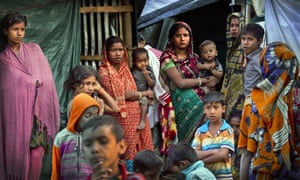
Rohingya Hindu refugees stand outside their make shift shelters at a refugee camp near Cox’s bazar, Bangladesh.


Concerns are growing among United Nations agencies and humanitarian groups over an agreement between the Bangladesh and Myanmar governments to repatriate several hundred thousand Rohingya refugees within two years.

Bangladesh state media reported on Wednesday that the first batch of Rohingya would be sent back to Myanmar next week. Rights groups said it remained unclear whether refugees would be forced to return against their will. Tiếp tục đọc “UN chief and rights groups raise concerns over Rohingya deal”

Infants in War-torn Yemen Dying at Alarmingly High Rate

 VOA
  • Lisa Schlein

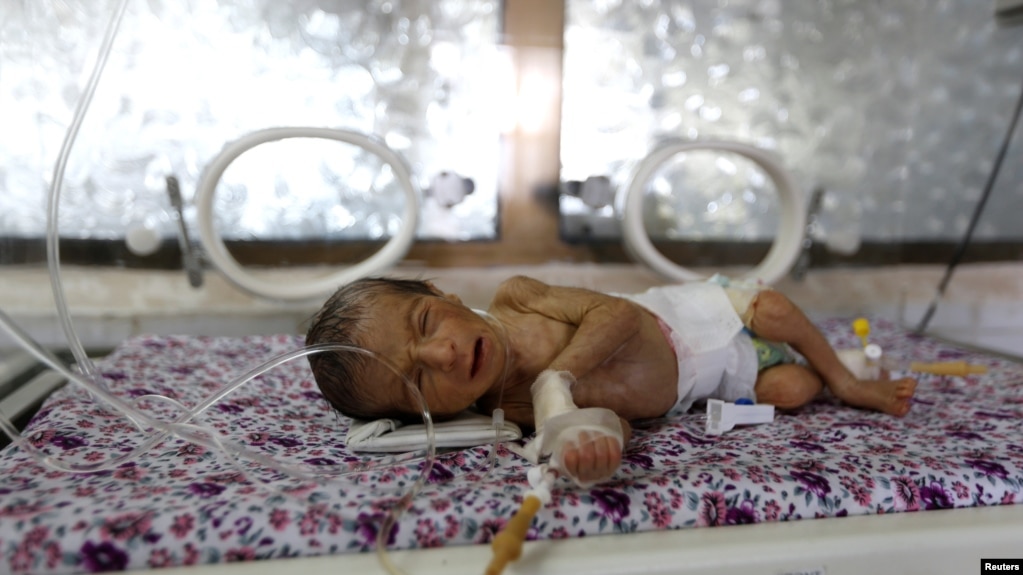
A premature baby lies in an incubator at the child care unit of a hospital in Sana'a, Yemen January 16, 2018.

A premature baby lies in an incubator at the child care unit of a hospital in Sana’a, Yemen January 16, 2018.

A report by the U.N. children’s fund finds babies born in war-torn Yemen are dying at an alarmingly high rate because of the collapsing health system, lack of food and clean water.

The U.N. children’s fund reports more than three million children have been born in Yemen since the country’s civil war escalated in March 2015. The agency’s report, called “Born into War”, describes the violent, hopeless situation of displacement, disease, poverty and hunger into which these children are born. Tiếp tục đọc “Infants in War-torn Yemen Dying at Alarmingly High Rate”

Critical Minerals of the United States

US Geological Survey, US Department of Interior

 Critical Minerals of the United States
It would be no exaggeration to say that without minerals, no aspect of our daily lives would be possible.

From the high-tech devices we use to access the information superhighway to the cars and trucks we use to drive the freeways, from the urban jungle to rural farms, every aspect of our lives relies on minerals. Thus, access to sufficient supplies of these minerals is a crucial part of keeping our economy and our security running.

In this new volume, entitled Critical Minerals of the United States, USGS geologists provide the latest and greatest on the geology and resources of 23 mineral commodities deemed critical to the economy and security of the United States. This work is meant to provide decision-makers, researchers, and economists with the tools they need to make informed choices about the mineral mix that fuels our society.

Image shows a chart of the elements used in computer chips over time
The number of elements used in computer chip technology  has changed: 12 in the 1980s, 16 in the 1990s, and more than 60 by the 2000s. (Public domain.)

Tiếp tục đọc “Critical Minerals of the United States”

Bao giờ có nhà máy năng lượng nhiệt hạch đầu tiên thế giới?

Trần Văn Đạt, Ph. D.

Mekong-cuulong blog

.

Hình 1: Nhà máy Thử nghiệm Nhiệt hạch Quốc tế đã được hoàn thành phân nửa. Ở đây, lò phản ứng Tokamak sẽ chứa nhiệt hạch nóng 10 lần hơn mặt trời khi được hoàn thành vào năm 2025 (ITER).

1/ Mở đầu:

Theo báo cáo Triển vọng Năng lượng Quốc tế 2017 của cơ quan Quản lý Thông tin Năng lượng (Energy Information Administration – EIA), Hoa Kỳ, dân số thế giới sẽ tăng trưởng đến 9 tỷ người trong 2040 và nhu cầu năng lượng toàn cầu cũng tăng thêm 45%. Năm 2015, nguồn năng lượng hóa thạch chỉ thỏa mãn 66,6% nhu cầu, nhưng ngày càng khan hiếm và gây ra nạn ô nhiễm môi trường đáng lo ngại. Nguồn năng lượng nguyên tử còn giới hạn, chỉ cung cấp 10,6% tổng nhu cầu thế giới, chưa kể đến mối nguy hiểm tiềm tàng từ loại năng lượng này. Còn các nguồn năng lượng sạch, tái tạo như khí hydro, sức gió, ánh sáng mặt trời, một số loài thảo mộc có dầu, ngũ cốc, rong rêu… đang được khai thác nhưng chỉ chiếm 22,8%. Do đó, một số nhà khoa học và công nghiệp năng lượng chú ý tới một loại năng lượng thật sạch, bền vững và phong phú, nhưng còn tốn kém và nhứt là công nghệ, thiết bị sản xuất chưa sẵn sàng. Đó là năng lượng nhiệt hạch. Dù vậy, nhiều nhà lãnh đạo thế giới và khoa học gia đã quan tâm đến tương lai và đang đầu tư cho ngành năng lượng triển vọng này nhằm hướng về các thế hệ mai sau và đồng thời mở ra kỷ nguyên năng lượng mới. Tiếp tục đọc “Bao giờ có nhà máy năng lượng nhiệt hạch đầu tiên thế giới?”

Nuclear Fusion Power

World Nuclear Association (Updated November 2017)
  • Fusion power offers the prospect of an almost inexhaustible source of energy for future generations, but it also presents so far insurmountable engineering challenges.
  • The fundamental challenge is to achieve a rate of heat emitted by a fusion plasma that exceeds the rate of energy injected into the plasma.
  • The main hope is centred on tokamak reactors and stellarators which confine a deuterium-tritium plasma magnetically.

Today, many countries take part in fusion research to some extent, led by the European Union, the USA, Russia and Japan, with vigorous programs also underway in China, Brazil, Canada, and Korea. Initially, fusion research in the USA and USSR was linked to atomic weapons development, and it remained classified until the 1958 Atoms for Peace conference in Geneva. Following a breakthrough at the Soviet tokamak, fusion research became ‘big science’ in the 1970s. But the cost and complexity of the devices involved increased to the point where international co-operation was the only way forward. Tiếp tục đọc “Nuclear Fusion Power”

Buôn bán và bóc lột người – “hy vọng cô đã sẵn sàng lấy chồng” – cuộc tìm kiếm những cô dâu Việt Nam bị bắt cóc

Con gái của Phượng bị bắt cóc tại một ngôi làng ở Việt Nam và bị bán làm cô dâu ở Trung Quốc. Phượng có thể tìm được con gái mình không – liệu có thể bắt đầu từ Facebook?

Vào một buổi sáng sớm cuối tháng Tư, Phượng tỉnh dậy thấy trên 100 cuộc gọi nhỡ trong máy điện thoại di động của mình, tất cả đều của cô con gái cả – tên Lý. “Mẹ!” Lý gào lên, khi cô gọi lại. “Mẹ đã ở đâu vậy? Cẩm đang mất tích! “Giọng của Lý đứt đoạn cùng sự hoảng loạn vì việc biến mất của em gái mình.”Em gọi cho con từ biên giới và nói rằng em đã bị lừa! Em đã bị bán! ”

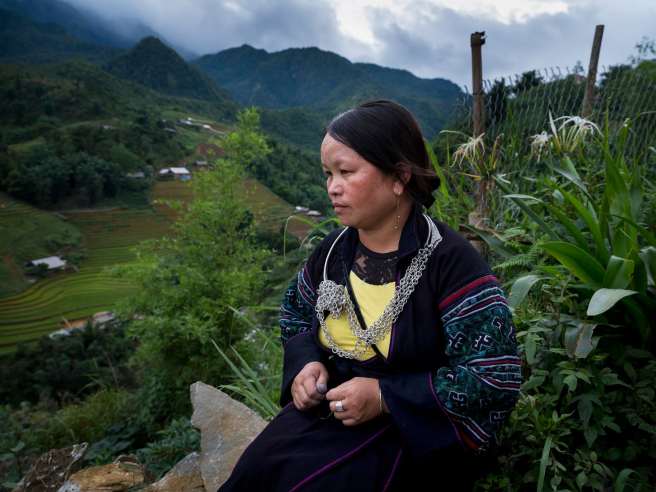
Phượng biết ngay điều gì đã xảy ra với con gái mình. Họ sống ở Sapa, một vùng nông thôn nghèo ở miền núi tây bắc của Việt Nam, và nơi đây, nhiều cô gái đã biến mất như thế: nạn nhân của nạn buôn bán cô dâu, vận chuyển đến Trung Quốc và cuộc sống trong tình trạng nô lệ, ô sin trong nhà và nô lệ tình dục. Phượng sẽ phải hành động một cách nhanh chóng nếu muốn tìm lại được con. Những kẻ buôn người di chuyển với tốc độ nhanh, và Cẩm 16 tuổi có thể ở đằng sau một chiếc ô tô, lao nhanh về nông thôn Trung Quốc, “người mua” cô đang chờ đợi để giao cô với nhiệm vụ mới của mình: lao động, người giúp việc, vợ, mẹ – thậm chí có thể là đồ chơi tình dục cho những người đàn ông khác trong gia đình. Tiếp tục đọc “Buôn bán và bóc lột người – “hy vọng cô đã sẵn sàng lấy chồng” – cuộc tìm kiếm những cô dâu Việt Nam bị bắt cóc”