Impacts of 25 years of groundwater extraction on subsidence in the Mekong delta, Vietnam

IOPscience

Many major river deltas in the world are subsiding and consequently become increasingly vulnerable to flooding and storm surges, salinization and permanent inundation. For the Mekong Delta, annual subsidence rates up to several centimetres have been reported. Excessive groundwater extraction is suggested as the main driver. As groundwater levels drop, subsidence is induced through aquifer compaction. Over the past 25 years, groundwater exploitation has increased dramatically, transforming the delta from an almost undisturbed hydrogeological state to a situation with increasing aquifer depletion. Yet the exact contribution of groundwater exploitation to subsidence in the Mekong delta has remained unknown. In this study we deployed a delta-wide modelling approach, comprising a 3D hydrogeological model with an integrated subsidence module. This provides a quantitative spatially-explicit assessment of groundwater extraction-induced subsidence for the entire Mekong delta since the start of widespread overexploitation of the groundwater reserves. We find that subsidence related to groundwater extraction has gradually increased in the past decades with highest sinking rates at present. During the past 25 years, the delta sank on average ~18 cm as a consequence of groundwater withdrawal. Current average subsidence rates due to groundwater extraction in our best estimate model amount to 1.1 cm yr−1, with areas subsiding over 2.5 cm yr−1, outpacing global sea level rise almost by an order of magnitude. Given the increasing trends in groundwater demand in the delta, the current rates are likely to increase in the near future.

Read full article here

Power stacked against Southeast Asia’s poor as China dams Mekong

channelnewsasia

Communities along the mighty Mekong blame China for their shrinking catches. (Photo: AFP/TANG CHHIN SOTHY)

Read more at https://www.channelnewsasia.com/news/asiapacific/power-stacked-against-southeast-asia-s-poor-as-china-dams-mekong-9841686

KANDAL, Cambodia: Cambodian fisherman Sles Hiet lives at the mercy of the Mekong: A massive river that feeds tens of millions but is under threat from the Chinese dams cementing Beijing’s physical – and diplomatic – control over its Southeast Asian neighbours.

The 32-year-old, whose ethnic Cham Muslim community live on rickety house boats that bob along a river bend in Kandal province, says the size of his daily catch has been shrinking by the year. Tiếp tục đọc “Power stacked against Southeast Asia’s poor as China dams Mekong”

Climate change is triggering a migrant crisis in Vietnam

Theconversation

The Vietnamese Mekong Delta is one of Earth’s most agriculturally productive regions and is of global importance for its exports of rice, shrimp, and fruit. The 18m inhabitants of this low-lying river delta are also some of the world’s most vulnerable to climate change. Over the last ten years around 1.7m people have migrated out of its vast expanse of fields, rivers and canals while only 700,000 have arrived.

On a global level migration to urban areas remains as high as ever: one person in every 200 moves from rural areas to the city every year. Against this backdrop it is difficult to attribute migration to individual causes, not least because it can be challenging to find people who have left a region in order to ask why they went and because every local context is unique. But the high net rate of migration away from Mekong Delta provinces is more than double the national average, and even higher in its most climate-vulnerable areas. This implies that there is something else – probably climate-related – going on here. Tiếp tục đọc “Climate change is triggering a migrant crisis in Vietnam”

What species is most fit for life? All have an equal chance, scientists say

Sciencedaily.com
Elephants and giant sequoias have no advantage over algae and bacteria

January 8, 2018 Source:SUNY College of Environmental Science and ForestrySummary:There are more than 8 million species of living things on Earth, but none of them — from 100-foot blue whales to microscopic bacteria — has an advantage over the others in the universal struggle for existence.A trio of scientists report that regardless of vastly different body size, location and life history, most species are equally ‘fit’ in the struggle for existence.

There are more than 8 million species of living things on Earth, but none of them — from 100-foot blue whales to microscopic bacteria — has an advantage over the others in the universal struggle for existence.

In a paper published Jan. 8 in the journal Nature Ecology & Evolution, a trio of scientists from universities in the United States and the United Kingdom describe the dynamic that began with the origin of life on Earth 4 billion years ago. They report that regardless of vastly different body size, location and life history, most plant, animal and microbial species are equally “fit” in the struggle for existence. This is because each transmits approximately the same amount of energy over its lifetime to produce the next generation of its species. Tiếp tục đọc “What species is most fit for life? All have an equal chance, scientists say”

Five things to know about the Lancang-Mekong Cooperation summit

TĐH: We don’t hear discussion on the VNese media about this China-pushed five-year development plan at all. I wonder if Vietnam will have a public discussion about this plan, or whoever attending the LMC summit will just simply approve the plan on behalf of Vietnam?


scmp: Five-year development plan, including construction of hydropower dams, is expected to top agenda at Mekong River nations’ conference in Cambodia

PUBLISHED : Tuesday, 09 January, 2018, 8:03am
UPDATED : Tuesday, 09 January, 2018, 2:57pm

When China and the leaders of nations along the Mekong River meet on Wednesday at the Lancang-Mekong Cooperation summit in Cambodia, a top item will be mapping out a five-year development plan that would include building hydropower dams and other projects for the region – pointing to its importance in China’s ambitious belt and road infrastructure plan.

But while the cooperation mechanism was created to help ease tension over development projects, environmentalists remain unsatisfied.

Concern is growing that the potential for causing ecological damage will make the Mekong a flashpoint for China and Southeast Asia’s territorial disputes – effectively creating a new South China Sea.

Amid the backdrop of the river’s importance in connecting Europe through Southeast Asia and beyond in the grand infrastructure programme launched by President Xi Jinping, Chinese delegation leader Premier Li Keqiang will be looking to bolster China’s influence in the Mekong region as he faces his counterparts from Cambodia, Vietnam, Thailand, Laos and Myanmar.

Here are five key things to know about the summit and the significance of the Mekong River:
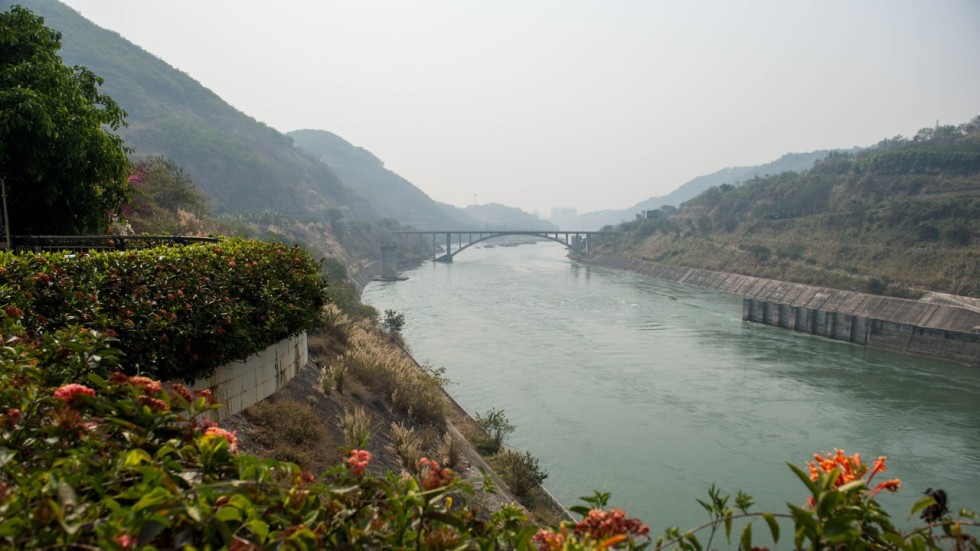
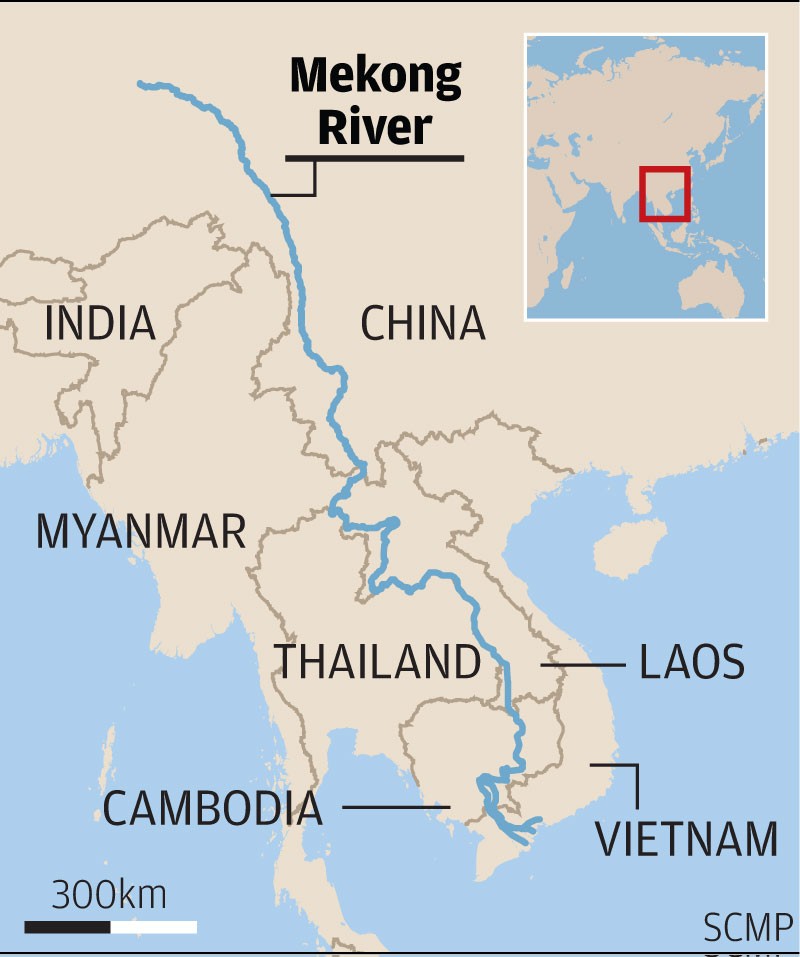
1. The river’s significance for China and Southeast Asia

Tiếp tục đọc “Five things to know about the Lancang-Mekong Cooperation summit”

Forty per cent of global e-waste comes from Asia

Forty per cent of global e-waste comes from Asia

Copyright: Panos

Speed read

  • E-waste generated in 2016 equivalent to 4,500 Eiffel Towers
  • Asian countries account for 40 per cent of the discarded goods
  • Developing countries still lack formal e-waste recycling systems

scidev.net_[NEW DELHI] Humans generated a staggering 44.7 million metric tonnes of electronic waste (e-waste) in 2016 — the equivalent of 4,500 Eiffel Towers, and five per cent more than the electrical and electronic goods discarded just two years earlier, says a new study.

The trend is set to continue, with volumes of e-waste expected to rise to 52.2 million metric tonnes by 2021. Tiếp tục đọc “Forty per cent of global e-waste comes from Asia”

Critical Issues to Watch in 2018

Reprint |    |  Print | 

ipsnews_Martin Khor is Executive Director of the South Centre, a think tank for developing countries, based in Geneva

More than 480 billion plastic bottles were sold in the world in 2016, in 2018 we can expect international cooperation to reduce the use of plastic and how to treat plastic waste. Credit: Athar Parvaiz/IPS

PENANG, Malaysia, Jan 2 2018 (IPS) – Another new year has dawned, and on a world facing serious disruption on many fronts.  What are the trends and issues to watch out for in 2018?

One obvious answer is to anticipate how Donald Trump, the most unorthodox of American Presidents, will continue to upset the world order.  But more about that later.

Just as importantly as politics, we are now in the midst of several social and environmental trends that have important long-lasting effects.  Some are on the verge of reaching a tipping point, where a long-term trend produces critical and sometimes irreversible events. We may see some of that in 2018.
Tiếp tục đọc “Critical Issues to Watch in 2018”

1MDB looms large in Asian banks’ war on money laundering

Tags:  |  |  | 
— Anti-Corruption News Story Curated by Anti-Corruption Digest International Risk & Compliance News

It would be difficult to write about money laundering controls in Asia without mentioning 1MDB, a Malaysian sovereign wealth fund embroiled in an ongoing international money laundering scandal. Yet, when Risk.net contacted six of the banks penalised for the wrong-doing to talk about lessons learned, our enquiries were greeted with either radio silence or a flat ‘no’.

One reason for this reticence could be a reluctance to show their hand to money launderers. But another is likely to be a fear of publicising anti-money laundering (AML) breaches – a sometimes bigger worry than the risk of regulatory fines.
Tiếp tục đọc “1MDB looms large in Asian banks’ war on money laundering”

Brazil announces end to Amazon mega-dam building policy

Can We Prevent a Global Energy Crisis From Bitcoin Mining?

Unchecked bitcoin mining could equal the world's current electricity consumption.

Unchecked bitcoin mining could equal the world’s current electricity consumption

Put it on camera: How to get into scientific film- and video-making

nature_It’s easier than ever to learn how to produce captivating clips that can boost your scientific outreach — or open the door to a new job.
Filming in Yellowstone

Biologist Stephani Gordon turned to freelance film-making to capture nature and science research on camera.Credit: Audrey Hall

Stephani Gordon has filmed squid in the Gulf of California, a nineteenth-century whaling boat in the northwestern Hawaiian Islands and a search for Amelia Earhart’s plane in the central Pacific. In 2017, she shot footage off the coast of Mexico of pelagic creatures such as the paper nautilus (Argonauta nouryi) and vampire jellyfish (Vampyrocrossota childressi).

Gordon, sole proprietor of Open Boat Films in Portland, Oregon, spent more than a decade working as a field biologist, studying seabirds, sharks and other marine animals. But from 2004 to 2005, while working as a marine-ecosystem research specialist at the US National Oceanic and Atmospheric Administration (NOAA) in Honolulu, Hawaii, she served as a field guide for two nature photographers and was impressed by the large audience their images drew. Tiếp tục đọc “Put it on camera: How to get into scientific film- and video-making”

Đà Lạt – Lâm Đồng xưa và nay

Tiếp tục đọc “Đà Lạt – Lâm Đồng xưa và nay”

Nam Tây Nguyên, một góc nhìn văn hóa ( 3 kỳ)

Cập nhật lúc 09:33, Thứ Năm, 23/08/2012 (GMT+7)

Kỳ I: Dòng chảy của… đá

(LĐ online) – Nói đến vùng đất Lâm Đồng – Nam Tây Nguyên – là nói đến một vùng văn hóa đa bản sắc của các tộc người thiểu số bản địa với những yếu tố văn hóa đan xen và giao hòa giữa dòng văn hóa bản địa truyền thống với văn hóa hiện đại của Việt Nam và thế giới. Từ buổi bình minh của lịch sử, văn hóa của vùng đất Nam Tây Nguyên – Lâm Đồng – đã định hình là một bộ phận khăng khít và cùng tiến triển với văn hóa Việt Nam; trong đó, những hiện vật bằng đá được tìm thấy trong thời gian gần đây là một trong những vấn đề rất đáng lưu ý. Tiếp tục đọc “Nam Tây Nguyên, một góc nhìn văn hóa ( 3 kỳ)”

Is Mekong River set to become the new South China Sea for regional disputes?

The Beijing-led Lancang-Mekong Cooperation mechanism was set up to help ease tensions over development projects, but environmental groups are yet to be convinced

 South China Morning Post PUBLISHED : Tuesday, 02 January, 2018, 9:00pm
UPDATED : Wednesday, 03 January, 2018, 12:09am

Foreign ministers from the six countries through which the Mekong flows met in southwestern China last month to approve a draft of a five-year development plan for the river. But as state leaders prepare to finalise the proposal at a meeting in Cambodia later this month, environmental groups have expressed concern over what it could mean for Southeast Asia’s longest waterway.

Tiếp tục đọc “Is Mekong River set to become the new South China Sea for regional disputes?”