Mekong communities struggle as China tests dam equipment

Water levels have fluctuated sharply with testing, but some are encouraged that China gave warning of its plan.

by , Al Jazeera

People along the Mekong are struggling with sharply fluctuation water levels as China tests dam equipment. This Thai woman said her garden on the river bank was damaged by flash floods as water was released from the upstream dam [International Rivers via Al Jazeera]

Phnom Penh, Cambodia – Water levels on the Mekong River, which flows through China and five other countries before emptying into the South China Sea, have dropped once again after Beijing revealed it was testing equipment at one of its 11 dams in the upper reaches of the vital waterway.

Tiếp tục đọc “Mekong communities struggle as China tests dam equipment”

Đồng Tâm: Các câu hỏi về thông tin vụ chết bốn người Bộ Công an nêu ra

Đồng Tâm: ‘Vụ này có nhiều uẩn khúc’

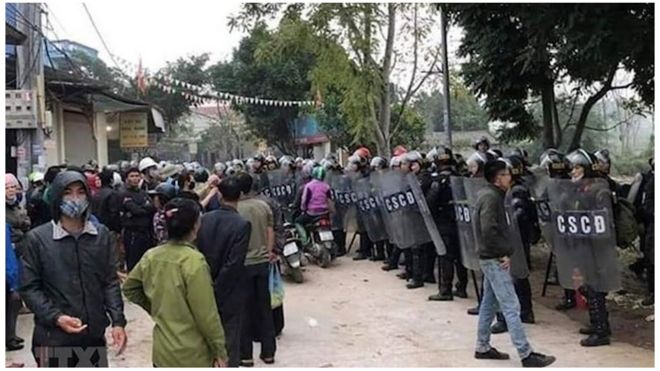
Theo truyền thông nhà nước, ông Lương Tam Quang, Thứ trưởng Bộ Công an Việt Nam, cho hay lực lượng của Bộ này vào Đồng Tâm không phải để đi ‘tuần tra’ mà là để ‘lập chốt an ninh ở cổng thôn Hoành” nhằm ‘bảo vệ công trình từ xa’.
Tiếp tục đọc “Đồng Tâm: Các câu hỏi về thông tin vụ chết bốn người Bộ Công an nêu ra”

Deadly land dispute in Vietnam sparks crackdown on ‘critical’ social media


Đọc bài quan trọng “Phân tích pháp lý về đất đai trong vu Đồng Tâm
Bộ Quốc Phòng và Công An có vi phạm Luật Hình Sự
trong vụ Đồng Tâm ngày 9/1/2020?

Chuỗi bài Đồng Tâm >>>

reuters.com
BANGKOK (Thomson Reuters Foundation) – A deadly land dispute in Vietnam has led to a crackdown on social media posts, a sign of growing heavy-handedness by authorities as rising demand for land spurs more conflicts across the country, analysts and human rights activists said.

Four people were killed and dozens arrested last week in the northern village of Dong Tam near the Vietnamese capital of Hanoi, as a long-running land dispute flared after a dawn raid by police.

Authorities said villagers attacked the troops with hand grenades, petrol bombs and knives, and were responsible for the deaths of the three policemen and a village leader.

Dong Tam residents said the police used excessive force. Tiếp tục đọc “Deadly land dispute in Vietnam sparks crackdown on ‘critical’ social media”

Đồng Tâm: Đừng để ‘oan oan tương báo’!

Đọc bài quan trọng “Phân tích pháp lý về đất đai trong vu Đồng Tâm
Bộ Quốc Phòng và Công An có vi phạm Luật Hình Sự
trong vụ Đồng Tâm ngày 9/1/2020?

Bộ Quốc Phòng và Công An có vi phạm Luật Hình Sự
trong vụ Đồng Tâm ngày 9/1/2020?

Chuỗi bài Đồng Tâm >>>

Mấy lần ngồi xuống để viết về Đồng Tâm mà không thể. Nghẹn ngào trào lên. Đau xót. Phải để lắng đi một tuần mới lấy lại được chút tĩnh tâm.

làng quê bắc bộ, đồng tâm
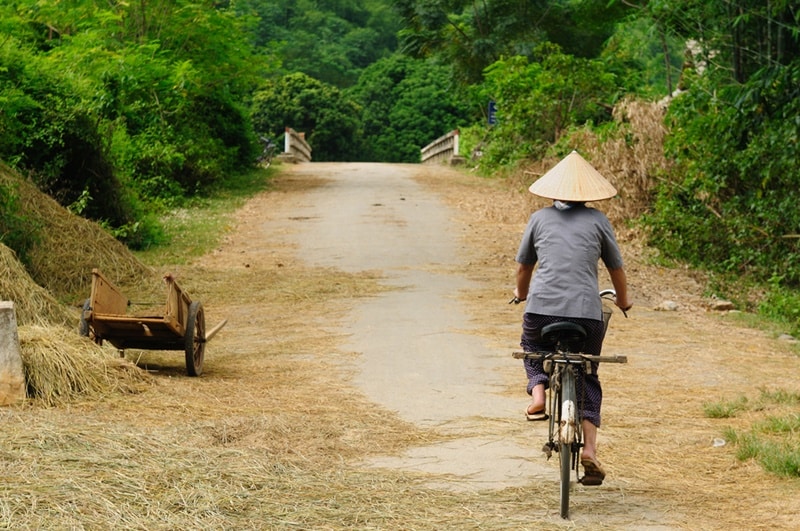
Một cảnh ở làng quê Bắc Bộ. (Ảnh: Rafal Cichawa/Shutterstock)

Tiếp tục đọc “Đồng Tâm: Đừng để ‘oan oan tương báo’!”

Quiet is a luxury in Vietnam

By Jesse Peterson   January 16, 2020 | 01:05 pm GMT+7

Jesse Peterson

Jesse Peterson

It was in the middle of the night when I was woken by a noise that kept thumping into my ears. Someone was playing music somewhere down the street, and it was understandably annoying. Everyone in the neighborhood started calling each other to find out who did it. As for me, there went my peaceful slumber.

Eventually, it was discovered that a café down the street was responsible for the noise. The music continued for about 20 minutes before dying out.

The next morning I asked the café owner why he played loud music when everyone was asleep. “It’s the World Cup!” he said, as if that explained everything. He thought that way he could attract more customers to watch the game.

The other week I and my friends were hanging out at Saigon’s Le Van Tam Park at around 7 p.m. It was quiet, away from the urban cacophony and the traffic. We were having fun until we heard music being blasted at maximum volume from the center of the park. A man was carrying a huge loudspeaker and cranked it all the way up, much to the dismay of passersby. I asked him to turn it down, and he said no. We had to move to another place in the park, as far away from the source of the noise as possible, but it kept ringing in our ears so much we couldn’t hold a proper conversation.

Ironically, we were discussing how a society where people cooperate with each other in public is healthier than one whose citizens keep dragging each other down through distractions. Having lived in Saigon for many years, I realized two problems that its administration kept ignoring: waste and noise pollution.

A loudspeaker is placed in front of a shop in District 1, HCMC. Photo by VnExpress/Son Hoa

A loudspeaker is placed in front of a shop in District 1, HCMC. Photo by VnExpress/Son Hoa.

According to the broken windows theory by social scientists James Q. Wilson and George L. Kelling, visible signs of crime, anti-social behavior and civil disorder create an urban environment that encourages further crime and disorder, and vice versa.

One thing I noticed about Vietnam is how people have so little respect for each other’s ears. They don’t stop to consider if their playing music and singing loudly affects others, and the concept of noise pollution is simply lost to some. Every night I could hear the sound of people singing karaoke and eating and screaming during their nights out until 2 or 3 a.m. It’s almost lawless. Mind you, there’s an entire neighborhood here. Everyone’s trying to get some downtime after a long day at work or school. So please keep it down. I insist.

Tiếp tục đọc “Quiet is a luxury in Vietnam”

Vietnamese goods in face of pressure from trade protectionism

SGGP

By the end of last year, more than 160 trade remedies investigations were launched and applied to Vietnamese goods. It is forecast that there will be 25 export products being investigated this year.

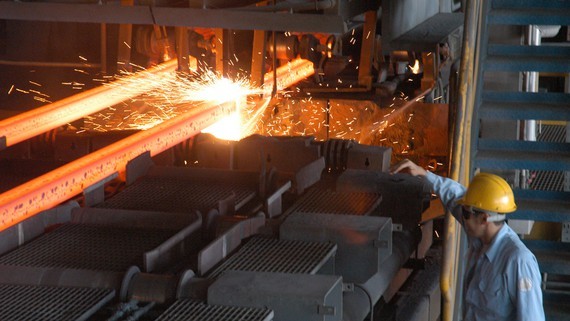
 Nine out of 16 cases of trade remedies investigations are on steel products, accounting for 60 percent. (Photo: SGGP)

Nine out of 16 cases of trade remedies investigations are on steel products, accounting for 60 percent. (Photo: SGGP)

Tiếp tục đọc “Vietnamese goods in face of pressure from trade protectionism”

Who will lead Vietnam in 2021?

Author: David Brown, California, East Asia ForumVietnamese politics has reverted to its customary opacity. General Secretary Nguyen Phu Trong and his intimates in the Communist Party’s secretariat remain intent on party renewal, a wholly internal affair. Going into 2019, Trong’s tightening leash on the sprawling Ministry of Public Security and his crusades against corruption and for the elevation of the ‘model cadre’ had secured for him an iron grip on the 2021 succession scenario. Going into 2020, things are a little different. Tiếp tục đọc “Who will lead Vietnam in 2021?”

Central Steering Committee on anti-corruption convenes 17th session

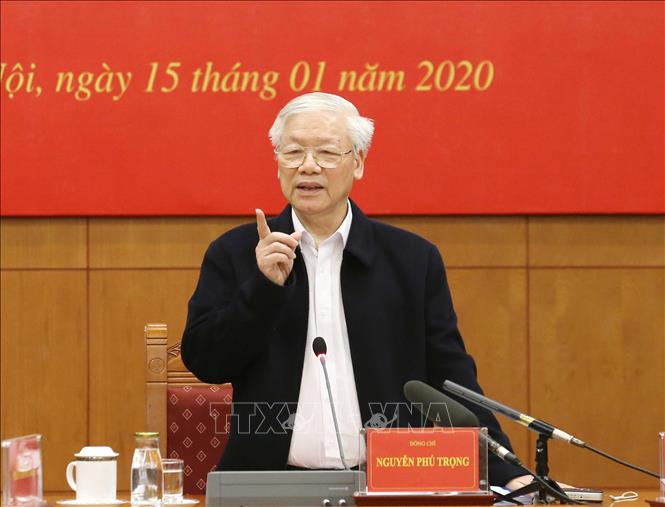
The Central Steering Committee for Anti-Corruption held its 17th session on January 15 under the chair of Party General Secretary, President and head of the committee Nguyen Phu Trong, to look back at its work in 2019 and line out key tasks for 2020.
VNA 
Central Steering Committee on anti-corruption convenes 17th session hinh anh 1Party General Secretary, President Nguyen Phu Trong chairs the 17th session of the Central Steering Committee for Anti-Corruption on January 15. (Photo: VNA)

Hanoi (VNA) – The Central Steering Committee for Anti-Corruption held its 17th session on January 15 under the chair of Party General Secretary, President and head of the committee Nguyen Phu Trong, to look back at its work in 2019 and line out key tasks for 2020. Tiếp tục đọc “Central Steering Committee on anti-corruption convenes 17th session”

Starbucks, Coffee Bean, and Tea Leaf losing to Vietnamese chains

What the Philippines and Australia can learn from Vietnam about living with China

EUAN GRAHAM

Photo: Flickr/Patrik M. Loeff

Photo: Flickr/Patrik M. Loeff

Published 5 Oct 2016 11:14   Lowry Institute

It is early days, granted, but the Philippines’ crude and crass new president Rodrigo Duterte appears increasingly intent on reversing his predecessor’s plucky South China Sea policy and pro-Alliance leanings, opting instead for a tilt towards China. Tiếp tục đọc “What the Philippines and Australia can learn from Vietnam about living with China”

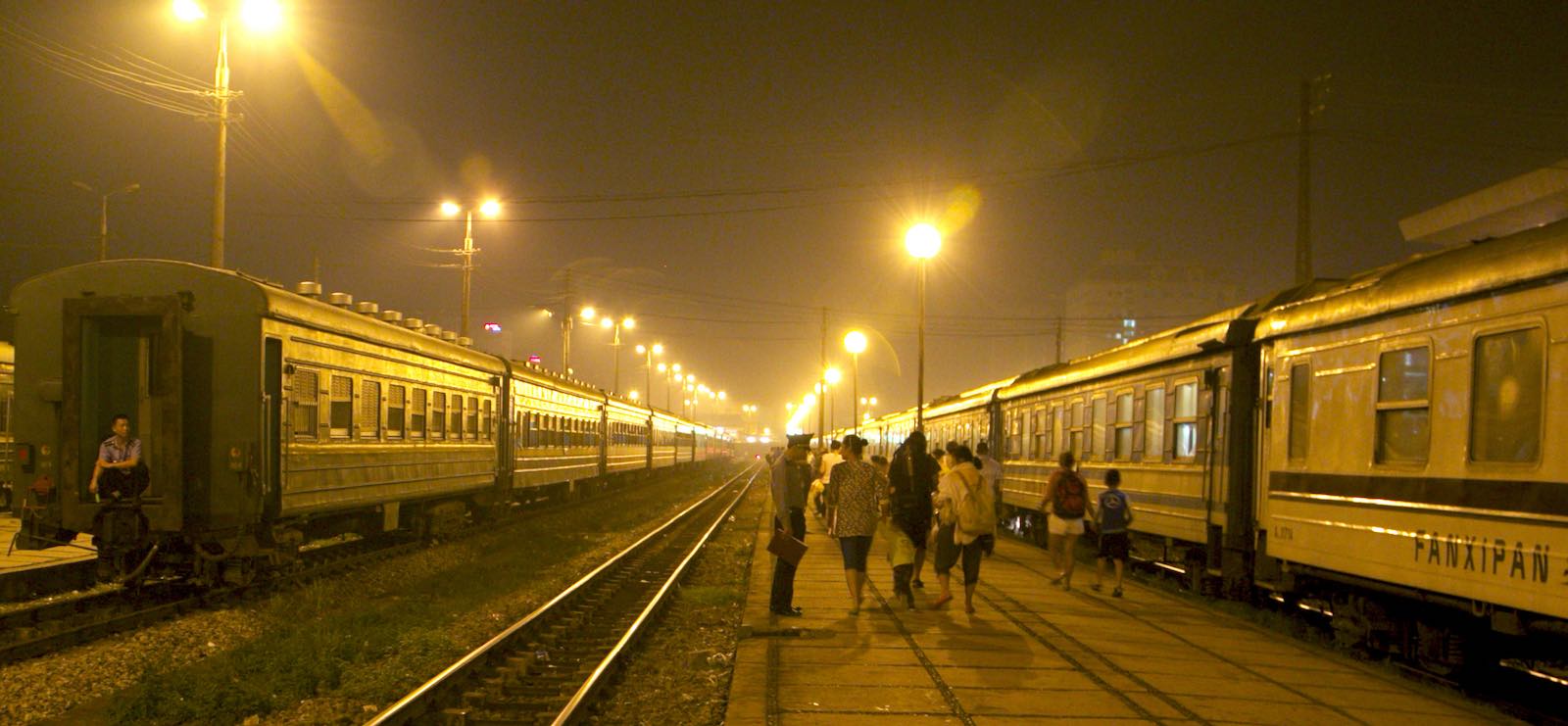
Belt and rail: New Vietnam- China train aims to put relations on track

Updating a colonial legacy railway might offer more than a
smoother connection between sometimes tense neighbours.

An early morning start in Lao Cai in 2013 (Photo: Biggs/Flickr)

An early morning start in Lao Cai in 2013 (Photo: Biggs/Flickr)
Published 15 Jan 2020 06:00 Lowry Institute

Last year, China and Vietnam unveiled plans to refurbish a colonial-era railway between the two countries. It was an attempt to update a historical legacy – and also signified new bilateral dynamics in a consequential and sometimes fraught regional relationship. Tiếp tục đọc “Belt and rail: New Vietnam- China train aims to put relations on track”

In the Race to Power Vietnam, Green Energy Grows Faster Than Policies Can Catch Up

For a few months earlier this year, it seemed like there was no stopping the wave of renewable energy projects coming online in Vietnam.

In March, the Srepok 1-Quang Minh solar power plant, Vietnam’s largest at the time, opened in Dak Lak Province. In September, it was surpassed by the Dau Tieng Solar Power Complex in Tay Ninh Province, which is Southeast Asia’s largest solar farm. The following month, the Asia Development Bank agreed to help fund the country’s first floating solar power facility on a reservoir in Binh Thuan Province. If built, it will be the region’s largest such facility. And in October, Vietnam Electricity (EVN) announced that 12,765 rooftop solar systems are selling power to the grid nationwide.

Wind power is expected to grow dramatically as well, with installed capacity forecast to more than triple by 2021, launching Vietnam toward the top of Southeast Asia in this sector. These projects were far from the only ones to come online recently. In the second quarter of this year, 81 new solar facilities were added to Vietnam’s power grid, compared to just five in the first quarter of 2019.

The Dau Tieng Solar Power Complex in Tay Ninh. Photo via VnExpress/Quynh Tran.

This growth in renewable power generation is vital, as in July, the Ministry of Industry and Trade (MOIT) admitted that the country is likely to face severe power shortages starting in 2021. Power generation capacity will need to increase from the current 48.6 gigawatts (GW) to 60 GW in 2020 and 130 GW by 2030. This is due to rapidly rising electricity demand as Vietnam continues its impressive economic growth, and delays on major thermal- and gas-fired power stations. Such an expansion of capacity is expected to cost nearly US$7 billion a year.

The explosion of solar projects in particular was spurred by a feed-in tariff (FiT) introduced by the Vietnamese government in 2017. A FiT is the rate paid by a power utility, in this case the government-owned Vietnam Electricity (EVN), to the company which operates a solar plant. The 9.35 US cents per kilowatt hour (kWh) tariff established by MOIT was very generous, and developers flooded in. A wind energy FiT was initiated in September 2018 as well, though growth hasn’t been quite as robust as solar.

Too much of a good thing?

The sheer numbers behind this solar surge are incredible, and Vietnam has become the darling of investment in the region, easily eclipsing its neighbors. The 86 new projects completed in the first half of this year added 4.5 gigawatts (GW) of capacity to the national grid, equaling about 10% of Vietnam’s total power capacity. EVN reportedly set up special teams working three shifts a day just to connect new plants.

The government had aimed to have 850 megawatts (MW) of solar online by 2020, while the 4.5 GW installed thus far has already reached their 2025 goal. Tiếp tục đọc “In the Race to Power Vietnam, Green Energy Grows Faster Than Policies Can Catch Up”

America, Japan Maritime Self-Defense Force Operate in the East China Sea


America, Japan Maritime Self-Defense Force Operate in the East China Sea

Photo By Petty Officer 3rd Class Vance Hand | 200113-N-ZS023-1045 EAST CHINA SEA (Jan. 13, 2020) Capt. Luke Frost, commanding… read more

USS AMERICA (LHA 6), EAST CHINA SEA

01.13.2020 dvidshub.net
Story by Petty Officer 3rd Class Vincent Zline 
USS America (LHA 6)