When leaders of Young Republican groups around the country exchange texts that say “I love Hitler”; that joke about gas chambers and rape, approve of slavery, sneer about “watermelon people” and monkeys in zoos, and throw around words like faggot and retarded, they aren’t just exposing their own anti-Semitism, racism, homophobia, and misogyny. To see only the varieties of bigotry with which we’re painfully familiar is to miss the depth of MAGA’s moral collapse. Professing love for Hitler is more than anti-Semitic—it’s antihuman. It’s a proud refusal to be bound by the most basic standard of goodness, a deliberate expression of contempt for everything decent. The texts degrade all of us.
And they’re hardly surprising. Cruelty and humiliation have become the Trump administration’s common currency. With permission from President Donald Trump’s coarse rhetoric and vows of hatred, Elon Musk’s Nazi salute, Tucker Carlson’s flirtation with Holocaust denial, and Stephen Miller’s rage-filled threats, the young loyalists who wrote the texts were speaking the language of the people they admire most. Nor was it surprising when, the day after Politico revealed the texts’ existence, the image of an American flag altered into the shape of a swastika appeared on the cubicle wall behind a staffer in the Capitol Hill office of a MAGA congressman. In that culture, the rehabilitation of the man who stands for the worst in humanity was inevitable.
Read full text on the AtlanticThis article was featured in the One Story to Read Today newsletter.
In the past decades, there has been a considerable rise in the number of apologies offered by states for injustices and human rights violations. But are such gestures a viable reconciliatory tool and do they have a universal potential to redress injustice or restore harmony? Or do people across cultures have different notions about what political apologies mean, what purpose they serve, or how they can or should be expressed?
In this five year project funded by the European Research Council, we bring scholarship on transitional justice together with cross-cultural psychology and anthropology to address these questions and to investigate how political apologies are viewed across cultures. The overall objective is to understand whether political apologies can be a universal reconciliation tool, or whether a tailored approach based on cultural variation is more appropriate.
The Value and Meaning of Political Apologies across Cultures
A central idea behind political apologies is that collectivities such as states can and should take responsibility or express remorse for past wrongdoings, and that this will help restore justice or promote harmony. But are such notions regarding collective moral responsibility and collective guilt shared across cultures? And is there a similar understanding about the function and meaning of political apologies across cultures? The aim of this subproject is to analyze whether key assumptions regarding political apologies hold across cultures, or whether this varies as a function of cross-cultural differences in key values (collectivism and individualism) and norms (face and honor). For this, we rely upon an interdisciplinary and mixed-methods approach using in-depth interviews, vignette studies, and surveys. Data have been collected using community samples (incl. people aged 18 and above from both urban and rural regions with mixed educational backgrounds) across 33 countries.
The Expression and Reception of Political Apologies across Cultures
Over the past years, there has been considerable debate about the role of political apologies in reconciliation processes. Although some have heralded such gestures as a meaningful step, others have described them as political rituals that may be appropriate in some (cultural) contexts but not in others, as people may have different notions about what they mean, what purpose they serve, or how they should be expressed. What has been lacking, however, is a systematic analysis of how political apologies are expressed and received across the world. In this subproject, we aim to fill this gap by mapping and comparing the political apologies that have been made across the world, and by analyzing whether there are universals in how they are valued, expressed, and interpreted or whether this varies as a function of cross-cultural differences in key values (collectivism and individualism) and norms (face and honor). For this, we rely on a broad range of methods, varying from content analyses and in-depth interviews to (experimental) surveys. Data have been collected using community samples (incl. people aged 18 and above from both urban and rural regions with mixed educational backgrounds) across 32 countries. The Political Apologies Database is available on this website under the Database page.
Last year’s withdrawal of US forces from Afghanistan marked the end of the US’ longest war.
Would the war have even started if US leaders had told the truth from the beginning? #AJVantagePoint looks at the history of the fog of war and military deception.
We are raiding the Audio Long Read archives to bring you some classic pieces from years past, with new introductions from the authors.
This week, from 2018: the credibility of establishment figures has been demolished by technological change and political upheavals. But it’s too late to turn back the clock
Fifty years on we know the trigger for war with Vietnam was a fiction. Will it be another 50 before we know the truth about Iraq?
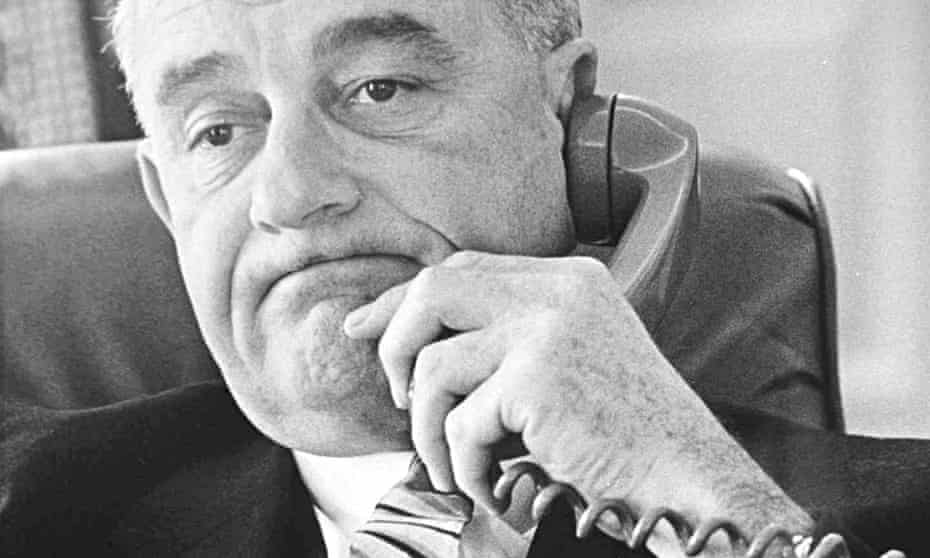
Lyndon Johnson’s repeated accusation that the Gulf of Tonkin attacks were unprovoked was the beginning of a disillusion that would lead Daniel Ellsberg to leak the Pentagon Papers. Photograph: Yoichi R Okamoto/AP Photograph: Yoichi R Okamoto/AP
Once there was a president who warned the world about conduct his government would not tolerate. And when this “red line” was crossed, or seemed to be, he took the US to war. Though this might sound like America’s involvement in Iraq, or Afghanistan, or Belgrade, or Libya, and what may yet become a wider war in Syria, this story began 50 years ago, on 4 August 1964.
TTCT – Ai mà ngờ được rằng, có những nhà báo làm ở các tờ báo, đài truyền hình lớn, những chính trị gia lão luyện lại đi nói xấu, đưa tin thất thiệt về các học sinh cấp III vừa sống sót sau một cuộc xả súng làm chết nhiều học sinh khác? Những người lớn chơi xấu này đang nhận lấy điều gì?
Chiều 14-2-2018, lại một vụ xả súng diễn ra ở Mỹ, lần này tại Trường trung học Marjory Stoneman Douglas, bang Florida, 14 học sinh và 3 giáo viên thiệt mạng, hàng chục học sinh khác bị trọng thương. Tiếp tục đọc “Khi người lớn chơi xấu”→
Như tôi đề cập trước đây, tôi đã dùng phần lớn thời gian trong kỳ nghỉ của mình ở miền tây để đọc cuốn Sự suy thoái và sự đổ của Đế chế Anh, 1781-1997 của Breandon. Như bạn có thể mường tượng, tôi đã dành nhiều thời gian nghiền ngẫm về những điểm tương đồng và những bài học cho vị thế toàn cầu hiện tại của Mỹ, giống như một người ủng hộ chủ nghĩa đế quốc Anh dành nhiều thời gian nghiên cứu kinh nghiệm của La Mã (được ghi lại tài tình bởi Edward Gibbon). Giữa một chuỗi các sự kiện phức tạp, ngồn ngộn và đa dạng, người ta rất dễ hấp dẫn về bất kỳ “bài học” nào được rút ra. Lưu ý đến điều đó, tôi đã rút ra 10 bài học hàng đầu về đế chế từ cuốn sách của Brendon như dưới đây. Ngay cả khi bạn không đồng ý với tôi về những bài học này, bạn vẫn nên tìm đọc cuốn sách.
I write these words from Bangkok, Thailand, on the eve of the 2016 presidential election in the United States. In about 32 hours, the entire global population will rejoice that the American election is finally, at last, over. If we put half the energy and ink that went into analysis of this election into actually addressing our problems, we might make some real progress. It has become nonsensical, the endless campaigning and jockeying. Do we really need two years to get to know our presidential candidates?
Most people study nuclear warfare by studying the new developments in the weapons themselves. Hugh Gusterson takes a different approach. Instead of studying the weapons, he studies the nuclear scientists who created them. He took to the TEDxFoggyBottom stage to share what he learned.
Dr. Gusterson’s research focuses on the interdisciplinary study of the conditions under which particular bodies of knowledge are formed and deployed, with special attention to the science of war, the military, and nuclear weapons.
His research addresses the problem of how to understand knowledge as a cultural formation, and how to analyze the historical and structural transformations of science and technology. He asks questions such as: How do cultures of science initiate and shape participants? How can we critically assess universalist claims about scientific and military “truths?” How do scientists justify their complicity with the projects of nation-states?
This talk was given at a TEDx event using the TED conference format but independently organized by a local community
When we rise in the morning and listen to the radio or read the newspaper, we are confronted with the same sad news: violence, crime, wars, and disasters. I cannot recall a single day without a report of something terrible happening somewhere. Even in these modern times it is clear that one’s precious life is not safe. No former generation has had to experience so much bad news as we face today; this constant awareness of fear and tension should make any sensitive and compassionate person question seriously the progress of our modern world. Tiếp tục đọc “A Human Approach to World Peace”→
TTCT – Ông Jan Oberg, giám đốc Quỹ Nghiên cứu hòa bình và tương lai xuyên quốc gia (TFF, trụ sở tại Thụy Điển, nhiều năm là ứng viên Nobel hòa bình), trao đổi với Tuổi Trẻ Cuối Tuần về những vấn đề “hậu Brussels” mà châu Âu nói riêng và thế giới nói chung đang đối mặt.
Ông Jan Oberg
15 năm chống khủng bố, vấn đề lớn hơn 80 lần…
TTCT: 31 người chết và hơn 200 người bị thương, nhưng hậu quả của vụ khủng bố Brussels 22-3 không dừng lại ở đó. Từ góc độ một nhà nghiên cứu hòa bình, theo ông, vụ khủng bố này còn để lại những hậu quả nào cho EU?Tiếp tục đọc ““Cuộc chiến chống khủng bố còn tệ hơn khủng bố””→
LTS: Nhiều năm qua, mức bội chi ngân sách thực tế đều cao hơn dự toán được Quốc hội thông qua và đều được Quốc hội bấm nút cho quyết toán. Phải duy trì kỷ cương ngân sách, nhưng bằng cách nào? TBKTSG trao đổi với Tiến sĩ Võ Trí Hảo, khoa Luật, Đại học Kinh tế TPHCM.
TBKTSG: Thưa ông, đâu là nguyên nhân sâu xa của tình trạng bội chi vượt mức cho phép, lãng phí ngân sách? Luật Đầu tư công 2014, rồi Luật Ngân sách Nhà nước 2015 và nhiều văn bản liên quan liên tục được ban hành liệu có thể cải thiện được tình trạng này?
(LĐ) – Người dân tự nguyện xây lăng Vua Hiệp Hòa, sau khi hoàn thành, họ đã bàn giao lăng vua lại cho con cháu nhà vua thuộc phủ Văn Lãng – Nguyễn Phước tộc. Sự kiện xảy ra vào ngày 13-14.8.2013 tại Huế. Mộ của Vua Hiệp Hòa – như báo chí miêu tả – “bé hơn mộ dân thường” và hoang tàn, lạnh lẽo.
Toàn cảnh khu mộ Vua Hiệp Hòa. Ảnh: Lê Thanh Phong
Thậm chí, không có được một tấm biển chỉ đường đi vào mộ vua, ngay cả người dân Huế cũng không mấy ai biết được mộ Vua Hiệp Hòa. Nói rộng ra, không có nhiều người biết được lịch sử Việt Nam có một vị vua có tên Nguyễn Phúc Hồng Dật, niên hiệu Hiệp Hòa. Lịch sử có những uẩn khúc của nó và số phận của Vua Hiệp Hòa là một uẩn khúc. Tiếp tục đọc “Lòng dân với lịch sử nhìn từ lăng Vua Hiệp Hòa”→




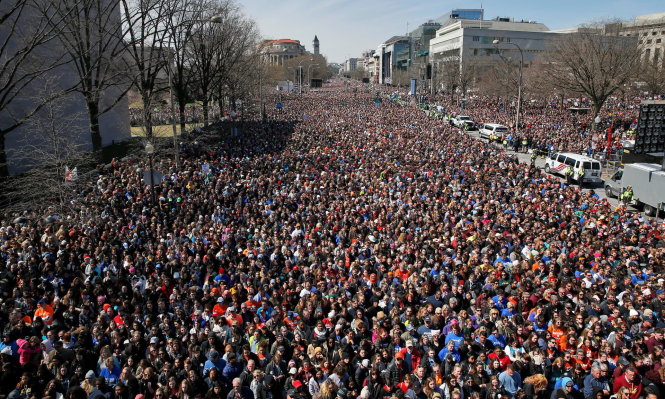 Chiều 14-2-2018, lại một vụ xả súng diễn ra ở Mỹ, lần này tại Trường trung học Marjory Stoneman Douglas, bang Florida, 14 học sinh và 3 giáo viên thiệt mạng, hàng chục học sinh khác bị trọng thương.

 Ông Võ Trí Hảo.

