Đinh chính những hiểu lầm về năng lượng tái tạo tại Việt Nam (P4)

Đinh chính những hiểu lầm về năng lượng tái tạo tại Việt Nam (P2)

GreenID mong muốn giúp cộng đồng hiểu rõ những hiểu lầm thường gặp đang cản trở sự phát triển của NLTT tại Việt Nam và hy vọng rằng cuốn tài liệu này sẽ mang lại những thông tin bổ ích cho người đọc.

Hiểu lầm 1. NLTT không ổn định, thường làm gián đoạn quá trình cung cấp điện và không thể cung cấp điện liên tục 24/24.

Hiểu lầm 2. NLTT đắt đỏ và xa xỉ, chỉ phù hợp với những quốc gia phát triển

No daylight for Vietnam solar energy

Silhouette of two women carrying wicker baskets trekking across the sand dunes at Bau Trang, Binh Thuan Province in Vietnam at the break of dawn. Photo: iStock/ Getty Images

Silhouette of two women carrying wicker baskets trekking across the sand dunes at Bau Trang, Binh Thuan Province in Vietnam at the break of dawn. Photo: iStock/ Getty Images

While some see bright prospects for an alternative power boom, high tariffs, regulatory risk and a volatile currency have kept the industry in the dark

 HO CHI MINH CITY, DECEMBER 14, 2017 9:55 AM (UTC+8)

atimes.com_Some here are calling it a gold rush. From Thailand to the United Arab Emirates, global players with experience in solar energy are sending representatives to Vietnam in search of the next big alternative energy boom.
Tiếp tục đọc “No daylight for Vietnam solar energy”

Southeast Asia’s largest wind project gets $1.1 billion funding injection

Southeast Asia’s leading nation for solar energy—Thailand—could now be the frontrunner in wind energy after renewables developer WEH secured funding for the region’s biggest wind power project yet.

Eco-business_The Chaiyaphum Wind Farm in Thailand’s Subyai district, Chaiyaphum province. Rising energy use in Southeast Asia is shifting the global energy system’s center of gravity towards Asia. Image: © Asian Development Bank .

Thai renewables developer Wind Energy Holdings Co. Ltd (WEH) has raised US$1.1 billion to finance five new onshore wind farms in what is billed as Southeast Asia’s biggest wind energy project yet.Located in Thailand’s northeastern provinces of Nakhon Ratchasima and Chaiyaphum, the wind farms will add up to 450 megawatts of energy to the national grid on completion, slated for early 2019.Towering at a height of 157 metres, the wind farms will boast the tallest towers in the region, and will use the latest technology supplied by Vestas and General Electric. Siam Commercial Bank is financing the project. Tiếp tục đọc “Southeast Asia’s largest wind project gets $1.1 billion funding injection”

The World Bank Year in Review: 2017 in 12 Charts

Worldbank.org

How to sum up 2017? The global economy improved but there were plenty of unsettling and upsetting events and trends. Catastrophic storms and flooding wrecked homes and livelihoods from South Asia to the Caribbean. Education quality in many countries fell short even as much of the world raced into the digital age. Yet extreme poverty continues to decline. Innovation and technology are enhancing the quality of life. And human capital is now the biggest driver of wealth in the world today. Here’s what 2017 looked like in 12 charts.

1. Millions faced famine and required emergency aid

2. The world emitted historic amounts of carbon

3. Natural disasters dominated the news

4. Two-thirds of global wealth is human capital

5. There’s a crisis in learning

6. Nutrition affects learning, and millions of children remain stunted

7. Child marriage carried high personal and economic costs

8. The world’s population is young. And jobless.

9. Natural capital and biodiversity are undervalued

10. Globally, about half of elections are considered free and fair

11. Starting a business is getting easier

12. The power of renewables

A Tribute to Hans Rosling

Tiếp tục đọc “The World Bank Year in Review: 2017 in 12 Charts”

What’s Up in Coal Country: Alternative-Energy Jobs

NYtimes_From the mountain hollows of Appalachia to the vast open plains of Wyoming, the coal industry long offered the promise of a six-figure income without a four-year college degree, transforming sleepy farm towns into thriving commercial centers.

But today, as King Coal is being dethroned — by cheap natural gas, declining demand for electricity, and even green energy — what’s a former miner to do?

Nowhere has that question had more urgency than in Wyoming and West Virginia, two very different states whose economies lean heavily on fuel extraction. With energy prices falling or stagnant, both have lost population and had middling economic growth in recent years. In national rankings of economic vitality, you can find them near the bottom of the pile. Tiếp tục đọc “What’s Up in Coal Country: Alternative-Energy Jobs”

Germany’s Transition from Coal to Renewables Offers Lessons for the World

Scientificamerican.org  
Germany's Transition from Coal to Renewables Offers Lessons for the World
Credit: Krisztian Bocsi Getty Images

From Ensia (find the original story here), from an article commissioned by Courier; reprinted with permission.

August 1, 2017—Seventy-seven-year-old Heinz Spahn—whose blue eyes are both twinkling and stern—vividly recalls his younger days. The Zollverein coal mine, where he worked in the area of Essen, Germany, was so clogged with coal dust, he remembers, that people would stir up a black cloud whenever they moved. “It was no pony farm,” he says—using the sardonic German phrase to describe the harsh conditions: The roar of machines was at a constant 110 decibels, and the men were nicknamed waschbar, or “raccoons,” for the black smudges that permanently adorned their faces. Tiếp tục đọc “Germany’s Transition from Coal to Renewables Offers Lessons for the World”

Can coal miners become solar technician?

Nothing on Earth moves without energy, and most of the energy that people use is of the fossil variety: coal, oil, and natural gas. Although renewable energy is beginning to make inroads, fossil fuels still account for 78 percent of global final energy consumption as of 2014, according to REN21’s Global Status Report 2016It is abundantly clear that a fundamental energy makeover is needed if we are to avoid climate chaos—especially with regard to coal, the dirtiest fuel of them all. Until recently, global coal production and use were still growing.

Advocates for renewable energy are typically consumed with matters like technology development, cost competitiveness, and policy support for deploying solar, wind, and other renewables. But the social dimension of the energy transition is just as crucial: in moving away from polluting sources of energy, we need to make sure that the workers who for decades have dug up coal aren’t left in the lurch. These are the people who have often paid with their health so that the rest of us could power air conditioners, refrigerators, TVs, and gadgets galore. Tiếp tục đọc “Can coal miners become solar technician?”

Thuế than ở Philippine tăng 400% thúc đẩy sự phát triển của năng lượng sạch

13.12.17
Mức tăng thuế than 400% vừa được phê duyệt ở Philipin cho chương trình tài khóa 2018 là một biện pháp kinh tế thận trọng sẽ thúc đẩy phát triển năng lượng sạch hơn và rẻ hơn, theo Viện Năng lượng Kinh tế và Phân tích Tài chính (IEEFA).
“Thuế than là một tín hiệu đáng mừng cho thấy chính phủ đang có ý định chuyển đổi
đất nước xa nhiên liệu hóa thạch không đáng tin cậy và tốn kém “, nhà phân tích của IEEFA
Sara-Jane Ahmed.
Mức thuế hiện nay là 10 Php sẽ tăng lên 50 Php/tấn vào năm 2018, 100 Php/tấn vào năm 2019, và 150 Php/tấn vào năm 2020. Việc tăng thuế này có thể dẫn đến khoản thu nhập thuế của 750 triệu Php vào năm 2018, 1,5 nghìn tỷ Php vào năm 2019, và 2,25 tỷ Php vào năm 2020. Sự thay đổi này đã được Nghị viện Philipin phê chuẩn và Hạ viện ngày hôm nay như là một phần của chương trình CẢI CÁCH TĂNG TRƯỞNG TOÀN DIỆN (TRAIN).
Nguồn doanh thu này có thể được sử dụng để đầu tư vào cơ sở hạ tầng, đặc biệt là nâng cấp hệ thống lưới điện và các hệ thống quản lý cung-cầu.

Tiếp tục đọc “Thuế than ở Philippine tăng 400% thúc đẩy sự phát triển của năng lượng sạch”

Increasing World’s Share of Renewable Energy Would Boost Global GDP up to $1.3 Trillion

Abu Dhabi, U.A.E., 16 January 2016 – Achieving a 36 per cent share of renewable energy in the global energy mix by 2030 would increase global gross domestic product (GDP) by up to 1.1 per cent, roughly USD 1.3 trillion, according to new analysis by the International Renewable Energy Agency (IRENA). Tiếp tục đọc “Increasing World’s Share of Renewable Energy Would Boost Global GDP up to $1.3 Trillion”

Cứu dòng Mekong: Việt Nam nên tăng cường mua điện từ Lào?

Thủy điện không còn hấp dẫn và cơ hội của dòng Mekong

***

Cứu dòng Mekong: Việt Nam nên tăng cường mua điện từ Lào?

  19:50 | Thứ năm, 07/12/2017

Phát triển dựa vào dòng dòng Mekong, từ vấn đề và bài toán phát triển năng lượng của Lào hiện nay, theo các phân tích, Việt Nam có thể và nên đóng vai trò chủ động hơn nữa trong vấn đề phát triển thủy điện thượng nguồn sông Mekong.


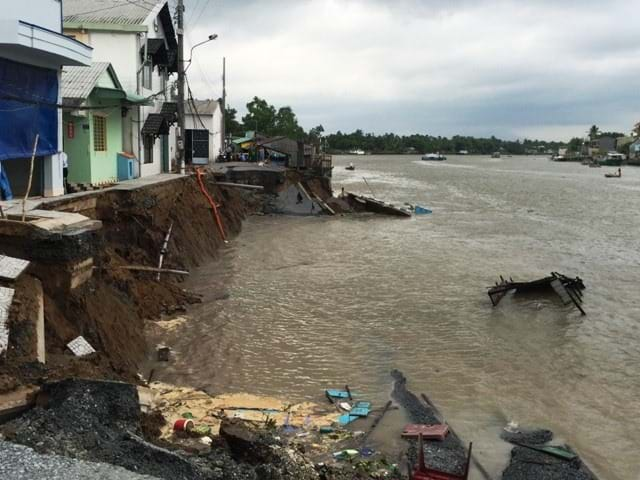
ĐBSCL hình thành là nhờ lượng phù sa của sông Mekong bồi đắp nên trong 6.000 năm qua. Việc xây thủy điện trên các dòng chính sông Mekong là một trong những nguyên nhân khiến ĐBSCL tăng sạt lở, dần “tan rã”. Ảnh: TL  Tiếp tục đọc “Cứu dòng Mekong: Việt Nam nên tăng cường mua điện từ Lào?”

Hướng dẫn tài chính cho người làm chính sách: Năng lượng tái tạo và hạ tầng xanh (P1)

>> Phần 1: Giới thiệu về Hướng dẫn Tài chính cho người làm chính sách: Năng lượng tái tạo và hạ tầng xanh
>> Phần 2: Thẩm định tính khả thi cho dự án năng lượng tái tạo ở thị trường mới nổi

Giới thiệu về Hướng dẫn Tài chính

bloomberg_Hiệp định Khí hậu Paris vào tháng 12 năm 2015 tập trung chú ý vào nhu cầu huy động các dòng vốn tư nhân lớn cho vào các giải pháp khí hậu với tốc độ và quy mô cần thiết để chống lại biến đổi khí hậu ở mức độ cấp thiết.

Việc thực hiện các kế hoạch quốc gia về năng lượng sạch hoặc cơ sở hạ tầng “xanh” sẽ đòi hỏi mức độ đầu tư chưa từng có, không chỉ vì lý do khí hậu, thông qua quyết tâm đóng góp quốc gia (Nationally determined contributions – NDC), mà còn đảm bảo an ninh năng lượng và tiếp cận năng lượng cho những người thiếu thốn, cũng như cho phát triển bền vững.

Bây giờ, hơn bao giờ hết, một điều vô cùng quan trọng là các nhà hoạch định chính sách và các bên khác không-phải-nhà-tài-trợ phải cần hiểu và giao tiếp với cộng đồng tài chính để thiết lập các điều kiện hiệu quả ở cấp quốc gia, cấp mà việc đầu tư sẽ phải được thực hiện.

Là một đóng góp thực tiễn, Hướng dẫn Tài chính cung cấp cái nhìn tổng quan thực tiễn về bối cảnh tài chính – nguồn vốn, cách thị trường hoạt động, cách các giao dịch vận hành và rộng hơn nữa để thiết lập các điều khoản tài chính chung trong bối cảnh đặt ra.

Hướng dẫn này phản ánh những thay đổi gần đây về điều kiện thị trường, cơ cấu tài chính và các cuộc tranh luận chính sách có liên quan. Các chủ đề của Hướng dẫn bao gồm:

Tiếp tục đọc “Hướng dẫn tài chính cho người làm chính sách: Năng lượng tái tạo và hạ tầng xanh (P1)”

John Kerry is plotting a renewable energy future … starting in Vietnam

Vietnam wants to build a massive number of coal plants. But a former United States secretary of state is offering the country a cleaner path forward.

John Kerry is working with the Vietnamese government on an alternative to its coal plan — one that could provide the same amount of electricity, but with hydroelectric dams and solar panels instead of fossil fuels. It’s a scheme that would save the country billions of dollars, prevent pollution-related deaths, and keep greenhouse gases out of the atmosphere.

Hints of this effort have surfaced in the Vietnamese press, but a representative for Kerry said he was not ready to speak about his efforts on the record. However, the former presidential candidate discussed his work last week at the Clean Energy Finance Forum held at Stanford University. While remarks made at the forum were initially off the record, Stanford’s Precourt Institute for Energy subsequently posted a video online of Kerry’s chat with Anne Finucane, a Bank of America vice chairman. (Update: Since Grist published this story, Stanford has taken down the video featuring Kerry and Finucane.)

SKorean group to build $450 million solar power plant in Bạc Liêu

Update: September, 18/2017 – 09:00


Leaders of Bạc Liêu Province and SY Group sign MoU to build a solar power project in the province. — Photo moitruong.net.vn

Viet Nam News BẠC LIÊU — The Department of Planning and Investment of the Mekong Delta province of Bạc Liêu signed a Memorandum of Understanding with the South Korea-based SY Group to build a solar power project in Đông Hải District.

Under the MoU, the SY Group will construct a 400ha solar power plant in Long Điền Đông Commune, Đông Hải District, by June 2019 with a total investment of more than VNĐ10.24 trillion, or over US$450.5 million.

The first phase of the project will have a capacity of 50MW while the second will bring the capacity up to 300MW. Tiếp tục đọc “SKorean group to build $450 million solar power plant in Bạc Liêu”