Minister of Planning and Investment Nguyen Chi Dung has urged localities in the south-east and Mekong Delta regions to develop transport infrastructure by diversifying the sources of and effectively using capital over the next five years.
Vam Cong Bridge across Hau River in the Mekong Delta. VNA/VNS Photo
Speaking at a conference on socio-economic development in the two regions, he called on them to lay out their objectives and priorities for public investment in 2021-25 to ensure “focused and effective investment.”
By Huyen Le September 10, 2020 | 08:50 pm GMT+7 vnexpressA vessel by the Vietnam Fisheries Resources Surveillance performs its duty at sea. Photo by VnExpress/Nguyen Dong.
Vietnam and China have agreed to promote negotiations for the delimitation of sea areas beyond the mouth of the Gulf of Tonkin.
The two sides will also negotiate cooperation on the East Sea, which is known internationally as the South China Sea.
The two countries held online the 13th round of negotiations regarding the seas beyond the mouth of the Gulf of Tonkin and the 10th round of consultation on cooperation for mutual benefit at sea on Wednesday, according to a Thursday press release from the Ministry of Foreign Affairs.
Solar panels seen in a complex in the central Binh Thuan Province. Photo by VnExpress/Tran Trung.
Vietnam’s national grid is ill-equipped to handle the power surge from new renewable energy plants seeking to come online this year.
National utility Vietnam Electricity (EVN) has said in a recent report that the construction of new transmission lines might not be able to match the speed of new solar and wind power projects.
COVID-19 has interrupted the country’s journey to become a high-performing economy, but the right structural adjustments could help get it back on track.
This is the second of two articles in which McKinsey looks at COVID-19’s immediate impact on Vietnam’s economy and identifies the long-term challenges the country can address to realize its potential.With relatively few recorded COVID-19 cases and fatalities to date, Vietnam now has an opportunity—and an imperative—to consider its longer-term economic aspirations, even as the country responds to a resurgence of the virus. Enduring success will require Vietnam’s leaders to focus on issues and opportunities that long preceded the pandemic. Tiếp tục đọc “What will it take to achieve Vietnam’s long-term growth aspirations?”→
Clean Cities, Blue Ocean (CCBO) is USAID’s flagship program for combatting ocean plastic pollution. The program works globally to target ocean plastics directly at their source, focusing on rapidly urbanizing areas that contribute significantly to the estimated eight million metric tons of plastic that flow into the ocean each year.
Hong Kong (CNN Business)Disney has publicly thanked a Chinese government agency accused of human rights abuses in Xinjiang for its help in making “Mulan” — a revelation that has provoked a storm of criticism online.Disney (DIS) acknowledges several Chinese government bodies in the credits for the live-action remake of the 1998 animated picture of the same name, but a few in particular have raised red flags: The Xinjiang government’s publicity department and the Public Security and Tourism bureaus for Turpan, a city of about 633,400 people just outside Xinjiang’s capital Urumqi.Disney did not respond to a request for comment from CNN Business to its media inquiry line, and to US press officers about the film and the credits. It’s not clear how much of “Mulan” may have been shot in Xinjiang, though people who worked on the movie have said on social media and in interviews that they scouted and filmed locations there.The US State Department estimates that since 2015 as many as two million of the Muslim-majority Uyghurs and other Turkic minorities have been imprisoned in enormous re-education camps in Xinjiang.The Turpan Public Security Bureau has been listed by the US government as an organization involved in “human rights violations and abuses” in the region.Beijing has long defended the crackdown in Xinjiang as necessary to tackle extremism and terrorism, and said it is in line with Chinese law and international practice, calling accusations of mass detentions a “groundless lie” and “sensational rumor.” A spokesperson for the country’s foreign ministry on Tuesday reiterated its defense of what it calls its Xinjiang “vocational skills education and training centers.” CNN Business has reached out to the Xinjiang government and Turpan’s tourism bureau, but Turpan’s Public Security bureau could not be reached for comment.
By David Lawder Reuters Posted September 9, 2020 12:55 am Updated September 9, 2020 12:56 am
U.S. impose sanctions on senior Chinese official over alleged Uighur rights abuse
U.S. Customs and Border Protection officials have prepared orders to block imports of cotton and tomato products from western China’sXinjiang region over allegations they are produced with forced labor, although a formal announcement has been delayed.
The Trump administration announcement of the actions, initially expected on Tuesday, has been put off until later this week because of “scheduling issues,” a CBP spokesman said.
The cotton and tomato bans along with five other import bans over alleged Xinjiang forced-labor abuses would be an unprecedented move by CBP and likely stoke tensions between the world’s two largest economies.
The “Withhold Release Orders” allow the CBP to detain shipments based on suspicion of forced-labor involvement under long-standing U.S. laws aimed at combating human trafficking, child labor and other human rights abuses.STORY CONTINUES BELOW ADVERTISEMENT
President Donald Trump’s administration is ratcheting up pressure on China over its treatment of Xinjiang’s Uighur Muslims. The United Nations has said it has credible reports that 1 million Muslims have been detained in camps in the region, where they are put to work.1:46China warns U.S. over Uighur bill, raising doubts over early trade dealChina warns U.S. over Uighur bill, raising doubts over early trade deal
China denies mistreatment of the Uighurs and says the camps are vocational training centers needed to fight extremism.
CBP Executive Assistant Commissioner Brenda Smith told Reuters that the effective import bans would apply to the entire supply chains involving cotton, including cotton yarn, textiles and apparel, as well as tomatoes, tomato paste and other products exported from the region.
“We have reasonable but not conclusive evidence that there is a risk of forced labor in supply chains related to cotton textiles and tomatoes coming out of Xinjiang,” Smith said in an interview. “We will continue to work our investigations to fill in those gaps.”STORY CONTINUES BELOW ADVERTISEMENT
U.S. law requires the agency to detain shipments when there is an allegation of forced labor, such as from non-governmental organizations, she said.
The bans could have far-reaching effects for U.S. retailers and apparel producers, as well as food manufacturers. China produces about 20% of the world’s cotton and most of it comes from Xinjiang. China also is the world’s largest importer of cotton, including from the United States.
The China Cotton Association, a trade body, declined to comment on Wednesday.
A Beijing-based cotton trader said the impact may be limited as China brings in about 2 million tonnes of cotton and 2 million tonnes of cotton yarn from abroad each year, which may be sufficient to produce textiles for the United States. Xinjiang’s output is about 5 million tonnes.
“If Xinjiang cotton goes to the domestic industry and non-Western markets, the impact may be limited, it can probably still be digested,” he said.
In the short-term, it could also boost cotton imports into China, he added.STORY CONTINUES BELOW ADVERTISEMENThttps://df7719edd330f16da50a98d8c70a9d62.safeframe.googlesyndication.com/safeframe/1-0-37/html/container.html0:40Teen’s TikTok tutorial turns into a plea for Uighurs in ChinaTeen’s TikTok tutorial turns into a plea for Uighurs in China
‘Abusive working and living conditions’
In March, U.S. lawmakers proposed legislation that would effectively assume that all goods produced in Xinjiang are made with forced labor and would require certification that they are not.
In July, Washington issued an advisory saying companies doing business in Xinjiang or with entities using Xinjiang labor could be exposed to “reputational, economic, and legal risks.”
The State Department also said it sent a letter to top American companies including Walmart Inc, Apple Inc and Amazon.com Inc warning them over risks faced from maintaining supply chains associated with human rights abuses in Xinjiang region.
In a draft announcement seen by Reuters, the CBP said it identified forced-labor indicators involving the cotton, textile and tomato supply chains “including debt bondage, unfree movement, isolation, intimidation and threats, withholding of wages, and abusive working and living conditions.”STORY CONTINUES BELOW ADVERTISEMENT
The agency’s orders would block cotton produced by the Xinjiang Production and Construction Corps, and apparel produced by Yili Zhuowan Garment Manufacturing Co Ltd and Baoding LYSZD Trade and Business Co Ltd. It says those entities use prison labor from Chinese government administered “re-education” internment camps.2:18Leaked documents reveal China’s surveillance of minority UighursLeaked documents reveal China’s surveillance of minority Uighurs
In addition, the proposed CBP orders would block imports of products made at the Lop County Industrial Park as well as the Lop County No. 4 Vocational Skills Education and Training Center. The moves follow the detention on July 1 of hair extensions and other goods from the Lop County Meixin Hair Product Co..
The CBP orders would also block imports of computer parts made by the Hefei Bitland Information Technology Co Ltd, based in Anhui, China.
WASHINGTON/BEIJING (Reuters) – The United States has revoked visas for more than 1,000 Chinese nationals under a May 29 presidential proclamation to suspend entry from China of students and researchers deemed security risks, a State Department spokeswoman said on Wednesday.
TTO – Bộ Ngoại giao Mỹ ngày 9-9 xác nhận đã hủy thị thực của hơn 1.000 công dân Trung Quốc trong nỗ lực chặn đứng những người “có liên quan quân đội Trung Quốc” tới Mỹ du học và nghiên cứu.
Bộ An ninh nội địa Mỹ ngày 9-9 tuyên bố sẽ tiếp tục chiến dịch ngăn chặn những người Trung Quốc có dính líu quân đội tới Mỹ ăn cắp sở hữu trí tuệ – Ảnh: AFP
Chinese firms have since 2013 signed deals with Asean nations to build projects such as railways, bridges, dams and special economic zonesBut many have been slow to start, with negotiations over loan amounts, environmental concerns and corruption causing years-long delays
Workers from the China Communications Constructions Company at the construction site of the East Coast Rail Link project in Malaysia. Photo: AFPBarrels of ink have been spent on hyping up the Belt and Road Initiative, which Beijing launched with great fanfare in 2013. But in the intervening years, the programme has faced a raft of challenges as it sought to move across China’s southern border into Southeast Asia.The RWR Advisory Group in Washington, which monitors belt-and-road projects around the world, estimates that China has started work on or completed projects totalling US$200 billion in Southeast Asia in the five years beginning in 2013. But that number seems inflated to someone who has visited most of the countries in recent years.
By Nguyen Quy September 5, 2020 | 11:21 am GMT+7 vnexpressSpring rolls (left) and fresh summer rolls are among Vietnam’s most popular dishes. Photo by Shutterstock/Dmytro Gilitukha.
The World Records Union (WorldKings) has acknowledged five world culinary records set by Vietnam.
The country has the largest number (164) of “strand and broth” dishes in the world such as traditional noodles pho, Hue-style beef noodles and Quang-style noodles, and the most kinds (100) of mam, or salted fish, and dishes made from it, WorldKings announced on its website this week.
By Anh Minh, Dat Nguyen September 8, 2020 | 02:30 pm GMT+7 VNExpressWorkers fix electric cables in District 1, Ho Chi Minh City. Photo by VnExpress/Thanh Nguyen.
Coal-fired power will remain a key energy source for Vietnam for several decades to come despite the boost in renewables, senior officials say.
Without coal-fired power, Vietnam will have to confront energy insecurity, Deputy National Assembly Chairman Phung Quoc Hien said Monday at a meeting between the parliamentary Economic Committee and Minister of Industry and Trade Tran Tuan Anh.
– Sau sự thành công của lưới điện 500kV mạch 1, có thể thấy trong quy hoạch phát triển lưới truyền tải, xu thế chung là tiếp tục phát triển mạnh lưới truyền tải 500 kV Bắc – Nam giữa các vùng miền và các trung tâm điện lực. Lưới 500 kV đang được đánh giá là cứu cánh để giải tỏa công suất nguồn điện, truyền tải điện tới các trung tâm phụ tải điện ở xa như trong định hướng Quy hoạch phát triển điện lực quốc gia Việt Nam giai đoạn 2021 – 2030, tầm nhìn 2045 (Quy hoạch điện 8) hiện nay. Bài viết này xin nêu vấn đề ở khía cạnh khác để phản biện lại việc phát triển hệ thống truyền tải 500 kV tại Quy hoạch điện VIII.
Hong Kong (CNN Business)Shares in Chinese chipmaker SMIC plummeted nearly 23% in Hong Kong on Monday on fears that it could become the latest casualty of the US-China tech war.The US Department of Defense and other US agencies are reportedly considering banning exports to Semiconductor Manufacturing International Corp., according to Reuters and other news outlets. The chipmaker could be added to a list of companies that the US government considers to be undermining American interests.SMIC’s relationship to the Chinese military is under scrutiny, according to the Reuters report, which cited an unnamed US official and two former officials briefed on the matter. The plunge in SMIC stock wiped 31 billion Hong Kong dollars ($4 billion) off its market value.Companies on the US list face significant challenges obtaining vital technology because American firms are banned from selling to them without first obtaining a license to do so. Escalating restrictions on Chinese tech firm Huawei, which was added to the list last year, threaten to cripple its global business, for example.


 A vessel by the Vietnam Fisheries Resources Surveillance performs its duty at sea. Photo by VnExpress/Nguyen Dong.



 1:46China warns U.S. over Uighur bill, raising doubts over early trade dealChina warns U.S. over Uighur bill, raising doubts over early trade deal
 0:40Teen’s TikTok tutorial turns into a plea for Uighurs in ChinaTeen’s TikTok tutorial turns into a plea for Uighurs in China
 2:18Leaked documents reveal China’s surveillance of minority UighursLeaked documents reveal China’s surveillance of minority Uighurs


 Spring rolls (left) and fresh summer rolls are among Vietnam’s most popular dishes. Photo by Shutterstock/Dmytro Gilitukha.
 Workers fix electric cables in District 1, Ho Chi Minh City. Photo by VnExpress/Thanh Nguyen.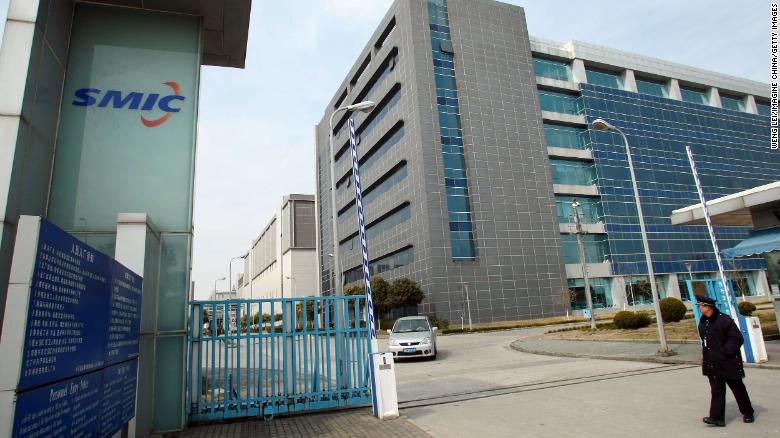
 CVD
CVD 