
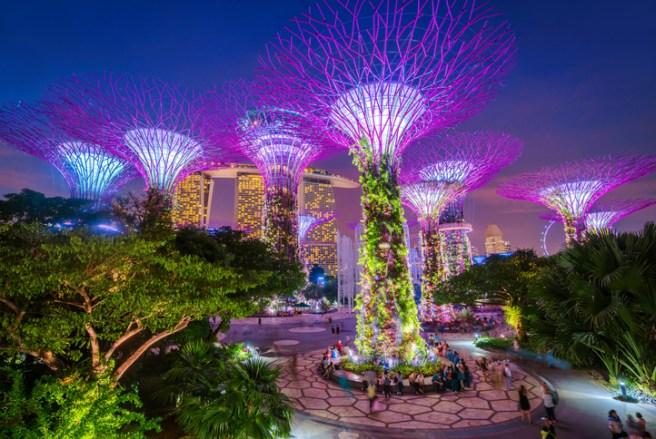
The top universities in the Asia-Pacific region according to data from Times Higher Education
July 4 2017

Times Higher Education has launched its first Asia-Pacific University Ranking 2017 to reflect the region’s growing strength in the higher education sector.
THE’s Asia-Pacific University Ranking 2017 analysed universities across 38 nations in East Asia, Southeast Asia and Oceania. The overall ranking features just over 200 universities from 13 different nations.
The ranking uses the same performance indicators as the THE World University Rankings 2016-17, however the weightings were adjusted to reflect the younger profile of some of the universities in the region. The full methodology can be found here.
Japan is the most-represented nation with 69 universities featured. China is in second place with 52 universities. Other countries with a strong presence in the ranking are Australia (35 universities), Taiwan (26), South Korea (25) and Thailand (nine).
Universities from China and Singapore dominate the top five places. The only university outside Asia to appear in the top five is the University of Melbourne in third place. The other four universities are the National University of Singapore (in first place), Peking University (second place), Tsinghua University (fourth place) and Nanyang Technological University (fifth place).
This is where the action is
Ready for the next level?
Asia-Pacific University Rankings methodology
Regional values
Backyard bonanza for Oz
Top five universities in Asia-Pacific region
Scroll down for the full list of top universities in the region
1. National University of Singapore
The National University of Singapore is a highly international university with more than half the student body made up of international students. It has overseas colleges in many different locations including Israel, Germany, the US and Sweden. It has also formed collaborations with leading US institutions Duke University and Yale University.
The university has 17 schools across three campuses in Singapore and regularly ranks highly in both the Asia University Rankings and the THE World University Rankings.
The university started as a medical school in 1905 and has since developed to be one of Asia’s flagship universities. It was established as the National University of Singapore after the merger of the University of Singapore and Nanyang University in 1980.
2. Peking University
The university was founded in 1898 and was the first national university in Chinese modern history. The teaching language for undergraduates is English, while graduate-level programmes are taught in either English or Chinese. It is the leading liberal arts university in China and also has a large mathematics and science faculty. The university consists of 31 colleges and 14 departments.
It has the largest university library in China containing more than 4 million volumes, including more than 1 million thread-bound Chinese books.
Many of the buildings on campus retain their original Chinese-style design and structure including traditional houses, gardens and pagodas, as well as many notable historic buildings and structures.
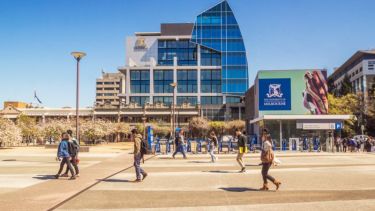
3. University of Melbourne
The University of Melbourne is a public research institution and Australia’s second-oldest university. Four Australian prime ministers have graduated from the institution and nine Nobel laureates have been associated with it.
The undergraduate curriculum is unusual for Australia since it offers nine generalised three-year degrees instead of more specialised undergraduate courses. This style of teaching has been labelled the “Melbourne Model”. The university also offers postgraduate courses.
Melbourne is one of the leading research universities in Australia and some of the research developed there has been adapted throughout the world. In the 1970s, research at the institution led to the first successful cochlear implant. Since 1984, more than 220,000 people worldwide have received a cochlear implant.
4. Tsinghua University
Tsinghua University is one of the most selective institutions in the world and a comprehensive research university. Its 20 schools and 54 departments cover subjects in art, economics, education, engineering, history, management, medicine, law, literature, philosophy and the sciences.
Tsinghua has more than 110 student associations and groups covering five areas: science and technology, physical training, humanities, arts and public welfare.
Tsinghua campus is in northwest Beijing, in the Haidian district, which was traditionally reserved specifically for universities and other academic institutes.
5. Nanyang Technological University
Nanyang Technological University is a relatively young research-intensive institution and is considered Singapore’s main science and technology university. It was formally established in 1991 through the merger of Nanyang Technological Institute and the National Institute of Education.
The university has three campuses: Yunnan Garden, NTU @one-north, and Novena. Yunnan Garden is the biggest in Singapore and has been voted one of the top 15 most beautiful campuses in the world. Yunnan is also an eco-friendly campus and the university has pledged to become the greenest campus in the world by 2022.


 CVD
CVD 
Have your say