I am an attorney in the Washington DC area, with a Doctor of Law in the US, attended the master program at the National School of Administration of Việt Nam, and graduated from Sài Gòn University Law School. I aso studied philosophy at the School of Letters in Sài Gòn.
.
I have worked as an anti-trust attorney for Federal Trade Commission and a litigator for a fortune-100 telecom company in Washington DC.
I have taught law courses for legal professionals in Việt Nam and still counsel VN government agencies on legal matters.
I have founded and managed businesses for me and my family, both law and non-law.
I have published many articles on national newspapers and radio stations in Việt Nam.
In 1989 I was one of the founding members of US-VN Trade Council, working to re-establish US-VN relationship.
Since the early 90's, I have established and managed VNFORUM and VNBIZ forum on VN-related matters; these forums are the subject of a PhD thesis by Dr. Caroline Valverde at UC-Berkeley and her book Transnationalizing Viet Nam.
I translate poetry and my translation of "A Request at Đồng Lộc Cemetery" is now engraved on a stone memorial at Đồng Lộc National Shrine in VN.
I study and teach the Bible and Buddhism. In 2009 I founded and still manage dotchuoinon.com on positive thinking and two other blogs on Buddhism.
In 2015 a group of friends and I founded website CVD - Conversations on Vietnam Development (cvdvn.net).
I study the art of leadership with many friends who are religious, business and government leaders from many countries.
I have written these books, published by Phu Nu Publishing House in Hanoi:
"Positive Thinking to Change Your Life", in Vietnamese (TƯ DUY TÍCH CỰC Thay Đổi Cuộc Sống) (Oct. 2011)
"10 Core Values for Success" (10 Giá trị cốt lõi của thành công) (Dec. 2013)
"Live a Life Worth Living" (Sống Một Cuộc Đời Đáng Sống) (Oct. 2023)
I practice Jiu Jitsu and Tai Chi for health, and play guitar as a hobby, usually accompanying my wife Trần Lê Túy Phượng, aka singer Linh Phượng.
Update: August, 26/2020 – 12:15|vietnamnewsChina’s Liaoning aircraft carrier sailing during a drill in the South China Sea in 2018. — AFP/VNA Photo
HÀ NỘI — Việt Nam has condemned China’s latest military drill in Hoàng Sa (Paracel) islands as a move against the country’s territorial integrity and regional peace.
The statement was made by Việt Nam’s Ministry of Foreign Affairs spokesperson Lê Thị Thu Hằng on Wednesday over reported Chinese naval exercises and live-fire drills in a part of the Paracels lying within the hotly contested South China Sea (known in Việt Nam as the East Sea) on August 24-29.
The writer is a senior fellow at the Center for International Security and Strategy at Tsinghua University, and a China Forum expert
The relationship between China and the US is in freefall. That is dangerous. US defence secretary Mark Esper has said he wants to visit China this year, which shows the Pentagon is worried. That Wei Fenghe, China’s defence minister, spoke at length with Mr Esper in August shows that Beijing is worried too. Both men have agreed to keep communications open and to work to reduce risks as they arise.
Walter E. Williams, a columnist for The Daily Signal, is a professor of economics at George Mason University.
Institutional racism and systemic racism are terms bandied about these days without much clarity. Being 84 years of age, I have seen and lived through what might be called institutional racism or systemic racism. Both operate under the assumption that one race is superior to another. It involves the practice of treating a person or group of people differently based on their race.
French teacher Peter Vlaming, who had taught since 2012 at West Point High School in West Point, Virginia, was fired in December 2018. (Photo: Alliance Defending Freedom)
A French teacher at West Point High School in West Point, Virginia, was fired for not using pronouns preferred by a transgender student.
Should people be forced to contradict their core beliefs just to keep a job? Can you be compelled to speak a message you don’t believe in?
Caleb Dalton, a counsel with the Christian legal organization Alliance Defending Freedom who represents the teacher, Peter Vlaming, joins “The Daily Signal Podcast” to discuss the issues involved.
Rachel del Guidice: I’m joined today on “The Daily Signal Podcast” by Caleb Dalton, who serves as legal counsel with Alliance Defending Freedom. Caleb, it’s great to have you on “The Daily Signal Podcast.”
Walter Lohman is director of the Asian Studies Center at The Heritage Foundation.
There is a long-held logic in Washington that puts so-called geostrategic interests ahead of values. The idea is that we cannot afford to stand for liberty because our global competitors do not.
If we alienate oppressive governments by criticizing them or pushing for political reform, the logic follows, they will side with our competitors and tilt the game board against us.
This is a much too simple way of looking at the world.
A case in point right now is what is happening in Thailand. For weeks, thousands have been demonstrating in favor of democratic reform, which the Thai government is already attempting to suppress.
If the U.S. turns a blind eye to this suppression—or sides with the Thai authorities—out of fear of pushing the Thai government closer to Beijing, we will be betraying our own democratic values.
The demonstrators are calling for a new constitution and greater freedom of expression. Protesters also are calling for constraints on the power of the Thai monarchy—a very touchy subject in Thailand, as criticism of the monarchy can land one in prison for up to 15 years.
It is hard to blame them. The state of democracy in Thailand today is not good. Elections held last year were best described as “partly free and not fair.” Although they did provide for a transition to civilian government, the military remains very much in control of the Thai political structure.
The strong influence of the military is by design. The country’s 2017 constitution, drafted by the Thai military junta, was written precisely to keep the military in, to keep former Prime Minister Thaksin Shinawatra (and other opposition like the former Future Forward Party) out, and to augment the powers and privileges of the monarchy.
Of course, Thailand is not the worst abuser of liberal freedoms. Freedom House now classifies it as partly free—a status it holds with several other countries in Southeast Asia, including the Philippines, Singapore, Malaysia, and Indonesia, which have regular elections.
The U.S. is right to engage Thailand as the valuable treaty ally it is. The Thai people, however, are also right to demand more of their government.
A relatively low-grade crackdown is already underway, and likely will intensify. The best model may be the current situation in Hong Kong, which Thai authorities may see as the most efficient approach to shutting down dissent.
Like Hong Kong following Beijing’s imposition of its “national security law,” the legal structure is in place in Thailand to target protest leaders and try to decapitate the movement.
There is also the possibility of a much broader, violent shutdown of the protests that anyone familiar with the Thammasat University massacre of 1976 shudders to consider.
In either case, the U.S. must stay true to its values. It cannot condone the arrest of political activists or a broader crackdown on peaceful protests. The Trump administration should speak out and take action against individuals responsible—as it has in Hong Kong.
If things cascade into another military takeover, Washington will be compelled to curtail the extent of its military cooperation with Thailand—as it did after other recent coups in 2006 and 2014.
Is this ceding the field to the People’s Republic of China in what is now a global strategic competition? Not at all.
Certainly, in the short term, Beijing will seek to gain an advantage, as it has at other tense points in U.S.-Thai relations. But Thailand has long had a good security relationship with China, the best in Southeast Asia, in fact. That is not the doing of the U.S.
Thailand is the classic fence-sitter. It wants to engage both the U.S. and China, and barring the former, will still be wary of drawing too close to the latter.
In the longer term, American interests align with the Thai people. They will remember where we were in these days of protests. Any tactical edge we may gain with U.S.-Thai military exercises or new arms sales will be overshadowed by their disappointment in our sense of priorities.
American values are a strategic asset, not a liability. We may soon be called upon to treat them as such.
By Minh Nga August 22, 2020 | 09:31 am GMT+7 VNExpressElectricians in Ho Chi Minh City repair a broken transmission system in District 7, September 2019. Photo by VnExpress/Thanh Nguyen.
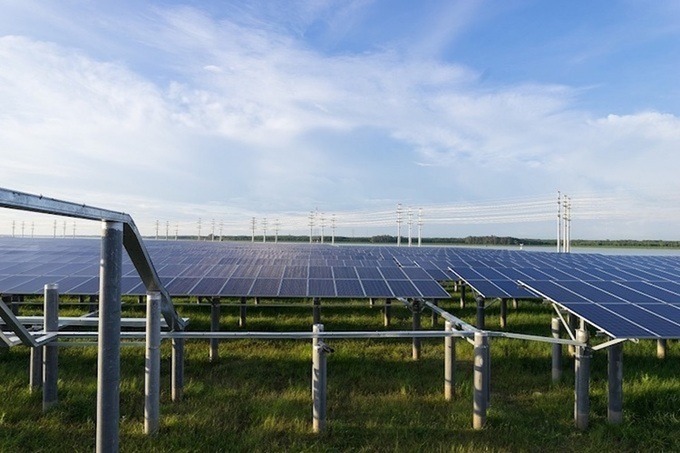
Denmark is assisting all 63 Vietnamese cities and provinces with reviewing energy usage and developing action plans to reduce consumption.
The Ministry of Industry and Trade has issued Guidelines for Developing Provincial Action Plans on Energy Efficiency for 2020-25 period under the Danish Vietnamese Energy Partnership Program, which seeks to cut Vietnam’s energy consumption by 5-7 percent by 2025.
Update: August, 21/2020 – 11:19| vietnamnewsGeneral director of Hanoi Sewerage and Drainage Company Võ Tiến Hùng. — Photo plo.vn
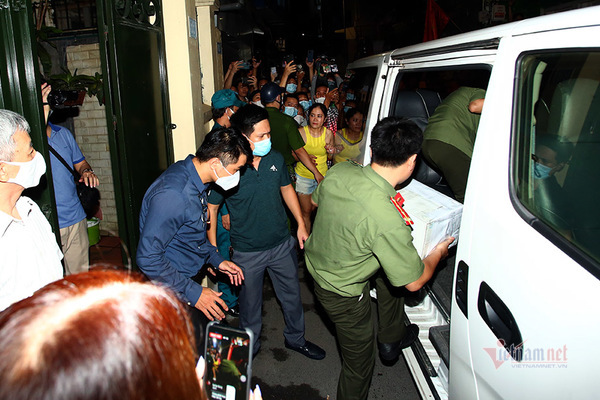
HÀ NỘI — The general director of Hanoi Sewerage and Drainage Company has been detained by the Ministry of Public Security over a number of management violations.
Update: August, 22/2020 – 07:33| vietnamnewsThe second branch of a double tunnel at the An Sương intersection in Ho Chi Minh City’s District 12 was opened to the public in July after being suspended for a period of time due to land clearance issues. VNA/VNS Photo
HÀ NỘI — Prime Minister Nguyễn Xuân Phúc on Friday presided over an online meeting with the participation of leaders of central ministries, agencies and localities to discuss ways to boost disbursement of public investment.
Vietnam was the United States’ 13th-largest trading partner last year, with bilateral trade increasing by more than 30%. Pictured: Vietnamese Prime Minister Nguyen Xuan Phuc addresses an Aug. 6 videoconference on the European Union-Vietnam Free Trade Agreement in Hanoi. (Photo: Nhac Nguyen/Agence France-Presse/Getty Images)
Anthony B. Kim researches international economic issues at The Heritage Foundation, with a strong focus on economic freedom. Kim is the research manager of the Index of Economic Freedom, the flagship product of the Heritage Foundation in partnership with The Wall Street Journal. Read his research.
This year marks the 25th anniversary of the United States and Vietnam reestablishing diplomatic relations.
Over the past 25 years—particularly since Vietnam’s accession to the World Trade Organization in December 2016, when the U.S. granted its former foe permanent normal trade relations status—U.S.-Vietnam economic and trade relations have expanded rapidly.
Health workers discuss COVID-19 treatment at a hospital in Da Nang, Vietnam. Photo: Tan Luc / Tuoi Tre
Vietnam reported 14 new coronavirus cases while taking one patient off the national count following negative retests on Thursday, according to the National Steering Committee for COVID-19 Prevention and Control.
The country’s tally has topped 1,000 cases since the virus first hit it in January.
Eleven of the additional cases were registered in Da Nang, one in neighboring Quang Nam Province, and two imported infections.
The patient in Quang Nam is linked to the cluster in Da Nang, a touristy city on the central coast.
The two imported cases include a 33-year-old Filipino expert who entered Vietnam from South Korea and a 27-year-old Vietnamese returnee from Equatorial Guinea. Both were quarantined upon entry, as per regulations.
The Filipino is treated in Khanh Hoa Province, located in south-central Vietnam, while the Vietnamese patient is receiving medical care in Ho Chi Minh City.
On Thursday morning, the Ministry of Health confirmed a 87-year-old man had tested positive for COVID-19 when hospitalized in Hanoi one day earlier.
But the ministry removed the patient from the tally in the evening following his three consecutive negative retests the same day.
Vietnam also announced nine recoveries on Thursday, all in Da Nang.
The Southeast Asian nation has documented 1,007 COVID-19 patients, including 666 local infections as of Thursday night, according to the health ministry.
A total of 542 patients have beaten the pathogen while 25 have died, most having suffered critical concomitant conditions.
A separate patient died on August 12 after having tested negative for the virus four times.
Five hundred and twenty-five domestic cases, most traced back to Da Nang, have been recorded since July 25, when the beach city logged the first locally-transmitted infection after Vietnam had gone 99 days without documenting any community transmission.
Vietnam has closed the border to foreigners since March to quell OVID-19 but the country grants exemption to foreign experts and skilled workers who are to be quarantined upon arrival.
The Vietnamese government has arranged for many flights to take home citizens stranded in other countries over virus-related travel restrictions.
Vietnam has affirmed many times and reiterated that the Hoang Sa (Paracel) and Truong Sa (Spratly) archipelagos are inseparable parts of its territory, Foreign Ministry spokesperson Le Thi Thu Hang has said.
Foreign Ministry spokesperson Le Thi Thu Hang (Photo: VNA)
She made the statement at a regular press conference of the Foreign Ministry on August 20, in response to media questions on Vietnam’s stance regarding China deploying an H-6J bomber to Phu Lam Island in the Hoang Sa archipelago in early August.
Vietnam has sufficient legal basis and historical evidence affirming its sovereignty over Hoang Sa and Truong Sa in line with international law, she said, adding that the deployment of weapons and fighter aircraft to Hoang Sa not only is a violation of Vietnam’s sovereignty but also further exacerbates the situation in the East Sea.
“We call on parties to make responsible contributions to maintaining peace, stability, and security in the East Sea,” Hang said.
Commenting on information that thousands of Chinese fishing vessels could flock to the East Sea after China’s fishing ban expires, Hang said Vietnam’s stance on the so-called fishing ban has been clearly stated.
On May 8, the spokesperson said in reply to questions about China’s fishing ban in the East Sea from May 1 to August 16 that as a coastal country in the East Sea and a member of the 1982 UN Convention on the Law of the Sea (UNCLOS), Vietnam has sovereignty, sovereign rights, and jurisdiction in waters as defined in the convention, and enjoys other legitimate rights in waters in accordance with the convention.
She made it clear that Vietnam rejects China’s unilateral decision. In the current global and regional context, Vietnam asks that China not further complicate the East Sea situation, she said./.VNA
A bill introduced in the US Congress would ban US government documents from referring to Xi Jinping, shown at a ceremony last month in Beijing for the BeiDou navigational satellite system, as China’s president. Photo: Xinhua
Lawmakers in Washington have introduced a bill to change the way the federal government refers to the leader of China, prohibiting the use of the term “president”.
A farmer harvests dragon fruit in Châu Thành District in the southern province of Long An. — VNA/VNS Photo Bùi Như Trường Giang
HÀ NỘI — The Animal and Plant Health Inspection Service, an agency of the US Department of Agriculture, will send officials to Việt Nam to check the quality of fruits to be exported to the US.
Thursday, August 20, 2020, 10:32 GMT+7 tuoitrenews
A map details the location of the future My An-Cao Lanh road in the road network of Vietnam’s Mekong Delta region. Graphic: Tuoi Tre
Vietnam’s prime minister has approved a proposal by the Ministry of Planning and Investment and the Ministry of Finance to construct a key road in the Mekong Delta using official development assistance (ODA) loans from South Korea.