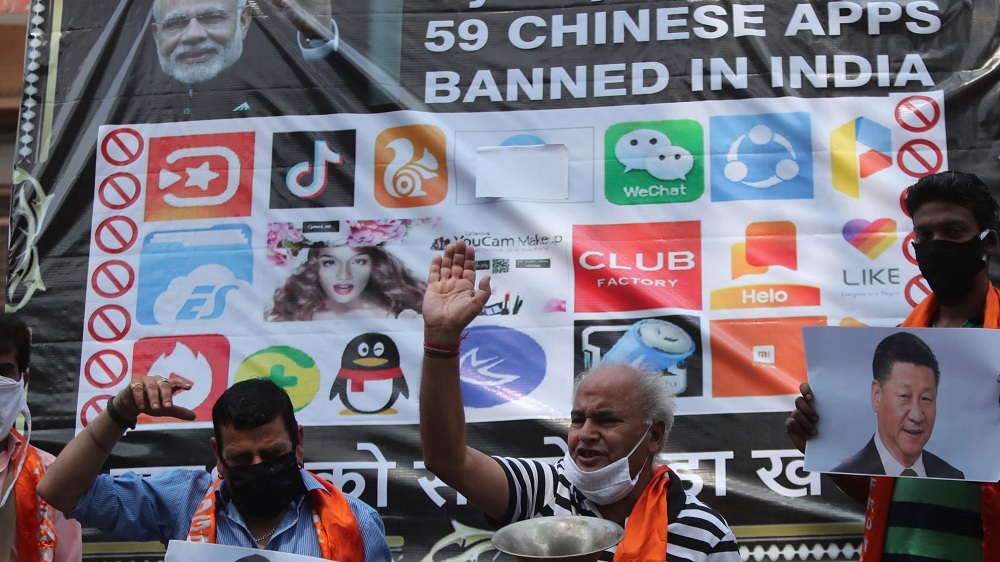
China is preparing for more heated relations with US

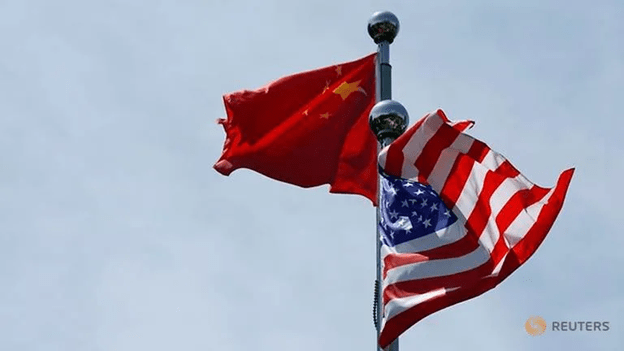
FILE PHOTO: Chinese and U.S. flags flutter near The Bund in Shanghai

By Kai He07 Sep 2020 06:09AM(Updated: 07 Sep 2020 06:10AM)

There have been a series of rhetorical attacks directed at the CCP from high-ranking US officials since late June.Advertisement

National Security Adviser Robert O’Brien, FBI Director Christopher Wray, Attorney General William Barr and Secretary of State Mike Pompeo have been dubbed the “four horsemen of the apocalypse” tasked by Trump to overthrow the CCP.

The Trump administration has taken concrete actions to decouple bilateral relations by closing the Chinese Consulate General in Houston, sending Health Secretary Alex Azar to Taiwan and attempting to ban Chinese social-media giants TikTok and WeChat in the United States.

READ: Commentary: A Digital Iron Curtain may be descending between the US and China

READ: Commentary: WeChat ban a formidable weapon in US-China trade war

Advertisement

CHINA URGES DIALOGUE

China’s reactions have been surprisingly conciliatory given its reputation for tit-for-tat actions against the United States. 

In an interview with Xinhua in early August, China’s Foreign Minister Wang Yi firmly rejected the idea of a new Cold War and proposed easing current tensions through dialogue “at any level, in any area and at any time”.

Two days later Yang Jiechi, Director of the Office of Foreign Affairs of the CCP, published an article titled Respect History, Look to the Future and Firmly Safeguard and Stabilise China–US Relations.

Yang praised the legacy of US engagement with China — pioneered by the Richard Nixon administration — and called for more “mutually beneficial cooperation in all fields”.

China’s goodwill diplomacy seems too little too late because no one in the Trump administration is taking it seriously. Beijing’s call for dialogue is falling on deaf ears in Washington in part because any such communication is seen as diplomatic kowtowing by the United States.

China's State Councillor Wang Yi meets Canada's FM Francois-Philippe Champagne in Rome
China’s State Councillor Wang Yi in Rome, Italy, Aug 25, 2020. (Photo: REUTERS/Yara Nardi)

But this interpretation of Chinese diplomacy seems overly simplistic. Chinese culture and history offer a better way to understand the three messages China intends to convey to salvage relations with the United States.

CHINA DOES NOT WANT CONFLICT

First, China does not want a Cold War with the United States. Wang Yi remarked that China was not the former Soviet Union and it had no intention of becoming another United States.

This might be wishful thinking from the CCP, but it takes two to tango, and China has said it wants to avoid the Cold War trap that ensnared the Soviet Union and the United States.

Wang and Yang highlighted the good old days of US–China relations after Richard Nixon’s 1972 visit to remind their US counterparts that the two countries co-existed by transcending their ideological differences. This is a taichi response to the punches thrown by the “four horsemen”.

READ: Commentary: The biggest IPO in history is happening but millions may miss out

READ: Commentary: Why doesn’t India have as many tech unicorns as China does?

THE US CANNOT GO ALONE

The second message is that the United States is unable to wage this Cold War alone. China wants to make it clear to US allies — including five-eyes countries Australia, New Zealand, the United Kingdom and Canada — that it has no intention to fight a new Cold War with the United States.

By striking a conciliatory tone, China aims to reduce the likelihood of the United States building a coalition against it. China’s anti-Cold War effort can also be seen in Wang Yi’s recent visits to five European countries.

Other interested countries — especially US allies — will need to choose whether to turn the Cold War into a reality or treat it as an illusion of the four horsemen.

While the Trump administration is trying to checkmate China through short-term confrontation, Chinese leaders are playing a game of Go insofar as they are seeking to position themselves for future advantages. This avoids direct confrontation in a game of high stakes, even if it forsakes short-term gains.

THE DANGERS OF CONFLICT

The third and final message is a warning to the international community about the danger of a potential conflict between the United States and China.

Beijing claims historical rights to vast swathes of the South China Sea, including islands, reefs
Beijing claims historical rights to vast swathes of the South China Sea, including islands, reefs and atolls in the Spratlys. (Photo: AFP/TED ALJIBE)

There are worries about the guns of August in the Asia Pacific — any strategic miscalculation or military accident might trigger a hot and potentially nuclear conflict in the South China Sea, East China Sea or over the Taiwan Strait.

The recent visit by US Health Secretary Azar to Taiwan may have led to Chinese military exercises around the Taiwan Strait as well as the carrier killer missile test in the South China Sea.

An early and sincere call for international cooperation during the pandemic is potentially China’s way of taking the moral high ground in preparation for something more heated with the United States.

READ: Commentary: The hope for change in a Biden-Harris US election win

Will China’s messages cut through to the United States? Will China behave according to the gentle signals it is trying to convey?

The coming months before the US election will be critical for US–China relations. It is time for the United States and China to work together to avoid a real, even if accidental, conflict.

Kai He is Professor of International Relations at the Griffith Asia Institute and the Centre for Governance and Public Policy, Griffith University. This commentary first appeared in The Conversation.
Source: CNA/sl
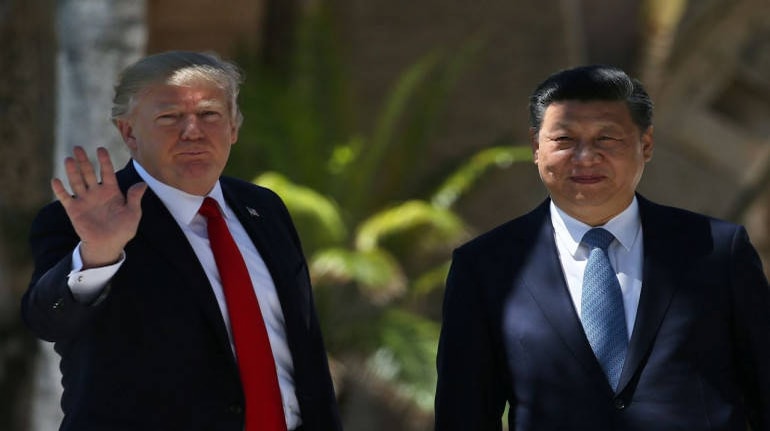
India’s opportunity in US-China decoupling

Last Updated : Sep 07, 2020 11:06 AM IST | Source: Moneycontrol.com

Whoever wins in the US on November 3, there will be a new normal in US-China ties. There will be new opportunity for India if it builds on its Comprehensive Global Strategic Partnership with the US, to consolidate a ‘trusted partner’ status, or ‘supply chain resilience’

Arun K Singh

On August 7, under the United States International Emergency Powers Act, US President Donald Trump issued an executive order banning, after 45 days, any transaction by a US entity with TikTok, and its parent company ByteDance. The order cited need to secure the information and communications technology and services supply chain, and asserted that “spread in the United States of mobile applications developed and owned by companies in China continues to threaten the national security, foreign policy, and economy of the United States”.

Concerns listed included TikTok automatically capturing vast swathes of information from users about network activity, location data, browsing and search histories. This, in turn, enabled the Chinese Communist Party (CCP) to get Americans’ personal and proprietary information, with the potential for future blackmail and corporate espionage. Among its justifications for arriving at this assessment, the order specifically referred to recent Indian government action banning TikTok. In a subsequent order of August 14, ByteDance was given 90 days to divest itself of all its properties in the US.

Several years earlier, Chinese hackers had been suspected to have stolen personal data of nearly 15 million US federal officials, and insurance-related data of more than 100 million people in US.

The US action against TikTok followed earlier steps against Chinese technology companies Huawei and ZTE, controlling any further access by them to US technology, equipment, software etc. It was followed by restrictions on US entities using Weibo and WeChat. The US has also been running an aggressive international campaign to prevent use of Huawei in 5G rollouts, with some success so far in Europe and Asia.

RELATED NEWS

The Chinese had so far been restrained in their responses, recognising the continued US technology inter-linkages for many of their leading companies, and not wanting to provoke the unpredictable Trump as he headed into a difficult re-election campaign. In the TikTok case, however, they have barred any sale of AI-related technology, and the algorithm used by the App — a clear signal of some countervailing technology power.

In an article in the May issue of The Atlantic, HR McMaster, a former Trump national security advisor, cited Chinese Premier Li Keqiang telling Trump in November 2017 that “China, having already developed its industrial and technology base, no longer needed the US….its role in the future would merely be to provide China with raw materials, agricultural products, and energy to fuel its production of the world’s cutting- edge industrial and consumer products”.

It can now be legitimately asked if the US-China economic and technology rivalry has finally crossed the Rubicon, and if some measure of decoupling is inevitable. The US has been struggling with its China policy for more than a decade now. For a long time, mainstream opinion supported ‘integrating China into the international mainstream’, which was assessed as leading to inevitable economic and political liberalisation. This did not happen.

China gamed the WTO and international trading systems, initially keeping the Yuan devalued, and then subsidising heavily its State-owned enterprises, and building excess capacity in many areas, including steel. It sponsored national champions in technology. Under President Xi Jinping, China abandoned the Deng Xiaoping era policy of ‘hide your strength and bide your time’, and threw the gauntlet through its China Dream, and Made in China 2025, seeking to make China a leading global high-tech manufacturer.

Trump has, no doubt, seized on a sharp anti-China rhetoric as electoral strategy, hoping to retain the votes of his 2016 base, which had seen its jobs vanish under globalisation, and to deflect the anger of those impacted by COVID-19. At the same time, his administration has taken the strongest measures, since the 1971 US opening to China, on tariffs, trade, technology denial, sanctions against Chinese officials and others for their actions in Xinjiang, Hong Kong, Tibet, and the South China Sea.

Aside from Trump, many senior US officials, including the Vice-President, have made sustained statements calling out China on cyber hacking, disinformation, intellectual property theft, forced technology transfers, human rights violations, and transgressions of international law. Democratic Presidential candidate Joe Biden issued a statement on September 3, asserting that as US President he would “put values back at center of American foreign policy”, meet with Dalai Lama, and appoint a Special Coordinator for Tibetan issues.

Whoever wins in US on November 3, there will be a new normal in US-China ties. Tech rivalry and reordering of supply chains will continue. There will be new opportunity for India if it builds on its Comprehensive Global Strategic Partnership with the US, to consolidate a ‘trusted partner’ status, or ‘supply chain resilience’ in areas of strength such as digital and pharma, or in new tech areas such as AI, cyber, quantum and big data.

Arun K Singh is former Indian Ambassador to the United States. Views are personal.

US to set up academy in Vietnam to foster young Southeast Asian leaders

By Minh Nga   September 5, 2020 | 04:44 pm GMT+7 vnexpressUS to set up academy in Vietnam to foster young Southeast Asian leadersYSEALI network was launched in December 2013 and has gathered more than 150,000 members, including 30,000 from Vietnam. Photo courtesy of the U.S. Mission to ASEAN.


The U.S. plans to set up a Young Southeast Asian Leaders Initiative Academy (YSEALI) next year at the Fulbright University Vietnam in Ho Chi Minh City.

It will cost $5 million, the U.S.’s Assistant Secretary for East Asian and Pacific Affairs, David R. Stilwell, announced at a virtual event held in HCMC on Friday.

Tiếp tục đọc “US to set up academy in Vietnam to foster young Southeast Asian leaders”

Nguy cơ thiếu điện, cách nào để không phải ‘cắt luân phiên’

05/09/2020    14:00 GMT+7 vietnamnet

Giai đoạn 2010-2019, Việt Nam không xảy ra thiếu điện. Tuy nhiên giai đoạn 2021 – 2025, Việt Nam phải đối mặt với nguy cơ thiếu hụt điện năng. Từ bây giờ, nhiều giải pháp đã được tính đến để không gặp cảnh “cắt điện luân phiên”.

Vỡ tiến độ quy hoạch, Việt Nam đối mặt thiếu điện trầm trọng

Lo thiếu điện, thuê xà lan làm nhà máy điện trên mặt nước

Tình huống cực đoan, cả nước lo lắng trước nguy cơ

Nhiều dự án chậm tiến độ

Báo cáo mới nhất về thực trạng, giải pháp phát triển điện lực đến năm 2030 của Bộ Công Thương đánh giá: Ngành điện, mà nòng cốt là EVN, cùng với các Tổng công ty phát điện của các tập đoàn: Dầu khí Việt Nam, Công nghiệp Than – Khoáng sản Việt Nam trong thời gian qua đã cơ bản đáp ứng đủ nhu cầu điện.

Tốc độ tăng trưởng điện sản xuất giai đoạn 2011-2019 là 10,1%/năm, điện thương phẩm giai đoạn 2011-2019 tăng trưởng bình quân 10,5 %/năm, công suất phụ tải lớn nhất toàn hệ thống (Pmax) năm 2019 đạt 38.249 MW.

 
Cung ứng điện năng trong 10 năm qua được đảm bảo. Ảnh: Lương Bằng
Tiếp tục đọc “Nguy cơ thiếu điện, cách nào để không phải ‘cắt luân phiên’”

Ấn Độ đã dạy cho doanh nghiệp Trung Quốc một ‘bài học đau đớn’

5/09/2020  07:32  GMT+7 vietnamnet

Lệnh cấm hàng loạt ứng dụng Trung Quốc tại Ấn Độ đã giúp các doanh nghiệp trong nước phát triển và mở đường cho những gã khổng lồ công nghệ của Mỹ.  

Trung Quốc ngầm xác nhận tham gia vụ bán TikTok tại MỹMỹ sẽ cấm thêm nhiều ứng dụng Trung Quốc sau TikTok, WeChatTrung Quốc ra ứng dụng đối phó tin giả

Biểu tình phản đối công nghệ Trung Quốc hôm 1/7 tại Ấn Độ. Ảnh: AP

Hôm 2/9, Ấn Độ tiếp tục cấm 118 ứng dụng Trung Quốc, trong đó có các tựa game lớn của Tencent và NetEase và dịch vụ của Baidu, Alibaba. Bộ Điện tử và Công nghệ thông tin nước này cho rằng các ứng dụng tham gia vào hoạt động gây phương hại đến chủ quyền và tính toàn vẹn của đất nước. Nhà chức trách cũng cáo buộc các dịch vụ gửi dữ liệu công dân sang máy chủ đặt ngoài Ấn Độ.

Tiếp tục đọc “Ấn Độ đã dạy cho doanh nghiệp Trung Quốc một ‘bài học đau đớn’”

Thấm thía với bài học về xây dựng, chỉnh đốn Đảng

05/09/2020    05:01 GMT+7 vietnamnet

Tổng Bí thư, Chủ tịch nước Nguyễn Phú Trọng là một trong những người phát hiện, đề xuất và tiếp tục hoàn thiện các mối quan hệ lớn chi phối toàn bộ quá trình đổi mới, phát triển đất nước.

Tổng Bí thư, Chủ tịch nước: Mỗi lần ngã là một lần bớt dại

Tổng Bí thư: Đổi mới một cách vô nguyên tắc rất dễ chệch hướng, ‘đổi màu’

Chuẩn bị và tiến hành thật tốt Đại hội XIII của Đảng, đưa đất nước bước vào một giai đoạn phát triển mới

Chia sẻ với VietNamNet, GS-TS Phùng Hữu Phú, Phó Chủ tịch thường trực Hội đồng Lý luận Trung ương nhấn mạnh: Bài viết “Chuẩn bị và tiến hành thật tốt Đại hội XIII của Đảng, đưa đất nước bước vào một giai đoạn phát triển mới” của Tổng Bí thư, Chủ tịch nước Nguyễn Phú Trọng thể hiện một cách khái quát và rất sâu sắc những định hướng lớn trong quá trình chuẩn bị Đại hội XIII.

Tiếp tục đọc “Thấm thía với bài học về xây dựng, chỉnh đốn Đảng”

Tử hình cựu Giám đốc chi nhánh Ngân hàng Oceanbank

04/09/2020    14:34 GMT+7 vietnamnet

Bị cáo Trần Thị Kim Chi, cựu Giám đốc Ngân hàng Oceanbank – Chi nhánh Hải Phòng bị tòa tuyên án tử hình về tội Tham ô tài sản.

Nữ giám đốc giết người tình trẻ lĩnh 20 năm tù

Nữ giám đốc 9X Hải Phòng lập 7 công ty ‘ma’, bán hóa đơn khống 2.500 tỷ

Nữ giám đốc công ty Hoàng Kim Land bị bắt

Sáng nay (4/9), TAND TP Hải Phòng mở phiên tòa xét xử vụ án Tham ô tài sản xảy ra tại ngân hàng Oceanbank, chi nhánh Hải Phòng.

Đây là vụ án được dư luận đặc biệt quan tâm, bởi nhiều gia đình điêu đứng khi gửi tiền tiết kiệm vào ngân hàng này.

HĐXX đã tuyên tử hình với bị cáo Trần Thị Kim Chi, cựu Giám đốc Ngân hàng Thương mại TNHH MTV Đại Dương (Oceanbank) – Chi nhánh Hải Phòng về tội Tham ô tài sản.

Tiếp tục đọc “Tử hình cựu Giám đốc chi nhánh Ngân hàng Oceanbank”

Đàn sâu xanh vặt trụi lá cây trên đường nội đô đẹp nhất Sài Gòn

05/09/2020    13:24 GMT+7

Nhiều cây trên đường Phạm Văn Đồng đoạn qua phường Linh Đông (quận Thủ Đức, TP.HCM) trơ trụi do bị đàn sâu màu xanh “tấn công”.

Kẻ xấu khoan lỗ, đổ hóa chất bức tử hàng loạt cây xanh trên phố Hải Phòng

Ông Đoàn Ngọc Hải: ‘Tôi chở bệnh nhân nghèo không phải để làm màu’

Kỷ luật nhiều cán bộ lãnh đạo ở tỉnh An Giang

XEM CLIP:

https://embed.vietnamnettv.vn/v/203682.html?domain=http://vietnamnet.vn/thoi-su-clip-nong

Theo ghi nhận của PV vào sáng 5/9, đường Phạm Văn Đồng hướng đi vào sân bay Tân Sơn Nhất có nhiều cây bị trơ trụi.

Tiếp tục đọc “Đàn sâu xanh vặt trụi lá cây trên đường nội đô đẹp nhất Sài Gòn”

US-China tensions: Korean war was a miscalculation. It could happen again with Taiwan

SCMP October marks the 70th anniversary of the Korean war, amid concerns that a miscalculation and disinformation could cause another China-US confrontationTaiwan has become the most dangerous flashpoint between the two powers, the other being the disputed South China Sea Tiếp tục đọc “US-China tensions: Korean war was a miscalculation. It could happen again with Taiwan”

Chinese Investment in the Maldives: Appraising the String of Pearls

September 4, 2020  |  AMTI Brief

Chinese investment in the Maldives is a frequent subject of concern. The archipelagic nation is strategically located along major Indian Ocean shipping routes. Its former president has very publicly speculated that China is being allowed to buy up whole islands and extend loans that the government cannot afford.

And media articles in India, long the most important external partner for the Maldives, often assume that prominent Chinese investments are a stalking horse for military access. The most frequently cited example of late is a resort development on Feydhoo Finolhu island. But the available data suggests these fears, and those surrounding other Chinese projects in the Maldives, are overblown. Tiếp tục đọc “Chinese Investment in the Maldives: Appraising the String of Pearls”

Advancing Reciprocity in U.S.- China Diplomatic Relations

PRESS STATEMENT

MICHAEL R. POMPEO, SECRETARY OF STATE

SEPTEMBER 2, 2020Share

For years, the PRC has imposed significant barriers on American diplomats working in the PRC that are far beyond diplomatic norms. PRC authorities implement a system of opaque approval processes designed to prevent American diplomats from conducting regular business and connecting with the Chinese people. U.S. diplomats’ attempts to host cultural events, secure official meetings, and visit university campuses are regularly obstructed.

In the United States, by contrast, PRC diplomats have enjoyed open access to American society, while ignoring sustained U.S. entreaties to improve the balance. In response to the PRC’s longstanding restrictions on U.S. diplomats and refusal to engage in good faith on fundamental matters of reciprocity and mutual respect, the Department of State is compelled to impose certain new requirements on PRC diplomats.

The Department of State will now require senior PRC diplomats in the United States to receive approval to visit U.S. university campuses and to meet with local government officials. Cultural events with an audience larger than 50 people hosted by the PRC embassy and consular posts outside of mission properties will also require Department of State approval. The Department of State will also take action to help ensure that all official PRC embassy and consular social media accounts are properly identified as PRC government accounts, since the U.S. Embassy is denied unfettered access to PRC social media and PRC citizens are blocked from using Twitter and Facebook, amongst other social media platforms.

The United States insists on reciprocal access to educational and cultural institutions for U.S. diplomats around the world. These new requirements on PRC diplomats are a direct response to the excessive restraints already placed on our diplomats by the PRC, and they aim to provide further transparency on the practices of the PRC government. Should the PRC eliminate the restrictions imposed on U.S. diplomats, we stand ready to reciprocate.

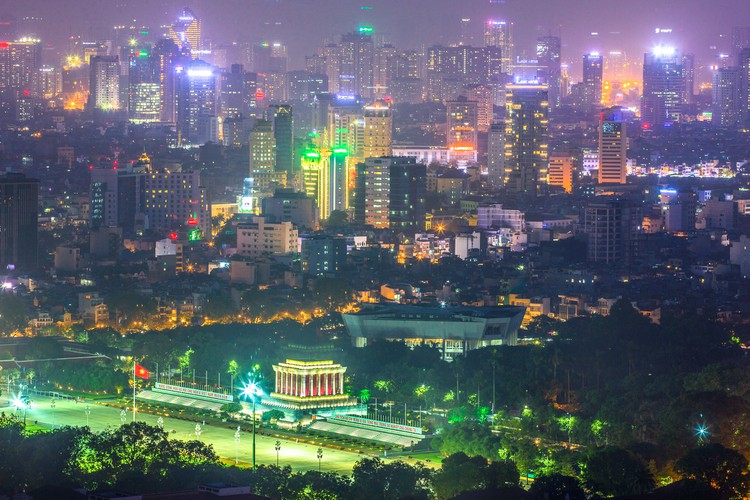
Modern Hanoi and HCM City impressive images

Chia sẻ | FaceBookTwitter Email Copy LinkInterested003/09/2020    12:32 GMT+7

In recent years both Hanoi and HCM City have undergone rapid development, with many skyscrapers, immense boulevards, and impressive public works taking shape. 

Let’s take a look at the amazing architectural feats of the nation’s two largest cities:

modern hanoi and ho chi minh city in impressive images hinh 1

Ba Dinh Square, the country’s largest square, is located on Hung Vuong street directly in front of the Ho Chi Minh Mausoleum. The site is the place where President Ho Chi Minh proclaimed the Declaration of Independence on September 2, 1945, therefore marking the start of the Democratic Republic of Vietnam.

Tiếp tục đọc “Modern Hanoi and HCM City impressive images”

Parents Sue School System for Discriminating Against High-Achieving Asian Kids

Kenny Xu @kennymxu / September 02, 2020 / Daily Signal

Without court intervention, their children “will be denied the opportunity to compete for admission to … magnet middle school programs on an equal footing with other applicants,” Asian American parents say in their lawsuit in Montgomery County, Maryland. (Photo illustration: Hill Street Studios/Getty Images)

Tiếp tục đọc “Parents Sue School System for Discriminating Against High-Achieving Asian Kids”

Investor-state disputes arising from COVID-19: balancing public health and corporate wealth

facebook sharing button
twitter sharing button
whatsapp sharing button
linkedin sharing button

ISDS Platform

Corrs Chambers Westgarth | 27 August 2020

Investor-state disputes arising from COVID-19: balancing public health and corporate wealth

In response to the COVID-19 pandemic, governments globally are engaging in a difficult balancing act of protecting public health, mitigating economic damage and avoiding interference with private rights.

Even during a global pandemic, however, States are likely to be challenged for implementing measures that interfere with an investor’s private rights. Governments the world over have introduced COVID-19 prevention measures such as hard border closures, city and regional lockdowns, suspension of construction, production and mining, nationalisation of private industries and import and export restrictions.

Tiếp tục đọc “Investor-state disputes arising from COVID-19: balancing public health and corporate wealth”