Bài học từ vụ thắng kiện đòi bồi thường 3,7 tỷ USD

***
Thứ sáu, 7/3/2014, 01:03 (GMT+7) 

Bài học từ vụ thắng kiện đòi bồi thường 3,7 tỷ USD

south-fork-1683-1394092531.jpg

Một góc dự án South Fork của nhà đầu tư Mỹ.

Giành phần thắng theo phán quyết của trọng tài quốc tế, Việt Nam thoát nguy cơ bồi thường số tiền khổng lồ, song cũng tự rút ra nhiều bài học, kinh nghiệm khi làm việc với nhà đầu tư ngoại.

Giành thắng lợi 2 vụ nhà đầu tư nước ngoài kiện Chính phủ Việt Nam

Thứ Hai, 10/07/2017 – 18:51

Dân trí – Bộ Tư pháp phối hợp với Bộ Kế hoạch và Đầu tư, Bộ Tài chính, Bộ Công Thương và các địa phương liên quan vừa giải quyết thắng lợi 2 vụ tranh chấp nhà đầu tư nước ngoài kiện Chính phủ Việt Nam và được Hội đồng trọng tài tuyên bố chấm dứt vụ kiện. Đó là vụ kiện của Saigon Metropolitan và Recofi.

 Bộ trưởng Bộ Tư pháp Lê Thành Long.

Bộ trưởng Bộ Tư pháp Lê Thành Long.

Tại hội nghị tổng kết công tác 6 tháng đầu năm 2017 chiều 10/7, Bộ Tư pháp cho biết đã tham mưu giúp Chính phủ kịp thời xử lý các vấn đề phát sinh trong hội nhập quốc tế, đàm phán, ký kết thực hiện điều ước quốc tế, thoả thuận, cam kết quốc tế. Tiếp tục đọc “Giành thắng lợi 2 vụ nhà đầu tư nước ngoài kiện Chính phủ Việt Nam”

the 2018 International Lancet Countdown on Health and Climate Change

The 2018 report of the Lancet Countdown on health and climate change by Nick Watts and colleagues published on Nov 28 provides a snapshot and direction of travel for 41 global indicators at the intersection between health and climate change.
Indicator 5.1: media coverage of health and climate change shows that health still represents only a small proportion of climate change media coverage but has increased by an average of 4% per year over the past decade compared with a decline in overall climate change coverage by an average of 1·25% per year. Health potentially holds the key to humanising climate change conversations, contributing to more rapid and effective behaviour change—and it therefore matters how it is positioned.

Tiếp tục đọc “the 2018 International Lancet Countdown on Health and Climate Change”

IPPC SPECIAL REPORT Global Warming of 1.5 ºC

An IPCC special report on the impacts of global warming of 1.5 °C above pre-industrial levels and related global greenhouse gas emission pathways, in the context of strengthening the global response to the threat of climate change, sustainable development, and efforts to eradicate poverty.

COP24 special report on health and climate change

3-14 December 2018, Katowice, Poland – In its latest report, WHO highlights health as the biggest issue to be prioritized during COP-24 and provides key recommendations to the negotiators on how to maximize the health benefits of tackling climate change and avoid the worse health impacts of this global challenge. Although there has been hugely positive progress in tackling health and climate change issues, there is a still a long way to go. Millions of people are still exposed to air pollution globally, resulting in 7 million premature deaths every year; 3 billion people still lack access to clean and reliable energy; and nearly a quarter of all deaths worldwide result from people having to live or work in unhealthy environments. Unless significant changes are made and stronger action taken, we are risk of failing to meet the targets of the Paris Agreement and the SDGs. Tiếp tục đọc “COP24 special report on health and climate change”

UN Launches Multibillion-Dollar Appeal for World’s Most Vulnerable

VOV

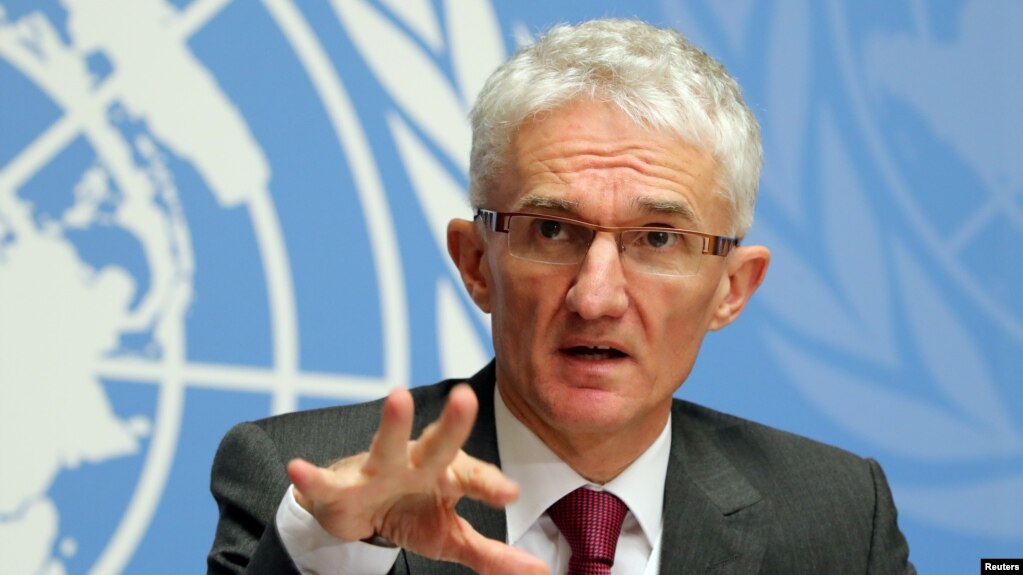
U. N. Undersecretary-General for Humanitarian Affairs and Emergency Relief Coordinator (OCHA) Mark Lowcock attends a news conference for the launch of the “Global Humanitarian Overview 2019” at the United Nations in Geneva, Switzerland, Dec. 4, 2018.

The United Nations is launching a $21.9 billion humanitarian appeal for 2019 to help nearly 94 million people in 42 countries survive conflict, hunger, homelessness, deprivation, and the impact of climate change. Tiếp tục đọc “UN Launches Multibillion-Dollar Appeal for World’s Most Vulnerable”

Trump and Xi Park Trade War—For Now

FP
But the U.S. president raises new uncertainties over the fate of the trade deal with Mexico and Canada.

U.S. President Donald Trump, Chinese President Xi Jinping, and top officials reached a truce in the trade war over dinner at the G-20 summit in Buenos Aires on Dec. 1. (Saul Loeb/AFP/Getty Images)

U.S. President Donald Trump, Chinese President Xi Jinping, and top officials reached a truce in the trade war over dinner at the G-20 summit in Buenos Aires on Dec. 1. (Saul Loeb/AFP/Getty Images)

As widely expected, U.S. President Donald Trump paused his trade war with China at the G-20 summit in Argentina this weekend, halting the imposition of new tariffs for 90 days while the two countries continue talking about the wider irritants in the trade relationship. But Trump also threw a cloud over the future of the new NAFTA, threatening to pull out of the existing three-way North American trade deal altogether if Congress doesn’t ratify the renegotiated accord. Tiếp tục đọc “Trump and Xi Park Trade War—For Now”

Agreement between the United States of America, the United Mexican States, and Canada

The Agreement between the United States of America, the United Mexican States, and Canada is a signed but not ratified free trade agreement between Canada, Mexico, and the United States. It is referred to differently by each signatory: in the United States, it is called the United States–Mexico–Canada Agreement (USMCA); in Canada, it is called the Canada–United States–Mexico Agreement (CUSMA) in English and the Accord Canada–États-Unis–Mexique (ACEUM) in French; and in Mexico, it is called the Tratado entre México, Estados Unidos y Canadá (T-MEC). The agreement is also referred to as “NAFTA 2.0”, or New NAFTA in order to distinguish it from its predecessor, the North American Free Trade Agreement (NAFTA). (wikipedia)

Agreement between the United States of America, the United Mexican States, and Canada Text

Sử thi Raglai – Nhìn từ phương diện chức năng thể loại

Kết quả hình ảnh cho đám cưới Raglai
Đám cưới người Raglai tại nhà trai. Ảnh: Internet

Nguyễn Thanh Tùng*

Tóm tắt:

Trong nền văn hóa lâu đời của người Raglai, sử thi (Akhát Jucàr), xét về phương diện chức năng thể loại, là những di sản có giá trị lớn về nhiều mặt.

Trong phạm vi của bài viết này, ngoài việc điểm lược những nét khái quát về tộc người và văn hóa tộc người Raglai; về thể loại sự thi (Akhát Jucàr) trong nền văn học dân gian Raglai, chúng tôi tập trung nghiên cứu, thẩm nhận bước đầu một số chức năng của sử thi trong văn hóa tộc người Raglai, xét từ phương diện chức năng thể loại:

– Bảo lưu và truyền tải  phong tục, tập quán, tín ngưỡng;

– Tái tạo, tôn vinh lịch sử, xã hội, văn hóa tộc người;

– Đảm nhận vai trò đích thực của những áng văn chương truyền miệng .

Tiếp tục đọc “Sử thi Raglai – Nhìn từ phương diện chức năng thể loại”

Vietnam to face power shortage by 2020

Last update 17:15 | 04/12/2018
Vietnam could face power shortages in the early 2020s. The shortages are likely to happen from 2020 to 2025.


The Electricity of Vietnam said to meet surging demand for power, the country needs 60,000MW of electricity by 2020; 96,500MW of electricity by 2025 and 129,500MW of electricity by 2030.

This means total installed capacity would have to increase by 6,000-7,000MW of electricity per year.

Experts say it is necessary to review electricity producing projects to ensure energy security.

They suggested that special treatment such as loan guarantee be offered to investors so that power projects could be soon built and operated.-VNA

International tourist arrivals pass 14 million in 11 months

The number of foreign tourists visiting Viet Nam so far this year is estimated at 14.2 million, up 21.3 per cent against the same period last year, the General Statistics Office said on Thursday.

In this period, the number of foreigners visiting Viet Nam by air and road rose by 15.3 per cent and 64.4 per cent, respectively, while the number that arrived by sea went down 11.3 per cent year-on-year due to the impact of storms Toraji and Usagi. Tiếp tục đọc “International tourist arrivals pass 14 million in 11 months”

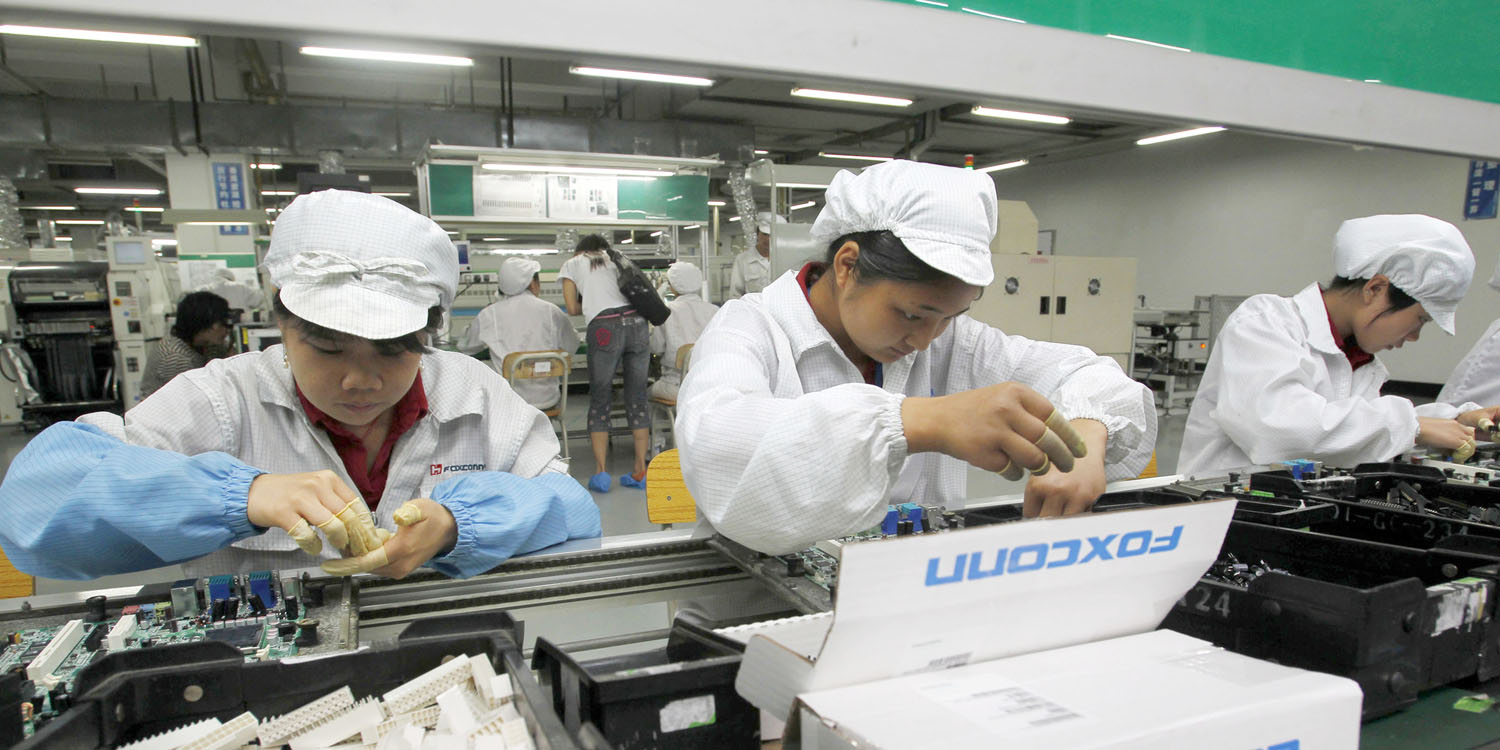
Foxconn considering iPhone factory in Vietnam as China trade war uncertainty continues

Apple’s biggest supply chain partner, Foxconn, is looking to start a new facility in Vietnam as a way to hedge against instability and uncertainty in its current production facilities due to the ongoing trade war between China and the US. Tiếp tục đọc “Foxconn considering iPhone factory in Vietnam as China trade war uncertainty continues”

Global Climate Risk Index

The annually published Global Climate Risk Index analyses to what extent countries have been affected by the impacts of weather-related loss events (storms, floods, heat waves etc.).

Publication
27 November 2018
Cover Climate Risk Index 2019
Who suffers Most from Extreme Weather Events? Weather-related Loss Events in 2017 and 1998 to 2017

The Global Climate Risk Index 2019 analyses to what extent countries and regions have been affected by impacts of weather-related loss events (storms, floods, heat waves etc.). The most recent data available — for 2017 and from 1998 to 2017 — were taken into account. The countries and territories affected most in 2017 were Puerto Rico, Sri Lanka as well as Dominica. For the period from 1998 to 2017 Puerto Rico, Honduras and Myanmar rank highest. Tiếp tục đọc “Global Climate Risk Index”

Việt Nam ranks 6th on Global Climate Vulnerability list; MoNRE responds

Update: December, 04/2018 – 21:30

Phạm Văn Tân, deputy head of the Climate Change Department, Việt Nam’s Ministry of Natural Resources and Environment (MoNRE), presents the ministry’s response to climate change threats to the country. — VNS Photo Mai Hoàng

Viet Nam News By Mai Hoàng

Katowice, POLAND — At the 24th UN Conference on Climate Change (COP24), Germanwatch released the most up-to-date Climate Risk Index ranking, which analyses the extent to which each country has been affected by weather-related loss events. Tiếp tục đọc “Việt Nam ranks 6th on Global Climate Vulnerability list; MoNRE responds”

7 Reasons U.S. Should Not Ratify UN Convention on the Law of the Sea

Heritage Foundation

Jun 4th, 2018 5 min read

Commentary By

Theodore R. Bromund, Ph.D.@Bromund

Senior Research Fellow in Anglo-American Relations

James Jay Carafano@JJCarafano

Vice President, Kathryn and Shelby Cullom Davis Institute

Brett D. Schaefer

Senior Research Fellow in International Regulatory Affairs

The UN Convention on the Law of the Sea requires that coastal nations pay royalties on their seabed resources to landlocked and developing countries.mizoula/Getty Images

KEY TAKEAWAYS

U.S. accession would provide no benefits not already available to the U.S., while creating unnecessary burdens and risks.

The U.S. does not need to join the convention in order to access oil and gas resources on its extended continental shelf, in the Arctic, or in the Gulf of Mexico.

Despite subsequent changes in 1994 that led the Clinton administration to support U.S. accession, the Trump administration should oppose accession to this treaty.

 
President Donald Trump recently proclaimed June 2018 to be National Ocean Month and stated his support for better utilizing the vast resources contained in America’s Exclusive Economic Zone, the 200-nautical mile zone off U.S. coasts over which the U.S. has jurisdiction. Tiếp tục đọc “7 Reasons U.S. Should Not Ratify UN Convention on the Law of the Sea”