
Chuyên mục: Biến đổi khí hậu – Climate change
Mẹ thiên nhiên và huỷ diệt bởi thủy điện không phải là vấn đề duy nhất của Đồng Bằng Sông Cửu Long
Không có khu vực đồng bằng nào trên thế giới bị đe doạ bởi biến đổi khí hậu trầm trọng như Sông Cửu Long. Liệu Việt Nam có hành động kịp thời để cứu nơi đây?
Loạt bài của Mongabay – Mongabay series
Tiếng Việt
Phần 1 – Liệu biến đổi khí hậu sẽ nhấn chìm Đồng bằng sông Cửu Long?
Phần 2 – Việt Nam cực kỳ lo lắng vì Trung Quốc và Lào xây đập trên Mekong
Phần 3 – Mẹ Thiên nhiên và huỷ diệt bởi thủy điện không phải là vấn đề duy nhất của Đồng bằng sông Cửu Long
Phần 4 – Kế hoạch cứu nguy Đồng bằng sông Cửu Long
English
Part 1 – Will climate change sink the Mekong Delta?
Part 2 – Vietnam sweats bullets as China and Laos dam the Mekong
Part 3 – Mother Nature and a hydropower onslaught aren’t the Mekong Delta’s only problems
Part 4 – A plan to save the Mekong Delta
Biến đổi khí hậu và các đập nước ở thượng nguồn đang đe dọa khu vực quan trọng này và vấn đề trở nên khó kiểm soát được. Nhưng có phải những vấn đề lớn nhất của ĐBSCL đều do chính Việt Nam tạo ra?
Đồng bằng sông Cửu Long của Việt Nam, nơi ở của gần 20 triệu người, là một trong những môi trường nông nghiệp có năng suất cao nhất trên thế giới, nhờ vào mạng lưới kênh rạch, đê, cửa cống và rãnh thoát nước phức tạp.
Về thế mạnh nông nghiệp của ĐBSCL, Việt Nam đã đi từ một nhà nhập khẩu gạo lâu năm và trở thành một nước xuất khẩu lớn. Tuy nhiên, nông dân trong khu vực rất quan tâm đến các chính sách an ninh lương thực của chính phủ, trong đó yêu cầu hầu hết đất đai của ĐBSCL phải được dành cho sản xuất lúa gạo. Và nhiều người trong số họ đang có biện pháp để phá vỡ các quy tắc, theo những cách mà không phải lúc nào cũng thân thiện với môi trường.
Tiếp tục đọc “Mẹ thiên nhiên và huỷ diệt bởi thủy điện không phải là vấn đề duy nhất của Đồng Bằng Sông Cửu Long”
What If All U.S. Coal Workers Were Retrained to Work in Solar?
AUGUST 08, 2016
HBR.org _The global economy is in a massive transition from a fossil-fuel-based energy system to one using sophisticated renewable energy technologies. For tens of thousands of fossil fuel workers, though, the energy industry outlook is not promising. For coal industry workers, the future looks particularly bleak. However, research I conducted with Edward Louie of Oregon State University offers hope for a better future based on retraining workers. Our study (published in the journal Energy Economics) quantified the costs and benefits of retraining coal workers for employment in the rapidly expanding solar photovoltaic industry—and it explores different ways to pay for this retraining. Tiếp tục đọc “What If All U.S. Coal Workers Were Retrained to Work in Solar?”
What’s Up in Coal Country: Alternative-Energy Jobs
NYtimes_From the mountain hollows of Appalachia to the vast open plains of Wyoming, the coal industry long offered the promise of a six-figure income without a four-year college degree, transforming sleepy farm towns into thriving commercial centers.
But today, as King Coal is being dethroned — by cheap natural gas, declining demand for electricity, and even green energy — what’s a former miner to do?
Nowhere has that question had more urgency than in Wyoming and West Virginia, two very different states whose economies lean heavily on fuel extraction. With energy prices falling or stagnant, both have lost population and had middling economic growth in recent years. In national rankings of economic vitality, you can find them near the bottom of the pile. Tiếp tục đọc “What’s Up in Coal Country: Alternative-Energy Jobs”
Only a fundamental mindset shift can save the Mekong Delta: expert
Last update 11:10 | 16/12/2017
VietNamNet Bridge – Well-meant but misguided climate change interventions in the Mekong Delta are set to do more harm than good, and only a change in policymakers’ mindset can reverse the damage, an independent researcher and expert said on December 14.
 |
| Nguyen Huu Thien (standing), expert on Mekong Delta ecology, responds to questions at a workshop on the region’s water and energy needs held on December 14 in Hanoi. — VNA/VNS Photo Trong Kien |
The change in mindset would involve a shift from forceful interventions to embracing natural cycles, said Nguyen Huu Thien.
Thien, whose work focuses on the Mekong Delta’s ecology, was giving his assessment of Resolution No 120 on sustainable development for the Mekong Delta that Prime Minister Nguyen Xuan Phuc signed in November. Tiếp tục đọc “Only a fundamental mindset shift can save the Mekong Delta: expert”
Nạn đói ở giữa thế kỷ 21? Không phải do thiếu thực phẩm
English: Famines in the 21st century? It’s not for lack of food
Những nạn đói đã cướp đi sinh mạng của gần 75 triệu người ở thế kỉ 20, nhưng dường như vấn đề này đã được giải quyết ở những thập kỷ gần đây. Hiện tại, đột nhiên, vấn nạn này quay trở lại. Vào cuối tháng 2, một nạn đói đã diễn ra ở South Sudan, và ở Somali, Nigeria và Yemen cũng đã phát ra những cảnh báo về nạn đói.
Ngoài ra, vào tháng 1, Hệ thống cảnh báo nạn đói sớm (FEWSNET) – một tổ chức được tài trợ bởi chính phủ Mỹ thành lập năm 1985 chuyên đưa ra dự báo về nạn đói và những vấn đề nhân đạo khẩn cấp – đã ước tính 70 triệu người bị ảnh hưởng bởi các xung đột hoặc thảm họa toàn cầu sẽ cần trợ giúp lương thực vào năm 2017. Con số này đã tăng lên gần 50% chỉ trong vòng 2 năm qua.
Đâu là nguyên do của hiện tượng tăng đột biết số người cần trợ giúp lương thực khẩn cấp? Và tại sao, trong thời kỳ mà nghèo đói đang giảm trên quy mô toàn cầu, chúng ta đột nhiên phải đối mặt với bốn nạn đói tiềm ẩn ở các quốc gia ít liên quan đến nhau? Tiếp tục đọc “Nạn đói ở giữa thế kỷ 21? Không phải do thiếu thực phẩm”
Kinh tế Biến đổi Khí hậu: Nổi trên dòng nước
English: Climate Change Economics: Treading the water
Một cái hoá đơn tại bang Floria đang dần đến hồi kết, cái giá của Biến đổi khí hậu đang ngày càng tăng trên toàn cầu. Thích ứng với BĐKH sẽ cần thời, nhưng liệu có cứu được Miami?Frank Behrens, một nhà phân phối hàng đầu cho công ty phát triển Hà Lan mà đang thấy lợi nhuận, không bị thua lỗ trong biến đổi khí hậu, vừa tắt động cơ trên chiếc ca nô 22-foot Hurricane. Chúng tôi trôi qua vùng nước lợ về phía giữa hồ Maule thuộc sở hữu tư nhân ở North Miami Beach.
Nơi đây không hoàn toàn là thiên đường.
Hồ này, giống như nhiều hồ khác ở Florida, bắt đầu là một mỏ đá. Từ đó trong nhiều năm, nó được dùng như một địa điểm để đua thuyền, một chỗ bơi lội cho hải cẩu, và một loạt chương trình truyền hình Flipper năm 1960. Mới đây, như thể nhấn mạnh tính không bền vững về địa chất của South Florida, các công ty phát triển đã chơi trò lấp đầy một phần của hồ để xây các căn hộ. Behrens đang quảng bá một ngôi làng nổi với 29 hòn đảo nhân tạo riêng biệt, mỗi đảo đều có biệt thự kiểu dáng đẹp, 4 phòng ngủ, bãi cát, hồ bơi, cây cọ, và một bến tàu đủ dài để neo đậu một du thuyền 80 feet. Giá bán là 12.5 triệu đô la mỗi hòn đảo.
Dutch Docklands, công ty của Behrens, đã chọn hồ này và quảng cáo các hòn đảo như liều thuốc giải độc biến đổi khí hậu cho người giàu. Đối với những rủi ro nước biển dâng cao, thì đó là vẻ đẹp của ngôi nhà nổi. Các hòn đảo sẽ được neo vào đáy của hồ bằng sợi dây viễn vọng giống những sợi dây làm cho các giếng dầu nổi lái ra khỏi các cơn bão khủng khiếp nhất. Tiếp tục đọc “Kinh tế Biến đổi Khí hậu: Nổi trên dòng nước”
China to launch nationwide carbon market next week: officials
By Li Jing in Beijing
China’s long-awaited nationwide emissions trading scheme (ETS) will be officially launched on 19 December, starting with the power sector only, according to a document from National Development Reform Commission (NDRC).It represents a scaling back from the original plan for eight economic sectors to take part in the carbon market: petrochemicals, chemicals, building materials, iron and steel, non-ferrous metals, paper, power and aviation.
China’s long-awaited nationwide emissions trading scheme (ETS) will be officially launched on 19 December, starting with the power sector only, according to a document from National Development Reform Commission (NDRC).It represents a scaling back from the original plan for eight economic sectors to take part in the carbon market: petrochemicals, chemicals, building materials, iron and steel, non-ferrous metals, paper, power and aviation.
Nonetheless, it will instantly overtake the EU’s carbon market to become the world’s largest. The power sector accounts for 46% of China’s carbon dioxide emissions, of which an estimated 39% will be covered by the ETS, according to data from World Resource Institute.
Explaining the change, Chinese officials said some industrial sectors did not have strong statistical foundations, and the system would involve constant testing and continuous adjustments.
Carbon futures trading will not be available at the launch stage of the scheme, Xie Zhenhua, China’s special representative for climate change, said during the UN climate conference in Bonn last month. It is intended to create a cost for emitting carbon, not a platform for market speculation, he said. Tiếp tục đọc “China to launch nationwide carbon market next week: officials”
Ấn phẩm đầu tiên của VN về kinh tế từ góc nhìn biến đổi khí hậu
Cuốn sách chuyên khảo “Kinh tế và Chính sách Biến đổi khí hậu” do GS.TS. Trần Thọ Đạt và TS. Vũ Thị Hoài Thu biên soạn được Nhà xuất bản Đại học Kinh tế Quốc dân ấn hành năm 2017 là ấn phẩm đầu tiên ở Việt Nam trình bày chuyên sâu về các khía cạnh kinh tế và chính sách của vấn đề biến đổi khí hậu toàn cầu.
Cuốn sách gồm 10 chương và được cấu trúc thành 3 phần, tập trung giải thích tính toàn cầu của vấn đề biến đổi khí hậu, phân tích các khía cạnh kinh tế của biến đổi khí hậu, trình bày các nội dung về kinh tế học giảm nhẹ biến đổi khí hậu và kinh tế học thích ứng với biến đổi khí hậu, phân tích các chính sách biến đổi khí hậu và hành động quốc tế về biến đổi khí hậu.
 |
Các nội dung này được trình bày trên cả phương diện lý luận và thực tiễn, bao gồm thực tiễn ở cấp quốc gia, khu vực và toàn cầu. Tính toàn cầu, hiệu quả và công bằng là những tư tưởng xuyên suốt của kinh tế và chính sách biến đổi khí hậu.
Theo nhận xét của giới chuyên gia, kinh tế và chính sách biến đổi khí hậu là một lĩnh vực nghiên cứu rất rộng và phức tạp, huy động các ý tưởng và kỹ thuật phân tích từ rất nhiều lĩnh vực khác nhau của khoa học kinh tế như tăng trưởng và phát triển, công nghiệp, đổi mới và thay đổi công nghệ, thể chế, kinh tế quốc tế, tài chính công, thông tin và không chắc chắn, kinh tế môi trường và kinh tế công cộng. Tiếp tục đọc “Ấn phẩm đầu tiên của VN về kinh tế từ góc nhìn biến đổi khí hậu”
Biến đổi khí hậu đã tác động đến Việt Nam như thế nào?
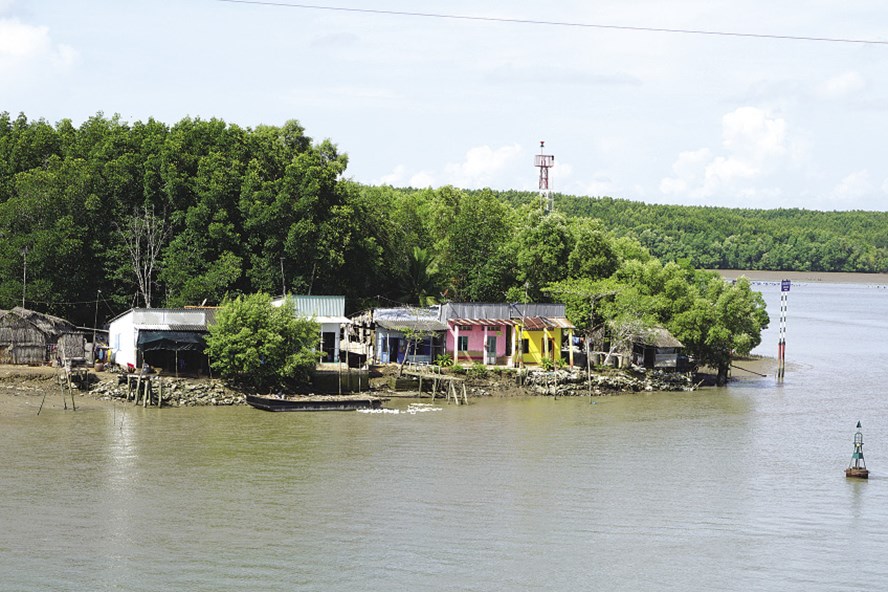
Do ảnh hưởng của nước biển dâng, hiện các nhà dân ở chân cầu Dần Xây (huyện Cần Giờ, TPHCM) lúc triều cao bị ngập đến 1,7m khiến việc sinh hoạt, đi lại rất khó khăn. Ảnh: MINH QUÂN
The Climate – Justice – Cooperation Nexus: 10 Cornerstones of the Great Transformation towards Sustainability
The challenge of our generation: Avert dangerous global warming – invest in social cohesion and wellbeing of people – build local, national, and transnational alliances for transformative change towards sustainability
1. We can reach the goals of the Paris Agreement – but ambitious action is needed now! Climate change is a threat to humanity. Irreversible Earth systems changes need to be avoided. This is a civilisational challenge which requires unprecedented joint action around the globe. We are under huge time pressure. Global CO2 emissions must decline to zero by mid-century in order to achieve the ambitious Paris goal, aimed at stabilising the global mean temperature well below 2 degrees C, and if possible at 1.5 degrees C. This translates into a stylised “carbon law”, whereby emissions must be halved every decade in analogy to the Moore’s law of semiconductors. We have the resources and the technology to achieve this, but do we have the political will and the resolve? Recent developments, such as the declaration by the US President to withdraw from the Paris Agreement, can be interpreted as a major setback. At the same time, they may inspire counter-movements, strengthening the determination to vigorously combat climate change. In particular, OECD countries and emerging economies should make commitments within the G 20 and within their national policies to ensure the achievement of global decarbonisation by the middle of the century. Tiếp tục đọc “The Climate – Justice – Cooperation Nexus: 10 Cornerstones of the Great Transformation towards Sustainability”
Cứu dòng Mekong: Việt Nam nên tăng cường mua điện từ Lào?
Thủy điện không còn hấp dẫn và cơ hội của dòng Mekong
***
Cứu dòng Mekong: Việt Nam nên tăng cường mua điện từ Lào?
19:50 | Thứ năm, 07/12/2017
- Thủy điện không còn hấp dẫn và cơ hội sống sót của dòng Mekong
- Cứu sông Mekong từ chính sách phát triển năng lượng tái tạo
- Mekong: những cam kết trôi theo dòng nước
- Chính thức khởi động PNPCA với Pak Beng: Dòng Mekong đến gần hơn với cái chết?
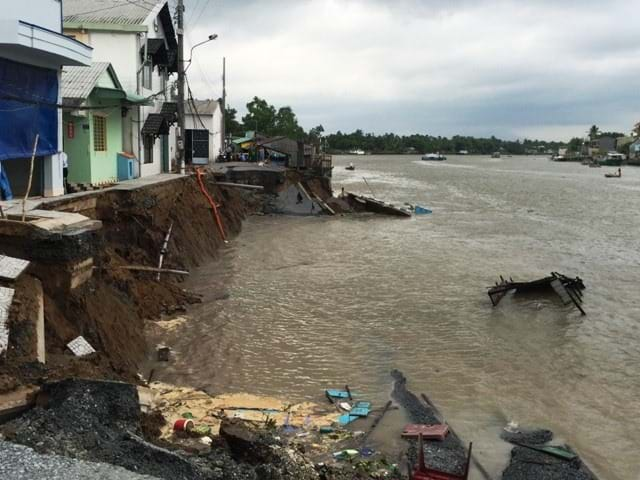
ĐBSCL hình thành là nhờ lượng phù sa của sông Mekong bồi đắp nên trong 6.000 năm qua. Việc xây thủy điện trên các dòng chính sông Mekong là một trong những nguyên nhân khiến ĐBSCL tăng sạt lở, dần “tan rã”. Ảnh: TL Tiếp tục đọc “Cứu dòng Mekong: Việt Nam nên tăng cường mua điện từ Lào?”
Loạt bài về nhiệt điện than trên trang Năng lượng Việt Nam
TĐH: Mình vừa thấy vài loạt bài rất interesting, hỗ trợ nhiệt điện than, trên trang Năng lượng Việt Nam của Hiệp hội Năng lượng Việt Nam. Đặt links ở đây để các bạn tiện tham khảo.
Vì sao Việt Nam cần phát triển nhiệt điện than? (Bài 1)
Vì sao Việt Nam cần phát triển nhiệt điện than? (Bài 2)
Vì sao Việt Nam cần phát triển nhiệt điện than? (Bài 3)
Vì sao Việt Nam cần phát triển nhiệt điện than? (Bài 4) Tiếp tục đọc “Loạt bài về nhiệt điện than trên trang Năng lượng Việt Nam”
Towards a Climate-Smart World: 12 Ways for a Resilient Future
The ceiling of Rai Tabusoro’s home was ripped away by catastrophic winds. The 43-year-old was able to save the life of his elderly mother by placing her in a concrete bathroom, as well as a pregnant woman who he carried to shelter.
In the same Fijian village, Asmita Kamal, a 24-year-old teacher, found shelter under a table with her grandmother while her family hid under a bed as Cyclone Winston blasted through their village. Despite their best efforts to secure their house, strong winds swept away just about everything. Tiếp tục đọc “Towards a Climate-Smart World: 12 Ways for a Resilient Future”
Global Tree Cover Loss Remains High. Emerging Patterns Reveal Shifting Contributors.
 Mikaela Weisse, , , , and –
WRI

Global Forest Watch released new satellite-based data showing how forests around the world changed in the year 2015. The data, produced through the analysis of roughly a million satellite images by the University of Maryland and Google, measures the death or removal of trees at least 5 meters tall within 30×30 meter areas. This can capture any number of sustainable or unsustainable activities, from the clearing of natural forests to the harvest of tree plantations, but when analyzed appropriately with other contextual data and information can serve as a proxy for deforestation (typically defined as the permanent conversion of forest land for another use). Tiếp tục đọc “Global Tree Cover Loss Remains High. Emerging Patterns Reveal Shifting Contributors.”

