
In the past decades, there has been a considerable rise in the number of apologies offered by states for injustices and human rights violations. But are such gestures a viable reconciliatory tool and do they have a universal potential to redress injustice or restore harmony? Or do people across cultures have different notions about what political apologies mean, what purpose they serve, or how they can or should be expressed?
In this five year project funded by the European Research Council, we bring scholarship on transitional justice together with cross-cultural psychology and anthropology to address these questions and to investigate how political apologies are viewed across cultures. The overall objective is to understand whether political apologies can be a universal reconciliation tool, or whether a tailored approach based on cultural variation is more appropriate.
The Value and Meaning of Political Apologies across Cultures
A central idea behind political apologies is that collectivities such as states can and should take responsibility or express remorse for past wrongdoings, and that this will help restore justice or promote harmony. But are such notions regarding collective moral responsibility and collective guilt shared across cultures? And is there a similar understanding about the function and meaning of political apologies across cultures? The aim of this subproject is to analyze whether key assumptions regarding political apologies hold across cultures, or whether this varies as a function of cross-cultural differences in key values (collectivism and individualism) and norms (face and honor). For this, we rely upon an interdisciplinary and mixed-methods approach using in-depth interviews, vignette studies, and surveys. Data have been collected using community samples (incl. people aged 18 and above from both urban and rural regions with mixed educational backgrounds) across 33 countries.

The Expression and Reception of Political Apologies across Cultures
Over the past years, there has been considerable debate about the role of political apologies in reconciliation processes. Although some have heralded such gestures as a meaningful step, others have described them as political rituals that may be appropriate in some (cultural) contexts but not in others, as people may have different notions about what they mean, what purpose they serve, or how they should be expressed. What has been lacking, however, is a systematic analysis of how political apologies are expressed and received across the world. In this subproject, we aim to fill this gap by mapping and comparing the political apologies that have been made across the world, and by analyzing whether there are universals in how they are valued, expressed, and interpreted or whether this varies as a function of cross-cultural differences in key values (collectivism and individualism) and norms (face and honor). For this, we rely on a broad range of methods, varying from content analyses and in-depth interviews to (experimental) surveys. Data have been collected using community samples (incl. people aged 18 and above from both urban and rural regions with mixed educational backgrounds) across 32 countries. The Political Apologies Database is available on this website under the Database page.
THE POLITICAL APOLOGIES DATABASE
CASE STUDIES: EL SALVADOR, REPUBLIC OF KOREA, AND THE UNITED KINGDOM
LARGE-SCALE MULTI-COUNTRY EXPERIMENTAL SURVEY
The Expression and Reception



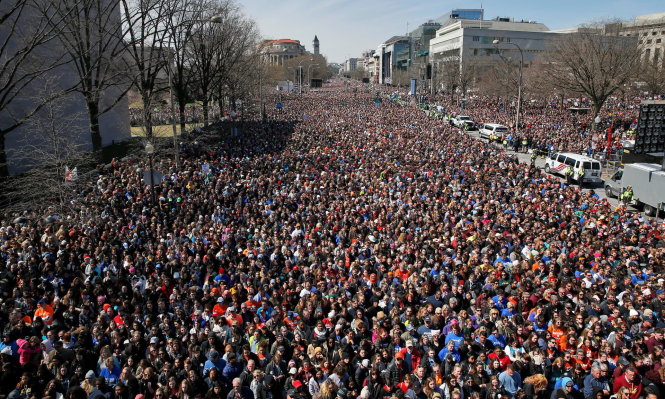 Chiều 14-2-2018, lại một vụ xả súng diễn ra ở Mỹ, lần này tại Trường trung học Marjory Stoneman Douglas, bang Florida, 14 học sinh và 3 giáo viên thiệt mạng, hàng chục học sinh khác bị trọng thương.

 Ông Võ Trí Hảo.
 CVD
CVD 