Chiến dịch Chấm dứt việc lạm dụng và dùng thuốc kháng sinh không đúng cách

Việc kháng thuốc kháng sinh xảy ra khi vi khuẩn và các vi sinh vật khác thay đổi sau khi tiếp xúc với các thuốc kháng khuẩn. Kháng sinh là một trong những loại thuốc chống vi khuẩn phổ biến nhất được sử dụng ở người và động vật. Việc lạm dụng thuốc kháng sinh đang đẩy nhanh sự gia tăng của tình trạng kháng thuốc và đe dọa đến tất cả chúng ta.Việc kháng thuốc kháng sinh có thể ảnh hưởng đến bất cứ ai, ở mọi lứa tuổi, ở bất kỳ quốc gia nào. Đó là mối đe dọa đối với sức khỏe con người, an ninh lương thực và phát triển bền vững.

Nhưng bạn có thể giúp giảm thiểu tình trạng kháng thuốc kháng sinh bằng hai cách đơn giản:

  1. Chấm dứt việc Lạm dụng và dùng không đúng cách
  2. Phòng chống lây lan dịch bệnh để hạn chế việc phải dùng đến thuốc kháng sinh.

TÌM HIỂU THÊM ›

Tham gia vào cuộc chiến này!

Cứu Sống
Cứu lấy Tương lai Chúng ta
Hãy dùng Kháng sinh có Trách nhiệm
ĐĂNG KÝ CAM KẾT TẠI ĐÂY

Nông lâm kết hợp: giải pháp ngày càng phổ biến cho một thế giới nóng và đói khát

Thoạt nhìn, các vùng phía Tây Cameroon trông có vẻ tươi tốt [phủ xanh bởi cây cối và rừng], nhưng khi nhìn gần hơn thì thấy đất đai ở khu vực này đã bị suy thoái do canh tác quá mức, kỹ thuật canh tác không bền vững, thảm thực vật bị tàn phá do bị khai thác làm củi và cháy rừng.

Tuy nhiên, ở một số khu vực vẫn tràn ngập đa dạng sinh học: cà phê phát triển dưới bóng mát của cây chuối, gần đó là những cây mận Châu Phi (tên địa phương là cây safou), cây cô la, cam và các loại cây lấy gỗ như gỗ gụ. Đối với người không chuyên thì đây trông giống như một khu rừng tự nhiên, nhưng thực tế đó là một hệ thống nông lâm – kết hợp cây cho bóng mát với cây trồng.

 [Hệ thống nông lâm kết hợp điển hình ở vùng Tây Bắc của Cameroon với chuối và các loại quả địa phương và cây lấy gỗ. Ảnh Ebernezar Asaah]

Vietnam’s sex industry and the sticky subject of legalizing it

Vietnam's sex industry and the sticky subject of legalizing it

A sex worker looks for customers at a public park in downtown Hanoi, as shown in a file photo by AFP.

‘Sex workers should have the right to make a living, contribute to society, and enjoy welfare in terms of healthcare and education.’

Vietnamese officials have expressed their concerns about the complicated nature of recognizing prostitution as a job.

Despite being illegal in Vietnam, prostitutes can still be found all over the country’s biggest cities, and the rackets controlling them have come up with countless ways to dodge the law with authorities seemingly helpless to stop the industry’s unchecked development.

Data may vary, but figures from the International Labor Organization (ILO) suggest that there are nearly 101,300 sex workers, including 72,000 women, in Vietnam.

Tiếp tục đọc “Vietnam’s sex industry and the sticky subject of legalizing it” →

Hệ thống văn bản về Pháp luật Doanh nghiệp 2018

THƯ VIỆN PHÁP LUẬT trân trọng gửi đến quý thành viên Hệ thống văn bản về Pháp luật Doanh nghiệp sẽ được áp dụng trong năm 2018.

Hệ thống văn bản về Pháp luật Doanh nghiệp 2018

Hệ thống văn bản về pháp luật doanh nghiệp

HỆ THỐNG VĂN BẢN VỀ PHÁP LUẬT DOANH NGHIỆP 2018

Luật

1. Luật Doanh nghiệp 2014

Nghị định

2. Nghị định 50/2016/NĐ-CP quy định về xử phạt vi phạm hành chính trong lĩnh vực kế hoạch và đầu tư
3. Nghị định 96/2015/NĐ-CP hướng dẫn Luật Doanh nghiệp
4. Nghị định 81/2015/NĐ-CP về công bố thông tin của doanh nghiệp Nhà nước
5. Nghị định 78/2015/NĐ-CP về đăng ký doanh nghiệp

Thông tư

6. Thông tư 04/2016/TT-BKHĐT quy định biểu mẫu văn bản sử dụng trong đăng ký doanh nghiệp xã hội theo Nghị định 96/2015/NĐ-CP hướng dẫn Luật Doanh nghiệp
7. Thông tư 20/2015/TT-BKHĐT hướng dẫn về đăng ký doanh nghiệp do Bộ trưởng Bộ Kế hoạch và Đầu tư ban hành
8. Thông tư 127/2015/TT-BTC hướng dẫn cấp mã số doanh nghiệp thành lập mới và phân công cơ quan thuế quản lý đối với doanh nghiệp

Công văn

9. Công văn 4211/BKHĐT-ĐKKD ngày 26/6/2015 hướng dẫn áp dụng quy định về đăng ký doanh nghiệp
10. Công văn 9720/BKHĐT-ĐKKD ngày 02/11/2015 về thông báo mẫu con dấu

 Thanh Hữu

Visualizing Data to Build Climate Resilience

WRI.org

PREPdata, an open-source platform that improves access to the highly credible information that adaptation decision-makers and practitioners need to plan for climate change.

Webinar Recording

About the Webinar

Decision-makers from urban planners to corporate executives are grappling with tough questions in a changing climate. Should city officials in the Caribbean update building codes to climate-proof infrastructure against storm surges from monster hurricanes like Maria or move to higher ground? Should farmers in drought-prone regions of sub-Saharan Africa adopt more efficient irrigation systems or switch to climate-resilient seeds? Tiếp tục đọc “Visualizing Data to Build Climate Resilience” →

Để nói chuyện với trẻ em về chủ đề tình dục/giới tính

English : How to talk to kids about sex

“Em biết trẻ con được sinh ra thế nào nhé,” con trai 8 tuổi của tôi nói với cô chị gái 13 tuổi của nó. Bé gái lờ đi, quay sang tôi “Mẹ, em con chẳng thực sự biết đâu nhỉ”. “Mẹ nên dạy em ấy trước khi em nghe chuyện từ các anh chị lớn ở trường.” Bé nói đúng. Tôi đã dạy con về tình yêu hàng năm nay, tuy nhiên lại bỏ qua phần cơ học.

Theo Deborah Roffman, một giáo viên, tác giả cuốn “Talk to Me First: Everything You Need to Know to Become Your Kids’ (Nói với con: Những điều cần biết để tạo nên trẻ con). Tôi đã muộn trong trò chơi này. “Nếu trẻ được giáo dục về sinh hoạt tình dục một cách có ý thức, gần như tất cả mọi thứ các em học được sau đó sẽ trở thành liều thuốc đề kháng cho các em”, cô nói. “Nói về việc quan hệ tình dục trong chức năng sinh sản hoàn toàn là những kiến thức phù hợp với trẻ 6 tuổi.”

Không lâu sau khi tôi hướng dẫn con trai mình hiểu được vấn đề, tôi đã lần đầu tiên dạy cho học sinh trung học về sức khoẻ và y tế. Tôi thấy rằng, không lượng kiến thức nào đủ sẵn sàng để dạy cho một lớp toàn các em 13 tuổi với con mắt tò mò. Ngài hiệu trưởng đã chuẩn bị cho tôi những câu hỏi của các em trước đó. “Con có thể mời một cô gái đi chơi với con bao nhiêu lần trước khi điều này trở thành một hành động quấy rối tình dục?” “Có thể nào một cậu bé đưa cậu nhỏ của mình vào sai nơi?” “Sự khác biệt giữa các tư thế là gì?” Tiếp tục đọc “Để nói chuyện với trẻ em về chủ đề tình dục/giới tính” →

Resource Kit for Building Resilience and Sustainability in Mekong Towns – Bộ công cụ Xây dựng khả năng chống chịu và tính bền vững cho các đô thị vùng sông Mekong

Project Description

Resource Kit for Building Resilience and Sustainability in Mekong Towns

Donor: Asian Development Bank (ADB)     |    Duration: 2013-2014   |    Location: Cambodia, Lao PDR and Vietnam

About: Natural systems are the essential foundation for Mekong town development and rehabilitation. The Resource Kit for Building Resilience and Sustainability in Mekong Towns is a seven-volume kit that promotes the maintenance and use of natural systems as a key strategy for building sustainability and resilience in urban areas. Tiếp tục đọc “Resource Kit for Building Resilience and Sustainability in Mekong Towns – Bộ công cụ Xây dựng khả năng chống chịu và tính bền vững cho các đô thị vùng sông Mekong” →

Tuberculosis: new hope for an ancient disease

blogs.worldbank.org

Miriam Schneidman's picture

Photo: Miriam Schneidman / World Bank

The global community is coming together to tackle an ancient disease that still inflicts interminable human suffering.  Globally, one person dies of TB every 20 seconds.  While progress has been made over the past decade much remains to be done.  Annually, there are still 10.4 million new cases and 1.7 million deaths. One of the key challenges is to find the 4 million missing cases, individuals who develop TB but are missed by health systems and continue to transmit the disease. With the global commitment to end TB, there is a renewed sense of hope in the battle against TB.

Lives and faces behind the numbers

On a hot afternoon in New Delhi, a 45-year old woman explained to visiting guests the devastation unleashed on her family when several members were diagnosed with multi-drug resistant tuberculosis (MDR-TB), a lethal form of the disease.  Due to delayed diagnosis and overcrowding, the disease spread to other family members and several succumbed, including the main breadwinner. Tiếp tục đọc “Tuberculosis: new hope for an ancient disease” →

Re-education in Unliberated Vietnam: Loneliness, Suffering and Death

Re-education in Unliberated Vietnam: Loneliness, Suffering and Death – by Ginetta Sagan and Stephen Denney [1982]

Note: The following article was published in The Indochina Newsletter, a newsletter I edited at the time, October-November 1982. Much has changed in the 16 years since this article was written. So far as is known all of the former South Vietnam government officials and officers have been released from the re-education camps and many have been allowed to emigrate to the U.S. under a special program, called Humanitarian Operation. But many of former prisoners have experienced various problems resulting from their long term incarceration under difficult conditions. I hope this article might be of historical interest in understanding what these prisoners have experienced; and also in understanding conditions of imprisonment endured by those dissidents and others still detained in Vietnam. – Steve Denney [1998]

THE INDOCHINA NEWSLETTER
October-November 1982

Re-education in Unliberated Vietnam: Loneliness, Suffering and Death

by Ginetta Sagan and Stephen Denney

(Editor’s Note: The following article is part of a preliminary draft of a report that will be issued later this year on human rights in Vietnam. The report is prepared for the Aurora Foundation, of which Ginetta Sagan is the Executive Director. Mrs. Sagan is a well-known human rights activist who interviewed over 200 former prisoners from Vietnam in preparation for this report. Details of the interviews will be brought out in fuller detail when the report is issued.)

Ten years ago, demonstrations were held around the world to protest political repression and imprisonment in South Vietnam. Seven years ago, Communist forces completed their conquest of South Vietnam. In June of 1975, the new regime ordered hundreds of thousands of Vietnamese to report to authorities for « re-education ». Many are still held in the camps today, but the world is mostly silent on their plight.

« Re-education » means different things to different people. To the Hanoi regime and its more vocal defenders abroad, re-education is seen as a very positive way to integrate the former enemy into the new society. It is, according to Communist leaders of Vietnam, an act of mercy, since those in the camps deserve the death penalty or life imprisonment.(1). The former prisoners, on the other hand, see re-education from quite a different perspective. Tiếp tục đọc “Re-education in Unliberated Vietnam: Loneliness, Suffering and Death” →

Five lessons in infrastructure pricing from East Asia and Pacific

Photo: © Dini Sari Djalal/World Bank

In the infrastructure domain, “price” is a prism with many façades.

An infrastructure economist sees price in graphic terms: the coordinates of a point where demand and supply curves intersect.

For governments, price relates to budget lines, as part of public spending to develop infrastructure networks.

Utility managers view price as a decision: the amount to charge for each unit of service in order to recover the costs of production and (possibly) earn a profit.

But for most people, price comes with simple question: how much is the tariff I have to pay for the service, and can I afford it? Tiếp tục đọc “Five lessons in infrastructure pricing from East Asia and Pacific” →

Hồ Sơ Mật Dinh Độc Lập – Nguyễn Tiến Hưng (audio book)

Nguyễn Tiến Hưng (sinh 1935) là một tiến sĩ kinh tế, nguyên là Tổng trưởng Kế hoạch của Chính phủ Việt Nam Cộng hòa kiêm cố vấn của tổng thống Nguyễn Văn Thiệu, hiện là giáo sư về hưu của Đại học Howard (Washington, D.C., Hoa Kỳ).

00: http://www.mediafire.com/?85lhy04r6qqn722

01: http://www.mediafire.com/?vr9di4h2v9eqcb5
02: http://www.mediafire.com/?gc3hocswxnbe1eh
03: http://www.mediafire.com/?454cuy90mzcg3tb
04: http://www.mediafire.com/?jsw89zn09f6weo9
05: http://www.mediafire.com/?xnrip34l844497e

06: http://www.mediafire.com/?i82i2i0cvth82vz
07: http://www.mediafire.com/?u4h7qmga7z1unk9
08: http://www.mediafire.com/?7lzxjf0ka783dlb
09: http://www.mediafire.com/?2hskmn0zrxoagw6
10: http://www.mediafire.com/?imbe43rq66o1y4m

11: http://www.mediafire.com/?1dhzeavxq3637vl
12: http://www.mediafire.com/?l5hqaidh2oknedv
13: http://www.mediafire.com/?611bfu5kr3hf4df
14: http://www.mediafire.com/?i0ff3z6q9wm5y3i
15: http://www.mediafire.com/?2eomt1p34binp96

16: http://www.mediafire.com/?pbr3fxbm9dg9ikk
17: http://www.mediafire.com/?6791zvvz9ges2fp
18: http://www.mediafire.com/?lh56hak6yv4a6ky
19: http://www.mediafire.com/?3yc8rvn2mgvfaoe
20: http://www.mediafire.com/?dwtbo7eph8ieo9f

21: http://www.mediafire.com/?jc3oigb8if669ra
22: http://www.mediafire.com/?z9we79c36eayj7z
23: http://www.mediafire.com/?r7v4rz2bk6k19ck

The 1968 “Hue Massacre”

by D. Gareth Porter
“Indochina Chronicle,” #33, June 24, 1974

Six years after the stunning communist Tet Offensive of 1968, one of the enduring myths of the Second Indochina War remains essentially unchallenged: the communist “massacre” at Hue. The official version of what happened in Hue has been that the National Liberation Front (NLF) and the North Vietnamese deliberately and systematically murdered not only responsible officials but religious figures, the educated elite and ordinary people, and that burial sites later found yielded some 3,000 bodies, the largest portion of the total of more than 4,700 victims of communist execution.

Although there is still much that is not known about what happened in Hue, there is sufficient evidence to conclude that the story conveyed to the American public by the South Vietnamese and American propaganda agencies bore little resemblance to the truth, but was, on the contrary, the result of a political warfare campaign by the Saigon government, embellished by the U.S. government and accepted uncritically by the U.S. press. A careful study of the official story of the Hue “massacre” on the one hand, and of the evidence from independent or anti-communist sources on the other, provides a revealing glimpse into efforts by the U.S. press to keep alive fears of a massive “bloodbath.”1 It is a myth which has served the U.S. administration interests well in the past, and continues to influence public attitudes deeply today. Tiếp tục đọc “The 1968 “Hue Massacre”” →

‘Có nhà trưng bày Hoàng Sa nhưng Đà Nẵng chưa hoàn toàn giải phóng’

28/03/2018 11:08 GMT+7

TTO – Khánh thành Nhà trưng bày Hoàng Sa sáng nay, thực ra chúng ta cũng chỉ mới đi một nửa đoạn đường. Đấu tranh đòi lại chủ quyền đối với quần đảo Hoàng Sa là con đường phía trước còn rất dài.

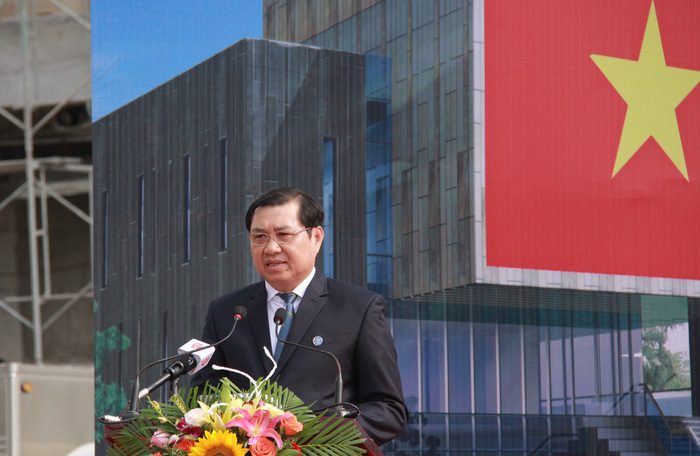
Có nhà trưng bày Hoàng Sa nhưng Đà Nẵng chưa hoàn toàn giải phóng - Ảnh 1.

Ông Huỳnh Đức Thơ, chủ tịch UBND TP Đà Nẵng nói tại buổi lễ khánh thành rằng: “Ngoài biển khơi xa kia huyện Hoàng Sa đang bị ngoại bang chiếm đóng trái phép” – Ảnh: HỮU KHÁ

Sáng 28-3, UBND TP Đà Nẵng đã tổ chức khánh thành Nhà trưng bày Hoàng Sa nằm trên đường Hoàng Sa (quận Sơn Trà, Đà Nẵng). Buổi lễ khánh thành đặc biệt và giàu ý nghĩa này đã thu hút đông đảo các tầng lớp nhân dân tham gia.

Tại buổi lễ nhiều người có cùng suy nghĩ rằng: Khánh thành Nhà trưng bày Hoàng Sa sáng nay, thực ra chúng ta cũng chỉ mới đi một nửa đoạn đường.

Đấu tranh đòi lại chủ quyền đối với quần đảo Hoàng Sa là con đường phía trước còn rất dài mà mọi thế hệ người Việt sau này phải tiếp nối, có trách nhiệm khi một phần lãnh thổ thiêng liêng của Tổ quốc đang bị Trung Quốc chiếm đóng trái phép. Tiếp tục đọc “‘Có nhà trưng bày Hoàng Sa nhưng Đà Nẵng chưa hoàn toàn giải phóng’” →