Lazard’s Levelized Cost of Energy Analysis – December 2016

Summary Considerations

Lazard has conducted this study comparing the levelized cost of energy for various conventional and Alternative Energy generation technologies in order to understand which Alternative Energy generation technologies may be cost – competitive with conventional generation technologies, either now or in the future, and under various operating assumptions, as well as to understand which technologies are best suited for various applications based on locational requirements, dispatch characteristics and other factors. We find that Alternative Energy technologies are complementary to conventional generation
technologies, and believe that their use will be increasingly prevalent for a variety of reasons, including RPS requirements, carbon regulations, continually improving economics as underlying technologies improve and production volumes increase, and government subsidies in certain regions.

In this study, Lazard’s approach was to determine the levelized cost of energy, on a $/MWh basis, that would provide an after – tax IRR to equity holders equal to an assumed cost of equity capital. Certain assumptions (e.g., required debt and equity returns, capital structure, etc.) were identical for all technologies, in order to isolate the effects of key differentiated inputs such as investment costs, capacity factors, operating costs, fuel costs (where relevant) and other important metrics on the levelized cost of energy. These inputs were originally developed with a leading consulting and engineering firm to the Power & Energy Industry, augmented with Lazard’s commercial knowledge where relevant. This study (as well as previous versions) has benefited from additional input from a wide variety of industry participants.

Lazard has not manipulated capital costs or capital structure for various technologies, as the goal of the study was to compare the current state of various generation technologies, rather than the benefits of financial engineering. The results contained in this study would be altered by different assumptions regarding capital structure (e.g., increased use of leverage) or capital costs (e.g., a willingness to accept lower returns than those assumed herein).

Key sensitivities examined included fuel costs and tax subsidies. Other factors would also have a potentially significant effect on the results contained herein, but have not been examined in the scope of this current analysis. These additional factors, among others, could include: capacity value vs. energy value; stranded costs related to distributed generation or otherwise; network upgrade, transmission or congestion costs; integration costs; and costs of complying with various environmental
regulations (e.g., carbon emissions offsets, emissions control systems).

The analysis also does not address potential social and environmental externalities, including, for example, the social costs and rate consequences for those who cannot afford distribution generation solutions, as well as the long-term residual and societal consequences of various conventional
generation technologies that are difficult to measure (e.g., nuclear waste disposal, environmental impacts, etc.).

Download: L A Z A R D ‘ S L E V E L I Z E D C O S T O F E N E R G Y A N A L Y S I S

Hydro vs. Wind vs. Solar Power?

Linkedin

 Introduction

Electricity is energy produced by behavior of electrons and protons. Electrical energy or power is not actually or potentially supplied by nature; it has to be produced or generated by various secondary means, converting one form of energy into another. In the modern world, there is an unending need for energy to power electrical appliances, such as fans, lights, communication infrastructures, machines and computing systems, and other devices operated by electrical energy. Nowadays, power can be generated from several renewable and non-renewable energy sources, including fossil fuels, nuclear, geothermal, solar, wind, hydro, wood, biomass, and more.

Tiếp tục đọc “Hydro vs. Wind vs. Solar Power?”

Low Costs of Solar Power & Wind Power Crush Coal, Crush Nuclear, & Beat Natural Gas

Cleantechnica

December 25th, 2016 by

 We already published a great article from Nexus Media regarding Lazard’s new report showing the extremely low (and falling) costs of solar power and wind power. However, I’ve been wanting to highlight these awesome new findings since Larmion shared the updated report with us earlier this month, and I want to break out the amazing news in 5 specific ways.

Tiếp tục đọc “Low Costs of Solar Power & Wind Power Crush Coal, Crush Nuclear, & Beat Natural Gas”

Khánh Hòa: Investors interested in solar power projects

vietnamnews

Update: June, 02/2017 – 18:41

Solar energy projects in Khánh Hòa Province are attracting investors’ interest. — Photo evn.com.vn
Viet Nam News KHÁNH HÒA – Investors have shown interest in the solar energy sector in the central coastal province of Khánh Hòa, with some 10 solar projects applying for investment licences in the province.

Three projects in the field have been approved, according to the provincial Department of Planning and Investment.

One is a 70ha plant in Cam Thịnh Đông Commune, Cam Ranh City, with capacity of 60MW. It is invested by the Sông Giang Hydropower SJC at a total cost of more than VNĐ2 trillion (US$88 million). Tiếp tục đọc “Khánh Hòa: Investors interested in solar power projects”

5 nghề phát triển nhanh nhất trong ngành năng lượng sạch

English: 5 of the Fastest Growing Jobs in Clean Energy

Tìm được một công việc mới có thể rất khó. Một cách để tối đa hóa cơ hội của bạn là tìm kiếm các cơ hội trong ngành năng lượng sạch. Đây là một trong những ngành phát triển nhanh nhất, đổi mới nhất trong nền kinh tế.

Một báo cáo mới đây của Cơ quan năng lượng Mỹ (DOE) về các nghề nghiệp trong nền kinh tế cho biết có 6,4 triệu người Mỹ làm việc trong ngành năng lượng, với 300,000 công việc được tao ra mỗi năm. Một phần lớn trong số các công việc mới này thuộc về lĩnh vực năng lượng  hiệu quả và năng lượng tái tạo

Hãy cùng xem một số nghề phát triển nhanh nhất trong ngành này.

Kỹ thuật viên tua-bin gió – Wind Turbine Technician

Với 25,000 công việc tăng thêm trong năm ngoài, ngành điện gió Mỹ giờ có 102,000 lao động. Kỹ thuật viên tua-bin gió không chỉ là một trong những công việc phát triển nhanh nhất trong ngành năng lượng sạch – nó còn là nghề phát triển nhanh nhất ở Mỹ. Theo Cục thống kê lao động, nhân sự của nghề này tăng 108% đến năm 2024..

Xem một kỹ thuật viên điện gió đang làm việc!

Để tìm hiểu thêm về các cơ hội trong ngành điện gió, xin mời xem Bản đồ Nghề điện gió của DOE.

Nhân viên lắp pin năng lượng mặt trời – Solar Installer Tiếp tục đọc “5 nghề phát triển nhanh nhất trong ngành năng lượng sạch”

Renewable energy a must for Viet Nam

vietnamnews

Update: May, 27/2017 – 14:00

A solar power factory on Côn Đảo Island in Bà Rịa-Vũng Tàu Province. VNA/VNS Photo Ngọc Hà

HCM CITY — Developing renewable energy sources is more urgent than ever to meet demand for power, ensure sustainable growth and cope with climate change in the country, experts said yesterday at a meeting held in HCM City.

Rainer Brohm, GIZ consultant, said that solar photovoltaic (PV) energy could replace expensive sources such as coal and gas and could quickly meet needed power capacity. Tiếp tục đọc “Renewable energy a must for Viet Nam”

Hydropower plant drowns kids

vietnamnews

Update: May, 27/2017 – 09:48

A hydropower plant in the central province of Phú Yên that opened its floodgates without warning caused the death of four students in the downstream area earlier this week, officials reported.— Photo vietnammoi.vn

PHÚ YÊN — A hydropower plant in the central province of Phú Yên that opened its floodgates without warning caused the death of four students in the downstream area earlier this week, officials reported.

The man-made flood in the current dry season was characterised as “unseen in 40 years” by Cao Minh Hoà, deputy secretary of Sơn Hoà District’s Party Committee.

The remark was made in a meeting with inspection group sent by the Ministry of Industry and Trade (MoIT) to hydropower plant Ba Hạ River, a member of the state-owned Việt Nam Electricity (EVN), following the May 24 incident. Tiếp tục đọc “Hydropower plant drowns kids”

5 lý do hàng đầu cho công ty nhiên liệu hoá thạch chuyển sang năng lượng tái tạo ngay bây giờ

English: Top Five Reasons Fossil Fuel Companies Should Diversify into Renewables Now

Jennifer Runyon tổng biên tập Renewableenergyworld

Theo Amory Lovins, chuyên gia tư vấn của Shell Oil trong 45 năm qua, nhà khoa học hàng đầu và đồng sáng lập viện Rocky Mountain, người ta ít chú ý đến công việc mà các công ty năng lượng truyền thống đang làm về năng lượng tái tạo.

Ông cho biết trong một cuộc phỏng vấn tại diễn đàn Powering Progress Together của Shell tại Detroit, Michigan vào cuối tháng 4: “Tôi nghĩ rằng nhiều nhóm thúc đẩy hiệu quả và năng lượng tái tạo quá bận rộn với những đổi mới và trỗi dậy trong thế giới kinh doanh mà không để ý đến những công ty đang làm về năng lượng.”

“Nó giống như sự cân bằng âm dương”, ông nói tếu thêm rằng nếu bạn không là một phần của vấn đề, sao bạn có thể là một phần của giải pháp?

Tuy nhiên, các công ty nhiên liệu hoá thạch được trang bị đầy đủ các kỹ năng và chuyên môn để chuyển đổi sang các ngành kinh doanh mới của năng lượng tái tạo, ông nói. Tiếp tục đọc “5 lý do hàng đầu cho công ty nhiên liệu hoá thạch chuyển sang năng lượng tái tạo ngay bây giờ”

Wind plant in Quảng Trị starts generating power

vietnamnews

Update: May, 24/2017 – 16:00

The wind turbines at Hướng Linh 2 plant. — Photo tienphong.vn
QUẢNG TRỊ — The first wind power plant in the central province of Quảng Trị has begun contributing electricity to the national power grid, a positive sign for the future of green energy development.This is the first wind power plant in the northern part of the central region of Việt Nam.

An official from Hướng Linh 2 plant said the plant started operating earlier this week at a capacity of 30MW, which is being transferred to the national grid. Tiếp tục đọc “Wind plant in Quảng Trị starts generating power”

Generating electricity with solar panels

Last update 07:35 | 24/05/2017
VietNamNet Bridge – The government policy encouraging investment in the power sector has created a firm framework for the development of solar energy.

vietnam economy, business news, vn news, vietnamnet bridge, english news, Vietnam news, news Vietnam, vietnamnet news, vn news, Vietnam net news, Vietnam latest news, Vietnam breaking news, solar energy, EVN, MOIT electricity price

To generate 1 MW of electricity, solar energy investors need 1.1 hectares of land. However, despite the large land fund needed, economists think that developing solar energy has many advantages.

As equipment, operation and maintenance costs are getting cheaper, solar energy is becoming more attractive than other types of clean energy.

To generate 1 MW of electricity, solar energy investors need 1.1 hectares of land. However, despite the large land fund needed, economists think that developing solar energy has many advantages.

Investors are pouring billions of dollars into clean energy projects in Binh Thuan province, which is bestowed by nature with abundance of wind and sun.

Up to 72 percent of Binh Thuan province’s area has solar radiation of over 5 kWh/m/day, the level high enough to make solar projects economically feasible. Tiếp tục đọc “Generating electricity with solar panels”

THỊNH VƯỢNG TỪ ĐỘT PHÁ (P2)

ENGLISH: THRIVING THROUGH DISRUPTION: HOW BUSINESS LEADERS ARE FOSTERING DISRUPTION ACROSS THEIR ORGANISATIONS

Báo cáo này và cuộc khảo sát các nhà điều hành toàn cầu đánh giá cách nhìn nhận của các công ty về sự đột phá và những điều họ đang thực hiện. Tập trung vào lĩnh vực dịch vụ tài chính, chăm sóc sức khỏe và năng lượng, báo cáo phân tích điều gì đang tạo ra sự đột phá trong các ngành, điều gì sẽ định hình sự đột phá trong tương lai và sự phản ứng khác nhau ở mỗi công ty để tận dụng những thách thức và cơ hội mà đột phá mang lại.

Phần 1

Phần 2

Phần 3

THỬ THÁCH HỢP TÁC TRONG LĨNH VỰC Y TẾ

Lĩnh vực y tế đang có rất nhiều nguồn lực đột phá. Ở một số nước, chính phủ đang thay đổi mô hình chăm sóc sức khỏe truyền thống, khiến cho các tổ chức phải xem xét lại mô hình kinh doanh của mình. Trong thời kỳ của “y tế thông minh”, người tiêu dùng (ở đây là bệnh nhân) nhận được nhiều thông tin sức khỏe, lời khuyên và sự chăm sóc hơn trước đây, nhờ vào những tiến bộ của công nghệ, gồm viễn thông y tế và y tế di động.

Họ có thể dễ dàng truy cập tới mọi dữ liệu từ thời gian chờ ở bệnh viện đến “nhận xét” của bác sĩ phẫu thuật và chuyên gia. Công nghệ đồng thời cũng mang đến khả năng thay đổi to lớn trong cách các tổ chức chăm sóc sức khỏe, từ các công ty khoa học đời sống đến bệnh viện và các trung tâm phục hồi sức khỏe ban đầu, phân phối dược phẩm và chăm sóc sức khỏe.

Sự hợp tác giữa y tế và công nghệ là kết quả và hiệu quả của những nguồn lực này, tạo ra hệ sinh thái đổi mới với nhiều vai trò khác nhau. Những công ty đột phá tận dụng dữ liệu lớn và công nghệ chăm sóc sức khỏe, là thách thức với cách chăm sóc sức khỏe truyền thống và các tổ chức khoa học đời sống. Mặc dù chậm trễ hơn, nhưng một số công ty đã bắt đầu sử dụng những công nghệ tương tự để đáp ứng thị trường. Điều này có thể coi là cơ hội cho sự phát triển hơn là một mối đe dọa, nhưng các tổ chức chăm sóc sức khỏe cần hợp tác với các công ty đột phá trong những ngành khác, đặc biệt là công nghệ, bên cạnh đó còn có các ngành dịch vụ tài chính, bảo hiểm và thậm chí cả ngành sản xuất để tận dụng đầy đủ lợi thế. Tiếp tục đọc “THỊNH VƯỢNG TỪ ĐỘT PHÁ (P2)”

Black gold and a bleak future

Last update 00:00 | 22/05/2017

VietNamNet Bridge – Viet Nam has 20 thermal power plants now and plans to have more than double that by 2050.

National electricity development plan, thermal power plants, nuclear power, Vietnam economy, Vietnamnet bridge, English news about Vietnam, Vietnam news, news about Vietnam, English news, Vietnamnet news, latest news on Vietnam, Vietnam

Off the cuff, this makes sense. The nation is growing and needs more energy than ever.

However, if we look beyond mere numbers and visualise the social and environmental impacts of 51 coal-powered plants in the country, the rosy picture is blackened considerably, literally and otherwise.

A study published earlier this year by a group of researchers from Havard University and Greenpeace, an international non-governmental environmental organisation based in Amsterdam, cautions that by 2030, Viet Nam and Indonesia will be among the nations worst affected by coal pollution. Tiếp tục đọc “Black gold and a bleak future”

Đắk Lắk scraps plans for 17 hydropower plants

Môi trườngvietnamnews Update: May, 16/2017 – 18:00

The removal of hydropower projects and potential sites is because most of them are located in forest areas, meaning hydropower plant construction would seriously affect forest resources and local ecology.—VNA/VNS Photo

Viet Nam News HÀ NỘI — Authorities in the Central Highlands province of Đắk Lắk have made the decision to scrap plans for constructing 17 small and medium hydropower plants with total capacity of 27.4 megawatts.

The province has also axed 69 sites which have potential to become future stations, with combined capacity totalling 117 megawatts.

The move comes following the Prime Minister’s directive to close natural forests in the Central Highlands to deal with climate change during the 2016-2020 period, Đắk Lắk vice chairman Y Giang Gry Nie Knong said. Tiếp tục đọc “Đắk Lắk scraps plans for 17 hydropower plants”

Human poo transformed into clean fuel for Kenya’s urban poor

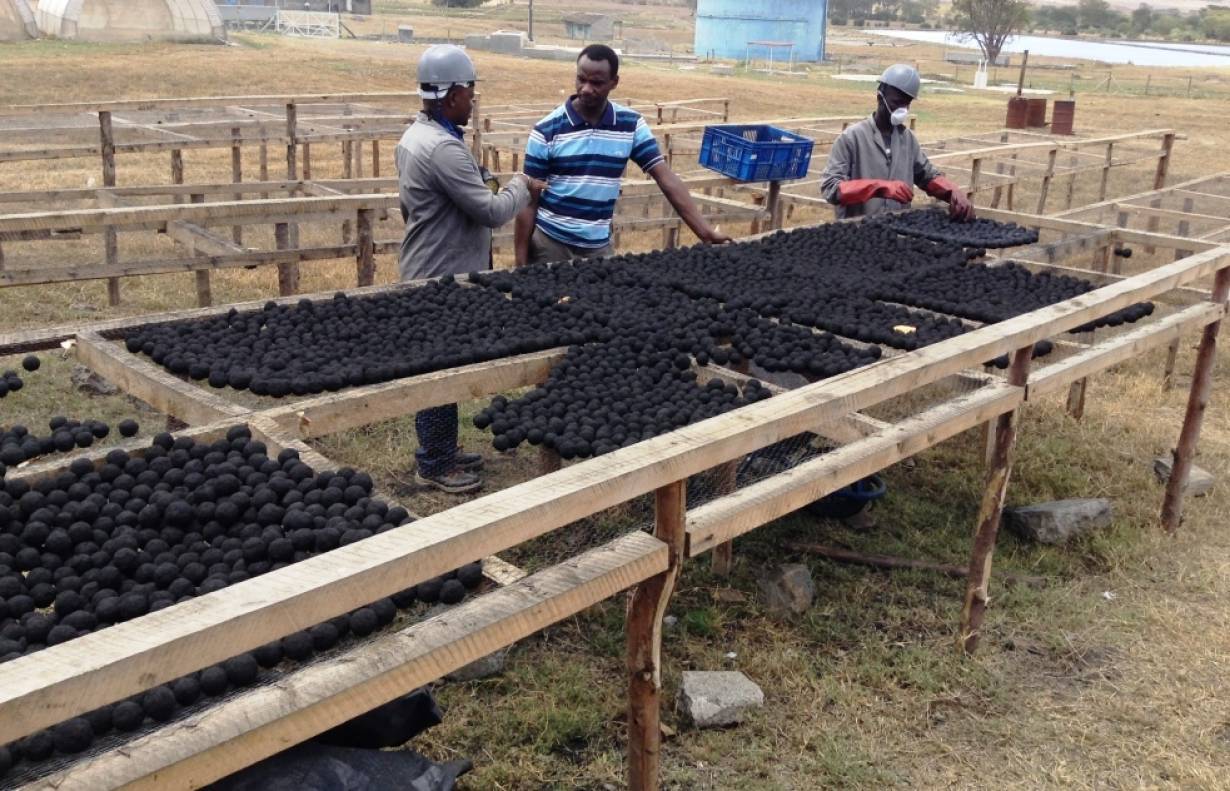
 Wet fuel briquettes made from human waste and sawdust are dried outside at the Nakuru Water and Sanitation Services Company plant in Nakuru, Kenya, April 8, 2017. TRF/ Be

 
by Benson Rioba | Thomson Reuters Foundation
Friday, 12 May 2017 13:38 GMT

Using human waste to make fuel briquettes tackles sanitation and health problems – and they even smell sweetBy Benson Rioba

NAKURU, Kenya, May 12 (Thomson Reuters Foundation) – Poultry farmer Josephine Mbithe used to get up three times a night to add charcoal to her stove just to keep her newborn chicks warm. But since she started using fuel briquettes made with human waste, the stove burns all night, leaving her to sleep in peace.

Mbithe is one of many Nakuru residents who have embraced the briquettes manufactured from human poo and sawdust collected around the town, northwest of Nairobi, in the Great Rift Valley. Tiếp tục đọc “Human poo transformed into clean fuel for Kenya’s urban poor”

Năng lượng Gió và Mặt trời: Cơ hội và triển vọng cho Việt Nam

Renewable Energy Network – Wind and Solar Energy: opportunities and perspectives for Vietnam

Gặp gỡ lần thứ 2 của Cộng đồng Năng lượng Tái tạo

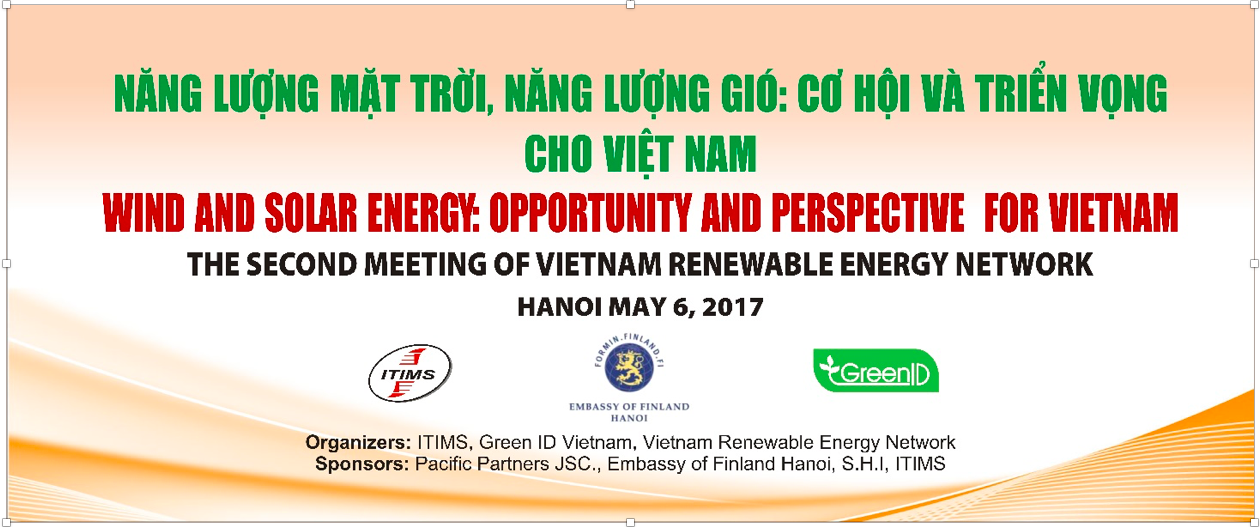
Ngày 6/5 tại Hà Nội, đã diễn ra cuộc Gặp gỡ lần thứ 2 của cộng đồng năng lượng tái tạo Việt Nam (The second Meeting of Vietnam Renewable Energy Network). Sự kiện này có sự góp mặt của các nhà hoạch định chính sách, nhà sản xuất, lắp đặt, vận hành, cung cấp và các nhà khoa học. Cuộc gặp gỡ được tổ chức nhằm 01) làm rõ một số chính sách, định hướng của cơ quan quản lý về năng lượng tái tạo nói chung, năng lượng mặt trời nói riêng, những tác động của chính sách này tới sản xuất, nghiên cứu khoa học và nguồn nhân lực trình độ cao; 02) tìm kiếm đối tác đầu tư, triển khai lắp đặt, vận hành và bảo hành bảo trì; 03) cập nhật thông tin về tình hình công nghệ và khoa học trên thế giới và trong nước; 04) thảo luận về cơ hội nghề nghiêp, về khả năng tổ chức khóa học ngắn hạn về năng lượng tái tạo nói chung cho các bên có nhu cầu tại Việt Nam.

Chính sách mới được ban hành đang theo hướng có lợi cho NLTT

Tiếp tục đọc “Năng lượng Gió và Mặt trời: Cơ hội và triển vọng cho Việt Nam”