Hy vọng cho Hà Nội? Hệ thống xe buýt mới có thể giảm ô nhiễm…nếu có đủ người sử dụng

English: Hope for Hanoi? New bus system could cut pollution … if enough people use it

Từ toà nhà cao ốc văn phòng tại Hà Nội, anh Trần Dũng hầu như không thể nhìn thấy đường chân trời của thành phố đằng sau lớp khói bụi dày đặc. Trước khi rời công sở, anh chuyên viên trợ lý này kiểm tra phần ứng dụng AirVisual để đọc mức ô nhiễm không khí, ứng dụng cung cấp số đo chỉ số PM2.5 tại thời gian thực – PM2.5 là các hạt bụi nhỏ li ti có trong khói bụi mà có thể huỷ hoại cổ họng và phổi của con người.

Traffic jam in Hanoi

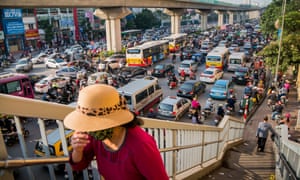
Những hàng dài xe máy và ô tô là nguyên nhân chính gây ô nhiễm không khí ở Hà Nội

Chỉ số PM2.5 thường dao động từ 100 đến 200 microgram mỗi mét khối – mức độ này thường được xếp vào loại “không tốt cho sức khoẻ” mà được toàn cầu đã công nghận. Nhưng vào ngày 19/12 năm rồi, nó đạt đến “mức độ  nguy hiểm” ở mức 343 microgram/m3, cao hơn cả ở Bắc Kinh.

Bị sốc khi đọc được con số này, anh Dũng đã chia sẻ ảnh chụp màn hình với bạn bè trên Facebook, anh viết: “Tôi không thể tin vào mắt mình. Các bạn bảo trọng!” Tiếp tục đọc “Hy vọng cho Hà Nội? Hệ thống xe buýt mới có thể giảm ô nhiễm…nếu có đủ người sử dụng”

Đường đi cát Việt ra nước ngoài – 5 kỳ

  • Kỳ 1: Đường đi cát Việt ra nước ngoài: Tàu chở cát đi đâu?
  • Kỳ 2: Đường đi cát Việt ra nước ngoài: Cát Việt bán giá bao nhiêu?
  • Kỳ 3: Cát Việt bán giá bèo, hải quan nghi vấn nhưng cho qua
  • Kỳ 4: Tìm sự thật các hợp đồng nhập khẩu cát ở Singapore
  • Cát Việt ra nước ngoài: “Bán” dự án, “xà xẻo” tài nguyên
***
Kỳ 1: Đường đi cát Việt ra nước ngoài: Tàu chở cát đi đâu?
01/03/2017 09:58 GMT+7

TTOSuốt hai tháng đầu năm 2017, chúng tôi đã theo dõi 40 chiếc tàu đến vùng biển tỉnh Kiên Giang, Khánh Hòa và Hà Tĩnh chở cát. Bốn doanh nghiệp xuất khẩu cát chỉ biết tàu đi Singapore nhưng không biết chính xác địa chỉ nào.

Đường đi cát Việt ra nước ngoài: Tàu chở cát đi đâu?
Hai tàu JS Bandol và Sheng Wang Hai bắt đầu rời vùng biển Phú Quốc đi Singapore giữa tháng 1-2017 – Ảnh: V.TR.

Tiếp tục đọc “Đường đi cát Việt ra nước ngoài – 5 kỳ”

Sand mining: the global environmental crisis you’ve probably never heard of

From Cambodia to California, industrial-scale sand mining is causing wildlife to die, local trade to wither and bridges to collapse. And booming urbanisation means the demand for this increasingly valuable resource is unlikely to let up

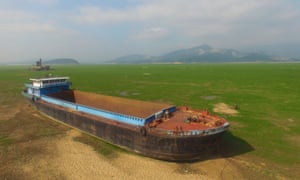
A boat is stranded on the Poyang Lake in east China.
A boat is stranded on the Poyang Lake in east China, site of one of the world’s biggest sand mines. Photograph: Xinhua/Barcroft Images

Times are good for Fey Wei Dong. A genial, middle-aged businessman based near Shanghai, China, Fey says he is raking in the equivalent of £180,000 a year from trading in the humblest of commodities: sand.

Fey often works in a fishing village on Poyang Lake, China’s biggest freshwater lake and a haven for millions of migratory birds and several endangered species. The village is little more than a tiny collection of ramshackle houses and battered wooden docks. It is dwarfed by a flotilla anchored just offshore, of colossal dredges and barges, hulking metal flatboats with cranes jutting from their decks. Fey comes here regularly to buy boatloads of raw sand dredged from Poyang’s bottom. He ships it 300 miles down the Yangtze River and resells it to builders in booming Shanghai who need it to make concrete.

The demand is voracious. The global urbanisation boom is devouring colossal amounts of sand – the key ingredient of concrete and asphalt. Shanghai, China’s financial centre, has exploded in the last 20 years. The city has added 7 million new residents since 2000, raising its population to more than 23 million. In the last decade, Shanghai has built more high-rises than there are in all of New York City, as well as countless miles of roads and other infrastructure. “My sand helped build Shanghai Pudong airport,” Fey brags. Tiếp tục đọc “Sand mining: the global environmental crisis you’ve probably never heard of”

Chư Mom Ray không còn bình yên

– 42 ĐÌNH VĂN 12:0 PM, 25/02/2017

Không gian sống bị đe dọa, bò tót trưởng thành húc thẳng vào đầu xe tải, báo động sự tồn vong các loài động vật ở đây đang bị xâm hại.

Chư Mom Ray không còn bình yên ảnh 1
Con bò tót quý hiếm húc vào xe tải chết ngày 17.2 tại Vườn quốc gia Chư Mom Ray. Ảnh VQG Chư Mom Ray cung cấp.

Nhóm công nhân thi công tuyến tỉnh lộ 674 nối thị trấn Sa Thầy (huyện Sa Thầy, Kon Tum) vào xã Mo Rai, nhiều lần nhìn thấy đàn bò tót gặm cỏ non. Vườn Quốc gia Chư Mom Ray – buộc phải xẻ ngang – để tuyến đường cắt qua. Không gian sống bị đe dọa, bò tót trưởng thành húc thẳng vào đầu xe tải, báo động sự tồn vong các loài động vật ở đây đang bị xâm hại. Hơn thế, khi một tuyến đường khác – QL 14C huyện Ngọc Hồi (Kon Tum) đi xã Mo Rai dài 27km – cũng đang đâm xuyên tim vườn quốc gia này. Tiếp tục đọc “Chư Mom Ray không còn bình yên”

Work starts on $524mn environmental sanitation project in Saigon

TUOI TRE NEWS

Updated : 02/25/2017 15:00 GMT + 7

The Ho Chi Minh City administration on Friday kick-started the second stage of a World Bank-sponsored project aimed to improve the city’s environmental sanitation in District 2.

The Second Ho Chi Minh City Environmental Sanitation Project is intended to improve wastewater services in a sustainable manner in selected areas of Ho Chi Minh City and increase awareness on sanitation, according to the World Bank.

The key component of the project is the construction of a large interceptor that will convey the wastewater, currently discharged on the east side of the Saigon River without treatment, to the wastewater treatment plant that will be constructed under the project. Tiếp tục đọc “Work starts on $524mn environmental sanitation project in Saigon”

Bodies, individuals related to Formosa disaster made public

Update: February, 23/2017 – 09:59

Infringements and defects committed by the Ministry of Natural Resources and Environment’s Party Civil Affairs Committee and individuals involved in the Formosa fish deaths were serious and must be punished, announced the Central Inspection Commission. — VNA/VNS Photo Võ Dung

HÀ NỘI – Infringements and defects committed by the Ministry of Natural Resources and Environment’s Party Civil Affairs Committee and individuals involved in the Formosa fish deaths were serious and must be punished, announced the Central Inspection Commission.

In an announcement yesterday of the results of the commission’s 11th meeting from February 15-17, the commission concluded that from 2008-16 the ministry’s Party Civil Affairs Committee was irresponsible in exercising their leadership, carried out insufficient inspections and supervision and let infringements occur in assessment of environmental impacts, and adjustment of waste water discharge location and State management of the Formosa Hà Tĩnh project. Tiếp tục đọc “Bodies, individuals related to Formosa disaster made public”

Con Sam – biểu tượng vợ chồng chung thủy – có thể bị tuyệt chủng

Vợ chồng sam
Vợ chồng sam

 
Chào các bạn,

Trong văn hóa Việt Nam, sam là biểu tượng của vợ chồng chung thủy, dùng thường xuyên để giáo dục đạo vợ chồng. Nhưng biểu tượng này có nguy cơ tuyệt chủng vì ngày nay người ta rầm rộ quảng cáo “đặc sản sam”, “món ăn không thể bỏ qua”, “tuyệt vời gỏi trứng sam” trong các nhà hàng.

Sam (tên khoa học Tachypleus tridentatus), đôi khi được gọi là sam biển, thường sống ở các cửa biển và các khúc sông gần cửa biển, luôn đi đôi một cặp vợ chồng. Sam cái lớn hơn sam đực, đi trước. Sam đực theo sau, bám chặt vào sam cái. Nếu người ta bắt sam thì luôn luôn bắt hai con bám nhau như thế. Vì vậy, từ xưa sam đã được dùng làm biểu tượng cho vợ chồng chung thủy, để dạy chúng ta ăn ở thủy chung. Tiếp tục đọc “Con Sam – biểu tượng vợ chồng chung thủy – có thể bị tuyệt chủng”

Vietnam to punish officials over mass fish deaths

HANOI: Vietnam said on Wednesday (Feb 22) it will punish 11 senior officials for misconduct over a toxic waste dump last year that killed tonnes of fish in one of the country’s worst environmental disasters.

Taiwanese steel firm Formosa was blamed for the crisis that decimated livelihoods in coastal fishing communities in central Vietnam and was forced to pay $500 million in fines.

Fishermen and activists in authoritarian Vietnam have staged rare protests since the disaster and filed lawsuits demanding a fair share of compensation. Tiếp tục đọc “Vietnam to punish officials over mass fish deaths”

Japan’s ‘zero waste town’ is so good at recycling that it is attracting foreign visitors

Residents of Kamikatsu diligently sort their waste into 45 different categories so it can be recycled, reused or composted

A small town in western Japan has become so good at recycling that it has been attracting foreign visitors, after its efforts became widely known via YouTube.

The documentary video, titled How This Town Produces No Trash with English narration and captions, explains how the 2,000 or so residents of town of Kamikatsu in Tokushima Prefecture diligently sort and recycle their waste according to 34 designated categories, peeling off labels and removing bottle caps as they go. Since the video was produced in late 2015, the categories have been increased to 45.

Tiếp tục đọc “Japan’s ‘zero waste town’ is so good at recycling that it is attracting foreign visitors”

Lúng túng quản lý sinh vật ngoại lai

Ốc bươu vàng gom bên vệ đường ở đồng lúa xã Xuân Hòa, Nam Đàn, Nghệ An - 27/06/2016
Ốc bươu vàng gom bên vệ đường ở đồng lúa xã Xuân Hòa, Nam Đàn, Nghệ An – 27/06/2016

01:43 AM – 05/09/2010 TN

Như Thanh Niên đã cảnh báo, sinh vật ngoại lai (SVNL) có nguồn gốc từ các nước khác liên tiếp du nhập vào VN  gây ra những tác hại cho môi trường.

“Vô tư” xâm nhập VN

Theo Tổng cục Môi trường (Bộ Tài nguyên – Môi trường), do những yếu tố khách quan về vị trí địa lý, địa hình, điều kiện khí hậu cùng quá trình hội nhập kinh tế quốc tế đã tạo nên nguy cơ xâm nhập của các SVNL xâm hại vào nước ta là rất cao. Thực tế, trong nhiều năm qua, một loạt SVNL xâm hại đã có mặt tại VN và gây ra những thiệt hại không nhỏ về kinh tế, môi trường. Tiếp tục đọc “Lúng túng quản lý sinh vật ngoại lai”

Từ vụ phóng sinh cá chim trắng, tổng rà soát sinh vật ngoại lai có nguy cơ xâm hại

DT Theo thông tin từ Tổng cục Môi trường (Bộ Tài nguyên và Môi trường), cơ quan này đã tổ chức cuộc họp với các cơ quan liên quan để thảo luận về sự việc phóng sinh một lượng cá lớn, trong đó có cá chim trắng (tên khoa học là Colossoma brachypomum) là ngoại lai có nguy cơ xâm hại vào ngày 5/2 vừa qua tại bến sông trước cửa đình làng Bát Tràng, huyện Gia Lâm, Hà Nội.

 >> Đề nghị Bộ Công an làm rõ việc phóng sinh sinh vật ngoại lai xuống sông Hồng
 >> Nghi vấn thả cá “ăn thịt” xuống sông Hồng: Cá chim trắng có phải loài ngoại lai xâm hại?

Hình ảnh người dân thả cá chim trắng xuống sông Hồng ngày 5/2 (Ảnh Vietnamnet).

Tiếp tục đọc “Từ vụ phóng sinh cá chim trắng, tổng rà soát sinh vật ngoại lai có nguy cơ xâm hại”

Death in the air: Pollution-related fatalities see sharp rise in Vietnam

e.VnExpress   February 16, 2017 | 12:00 am GMT+7

Air pollution fatalities in Vietnam are the second highest in Southeast Asia.

A new environment study paints a very bleak picture of Vietnam, measuring its air pollution as the second deadliest in Southeast Asia in terms of the raw number of premature deaths.

Deaths attributable to dangerous air particles in Vietnam jumped 60 percent from 26,300 in 1990 to 42,200 in 2015, according to the report issued jointly on Tuesday by the Health Effects Institute, a Boston research institute focused on the health impacts of air pollution, and the Institute of Health Metrics and Evaluation in Seattle.

In Southeast Asia, the country’s fatalities came second only to Indonesia’s, the study found. Vietnam has the third largest population in the region.

Ambient particulate matter ranks fifth among risk factors for total deaths around the world, after high blood pressure, smoking, diabetes and high cholesterol.

Ambient air pollution is measured by the concentration of PM2.5, a fraction of the width of a human hair which is released from vehicles, industry, as well as from natural sources like dust.

Pollution in Vietnam worsened between 2000 and 2005, but improved later and thus stayed almost unchanged over the surveyed period.

Continue reading on e.VnExpress

Hope for Hanoi? New bus system could cut pollution … if enough people use it

A new $53m BRT (bus rapid transit) system has the power to reduce Hanoi’s dreadful air pollution. Persuading residents of Vietnam’s rapidly expanding capital to ditch their motorbikes and private cars, however, will be another story

Traffic jam in Hanoi
The swarm of motorbikes and cars is the main cause of Hanoi’s air pollution. Photograph: Linh Pham/Getty Images

From his high-rise office building in Hanoi, Tran Dung can barely see his city’s skyline behind the thick layer of smog. Before leaving work, the 25-year-old executive assistant checks the pollution reading on his AirVisual app, which provides real-time measurements of PM2.5 – the tiny particles found in smog that can damage your throat and lungs.

Hanoi’s PM2.5 levels typically range from 100 to 200 micrograms per cubic metre – regularly within the globally acknowledged “unhealthy” category. But on 19 December last year, they hit “hazardous levels” at 343μg/m3, which was higher than Beijing. Tiếp tục đọc “Hope for Hanoi? New bus system could cut pollution … if enough people use it”

6 câu chuyện về môi trường và phát triển cần để mắt trong năm 2017

 English: 6 Environment and Development Stories to Watch in 2017

Năm vừa rồi 2016 đã mang lại những cú shock chính trị lớn cho thế giới: Donald Trump đắc cử; sự lên ngôi của “tin giả mạo”; sự trỗi dậy của chủ nghĩa dân túy, làn sóng  chống lại toàn cầu hoá ở Anh, sự kiện ở Philipin và các nơi khác. Rất nhiều sự kiện này được châm ngòi bởi một số nhóm người cảm thấy rằng họ bị cướp mất các cơ hội về kinh tế.

Một câu hỏi lớn cho năm 2017 là: Tiếp tục đọc “6 câu chuyện về môi trường và phát triển cần để mắt trong năm 2017”

‘We had to sue’: the five lawyers taking on China’s authorities over smog

In an unprecedented legal case, a group of Chinese lawyers have charged the governments of Beijing, Tianjin and Hebei with failing to protect their citizens from air pollution, which is linked to a third of all deaths in the country

Pinterest
Airpocalypse now: time-lapse video of smog posted by Beijing-based Briton Chas Pope on 1 January this year

Who is responsible for China’s chronic and deadly air pollution? That depends on who you ask. Officials blame the weather or outdoor barbecues, activists blame steel companies and coal-fired power plants. But Yu Wensheng blames only one actor: the government.

The 50-year-old lawyer recently launched an unprecedented suit against the authorities in three regions in China, claiming they have failed in their responsibilities. For a government with the motto “Serve the People”, Yu feels the officials are serving other interests by allowing nearly half a billion people to choke on toxic smog. Tiếp tục đọc “‘We had to sue’: the five lawyers taking on China’s authorities over smog”