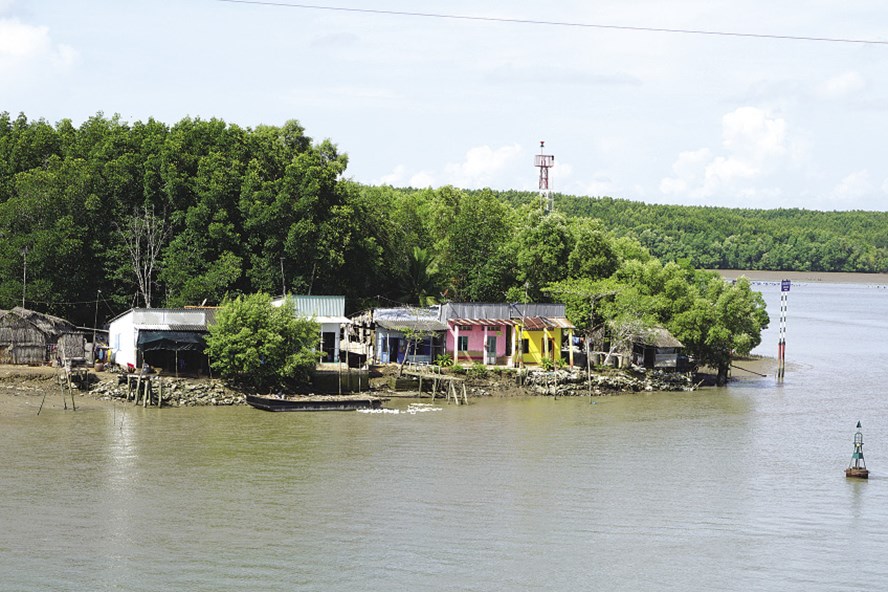
The Climate – Justice – Cooperation Nexus: 10 Cornerstones of the Great Transformation towards Sustainability

IIASA

The challenge of our generation: Avert dangerous global warming – invest in social cohesion and wellbeing of people – build local, national, and transnational alliances for transformative change towards sustainability

1. We can reach the goals of the Paris Agreement – but ambitious action is needed now! Climate change is a threat to humanity. Irreversible Earth systems changes need to be avoided. This is a civilisational challenge which requires unprecedented joint action around the globe. We are under huge time pressure. Global CO2 emissions must decline to zero by mid-century in order to achieve the ambitious Paris goal, aimed at stabilising the global mean temperature well below 2 degrees C, and if possible at 1.5 degrees C. This translates into a stylised “carbon law”, whereby emissions must be halved every decade in analogy to the Moore’s law of semiconductors. We have the resources and the technology to achieve this, but do we have the political will and the resolve? Recent developments, such as the declaration by the US President to withdraw from the Paris Agreement, can be interpreted as a major setback. At the same time, they may inspire counter-movements, strengthening the determination to vigorously combat climate change. In particular, OECD countries and emerging economies should make commitments within the G 20 and within their national policies to ensure the achievement of global decarbonisation by the middle of the century. Tiếp tục đọc “The Climate – Justice – Cooperation Nexus: 10 Cornerstones of the Great Transformation towards Sustainability”

Cứu dòng Mekong: Việt Nam nên tăng cường mua điện từ Lào?

Thủy điện không còn hấp dẫn và cơ hội của dòng Mekong

***

Cứu dòng Mekong: Việt Nam nên tăng cường mua điện từ Lào?

  19:50 | Thứ năm, 07/12/2017

Phát triển dựa vào dòng dòng Mekong, từ vấn đề và bài toán phát triển năng lượng của Lào hiện nay, theo các phân tích, Việt Nam có thể và nên đóng vai trò chủ động hơn nữa trong vấn đề phát triển thủy điện thượng nguồn sông Mekong.


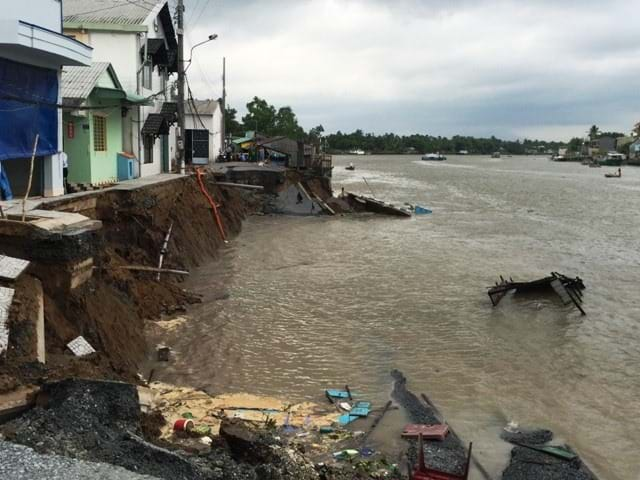
ĐBSCL hình thành là nhờ lượng phù sa của sông Mekong bồi đắp nên trong 6.000 năm qua. Việc xây thủy điện trên các dòng chính sông Mekong là một trong những nguyên nhân khiến ĐBSCL tăng sạt lở, dần “tan rã”. Ảnh: TL  Tiếp tục đọc “Cứu dòng Mekong: Việt Nam nên tăng cường mua điện từ Lào?”

Loạt bài về nhiệt điện than trên trang Năng lượng Việt Nam

TĐH: Mình vừa thấy vài loạt bài rất interesting, hỗ trợ nhiệt điện than, trên trang Năng lượng Việt Nam của Hiệp hội Năng lượng Việt Nam. Đặt links ở đây để các bạn tiện tham khảo.

Vì sao Việt Nam cần phát triển nhiệt điện than? (Bài 1)
Vì sao Việt Nam cần phát triển nhiệt điện than? (Bài 2)
Vì sao Việt Nam cần phát triển nhiệt điện than? (Bài 3)
Vì sao Việt Nam cần phát triển nhiệt điện than? (Bài 4) Tiếp tục đọc “Loạt bài về nhiệt điện than trên trang Năng lượng Việt Nam”

Towards a Climate-Smart World: 12 Ways for a Resilient Future

December 1, 2017 World Bank

The ceiling of Rai Tabusoro’s home was ripped away by catastrophic winds. The 43-year-old was able to save the life of his elderly mother by placing her in a concrete bathroom, as well as a pregnant woman who he carried to shelter.

In the same Fijian village, Asmita Kamal, a 24-year-old teacher, found shelter under a table with her grandmother while her family hid under a bed as Cyclone Winston blasted through their village. Despite their best efforts to secure their house, strong winds swept away just about everything. Tiếp tục đọc “Towards a Climate-Smart World: 12 Ways for a Resilient Future”

Global Tree Cover Loss Remains High. Emerging Patterns Reveal Shifting Contributors.

Global Forest Watch released new satellite-based data showing how forests around the world changed in the year 2015. The data, produced through the analysis of roughly a million satellite images by the University of Maryland and Google, measures the death or removal of trees at least 5 meters tall within 30×30 meter areas. This can capture any number of sustainable or unsustainable activities, from the clearing of natural forests to the harvest of tree plantations, but when analyzed appropriately with other contextual data and information can serve as a proxy for deforestation (typically defined as the permanent conversion of forest land for another use). Tiếp tục đọc “Global Tree Cover Loss Remains High. Emerging Patterns Reveal Shifting Contributors.”

Global food waste scandal – Bê bối lãng phí thức ăn toàn cầu


Hướng dẫn tài chính cho người làm chính sách: Năng lượng tái tạo và hạ tầng xanh (P1)

>> Phần 1: Giới thiệu về Hướng dẫn Tài chính cho người làm chính sách: Năng lượng tái tạo và hạ tầng xanh
>> Phần 2: Thẩm định tính khả thi cho dự án năng lượng tái tạo ở thị trường mới nổi

Giới thiệu về Hướng dẫn Tài chính

bloomberg_Hiệp định Khí hậu Paris vào tháng 12 năm 2015 tập trung chú ý vào nhu cầu huy động các dòng vốn tư nhân lớn cho vào các giải pháp khí hậu với tốc độ và quy mô cần thiết để chống lại biến đổi khí hậu ở mức độ cấp thiết.

Việc thực hiện các kế hoạch quốc gia về năng lượng sạch hoặc cơ sở hạ tầng “xanh” sẽ đòi hỏi mức độ đầu tư chưa từng có, không chỉ vì lý do khí hậu, thông qua quyết tâm đóng góp quốc gia (Nationally determined contributions – NDC), mà còn đảm bảo an ninh năng lượng và tiếp cận năng lượng cho những người thiếu thốn, cũng như cho phát triển bền vững.

Bây giờ, hơn bao giờ hết, một điều vô cùng quan trọng là các nhà hoạch định chính sách và các bên khác không-phải-nhà-tài-trợ phải cần hiểu và giao tiếp với cộng đồng tài chính để thiết lập các điều kiện hiệu quả ở cấp quốc gia, cấp mà việc đầu tư sẽ phải được thực hiện.

Là một đóng góp thực tiễn, Hướng dẫn Tài chính cung cấp cái nhìn tổng quan thực tiễn về bối cảnh tài chính – nguồn vốn, cách thị trường hoạt động, cách các giao dịch vận hành và rộng hơn nữa để thiết lập các điều khoản tài chính chung trong bối cảnh đặt ra.

Hướng dẫn này phản ánh những thay đổi gần đây về điều kiện thị trường, cơ cấu tài chính và các cuộc tranh luận chính sách có liên quan. Các chủ đề của Hướng dẫn bao gồm:

Tiếp tục đọc “Hướng dẫn tài chính cho người làm chính sách: Năng lượng tái tạo và hạ tầng xanh (P1)”

Venezuela is likely to be the first country to lose all of its glaciers, but unfortunately it will not be the last country.

Venezuela is losing its last glacier

Glacierhub.com

Humboldt Glacier, 14 December 2011 (Source: The Photographer/ Creative Commons).

Venezuela used to have five glaciers. Today, only one remains. The last glacier in Venezuela, the Humboldt glacier, is about to disappear. “Reduced to an area of ten football pitches, a tenth of its size 30 years ago, it will be gone within a decade or two,” reports The Economist. Once Venezuela loses the Humbolt, it will become the first country in modern history to have lost all of its glaciers.

The glacier is expected to completely vanish in ten to twenty years, and scientists have expressed the importance of studying the glacier in its last stages. However, the political and economic crisis in Venezuela makes it difficult to study the glacier. In the past, studies have shown how rapid glacier retreat affects the water cycle in glacier-dependent basins, which changes water regulation and availability. Thus, the disappearance of the Humboldt glacier will impact local communities as run-off stability and water supply for agriculture change. Tiếp tục đọc “Venezuela is likely to be the first country to lose all of its glaciers, but unfortunately it will not be the last country.”

Nghị quyết về Phát triển bền vững ĐBSCL thích ứng với Biến đổi khí hậu – Số 120/NQ-CP

CHÍNH PHỦ
——-

CỘNG HÒA XÃ HỘI CHỦ NGHĨA VIỆT NAM
Độc lập – Tự do – Hạnh phúc
—————

Số: 120/NQ-CP

Hà Nội, ngày 17 tháng 11 năm 2017


NGHỊ QUYẾT

VỀ PHÁT TRIỂN BỀN VỮNG ĐỒNG BẰNG SÔNG CỬU LONG THÍCH ỨNG VỚI BIẾN ĐỔI KHÍ HẬU

CHÍNH PHỦ

Căn cứ Luật Tổ chức Chính phủ ngày 19 tháng 6 năm 2015;

Căn cứ Nghị quyết số 24-NQ/TW ngày 03 tháng 6 năm 2013 của Ban Chấp hành Trung ương Đảng khóa XI về chủ động ứng phó với biến đổi khí hậu, tăng cường quản lý tài nguyên và bảo vệ môi trường;

Căn cứ Kết luận số 28-KL/TW ngày 14 tháng 8 năm 2012 của Bộ Chính trị về phương hướng, nhiệm vụ, giải pháp phát triển kinh tế – xã hội và bảo đảm an ninh, quốc phòng vùng đồng bằng sông Cửu Long đến năm 2020;

Trên cơ sở kết quả của Hội nghị về phát triển bền vững đồng bằng sông Cửu Long thích ứng với biến đổi khí hậu ngày 26 – 27 tháng 9 năm 2017; thảo luận, biểu quyết của các Thành viên Chính phủ tại phiên họp Chính phủ thường kỳ tháng 9 năm 2017,

QUYẾT NGHỊ:

Tiếp tục đọc “Nghị quyết về Phát triển bền vững ĐBSCL thích ứng với Biến đổi khí hậu – Số 120/NQ-CP”

Funded project to ease impact of climate change

vietnamnews

Update: November, 25/2017 – 09:58

An initiative for managing natural disasters was introduced on Friday in the context of increasing extreme weather events in Việt Nam.— VNA/VNS Photo

HÀ NỘI — An initiative for managing natural disasters was introduced on Friday in the context of increasing extreme weather events in Việt Nam.

The project entitled, “Improving the resilience of vulnerable coastal communities to climate change related impacts in Việt Nam”, involved cooperation from the government and the United Nations Development Program (UNDP), with sponsorship of the Green Climate Fund (GCF). Tiếp tục đọc “Funded project to ease impact of climate change”

Resolution aims for sustainable Mekong Delta development – Nghị quyết về phát triển bền vững Đồng bằng sông Cửu Long thích ứng với biến đổi khí hậu


Viet Nam News Update: November, 20/2017 – 10:01

Prime Minister Nguyễn Xuân Phúc has signed a resolution to sustainably develop the Mekong Delta as apart of an effort to cope with climate change. — Photo tinmoitruong

HCM City – Prime Minister Nguyễn Xuân Phúc has signed a resolution to sustainably develop the Mekong Delta as apart of an effort to cope with climate change.

The resolution points out that the Mekong Delta accounts for 12 per cent of the national area and 19 per cent of population, contributes 50 per cent of the rice crop, 65 per cent of aquaculture, 70 per cent of fruit, 95 per cent of exported rice and 60 per cent of exported fish. Tiếp tục đọc “Resolution aims for sustainable Mekong Delta development – Nghị quyết về phát triển bền vững Đồng bằng sông Cửu Long thích ứng với biến đổi khí hậu”

Using real-time satellite data to track water productivity in agriculture

New FAO tool offers water-scarce countries and river basins a way to boost productivity

Photo: ©FAO/Olivier Asselin

Watering crops in the Democratic Republic of Congo.

FAO 20 April 2017, Rome – Measuring how efficiently water is used in agriculture, particularly in water-scarce countries, is going high-tech with the help of a new tool developed by FAO.

The WaPOR open-access database has gone live, tapping satellite data to help farmers achieve more reliable agricultural yields and allowing for the optimization of irrigation systems.

WaPOR was presented this week during a high-level partners meeting for FAO’s Coping with water scarcity in agriculture: a global framework for action in a changing climate. It allows for fine-grained analysis of water utilised through farming systems, generating empirical evidence about how it can be most productively used.

Worldwide water utilization – the majority of which is used by agriculture – has outpaced the rate of population growth for most of the last century and some regions are close to breaching viable limits. Tiếp tục đọc “Using real-time satellite data to track water productivity in agriculture”

Climate talks close with Trump administration on one track, world on another

NBC News

The world climate conference ended Friday much the way it began two weeks ago — with the Trump administration bolstering legacy fuels like coal and gas, separating itself from much of the world.

The lone panel sponsored by the U.S. government was interrupted by singing and chanting protesters, who said support for coal power went against the thrust of talks centered on promoting renewable energy and 21st century technology.

The result was a fundamental disconnect at the gathering in Bonn, Germany. Tiếp tục đọc “Climate talks close with Trump administration on one track, world on another”

Mekong River Facts

CGIAR

Upstream Mekong River changes through dam building and water usage could have serious consequences on downstream environments, in particular the Mekong Delta of Vietnam. Considered the rice basket of Vietnam, the Mekong Delta is already at grave risk through climate change sea level rise and intense local development. Mekong Delta citizens are concerned about these risks but and are determined to adapt and survive.

The Mekong has many names.

Mekong

In China, it is known as the Lancang Jiang, meaning ‘turbulent river’. The Thai and the Lao refer to it as Mae Kong or Mae Nam Kong, meaning ‘mother water’. In the delta, where the river splits into multiple branches, the Vietnamese refer to it as Cuu Long, meaning ‘nine dragons’. Tiếp tục đọc “Mekong River Facts”

Why eating insects makes sense – Tại sao nên ăn Côn trùng – một nguồn thực phẩm thay thế cho thit


Published on Sep 25, 2014

The world’s population is projected to reach 11 billion by the end of the century. Feeding that many people will be a challenge, and it is further complicated by the impact of climate change on agriculture. That is why some people advocate an unusual way to boost the food supply and feed people sustainably: by eating less meat, and more insects.

About 2 billion people already eat bugs. Mexicans enjoy chili-toasted grasshoppers. Thais tuck into cricket stir-fries and Ghanians snack on termites. Insects are slowly creeping onto Western menus as novelty items, but most people remain squeamish. Yet there are three reasons why eating insects makes sense.

First, they are healthier than meat. There are nearly 2,000 kinds of edible insects, many of them packed with protein, calcium, fibre, iron and zinc. A small serving of grasshoppers can contain about the same amount of protein as a similar sized serving of beef, but has far less fat and far fewer calories.

Second, raising insects is cheap, or free. Little technology or investment is needed to produce them. Harvesting insects could provide livelihoods to some of the world’s poorest people.

Finally, insects are a far more sustainable source of food than livestock. Livestock production accounts for nearly a fifth of all greenhouse-gas emissions – that’s more than transport. By contrast, insects produce relatively few greenhouse gases, and raising them requires much less land and water. And they’ll eat almost anything.

Despite all this, most Westerners find insects hard to swallow. One solution is to use protein extracted from bugs in other products, such as ready meals and pasta sauces. Not having to look at the bugs, and emphasising the environmental benefits, might make the idea of eating insects a bit more palatable. For more video content from The Economist visit our website: http://econ.st/1ytKwbp