Climate breakthrough award to a Vietnamese for the first time – BÀ NGỤY THỊ KHANH NGƯỜI VIỆT ĐẦU TIÊN ĐẠT GIẢI THƯỞNG KHÍ HẬU BREAKTHROUGH PROJECT NĂM 2019

#Climatebreakthroughweek
Nguồn: https://www.climatebreakthroughproject.org/awardee/nguy-thi-khanh/

Chúng tôi vinh dự được chia sẻ thông tin, Climate Breakthrough Project vừa công bố hai giải thưởng mới của năm 2019: Bà Ngụy Thị Khanh của Việt Nam và Ông Arief Rabik của Indonesia. Cả hai sẽ nhận được 2 triệu đô la trong ba năm tới để thiết kế và đưa ra các sáng kiến ​​toàn cầu.

Tiếp tục đọc “Climate breakthrough award to a Vietnamese for the first time – BÀ NGỤY THỊ KHANH NGƯỜI VIỆT ĐẦU TIÊN ĐẠT GIẢI THƯỞNG KHÍ HẬU BREAKTHROUGH PROJECT NĂM 2019”

Earth is heating at a rate equivalent to five atomic bombs per second. Or two Hurricane Sandys.

thebulletin.org

By Dana Nuccitelli, February 3, 2020

Trinity.jpgLong-exposure photo of the first atomic bomb test, code-named Trinity, and taken at 5:29:45 a.m. on July 16, 1945.
The heat absorbed in Earth’s oceans reached a new record in 2019, found a recent study published in the journal Advances in Atmospheric Sciences. Despite the fact that this has been the case for almost every year over the past decade, this information dominated the news cycle, with some particularly viral headlines noting that the amount of energy accumulating in the oceans is equivalent to detonating five Hiroshima atomic bombs per second, every second over the past 25 years.
Tiếp tục đọc “Earth is heating at a rate equivalent to five atomic bombs per second. Or two Hurricane Sandys.”

Mê Kông cạn cá

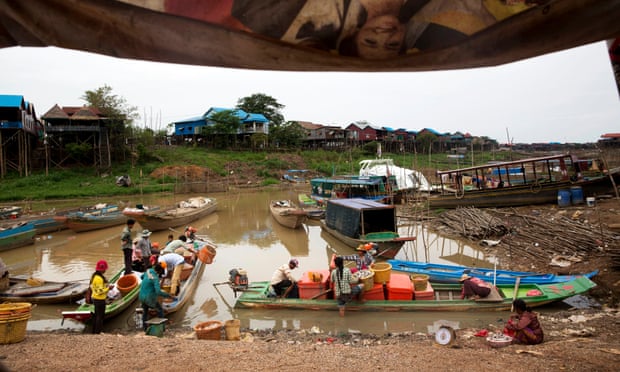
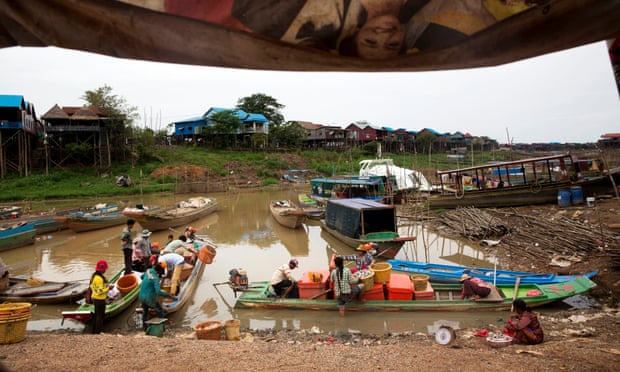
BVR&MT – Tbong ngồi trong bóng râm của căn chòi tạm bợ trên bờ hồ Tonlé Sap, quanh anh là mấy đứa trẻ tò mò.

“Cá quả, cá trê, cá tai tượng… Trước đây, cách đây rất lâu, hồ có rất nhiều cá”, anh vừa nói vừa nheo mắt vì nắng.

Cá ở Tonlé Sap, hồ nước ngọt lớn nhất Đông Nam Á là nguồn chất đạm chính cho người Campuchia. (Ảnh: Getty)

Nhưng mọi thứ thay đổi chóng vánh. Các loài cá suy giảm, thực vật đang chết dần và toàn bộ hệ thống sông Mê Công tan rã. Đối với những đứa trẻ tụ tập quanh Tbong, một Tonlé Sap trù phú chỉ còn trong chuyện kể.

Nằm ở trung tâm lưu vực hạ nguồn sông Mê Công, Tonlé Sap là hồ nước ngọt lớn nhất Đông Nam Á. Hồ và vùng ngập lũ xung quanh được UNESCO công nhận là khu dự trữ sinh quyển vào năm 1997, là nơi sinh sản, cung cấp nguồn thức ăn và là nơi thu hoạch hàng trăm loài cá và các sản phẩm thủy sản khác. Tiếp tục đọc “Mê Kông cạn cá”

Perceptions of climate related investment risk in Southeast Asia’s power sector

SEI.org

Given the growing international pressure to mitigate climate change and increasing fears around climate impacts, expectations of continued investment in fossil fuels in Southeast Asia’s power sector appear puzzling. This paper explores how power sector investors perceive climate-related risks and how they factor these risks into investment decision-making.

du Pont, P. Gueguen-Teil, C. and Johnson, O. (2020). Perceptions of Climate Related Investment Risk in Southeast Asia’s Power Sector. SEI Working Paper. Stockholm Environment Institute, Stockholm. http://www.sei.org/publications/perceptions-climate-investment-risk-southeast-asia-power-sector

Tiếp tục đọc “Perceptions of climate related investment risk in Southeast Asia’s power sector”

Revealed: the 20 firms behind a third of all carbon emissions

theguardian.com 

New data shows how fossil fuel companies have driven climate crisis despite industry knowing dangers

by  and 

The Guardian today reveals the 20 fossil fuel companies whose relentless exploitation of the world’s oil, gas and coal reserves can be directly linked to more than one-third of all greenhouse gas emissions in the modern era.

New data from world-renowned researchers reveals how this cohort of state-owned and multinational firms are driving the climate emergency that threatens the future of humanity, and details how they have continued to expand their operations despite being aware of the industry’s devastating impact on the planet.

The analysis, by Richard Heede at the Climate Accountability Institute in the US, the world’s leading authority on big oil’s role in the escalating climate emergency, evaluates what the global corporations have extracted from the ground, and the subsequent emissions these fossil fuels are responsible for since 1965 – the point at which experts say the environmental impact of fossil fuels was known by both industry leaders and politicians. Tiếp tục đọc “Revealed: the 20 firms behind a third of all carbon emissions”

On a hotter planet, we are all Australians

thebulletin.com

By David Spratt, January 16, 2020

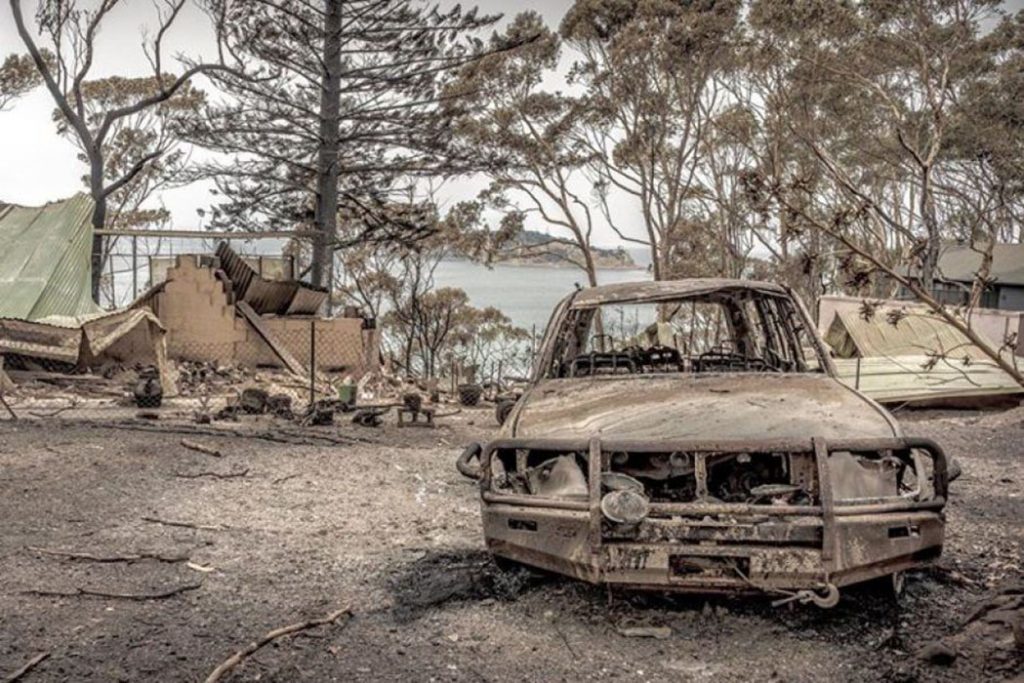
burnt-out car and scorched landAftermath of January 2020 wildfires in Rosedale, Victoria, about 184 kilometers east of Melbourne, Australia. Image courtesy Alan Meredith

“We are unleashing hell on Australia.”

Those were the words that David Karoly of the University of Melbourne used to portray the wildfires ravaging the lands down-under more than a decade ago. Yes, you read that right: this professor of climate change and climate variability had described an Australia of increased heat, drought, and catastrophic fire way back in 2009—not long after a round of wildfires had previously ravaged the landscape.

It turns out that while Australia’s 2019-20 summer wildfires may well be harbingers of death on a hotter planet for at least the rest of this century, they did not come without advance warning. The question now is: What are we going to do about it?

But first, let’s go back to those warnings, and how we got to this position.

Karoly’s research had, in part, focused on what is known here as Black Saturday—February 7, 2009—when devastating fires killed 173 people. (And another 374 extreme-heat-related deaths were attributed to the record-breaking heatwave across southern Australia that had set the stage for the flames.) Firefighters faced unprecedented conditions: high winds, very low humidity, a land dried by 10 years of drought, and a fire index reaching 170 on a 0-to-100 scale. The temperature hit a record 115.5 degrees Fahrenheit in the city of Melbourne and 119.8 degrees Fahrenheit in Victoria as a whole—the Australian state in which Melbourne sits. The amount of energy released by the fires was estimated to be the equivalent of around 1,500 Hiroshima atomic bombs.
Tiếp tục đọc “On a hotter planet, we are all Australians”

Mekong communities struggle as China tests dam equipment

Water levels have fluctuated sharply with testing, but some are encouraged that China gave warning of its plan.

by , Al Jazeera

People along the Mekong are struggling with sharply fluctuation water levels as China tests dam equipment. This Thai woman said her garden on the river bank was damaged by flash floods as water was released from the upstream dam [International Rivers via Al Jazeera]

Phnom Penh, Cambodia – Water levels on the Mekong River, which flows through China and five other countries before emptying into the South China Sea, have dropped once again after Beijing revealed it was testing equipment at one of its 11 dams in the upper reaches of the vital waterway.

Tiếp tục đọc “Mekong communities struggle as China tests dam equipment”

Saltwater intrusion to enter deeper in Mekong Delta

Saltwater intrusion in the Mekong Delta during the dry season, is forecast to enter local rivers 30-40km deeper than the annual average.
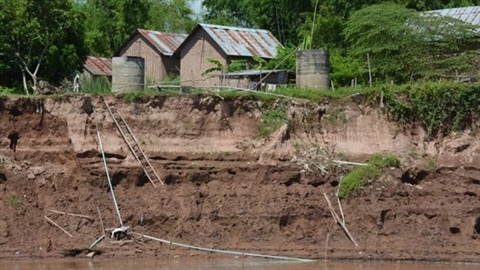
Saltwater intrusion to enter deeper in Mekong Delta
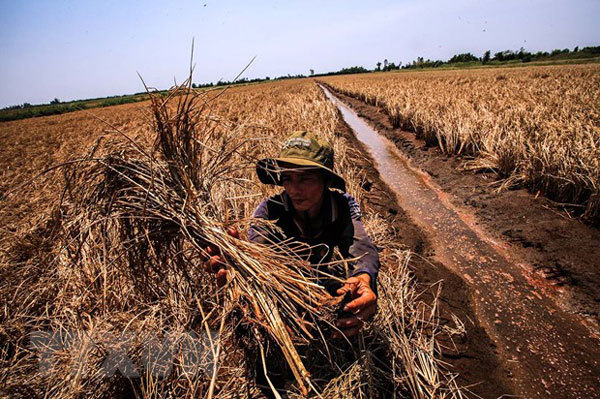
Salinity intrusion destroyed rice fields in the Mekong Delta province of Kien Giang in 2016.—VNA/VNS Photo Trong Dat

That is more severe than 2016, the year of historic salinity which caused VND15 trillion (US$ 646 million) damage to the delta.

The concentration of salinity was about four grammes per litre, said minister of Agriculture and Rural Development Nguyen Xuan Cuong at a meeting held on Friday in the Mekong Delta province of Ben Tre. Tiếp tục đọc “Saltwater intrusion to enter deeper in Mekong Delta”

Sand overexploitation of Mekong River raises worries for Mekong Delta

vietnamnet

The loss of sand has caused erosion and increased salinity as well as subsidence in the Mekong Delta.

The studies of the Mekong River by Prof Stephen Darby from Southampton University found that within several years, the river bed fell by several meters on a section of hundreds of kilometers in length.

Sand overexploitation of Mekong River raises worries for Mekong Delta

Tiếp tục đọc “Sand overexploitation of Mekong River raises worries for Mekong Delta”

Vietnam to buy 1.5 billion kWh of power annually from Laos

By Anh Minh   January 5, 2020 | 02:42 pm GMT+7 VnExpress

Vietnam to buy 1.5 billion kWh of power annually from Laos

A worker repairs electricity cables in Ho Chi Minh City. Photo by VnExpress/Thanh Nguyen.

State power utility EVN will buy around 1.5 billion kWh of electricity a year from Laos for two years starting in 2021.

Under contracts it signed on Saturday, Vietnam Electricity (EVN) will buy over 596 million kWh a year from two hydropower plants belonging to Phongsubthavy Group and 632 million kWh from two plants belonging to Chealun Sekong Group from 2022.

Tiếp tục đọc “Vietnam to buy 1.5 billion kWh of power annually from Laos”

Mekong Delta stays alert for severe drought

By Hoang Nam   January 4, 2020 | 04:45 pm GMT+7

Mekong Delta stays alert for severe drought

A farmer in a paddy field hit by drought in the Mekong Delta’s province of Soc Trang, June 2019. Photo by VnExpress/Thanh Nguyen.

Vietnam’s Mekong Delta is bracing severe drought and salinity in the coming months, and local authorities have been told to take every step possible to mitigate the damage.

For this dry season, which has already started in southern Vietnam and normally lasts until late April, drought conditions are likely to be more severe, resulting in more salinity in the delta, which spreads over 40,577 square kilometers (15,670 square miles).

The nation’s most fertile region for long, the Mekong Delta has been called the Vietnam’s rice granary. It is also the nation’s aquaculture hub.

Tiếp tục đọc “Mekong Delta stays alert for severe drought”

Vietnam and Asia neighbors hungry for cheap coal

asia.nikkei.com

Demand for low-grade coal expands amid economic growth

Vietnam’s steam coal imports in 2019 are estimated to total about 32 million tons, twice the amount for last year and up three times from three years ago.   © Reuters

TOKYO — Demand for low-grade coal with lower combustion efficiency is growing amid economic growth in Vietnam and other emerging Asian countries, placing another hurdle in the global race to reduce greenhouse gas emissions.

While prices of high-grade coal with higher power generation efficiency have fallen by more than 30% over the past year as developed countries have been reducing coal consumption, prices of low-grade coal have fallen more slowly. The price difference between the two categories of coal has shrunk to one-third the level of a year ago. Tiếp tục đọc “Vietnam and Asia neighbors hungry for cheap coal”

More Water Shortages Mean Energy Investors Need New Ways to Manage Drought Risk

WRI.org

On July 5, 2015, the first of six thermal power generation units at the Parli Thermal Power Station in Maharashtra, India shut down. Unable to draw enough water from the nearby Majalgaon dam, which had nearly run dry, the coal-powered unit was unable to run its cooling system and was forced to halt electricity production. This was just the start, as each of the five additional units subsequently shut down as well. Between July 2015 and December 2016, Parli stopped generating electricity entirely for 226 days solely due to water shortages, and during the days it wasn’t entirely shut down, it was largely paralyzed.

Imagine this picture replicated in other parts of India and around the world. Recent research is beginning to link climate change to drought, which suggests that risks to water availability will likely get worse.

That water shortages can prove costly to energy companies is old news. What is less understood is how much water shortages can impact utilities’ bottom lines.

In our new study, Financial Implications of Parched Power, we find that water shortage-induced outages to thermal power generation didn’t just turn off customers’ lights, they also caused occasional and sometimes major financial impacts to thermal power companies. This finding can have important implications for both thermal power companies and their investors. Tiếp tục đọc “More Water Shortages Mean Energy Investors Need New Ways to Manage Drought Risk”