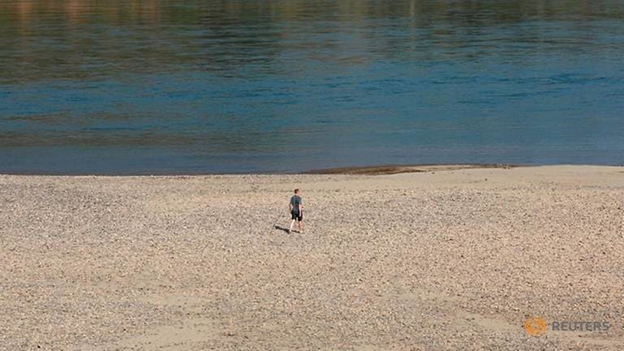
A tourist walks on the Mekong river bank outside Loei, Thailand, on Jan 10, 2020. (Photo: REUTERS/Soe Zeya Tun)
14 Dec 2020 01:27AM(Updated: 14 Dec 2020 06:46AM) CNA
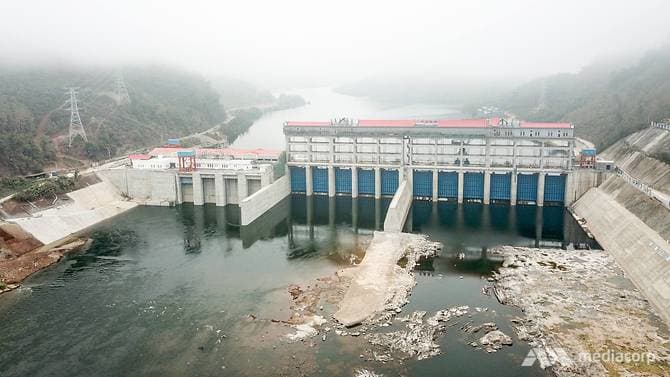
BANGKOK: A US-funded project using satellites to track and publish water levels at Chinese dams on the Mekong river was launched on Monday (Dec 13), adding to the superpowers’ rivalry in Southeast Asia.
The 4,350km waterway – known as the Lancang in China and flowing south through Myanmar, Laos, Thailand, Cambodia and Vietnam – has become a focus of competition.Advertisement
The geopolitics of the Mekong river continue to evolve, with key announcements from China, Thailand and the Mekong River Commission.
Editorial
Recent weeks have seen new developments in the ongoing tension over the Mekong river and its waters, as the river basin faces ecological crises and its waters play an ever-larger role in geopolitics.
This paper highlights how civil society organizations can play critical roles in establishing transparent and accountable climate finance systems that put communities at the center of decision-making. It draws from the Adaptation Finance Accountability Initiative’s experiences in Ethiopia and Uganda as well as lessons learned from similar efforts in Bangladesh, Kenya, and the Philippines. It offers valuable information to help civil society organizations build their engagement and capacity on climate adaptation finance.
COVID-19 đã làm gián đoạn hành trình của đất nước là trở thành một nền kinh tế tăng trưởng cao, tuy nhiên những điều chỉnh cơ cấu phù hợp có thể đưa nền kinh tế trở lại quỹ đạo.
Với một lượng ca nhiễm và tử vong do Covid 19 tương đối ít được ghi nhận đến nay, Việt Nam hiện đang có cơ hội và bắt buộc phải xem xét về khát vọng kinh tế dài hạn hơn, thậm chí giống như một quốc gia chịu trách nhiệm chống lại vi-rút. Thành công lâu dài sẽ đòi hỏi các nhà lãnh đạo Việt Nam phải tập trung vào vấn đề và cơ hội đã có từ lâu trước khi có đại dịch
Former U.S. Vice President Joseph R. Biden and his running mate Kamala Harris are widely recognized as having won the 2020 U.S. presidential election, with a majority in the Electoral College and a resounding majority in the popular vote. The Democratic Party has retained control of the U.S. House of Representatives, while the results for the U.S. Senate are very close and the outcome is undetermined at this time. In this WRI Commentary, WRI U.S. Director Dan Lashof suggests a 10-point plan for the new administration.
President-elect Biden will be sworn into office in the midst of four deeply intertwined crises: the health crisis, the economic crisis, the racial injustice crisis and the climate crisis. He has promised to build back better by taking bold action on all four simultaneously, including making unprecedented investments in health care, infrastructure and clean energy. Tiếp tục đọc “Top 10 Priorities for President Biden to Tackle the Climate Crisis”→
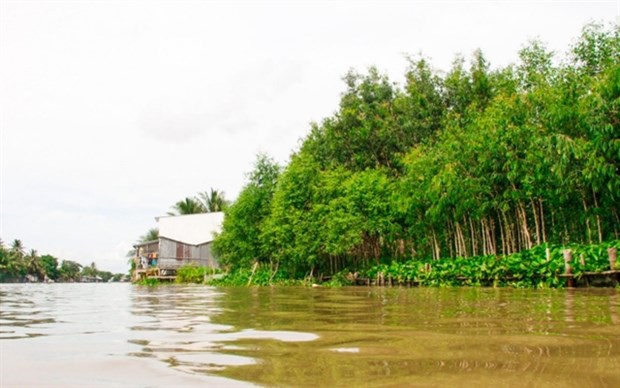
More people in the Mekong Delta are planting trees and building embankments made of natural materials to prevent erosion along rivers and canals.
A natural embankment in Phung Hiep District’s Bung Tau Town in Hau Giang Province (Photo: nhandan)
The delta, which has a dense river and canal network, has faced increasing erosion along rivers and canals in recent years because of human activity and climate change.
In Hau Giang Province, the Irrigation Sub-department built three natural embankments with a total length of 380 metres on a pilot basis to prevent erosion in Phung Hiep District and Nga Bay Town in 2017.
The natural embankments are made by filling eroded areas with soil and setting up a barrier made of cajuput trunks or bamboo between the embankments and water.
Cajuput and crabapple mangrove trees are planted inside the barriers so that their roots prevent soil erosion. Permeable fabric or fine nets are installed outside the barrier to hold the soil.
Climate change is pushing warmer Atlantic currents into the Arctic and breaking up the usual stratification between warm deep waters and the cool surface. This also makes it difficult for ice to form. Photograph: Alamy Stock Photo
For the first time since records began, the main nursery of Arctic sea ice in Siberia has yet to start freezing in late October.
The delayed annual freeze in the Laptev Sea has been caused by freakishly protracted warmth in northern Russia and the intrusion of Atlantic waters, say climate scientists who warn of possible knock-on effects across the polar region.
Ocean temperatures in the area recently climbed to more than 5C above average, following a record breaking heatwave and the unusually early decline of last winter’s sea ice.
The trapped heat takes a long time to dissipate into the atmosphere, even at this time of the year when the sun creeps above the horizon for little more than an hour or two each day.
Graphs of sea-ice extent in the Laptev Sea, which usually show a healthy seasonal pulse, appear to have flat-lined. As a result, there is a record amount of open sea in the Arctic.
“The lack of freeze-up so far this fall is unprecedented in the Siberian Arctic region,” said Zachary Labe, a postdoctoral researcher at Colorado State University. He says this is in line with the expected impact of human-driven climate change.
Advertisement
“2020 is another year that is consistent with a rapidly changing Arctic. Without a systematic reduction in greenhouse gases, the likelihood of our first ‘ice-free’ summer will continue to increase by the mid-21st century,’ he wrote in an email to the Guardian. Tiếp tục đọc “Alarm as Arctic sea ice not yet freezing at latest date on record”→
The world is not on track to avoid the catastrophic impacts of climate change. With 2030 just a decade away, and governments are under pressure to speed up the clean energy transition.
The good news is that: a) the technologies and the capital are available to accelerate the green energy transition, and b) the private sector is ready to invest billions of green dollars into decarbonization and clean energy.
By Phan Anh October 24, 2020 | 07:55 am GMT+7 vnexpreszA restaurant on Cua Dai Beach of central Quang Nam Province is demolished by waves and coastal erosion, October 2020. Photo by VnExpress/Dac Thanh.
In a country that is among the most exposed to natural hazards, Vietnam’s coastline often bears the brunt. Resilient Shores lays out a resilience strategy that can guide Vietnam through the decisive actions it must take to safeguard the prosperity of future generations from climate change and disaster risks.
By Reuters October 23, 2020 | 08:11 am GMT+7 vnexpressA boat of rice in a canal in Hau Giang Province in Vietnam’s Mekong Delta, March 13, 2020. Photo by VnExpress/Nguyet Nhi.
China on Thursday signed an agreement with the Mekong River Commission (MRC) to share year-round data on the flow of its portion of the vital waterway.
The move came amid concern that Chinese dams may be causing drought downstream in Southeast Asia.
A push for more data from China’s portion of the Mekong River – which Beijing calls the Lancang River – intensified this year after U.S. government criticism that 11 Chinese dams were “hoarding” water and hurting livelihoods downstream, an accusation Beijing denies.
By Jakob Askou Bøss, Senior Vice President for Corporate Strategy and Stakeholder Relations, Ørsted and Jennifer Layke, Director of Global Energy Program, World Resources Institute
The technologies and the capital are available to accelerate the green energy transition, but the global transformation from fossil fuels to clean energy is not moving forward quickly enough. Governments need to adjust their institutional and regulatory framework to pave the way for the necessary private investments to get the job done.
Electric bus in Hangzhou, China. Photo by Shankar S./Flickr
In his speech to the UN General Assembly on September 22, 2020, President Xi Jinping of China announced that China will scale up its Nationally Determined Contribution (NDC) to tackling climate change by adopting more vigorous policies and measures in an effort to peak carbon dioxide emissions before 2030 and reach carbon neutrality before 2060.
The announcement is among the most significant signs of progress concerning countries’ efforts to mitigate climate change since agreeing to the Paris Agreement in 2015. Further clarifications on the exact commitment will be needed, and it is likely that even more ambition will be needed in future. Here are four key questions and answers about this important development.
1. What Exactly Is New?
The announcement marks the first time that China has set a concrete long-term target of carbon neutrality. This means that by 2060, the country will either stop carbon dioxide emissions altogether, or — more likely — use various means to remove an equivalent amount of any remaining emissions.



 A restaurant on Cua Dai Beach of central Quang Nam Province is demolished by waves and coastal erosion, October 2020. Photo by VnExpress/Dac Thanh.
 A boat of rice in a canal in Hau Giang Province in Vietnam’s Mekong Delta, March 13, 2020. Photo by VnExpress/Nguyet Nhi.

