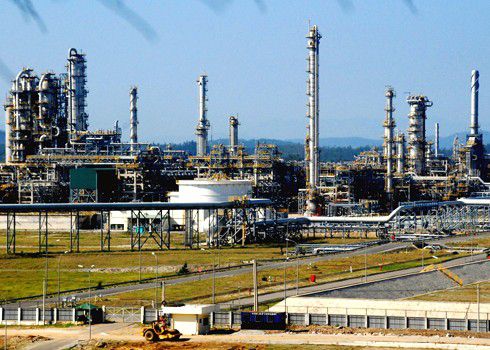
(KTSG Online) – Công ty TNHH Lọc hoá dầu Nghi Sơn (NSRP), nơi đảm bảo 30-35% nguồn cung xăng dầu trong nước, chỉ cắt giảm sản lượng 20% thì thị trường xăng dầu trong nước, nhất là khu vực miền Nam, đã lao đao từ tháng 1 đến nay. Tuy nhiên, hệ lụy của việc này không dừng ở việc thiếu xăng dầu cục bộ tại một số địa phương.
Công ty TNHH Lọc hoá dầu Nghi Sơn (NSRP)
Hệ lụy đầu tiên mà ai cũng nhìn thấy là NSRP đã gây sức ép thành công để Tập đoàn Dầu khí Việt Nam (PVN) và Chính phủ phải thực hiện cam kết hỗ trợ tài chính cho dự án Nhà máy lọc dầu Nghi Sơn, hay nói khác đi là bù lỗ cho dự án.
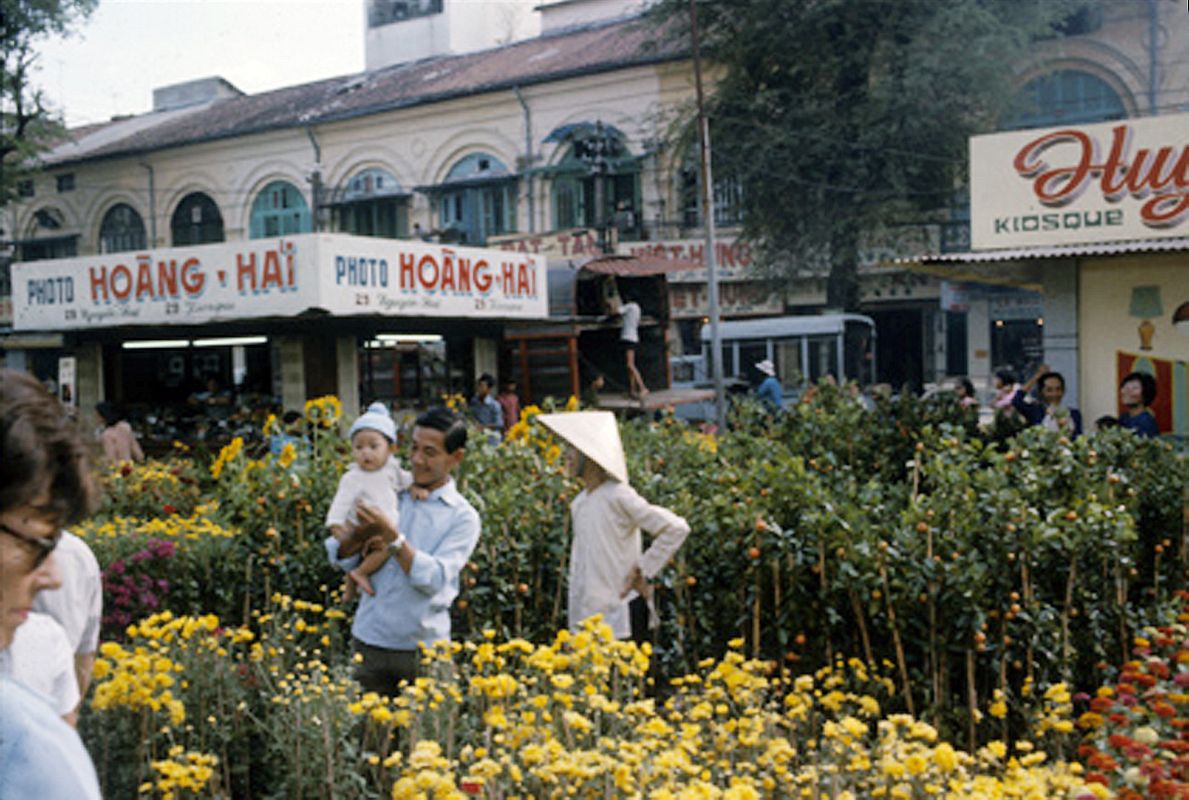
Along with banh tet, fireworks and red envelopes filled with lucky money, no visual represents the Tet holiday in Vietnam more than fresh flowers. Symbolizing wealth and passionate love, they adorn alters and tables as colorful manifestations of the joy that the Lunar New Year ushers into people’s homes.
In Saigon, the ochna integerrima (Vietnamese mickey-mouse plant) are most common thanks to their preference for hot, sunny climates, while the north’s gloomy growing season ushers in peach flowers and marumi kumquat. Farmers in the Mekong Delta fastidiously tend to the plants for months in the lead-up to the holiday, and to meet demand, Vietnam has even taken to importing them from abroad.
For decades, temporary flower markets have opened in response to every household’s desire to purchase the verdant delights. In these photos taken in the 1960s, one can observe Saigon’s stylish citizens mingling with vendors at one such market. The holiday atmosphere provides an opportunity for shoppers to wear their snazziest outfits and pose for photos amongst the rows of flowers.
It is easy to remark on how drastically Tết has changed over the years, but have the core elements really evolved that much?
For many, this most recent Tết probably included meeting friends at fancy bubble tea shops, snacking on junk food in front of Netflix, spending countless hours on social media, and perhaps even traveling to luxury resorts.
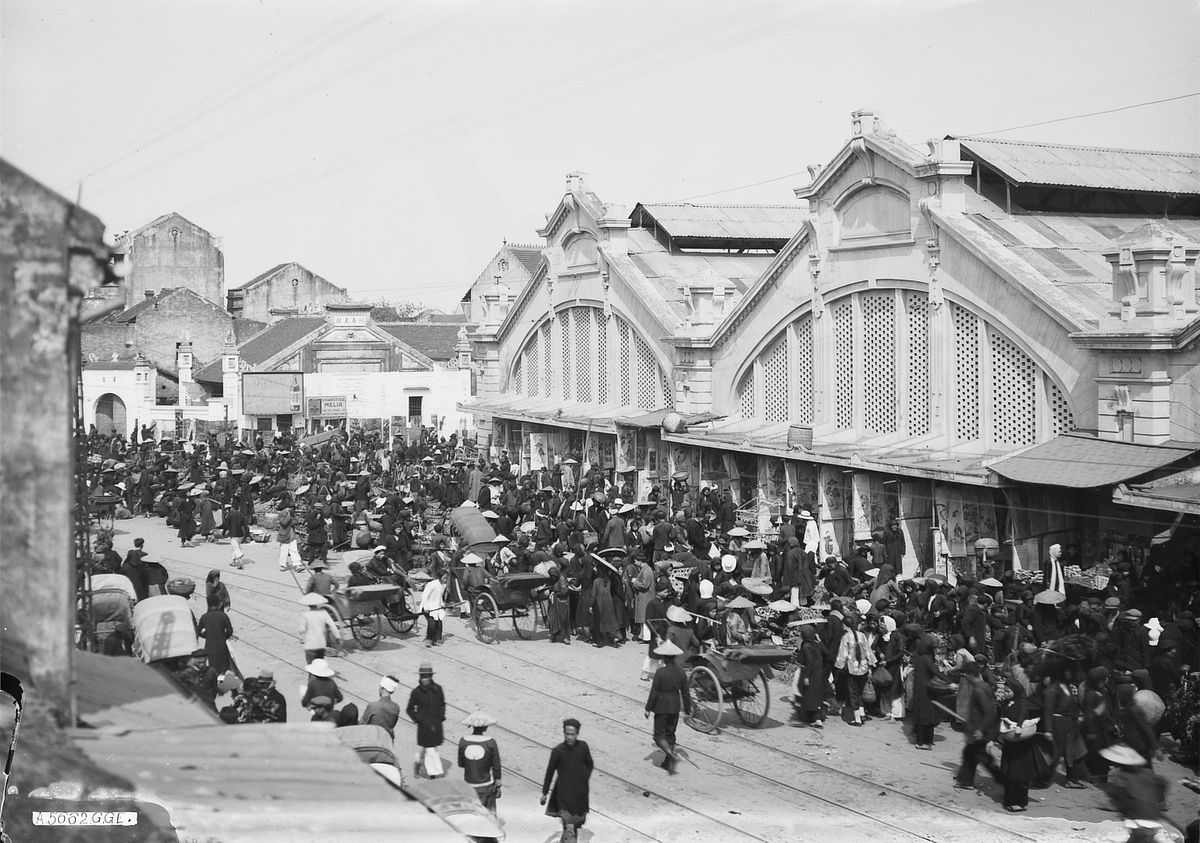
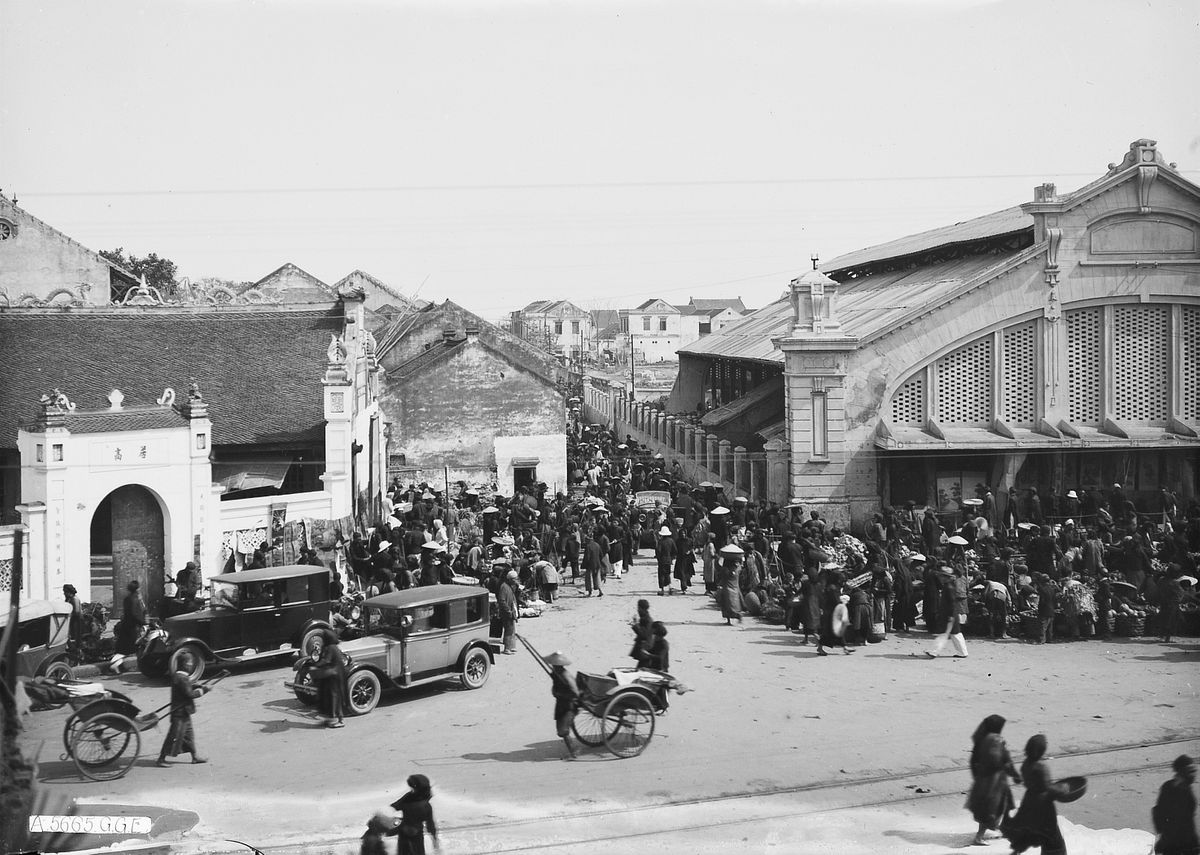
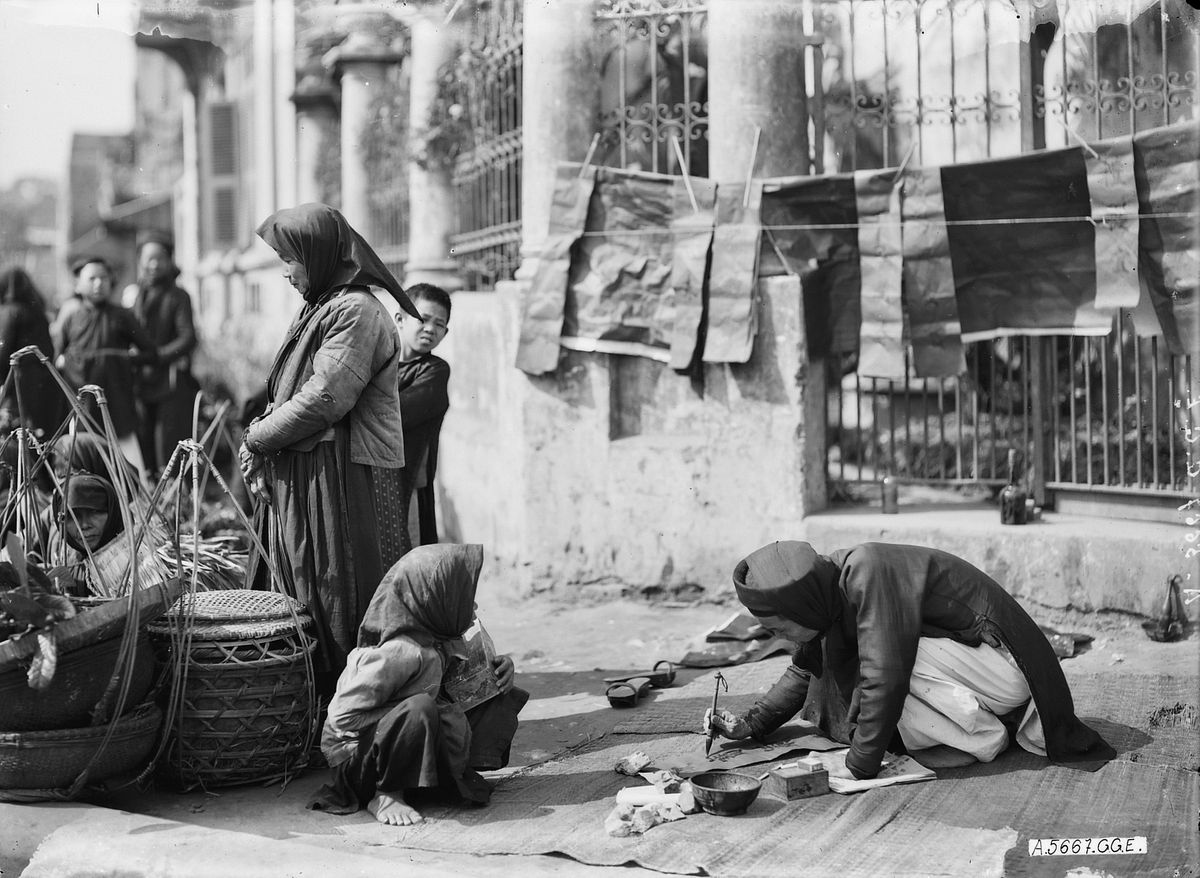
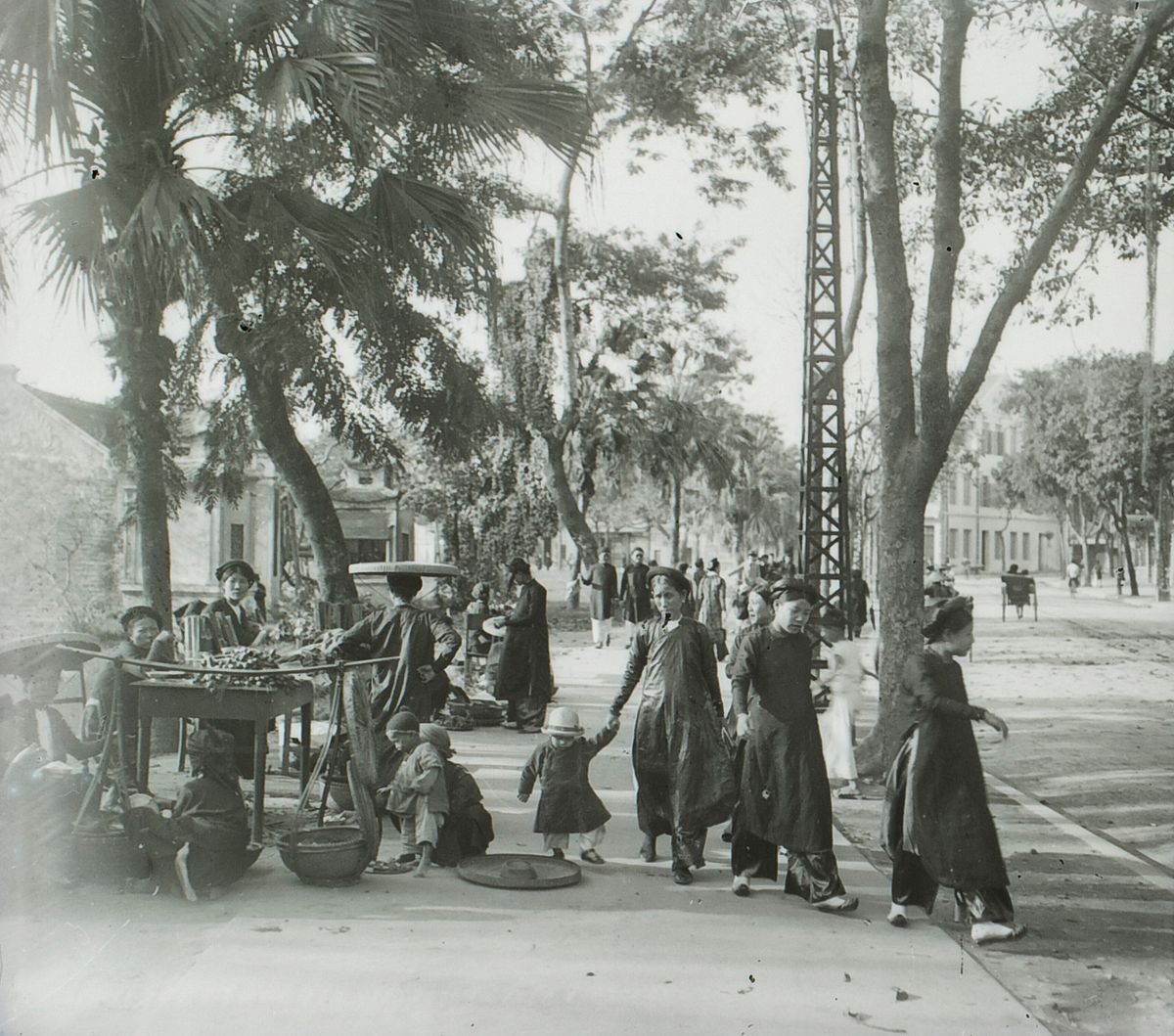
Certainly, none of these activities were available to Hanoi residents 100 years ago, but like today, a century ago markets bustled in the days leading up to the holiday, and then the streets emptied; people spent hours preparing special dishes and dressing up for photos and to honor their ancestors; and families spent hours leisurely strolling the streets or lounging in living rooms.
Have a look at these photos below and question how different the Lunar New Year in Hanoi was a century ago:
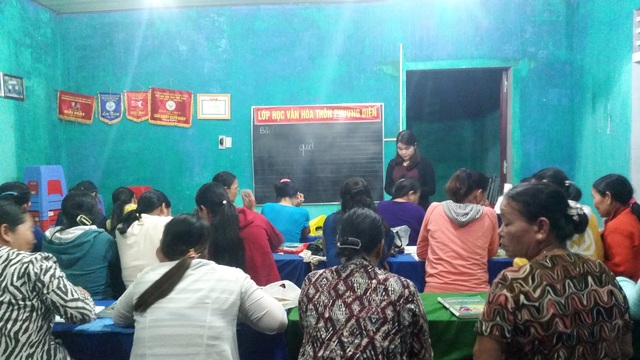
Khôngđồng đều về lứa tuổi, mỗi người một gia cảnh khác nhau nhưng ở tất cả họ đều có chung một ước mơ được biết chữ. Hiểu được mong muốn đó, một lớp học của “các mệ, các chị” đã được mở ra dành cho ngư dân vùng biển Phú Diên, huyện Phú Vang, tỉnh Thừa Thiên Huế.
“Cô giáo của lòng dân”
Cô Hiền bên lớp học thân thương của mình
Là giáo viên mầm non, hơn 16 năm công tác tại trường mầm non Phú Diên, cô giáo Nguyễn Thị Tâm Hiền (37 tuổi, thôn Phương Diên, xã Phú Diên, huyện Phú Vang, tỉnh Thừa Thiên Huế) khi tham gia sinh hoạt ở Chi hội phụ nữ xã đã biết được nguyện vọng của các mệ, các chị là mong muốn được học chữ. Từ đó cô Tâm quyết định xin phép thôn mở lớp học dạy chữ miễn phí. Không có lương, cũng không được phụ cấp bất cứ gì thế nhưng với cái tâm và sự nhiệt huyết của mình, mỗi tuần 4 buổi, cô Hiền đều đặn lên lớp đứng bục giảng.
Lê Hồng Quang (PV Đài THVN thường trú tại châu Âu)
Thứ tư, ngày 30/12/2020 09:04
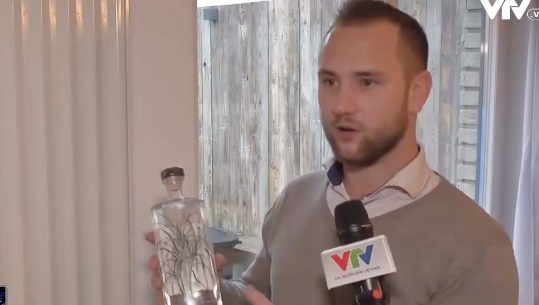
VTV.vn – Một công ty khởi nghiệp tại Vương quốc Bỉ vừa đưa ra thị trường một loại rượu Rhum cao cấp, được sản xuất hoàn toàn từ nước mía đông lạnh, nhập khẩu từ Việt Nam.
Công ty JTV tại Vương quốc Bỉ đã thử nghiệm nhiều loại mía nhưng chỉ có mía Việt Nam là cho ra rượu Rhum có mùi vị như ý.
“Do hoàn toàn chỉ dùng nước mía, chúng tôi làm được loại rượu Rhum rất thơm. Khi ngửi, sẽ thấy mùi mía tươi tới trước, sau đó mới thấy mùi rượu”, ông Thomas Schepers – công ty JTV Spirits (Bỉ) nói.
Rượu được đóng vào chai nửa lít, trên thân chai có hình cây mía Việt Nam.
After years of largely neglecting the buildup of plastic waste in Earth’s environment, the U.N. Environment Assembly will meet in February and March in the hopes of drafting the first international treaty controlling global plastics pollution.
Discarded plastic is currently killing marine life, threatening food security, contributing to climate change, damaging economies, and dissolving into microplastics that contaminate land, water, the atmosphere and even the human bloodstream.
The U.N. parties will debate how comprehensive the treaty they write will be: Should it, for example, protect just the oceans or the whole planet? Should it focus mainly on reuse/recycling, or control plastics manufacture and every step of the supply chain and waste stream?
The U.S. has changed its position from opposition to such a treaty under President Donald Trump, to support under President Joe Biden, but has yet to articulate exactly what it wants in an agreement. While environmental NGOs are pushing for a comprehensive treaty, plastics companies, who say they support regulation, likely will want to limit the treaty’s scope.
At the end of February, the United Nations Environment Assembly (UNEA) will tackle a challenging task: the creation of a landmark treaty to control plastic pollution worldwide. While most nations have agreed to participate, the scope and timing of such an agreement aren’t settled, with many countries, environmental NGOs, and the plastics industry expressing widely different ideas as to what should be included.
The role of commercial fishing vessels in disrupting military activities is not new. However, the democratisation of military technology has enabled civilians and clandestine military operators to play an expanding role in the modern hybrid maritime battlespace.
Vietnam players celebrate their win at the Women’s World Cup play-off with Chinese Taipei on February 6, 2022. Photo by Asian Football ConfederationVietnam will attend the 2023 Women’s World Cup for the very first time after a 2-1 victory in the play-off against Chinese Taipei on Sunday.
Playing in DY Patil Stadium in India, Vietnam opened the score in the seventh minute as Chuong Thi Kieu accurately headed the ball into the rival’s net after receiving a corner pass from Tuyet Dung.
The goal boosted the fighiting spirit of the Vietnamese women for the remainder of the match.
Investor–state disputes in the fossil fuel industry
By Lea Di Salvatore
Executive Summary
The fossil fuel industry is the most significant contributor to climate change. As the consequences of burning fossil fuels become increasingly evident, policy-makers across the globe are stepping up their efforts to curb emissions.These actions inevitably aim at curtailing fossil fuel activities. However, under current international investment law (IIL), foreign investments in fossil fuel projects are granted special protection and access to investor–state dispute settlement (ISDS). Through this system, investors can bring claims to international tribunals regarding regulatory measures adopted by a host state that they allege breach their investment privileges under IIL.
This report analyses the trends in investor–state disputes initiated by investors in the fossil fuel industry to understand the extent to which this industry relies on ISDS to protect its investments.The emerging picture is that the fossil fuel industry has been a pioneer of the ISDS system and has been using it extensively to protect its investments. This protection can hinder the development and implementation of measures to tackle climate change and can present a major obstacle for countries seeking to phase out fossil fuels.
Southeast Asia is home to over 54% of the world’s peatlands — tropical wetlands which have a major role to play in climate action. But they are being deforested rapidly: Around 25 million hectares of tropical peatlands in Southeast Asia have been deforested and drained over the last three decades alone, and only 6% of peatlands remain untouched.
This is a major blow to the region. These terrestrial wetland ecosystems help regulate water flow by capturing rainwater during the wet season and slowly releasing it during the dry season. They are also key habitats for endangered and rare species of both plants and animals, and are essential for the livelihoods of local communities.
Additionally, they are an important carbon store in the global carbon cycle; more than three-fourths of global peat carbon stocks (52 Gigatons) are stored in Southeast Asian peatlands. Their destruction warrants global attention.
The Biden administration took office with the intention of making partnership with Europe a central element of its China strategy. This paper assesses what has been achieved in the first year of these efforts, and what to expect in 2022. Despite some of points of contention, such as the disputes over the security pact between Australia, the United Kingdom, and the United States (AUKUS), European and US officials ended the year in a more optimistic place on the transatlantic China and Indo-Pacific agendas than they were at the start. Over the course of 2021, the two sides put in place new structures—from the EU-US Trade and Technology Council (TTC) to the Indo-Pacific high-level consultations—that have helped to get the right issues on the table and pushed their bureaucracies to deal with each other in ways that they had not before. Instead of a thin layer of periodic dialogues on China, there is an increasingly thick web of interactions, from working-level groups in different policy areas to leader-level exchanges. The EU and the United States also removed many of the obstacles to their joining forces more effectively on economic goals, particularly with the deal on steel and aluminum tariffs. Meanwhile, without raising excessively high expectations of a new coalition government that will not depart radically from its predecessor, the change in Berlin should also provide a stronger basis for cooperation on China than was present during the final phase of Chancellor Angela Merkel’s government.
All this needs to be translated into results this year. The gap between the EU and the United States is less in their analysis of China and more in the level of urgency with which they treat the challenge. Where the United States is in the process of making China the animating factor for its grand strategy, Europe is not, and the crisis with Russia will not make it likelier in the months ahead. Yet the actor that has done most to narrow the urgency gap between Europe and the United States has been China. Much as its escalatory sanctions in 2021 derailed its contentious Comprehensive Agreement on Investment with the EU, Beijing’s treatment of Lithuania is helping to expedite European plans to address economic coercion and supply-chain risks that might otherwise have taken years.
Economic coercion is one of several issues that are a priority for EU-US cooperation this year. The transatlantic agenda on China and the Indo-Pacific is a very expansive one and, although there is value to this breadth, the two sides will need to pick a few areas that merit an additional political push. While in an ideal world these would all be positive-sum efforts, such as aligning their infrastructure finance initiatives to compete more effectively with China’s Belt and Road Initiative (BRI), Europe and the United States will unavoidably have to deal with the sharp edges of Chinese power too. In all these efforts, the transatlantic agenda is only one component of a wider framework of cooperation that also involves their major partners in the Indo-Pacific. From the Quad to the TTC, one of the key goals for this year will be for these allies to stitch their efforts together with a view to driving outcomes rather than creating even more complex consultation structures.
There are also long-running goals for the United States and Europe that transcend administrations. There were striking shifts between the Obama, Trump, and Biden administrations but there has been more underlying consistency in what both sides need from each other in dealing with the China challenge than in many other policy fields. Considerable long-term planning is possible regardless of the potential political oscillations in the years ahead.




 CVD
CVD 