
|
English: Can education beat inequality?  Diễn đàn Kinh tế Thế giới năm nay thách thức những người tham dự suy nghĩ và đánh giá“Cuộc cách mạng công nghiệp lần thứ tư”, một kỷ nguyên của những tiến bộ công nghệ chóng mặt sẽ tác động mạnh đến các ngành công nghiệp và làm thay đổi tương lai theo những cách và không một ai trong chúng ta có thể tiên lượng được. Tuy nhiên, điều có thể dự đoán được là bất bình đẳng sẽ tiếp tục đổ bóng đen dài lên những tiến bộ của loài người, trừ khi chúng ta hành động. Đâu sẽ là vai trò bắt buộc của giáo dục bậc cao để đảm bảo sẽ có nhiều người hơn nữa sẵn sàng đón nhận lợi ích của thời đại sắp tới? Kiến thức đang – và vẫn sẽ – là thứ quyền lực nhất, và tính linh động kinh tế sẽ tiếp tục phụ thuộc, phần lớn, vào việc tiếp cận giáo dục có chất lượng.
Các trường đại học đang mở rộng cơ hội và chuẩn bị cho các thanh niên sẵn sàng trước những cam kết quan trọng đối với công việc của họ và đối với thế giới. Sinh viên sẽ va chạm với những quan điểm, lối tư duy có thể hoàn toàn xa lạ với họ – và kết quả là họ học để định hình cuộc sống của mình trong một bối cảnh rộng lớn hơn. Họ phát triển các thói quen tư duy thiên về sự linh hoạt và khả năng thích nghi, và họ ra trường với những ưu điểm có ích trong suốt cả cuộc đời. Tiếp tục đọc “Giáo dục có thể đánh bại bất bình đẳng?” |
Tháng: Tháng Hai 2016
Rác thải y tế độc hại lọt từ bệnh viện ra thị trường: Sự thật khủng khiếp bên trong bệnh viện
 Thay vì phải tiêu hủy, rác thải y tế độc hại được “âm thầm” phân loại ngay tại BV Bạch Mai (Hà Nội) để chuyển cho một đường dây thu gom.
Hàng chục tấn rác thải y tế độc hại lẽ ra phải bị tiêu hủy theo đúng quy trình nghiêm ngặt tại những cơ sở được cấp phép lại đang được “âm thầm” sơ chế tại một trong những cơ sở khám – chữa bệnh lớn và uy tín nhất Việt Nam: Bệnh viện Bạch Mai (Hà Nội). Để rồi, những phế phẩm vô cùng nguy hại này được tái chế thành những sản phẩm nhựa tại những cơ sở sản xuất thủ công ngay ngoại thành Hà Nội, và rất có thể chúng trở thành những chiếc thìa nhựa, cốc nhựa mà người dân vẫn sử dụng hằng ngày.
“Phá trận” đảo nhân tạo Trung Quốc trên Biển Đông
VT – Trên hết, nếu Trung Quốc vẫn quyết tâm biến biển Đông thành ao nhà của mình thì các nước Việt Nam, Philippines, Mỹ, Nhật và Ấn Độ cần hình thành một liên minh mạnh mẽ hòng đảo ngược lại trạng thái mất cân bằng quyền lực ấy.

Pháo đài bay B-52 của Mỹ thể hiện uy lực trong cuộc tập trận
Những hình ảnh chụp từ vệ tinh được tờ tạp chí tình báo quốc phòng IHS Jane’s phân tích cho thấy Trung Quốc đang xây dựng trên Đá Chữ Thập thuộc quần đảo Trường Sa một doi đất mang hình dáng sân bay dài 3.000m và một hải cảng đủ lớn cho các tàu chở dầu và tàu chiến lớn neo đậu. Đây không phải là lần đầu tiên Trung Quốc làm vậy, đảo này là hòn đảo mới nhất được Trung Quốc xây dựng trong chuỗi hành động xây đảo lấn biển mà nước này đang tiến hành ở cả quần đảo Trường Sa và Hoàng Sa trên biển Đông. Tiếp tục đọc ““Phá trận” đảo nhân tạo Trung Quốc trên Biển Đông”
Phân biệt Chùa, Đình, Đền, Miếu, Nghè, Điện, Phủ, Quán, Am,…
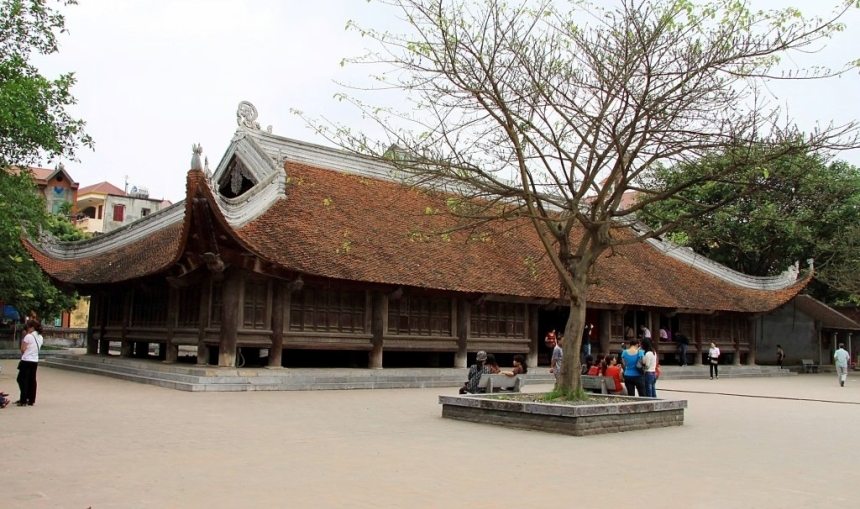
(hanhtrinhtamlinh.com) Trong đời sống văn hóa tâm linh của người Việt Nam có rất nhiều nơi thờ cúng khác nhau như đình, đền, chùa, miếu, phủ, quán, am,…Nhưng không phải ai cũng hiểu được ý nghĩa của những địa điểm thờ cúng đó. Cho nên có rất nhiều người đi chùa mà không hiểu được ý nghĩa của việc đi chùa, ở gần nhà có cái đình mà cũng không hiểu vì sao cái đình lại “mọc” lên ở đó,…
Vì vậy, chúng tôi đã biên tập bài viết này để giúp bạn đọc dễ dàng phân biệt được các địa điểm thờ cúng khác nhau, hiểu được ý nghĩa của việc thờ cúng và những nhân vật được thờ cúng trong đó. Tiếp tục đọc “Phân biệt Chùa, Đình, Đền, Miếu, Nghè, Điện, Phủ, Quán, Am,…”
Vui xuân Bính Thân 2016 – tại xã Minh Khai, Hoài Đức, Hà Nội
Chào các bạn,
Hòa chung không khí vui xuân Bính Thân 2016, mình xin chia sẻ với các bạn một số hình ảnh vui tết tại quê mình – xã Minh Khai, huyện Hoài Đức, thành phố Hà Nội. Các hoạt động này do hội thanh niên tích cực Minh Khai PYA kết hợp với đoàn xã và ban văn hóa xã tổ chức.
Chương trình vui tết với khai bút đầu xuân, biểu diễn võ thuật, triển lãm ảnh Minh Khai xưa và nay, đập niêu đất, đi cà kheo, đi cầu khỉ, thi vẽ tranh, thi dán tranh, quay xổ số, ném vòng cổ chai.
 Tiếp tục đọc “Vui xuân Bính Thân 2016 – tại xã Minh Khai, Hoài Đức, Hà Nội”
Requiem for a river: Can one of the world’s great waterways survive its development?

Despite Stay, America’s Economy and Climate Need the Clean Power Plan
by  Sam Adams and –
WRI – Yesterday, the U.S. Supreme Court paused implementation of the Clean Power Plan (CPP) to allow an appeals court to consider a legal challenge from a number of states, corporations and industry groups. That case is being expedited, and a decision is expected by the fall.
Importantly, the Supreme Court’s decision to grant a temporary stay was not based on the legal merits of the CPP, which calls for emissions reductions throughout states’ power sectors. Experts agree that the CPP is on solid legal ground and will prevail. Indeed, previously the Supreme Court not only upheld the EPA’s authority to regulate carbon pollution under the Clean Air Act (which the Clean Power Plan builds upon), the Court found the agency had the obligation to do so to protect Americans’ health.
We expect yesterday’s ruling to be only a temporary time out as the CPP heads to full implementation. As the legal case proceeds, the EPA has indicated it will continue to help states put in place the plans and tools they need to comply with the rule, and the Obama administration has committed to continue taking aggressive steps to reduce emissions and lead in the fight against climate change.
Clean Power Plan: Smart, Balanced and Beneficial
The benefits of the plan are clear, far-reaching and worth fighting for. The CPP offers a smart, balanced approach that will cut dangerous pollution as it drives innovation, creates new job opportunities and improves public health. The CPP is one of the most important near-term tools the United States can use to help reach its goal of reducing emissions 26-28 percent below 2005 levels by 2025. In addition, the plan will make our air safer to breathe by reducing Americans’ exposure to particulate matter and ground-level ozone, benefiting our health and the economy by an estimated $25 billion to $65 billion – far more than the $7 billion to $9 billion cost of compliance, according to the EPA.
Tiếp tục đọc “Despite Stay, America’s Economy and Climate Need the Clean Power Plan”
Industrial Policy: A Guide for the Perplexed
ocppc – For the purpose of this short note, industrial policy is defined as government intervention in a specific sector which is designed to boost the growth prospects of that sector and to promote development of the wider economy. I exclude from this definition horizontal policies, such as investment in education, reinforcement of the rule of law and property rights, and so on, even though these horizontal policies can affect different sectors differently and so can be part of an industrial policy. I do so for the sake of brevity and because the importance of horizontal policies is widely understood, and there is much less controversy surrounding them than around sectoral interventions. To sharpen the focus further, I also exclude interventions at the sectoral level which aim to achieve other objectives than growth and employment, such as improving environmental and safety standards, as these interventions aim to correct well-recognized market failures and are also relatively uncontroversial.
Industrial policy so defined takes many shapes, including regulatory reform, subsidies, protection, and direct government ownership of enterprises, and it has a checkered past. Its heyday was in the 1950s and 1960s, a period characterized by post-war recovery, rapid growth, decolonization, and import substituting industrialization (ISI). Following the ideas of Hirschman (1958)dynamic industrial sectors paying high wages and exhibiting strong backward linkages received special attention. While many developing countries did well during this phase, their inability to sustain growth following the oil shocks and inflation of the 1970s, the international interest rate hikes and Latin American debt crisis that followed, severely discredited ISI. Drawing on the example of a small number of successful “Asian tigers”, a new “outward-oriented” model of industrial policy became increasingly accepted. This entailed systematic promotion of key manufacturing export sectors which could exploit large world markets, but which also required imports of state-of-the-art machinery, the know-how of foreign investors, and maintenance of a competitive exchange rate (Dani Rodrik, Middle East Development Journal, 2008). Encouraged by some international organizations such as UNIDO and UNCTAD, many developing countries, for example, Brazil and India, continue to practice this model today, or at least, attempt to do so.
Điều chỉnh phân công công tác một số thành viên Chính phủ
05/02/2016 chinhphu.vn
j

(Chinhphu.vn) – Thực hiện sự phân công của Bộ Chính trị đối với một số đồng chí Ủy viên Bộ Chính trị và Bí thư Trung ương Đảng; xét đề nghị của Bộ trưởng Bộ Giao thông vận tải và Bộ trưởng, Chủ nhiệm Văn phòng Chính phủ, Thủ tướng Nguyễn Tấn Dũng điều chỉnh phân công công tác của một số thành viên Chính phủ.
Tiếp tục đọc “Điều chỉnh phân công công tác một số thành viên Chính phủ”
Phân công Bộ Chính trị, Ban Bí thư khóa XII
THỜI SỰ
Thứ 6, 05/02/2016, 19:09
Phân công Bộ Chính trị, Ban Bí thư khóa XII

Ông Đinh Thế Huynh (bìa trái) trao quyết định phân công công tác cho ông Võ Văn Thưởng. Ông Phạm Minh Chính (bìa phải).
Danh sách Bộ Chính trị khóa 12
28/01/2016 08:18 GMT+7
 – Tại phiên bế mạc Đại hội sáng 28/1, ông Đinh Thế Huynh đã thay mặt Đoàn Chủ tịch thông báo kết quả bầu Bộ Chính trị, Ban Bí thư, UB Kiểm tra TƯ, Chủ nhiệm UB Kiểm tra TƯ.
CLICK ẢNH DƯỚI ĐÂY ĐỂ XEM CHI TIẾT VỀ CÁC ỦY VIÊN BỘ CHÍNH TRỊ KHÓA 12:

Ban chấp hành TƯ khóa 12 gồm 180 ủy viên chính thức, 20 ủy viên không chính thức. Tiếp tục đọc “Danh sách Bộ Chính trị khóa 12”
Người có tầm nhìn của Thái Lan xây dựng ngành công nghiệp mặt trời với thúc đẩy từ IFC như thế nào
English: How Thailand’s Solar Power Visionary Built an Industry with a Boost from IFC

TIÊU ĐIỂM
– Một trong những người chiến thắng giải thưởng – UN Momentum for Change – Động lực cho sự thay đổi của LHQ năm nay đang thay đổi hoàn toàn công suất năng lượng tái tạo của Thái Lan với các trang trại năng lượng mặt trời quy mô lớn.
– Để có được nguồn tài chính liên tục cho những thứ mà lúc đó là một ngành công nghiệp mới của nước này, bà đã làm việc với Tập đoàn tài chính Quốc tế (IFC) của Ngân hàng Thế giới và Quỹ Công nghệ sạch để sử dụng nguồn tài chính tổng hợp.
– Dự án nâng công suất năng lượng sạch đã góp phần thúc đẩy tăng trưởng kinh tế ở một trong những vùng nghèo nhất của Thái Lan.
Ngân hàng Thế giới – thị trường năng lượng mặt trời của Thái Lan đã bế tắc trong năm 2008, với năng lượng mặt trời chiếm ít hơn 2 MW công suất lắp đặt. Mặc dù, chi phí công nghệ đã giảm, và chính phủ đã bắt đầu có ưu đãi khuyến khích phát triển năng lượng tái tạo. Wandee Khunchornyakong, một giám đốc điều hành sản xuất pin năng lượng mặt trời (đã về hưu), đã nhìn thấy tiềm năng.
Bà muốn giúp giảm sự phụ thuộc của Thái Lan vào năng lượng nhập khẩu, và bà tin rằng bà có thể thúc đẩy tăng trưởng kinh tế ở một trong những vùng nghèo nhất của đất nước cùng một lúc bằng cách xây dựng các trang trại năng lượng quy mô nhỏ.
Tài trợ từ Công ty Tài chính Quốc tế của Ngân hàng Thế giới đã cho Công ty năng lượng mặt trời (SPCG) của bà một lực đẩy cần thiết để thu hút các nhà đầu tư vào một sân chơi mới được kiểm chứng ở Thái Lan. Tiếp tục đọc “Người có tầm nhìn của Thái Lan xây dựng ngành công nghiệp mặt trời với thúc đẩy từ IFC như thế nào”
Nữ giáo sư gốc Việt Caroline Kiều Linh và cuốn sách Transnationalizing Viet Nam
Transnationalizing Viet Nam Community, Culture, and Politics in the Diaspora
Kieu-Linh Caroline Valverde
“Bridging Asian Studies and Asian American Studies, Transnationalizing Viet Nam is a rich and nuanced study of transnational linkages between Viet Nam and its diaspora in the United States. Through fascinating case studies of Vietnamese popular music productions, Internet virtual communities, diasporic art and community politics, Kieu-Linh Caroline Valverde provides a rare glimpse into how Vietnamese have connected their worlds and made meanings for themselves.”
—Yen Le Espiritu, Professor of Ethnic Studies, University of California, San Diego
temple.edu – Vietnamese diasporic relations affect—and are directly affected by—events in Viet Nam. In Transnationalizing Viet Nam, Kieu-Linh Caroline Valverde explores these connections, providing a nuanced understanding of this globalized community. Valverde draws on 250 interviews and almost two decades of research to show the complex relationship between Vietnamese in the diaspora and those back at the homeland.
Arguing that Vietnamese immigrant lives are inherently transnational, she shows how their acts form virtual communities via the Internet, organize social movements, exchange music and create art, find political representation, and even dissent. Valverde also exposes how generational, gender, class, and political tensions threaten to divide the ethnic community.
Transnationalizing Viet Nam paints a vivid picture of the complex political and personal allegiances that exist within Vietnamese America and shape the relations between this heterogeneous community and its country of origin.
Náo nức phiên chợ Tráng Kìm những ngày giáp Tết
TN – Những ngày giáp Tết, cao nguyên đá dường như trở nên nhộn nhịp và tràn đầy sắc màu với buổi chợ phiên đông đúc người mua kẻ bán, rộn thành bao thanh âm.
Bên dòng sông Tráng Kìm, khu chợ Đông Hà họp mỗi sáng thứ năm hàng tuần, tấp nập và đầy dư vị.
Chợ Đông Hà (còn gọi là chợ Tráng Kìm) thuộc thôn Tráng Kìm, xã Đông Hà, huyện Quản Bạ, tỉnh Hà Giang. Phiên chợ chính họp vào buổi sáng thứ năm và họp một phiên phụ vào sáng chủ nhật. Chợ họp từ lúc tờ mờ sáng cho đến hết buổi trưa.

Gian hàng bán đồ nhựa với nhiều màu sắc. Hầu hết ai đi chợ cũng đều sắm sửa cho gia đình những vật dụng cần thiết chuẩn bị cho những ngày Tết no ấm. Tiếp tục đọc “Náo nức phiên chợ Tráng Kìm những ngày giáp Tết”
Cancer burden in Vietnam: Avoidable consequences, preventable illness
Tuoi Tre News
Updated : 12/17/2015 07:55 GMT + 7
Death and the detrimental effects of cancer, which is itself a preventable disease, can be avoided by early detection and proper treatment.
>> Cancer burden in Vietnam: P2 – The culprits
>> Cancer burden in Vietnam – P1: Liabilities
tuoitrenews – Contrary to popular belief that a diagnosis of cancer means a death penalty, experts have asserted otherwise.
The cancer burden would be significantly eased by adopting a comprehensive preventative model, made possible with competent agencies’ effective administrative role and improved awareness.
Dr. Nguyen Chan Hung, chair of the Cancer Association of Vietnam, warned that diets rich in animal fat and meat, tainted food, dried salty fish or pickled vegetables, or insufficient vegetables and fruits are among the contributory factors of different types of cancer.
Those who smoke or drink heavily, and lead a sedentary lifestyle, also stand higher risks of contracting the illness.
According to Dr. Tran Thi Anh Tuong, vice head of the Nutrition Department of Ho Chi Minh City Oncology Hospital, all cancers start because abnormal cells grow out of control.
Cancerous cell growth is different from normal cell growth.
Instead of dying, cancerous cells continue to grow and form new, abnormal cells.
Cancer cells can also invade, or grow into, other tissues, something that normal cells cannot do.
Except for some unavoidable factors including genetic elements and old age, other causes are preventable thanks to a healthy lifestyle and adequate knowledge of the disease.
Early diagnosis saves lives, cuts costs
Dr. Mai Trong Khoa, deputy director of Bach Mai Hospital in Hanoi and director of the Nuclear Medicine and Oncology Center, told Tuoi Tre (Youth) newspaper earlier this month that approximately 100,000 out of 125,000 new cancer patients in Vietnam die of the illness each year.
New cancer cases have gone up especially fast recently, while the mortality rate has also been on the rise. Tiếp tục đọc “Cancer burden in Vietnam: Avoidable consequences, preventable illness”
 CVD
CVD 
economist – GUO, the driver, pulls his car to a merciful halt high above a crevasse: time for a cigarette, and after seven hours of shuddering along narrow, twisting roads, time for his passengers to check that their fillings remain in place. Lighting up, he steps out of the car and dons a cloth cap and jacket: sunny, early-summer days are still brisk 3,500 metres above sea level. Mr Guo is an impish little dumpling of a man, bald, brown-toothed and jolly. He is also an anomaly: a Shanghainese in northern Yunnan who opted to stay with his local bride rather than return to his booming hometown.
Tiếp tục đọc “Requiem for a river: Can one of the world’s great waterways survive its development?” →