Đến năm 2020 Việt Nam có những tuyến cao tốc nào?

Lê Anh – Thứ Tư,  9/3/2016, 19:54 (GMT+7)

(TBKTSG Online) – Bộ Giao thông Vận tải (GTVT) đặt mục tiêu đến hết năm 2020 sẽ đầu tư khoảng 2.500 km đường cao tốc, tập trung ưu tiên vào các đoạn cao tốc Bắc Nam phía Đông, các tuyến ở khu vực vùng Thủ đô Hà Nội, TPHCM và các tuyến nối với các cảng biển, cửa khẩu quốc tế.

Đường cao tốc TPHCM – Long Thành – Dầu Giây đoạn đi qua địa phận tỉnh Đồng Nai. Ảnh: Anh Quân

Tiếp tục đọc “Đến năm 2020 Việt Nam có những tuyến cao tốc nào?” →

Nonproliferation and Nuclear Energy: The Case of Vietnam

Is Vietnam diverting its civilian know-how to create an indigenous nuclear weapons program? Not yet, says the CSS’ Oliver Thränert, but increased tensions or overt conflict with China could lead Hanoi to develop its own nuclear deterrent.

By Oliver Thränert for Center for Security Studies (CSS)

ISN – For many years, the international nuclear non-proliferation regime has been in deep crisis. This became apparent most recently when the ninth Review Conference of the Parties to the Treaty on the Non-Proliferation of Nuclear Weapons (NPT) in May 2015 ended without a common final document. At the same time, a number of threshold countries are planning to begin using nuclear energy for peaceful purposes. In a time of increasing international tensions, some of them might build on know-how acquired through their civilian programs to safeguard their national security needs through a nuclear weapons program in the near future. Vietnam is an interesting case in point. Irrespective of certain delays in the development of its peaceful nuclear program, the country has progressed quite far. At the same time, it is engaged in an increasingly precarious conflict with its main neighbor, nuclear-armed China. Currently, there are no signs of a Vietnamese nuclear weapons program. In the framework of the nuclear non-proliferation regime, the country is a model of transparency and cooperation. But it is uncertain whether this will always remain the case. On the contrary, Hanoi might change its policy if the conflict with China should come to a head while the NPT continues to be weakened.

Vietnam’s strategic situation

Vietnam might complete its first nuclear reactor within a few years, ahead of ambitious neighbors such as Indonesia or Malaysia. The country’s main motivations are its growing energy requirements and the desire to diversify its energy sources. Considerations of prestige may also be a factor. As a threshold nation, Vietnam aims to achieve the same level as Asia’s developed nations. With a view to China, Hanoi probably also wishes to demonstrate the high level of global confidence that the country enjoys in sensitive matters of security policy. Tiếp tục đọc “Nonproliferation and Nuclear Energy: The Case of Vietnam” →

“Chợ bom” đã bớt cưa bom

22/03/2016 13:41 GMT+7

TTO – Nhiều người cho rằng sau vụ nổ kinh hoàng ở Hà Đông, dân kinh doanh phế liệu là vỏ bom mìn ở “chợ bom” xã Diễn Hồng, huyện Diễn Châu tỉnh Nghệ An đã biết sợ.

“Chợ bom” đã bớt cưa bom
Phế liệu bom mìn tại các cơ sở kinh doanh phế liệu ở Diễn Hồng năm 2005 – Ảnh: Vũ Toàn
Sau vụ nổ kinh hoàng ở Hà Đông (Hà Nội), chúng tôi tìm đến “chợ bom” ở xã Diễn Hồng, huyện Diễn Châu (Nghệ An) – nơi mà trước đây sắt, thép phế liệu, trong đó có bom, đạn đều được họ mua tuốt luốt (bài “Chợ… bom” , Tuổi Trẻ ngày 25-5-2005). Tiếp tục đọc ““Chợ bom” đã bớt cưa bom” →

Blogger Anh Ba Sàm hầu toà vì xâm phạm lợi ích của Nhà nước

09:03 AM – 23/03/2016 TN

Blogger Anh Ba Sàm Nguyễn Hữu Vinh và nhân viên dưới quyền bị cáo buộc viết 24 bài viết trên hai blog Dân quyền và Chép Sử Việt có nội dung xuyên tạc đường lối, chính sách của Đảng; bôi nhọ các cá nhân.

blogger-anh-ba-sam-hau-toa-vi-xam-pham-loi-ich-cua-nha-nuoc
Blogger Anh Ba Sàm Nguyễn Hữu Vinh Tiếp tục đọc “Blogger Anh Ba Sàm hầu toà vì xâm phạm lợi ích của Nhà nước” →

Indonesia hopes to maintain good relations with China

Good relations: Foreign Minister Retno Marsudi speaks to journalists at the Foreign Ministry. She said Indonesia would strive to maintain its good relations with China, along with upholding international law, despite a recent fishing dispute. (thejakartapost.com)

Good relations: Foreign Minister Retno Marsudi speaks to journalists at the Foreign Ministry. She said Indonesia would strive to maintain its good relations with China, along with upholding international law, despite a recent fishing dispute. (thejakartapost.com)

Foreign Minister Retno Marsudi has said Indonesia wants to maintain good relations with China despite a recent fishing dispute.

“We have a good relationship with China. [Despite the fishing dispute] we will strive to maintain our good relations along with international laws,” Retno said at the State Palace on Monday. Tiếp tục đọc “Indonesia hopes to maintain good relations with China” →

CSIS: Asia Maritime Transparency Initiative, March 22, 2016

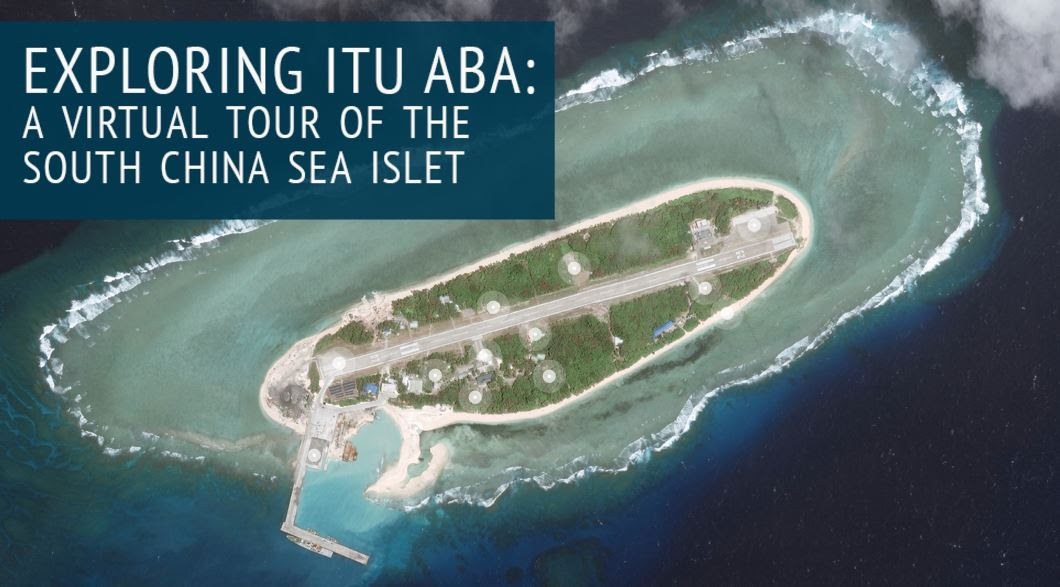
Exploring Itu Aba: A Virtual Tour of a South China Sea Islet

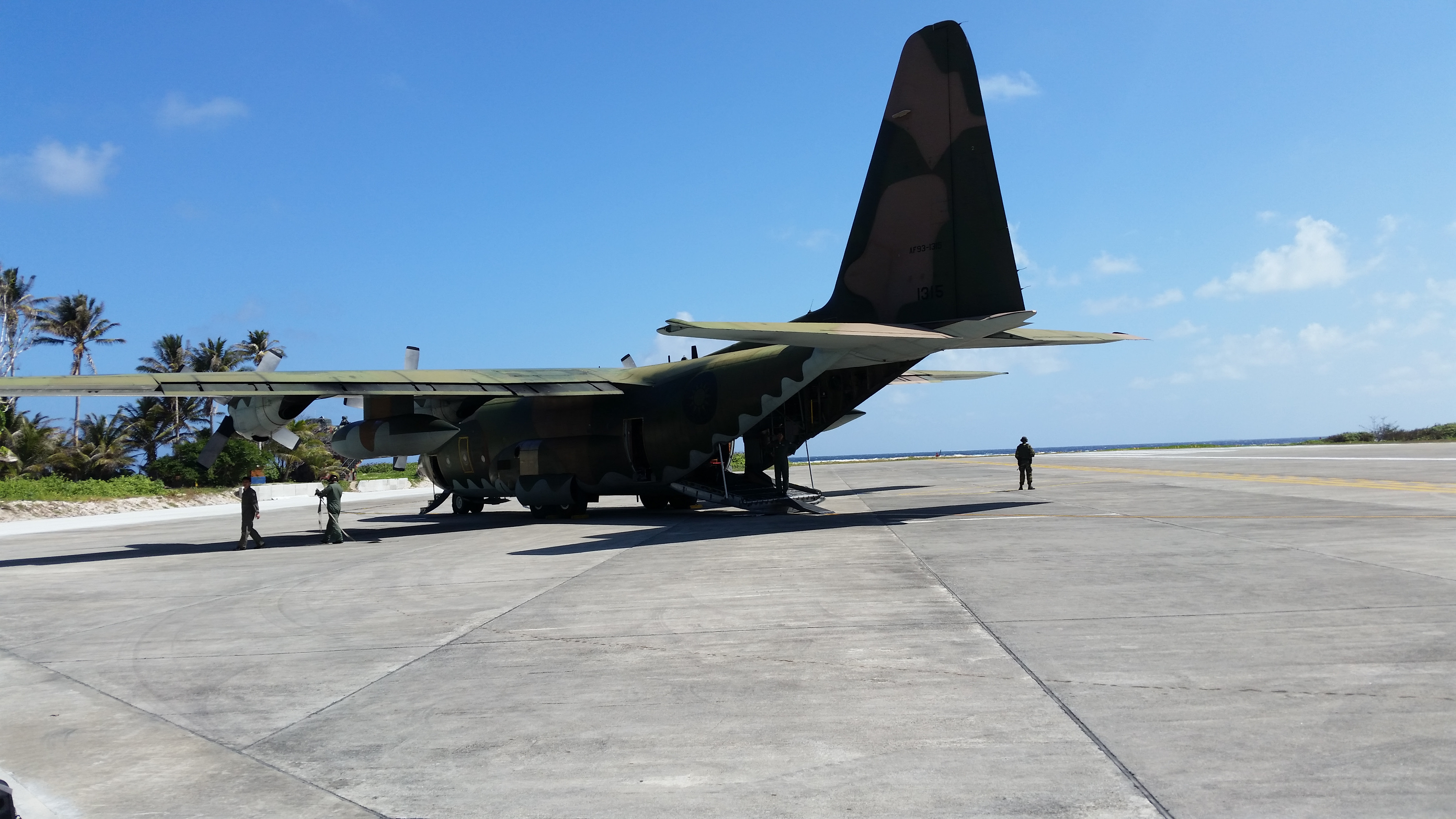
On January 23, AMTI Director Gregory Poling and Ambassador José Abeto Zaide, now with the Manila Bulletin, became the first foreigners to visit Itu Aba (Taiping Dao in Chinese)—the only feature in the Spratly Islands occupied by Taiwan. They accompanied a delegation of Taiwanese experts and officials, including the ministers of foreign affairs, mainland affairs, and environmental protection. President Ma Ying-jeou made his first visit to the island five days later. Using the graphic below, you can explore each location the group visited. And even more images and video follow.

Itu Aba has a lot of attention lately thanks to its inclusion in Manila’s arbitration case against Beijing’s South China Sea claims. The Philippines’ legal team has argued that Itu Aba cannot sustain human habitation and is therefore legally a “rock,” entitled to only a 12-nautical-mile territorial sea, and not an “island,” which would generate an exclusive economic zone and continental shelf. Manila believes that if Itu Aba—the largest naturally formed feature in the Spratly Islands—is not an island, then none of the Spratlys are. Taipei has insisted Itu Aba is an island, and the debate has focused on details such as the availability of drinkable water and arable soil.

For more on the debate, listen to recent AMTI podcasts with Paul Reichler, lead counsel for the Philippines, and Shen Lyu-Shun, Taiwan’s representative to the United States, or read “Is There Drinkable Water and Topsoil on Itu Aba?” by Yann-huei Song.

Read on…

  Tiếp tục đọc “CSIS: Asia Maritime Transparency Initiative, March 22, 2016” →

Will Indonesia, Provoked, Now Choose to Lead on the South China Sea?

CSIS

A confrontation between Indonesian and Chinese law enforcement vessels in the South China Sea over the weekend could mark a turning point in Indonesian foreign policy under President Joko “Jokowi” Widodo, forcing him to choose between two of his top priorities: attracting foreign investment – particularly Chinese investment – to fund his ambitious infrastructure agenda; and a more assertive defense of Indonesian territorial integrity and sovereignty over its natural resources. That, in turn, could herald a significant shift in diplomacy over the South China Sea. Tiếp tục đọc “Will Indonesia, Provoked, Now Choose to Lead on the South China Sea?” →

Cá ngừ đại dương: có tiếng mà chưa có miếng – Vì sao cá ngừ Việt Nam không thể làm sushi?

Cá ngừ đại dương: có tiếng mà chưa có miếng

Ngọc Hùng – Thứ Hai,  21/3/2016, 21:07 (GMT+7)

Làm sao để nâng cao chất lượng cá ngừ đại dương sau khi đánh bắt vẫn là một vấn đề nan giải của Việt Nam. Trong ảnh: một con cá ngừ đại dương trưng bày tại Lễ hội thủy sản tại Phú Yên. Ảnh: NH

(TBKTSG Online) – Cuối tháng 1-2016, Việt Nam đã mang 8 con cá ngừ đại dương sang Nhật Bản để đấu giá, và so với lần đấu giá năm 2014, chất lượng sản phẩm của Việt Nam đã cải thiện ít nhiều.  Tuy nhiên, sự kiện nói trên cũng chỉ mang tính chất “trình diễn”, vì sản lượng cá ngừ Việt Nam thực tế vẫn chưa đáp ứng được yêu cầu trong nước, hàng năm vẫn phải chi hàng trăm triệu đô la Mỹ nhập khẩu cá ngừ cho tiêu dùng nội địa.

Tiếp tục đọc “Cá ngừ đại dương: có tiếng mà chưa có miếng – Vì sao cá ngừ Việt Nam không thể làm sushi?” →

Deadly blast in Hanoi allegedly caused by man opening bomb with blow torch, police said

By Ha An – Minh Chien, Thanh Nien News

HANOI – Sunday, March 20, 2016 16:26

The large crater caused by the blast in Hanoi on March 19. Photo: Minh Chien

The large crater caused by the blast in Hanoi on March 19. Photo: Minh Chien

thanhniennews: The Ministry of Public Security has found traces of explosives and bomb debris at the site of a blast in Hanoi on Saturday that killed four people, injured 10 others and damaged more than 120 houses.

The explosion at about 3.10 p.m. at a scrap metal trading business seriously tore through 36 houses and damaged 95 others, and left a large crater in Van Phu residential area, Ha Dong District, the police said. Many vehicles along the street were damaged too.

Although the police was yet to officially pinpoint the cause of the blast, they speculated that it was ignited when the shop owner tried to cut open a bomb using a blow torch.

One of the perished victims was Pham Van Cuong, 42, who had rent the house for his scrap metal shop since 2013 and reportedly often used a blow torch to cut large scrap metal pieces, police said.

Tiếp tục đọc “Deadly blast in Hanoi allegedly caused by man opening bomb with blow torch, police said” →

HẠN CHẾ XE CÁ NHÂN: Một thực tế bế tắc

21/03/2016 11:41 GMT+7

TTCT – Cảnh tượng các tuyến đường vào nội thành ùn tắc không khác gì những bãi đậu xe đang ám ảnh rất nhiều người dân TP.HCM. 12 năm trước, đề án “Hạn chế phương tiện giao thông cá nhân” tại TP.HCM (gọi tắt là xe cá nhân) giai đoạn 2005-2010 đã được Sở Giao thông công chánh (nay là Sở Giao thông vận tải) trình UBND TP nhưng chưa được phê duyệt.

 Một thực tế bế tắc
Kẹt xe tại ngã tư Hàng Xanh (Q.Bình Thạnh, TP.HCM) -Thuận Thắng

Đề án xe cá nhân tiếp tục là một hạng mục trong “Chương trình kéo giảm ùn tắc giao thông TP” giai đoạn 2011-2015, nhưng đến nay việc hạn chế xe cá nhân ở TP vẫn chưa được triển khai trên thực tế. Tiếp tục đọc “HẠN CHẾ XE CÁ NHÂN: Một thực tế bế tắc” →

New Energy, New Geopolitics: Balancing Stability and Leverage

An assessment of how shale gas and tight oil in the United States is impacting energy, geopolitical and national security dynamics around the world.

CSIS – In early 2013, the CSIS Energy and National Security Program and the Harold Brown Chair in Defense Policy Studies assembled a broad multi-functional team to explore how shale gas and tight oil in the United States is impacting energy, geopolitical and national security dynamics around the world, with the intention of providing policymakers with a structured way to consider the potential risks and rewards of the new shale gas and tight oil resources.

The result was the report, “New Energy, New Geopolitics: Balancing Stability and Leverage” which concludes:

  • Shale gas and tight oil have had important impacts on the global energy sector. It has changed energy trade flows, altered the investment outlook for energy projects, reordered the climate change debate, and has helped change the energy posture of the United States, to name a few.
  • To date, the broader geopolitical impacts have remained limited. The uncertain trajectory of U.S. production, and even more uncertain, the potential for global production, make anticipating future impacts difficult.
  • So far, perception leads reality when it comes to geopolitical and national security impacts. Many countries are acting on early interpretations of the shale gas and tight oil trend.
  • A U.S. strategy for how to incorporate shale gas and tight oil developments into its current energy and national security strategies is still evolving. Going forward, U.S. policymakers face a choice between two strategic paths for managing shale gas and tight oil resources: “energy stability” or “energy leverage.”
  • This report concludes that “energy stability” is the most prudent and robust approach against a range of potential energy futures and recommends that the United States pursue policies that hew more closely to an “energy-stability” approach.

In addition to the summary for policymakers and report, CSIS will publish three contributing reports- one on energy, one on geopolitics and national security, and one of scenarios, strategies and pathways. These contributing reports will offer greater detail to the analysis provided in “New Energy, New Geopolitics: Balancing Stability and Leverage.” Tiếp tục đọc “New Energy, New Geopolitics: Balancing Stability and Leverage” →

Japan: How Energy Security Shapes Foreign Policy

thediplomat_Five years after the nuclear meltdown at Fukushima, public debates over nuclear power are still having an impact on Japan’s energy mix — and that, in turn, helps shape Japanese foreign policy. The Diplomat speaks with Jane Nakano, a senior fellow in the Energy and National Security Program at the Center for Strategic and International Studies, about the connection between Japan’s energy security concerns and its foreign policy decision making.

The Diplomat: What effect do you think the indictment and impeding trial of the three former TEPCO executives will have on the public debate in Japan over the future of nuclear energy? What other energy options does Japan have?

Nakano: The current public apprehension over, or opposition to, nuclear power generation in Japan seems to stem from their loss of trust in nuclear safety and governance. It is unclear as to what extent the indictment of TEPCO officials five years later may serve to restore the public confidence in nuclear safety and governance.

Diversification will remain to be the key in enhancing Japan’s sense of energy security.  As fossil fuels will remain important in Japan, as in most of the industrialized economies around the world, Japan is focused on using natural gas—which is the cleanest type of fossil fuels—and advancing clean coal technologies while promoting the greater use of wind and solar.

How dependent is Japan on oil imports from the Middle East, and how does this shape Japan’s foreign policy approach to the region? Tiếp tục đọc “Japan: How Energy Security Shapes Foreign Policy” →

Dự báo triển vọng phát triển công tác xã hội tại việt nam đến năm 2020

nhan_vien_ctac_xh.
Nhân viên công tác xã hội tại Bệnh viện Việt Đức đang giúp đỡ bệnh nhân.​

CTXH

1. Sự phát triển CTXH trên thế giới

Lịch sử phát triển của xã hội loài người cho thấy trong xã hội luôn có những bộ phận dân cư có mức sống thấp hơn mức sống trung bình của cộng đồng cần đến sự trợ giúp của xã hội để duy trì sự tồn tại và nắm bắt cơ hội vươn lên đạt tới những mức sống cao hơn. Nắm bắt tâm lý khát khao sinh tồn và vươn lên của những con người có hoàn cảnh khó khăn đó, nhiều cá nhân có tấm lòng hảo tâm đã ra tay trợ giúp. Đây chính là nguồn gốc manh nha hình thành nghề CTXH hiện nay. Tiếp tục đọc “Dự báo triển vọng phát triển công tác xã hội tại việt nam đến năm 2020” →

Project RENEW’s Prosthetics and Orthotics Mobile Outreach Program

LM – Project RENEW established a mobile outreach program to provide prostheses, orthotics and education to explosive remnants of war survivors in the remote communities of Vietnam.

Susan Eckey, Former Deputy Director General for Humanitarian Affairs, Norwegian Ministry of Foreign Affairs, visits with the P&O team. Photo courtesy of Dang Quang Toan/Project RENEW.

Susan Eckey, Former Deputy Director General for Humanitarian Affairs, Norwegian Ministry of Foreign Affairs, visits with the P&O team.
Photo courtesy of Dang Quang Toan/Project RENEW.

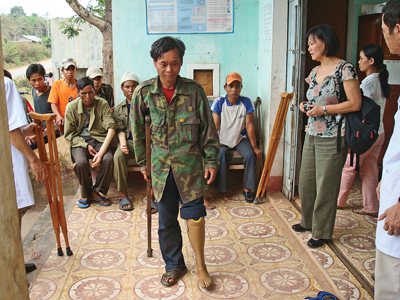
According to a 2014 report compiled by Vietnam’s Department of Labour, Invalids and Social Affairs, Quang Tri province currently has 37,292 persons with disabilities, 13,023 of whom were disabled by Agent Orange and 5,094 by explosive remnants of war (ERW).1,2,3 Disabled persons living in rural areas often live in poverty and do not have access to basic services. For those with injuries resulting from unexploded ordnance (UXO), prosthetics are difficult to obtain. Tiếp tục đọc “Project RENEW’s Prosthetics and Orthotics Mobile Outreach Program” →