Mấy cảm nhận về sự khác biệt giữa giáo dục miền Nam và giáo dục miền Bắc
Vương Trí Nhàn Tạp chí Nghiên cứu và Phát triển, số 7-8 (114-115).2014
10:31′ SA – Thứ ba, 03/02/2015
Đối chiếu với những điều bọn tôi được dạy bảo từ nhà trường phổ thông và sau này từng coi là phương hướng suy nghĩ, với các tài liệu mới đọc được, càng thấy trong khi khác biệt với GDMN, thì GDMB cũng khác nhiều so với thế giới. Đủ hiểu tại sao sau khi đào tạo trong nước, ra tiếp xúc với xã hội hiện đại, cánh học sinh sinh viên miền Bắc bọn tôi thường ú ớ, lạc lõng, trong khi những người được GDMN đào tạo thì hội nhập rất tự nhiên và hiệu quả.
Tôi vốn là người làm nghề nghiên cứu văn học.Trong cái nghề thuộc loại công tác tư tưởng này, những năm trước 1975, tôi chỉ được phép đọc các sách báo miền Bắc, còn sách vở miền Nam bị coi như thứ quốc cấm. Có điều, không phải chỉ là sự tò mò, mà chính lương tâm nghề nghiệp buộc tôi không thể bằng lòng với cách làm như vậy. Tiếp tục đọc “Mấy cảm nhận về sự khác biệt giữa giáo dục miền Nam và giáo dục miền Bắc”
Học tiếng Anh tốt như người Philippines
VE –Gần 30% trẻ em Philippines chưa từng đến lớp hoặc tốt nghiệp tiểu học, nhưng nước này giỏi tiếng Anh thứ ba châu Á, hơn hẳn Việt Nam hay Nhật Bản, Hàn Quốc.

Tất cả các tấm biển báo giao thông ở Philippines đều bằng tiếng Anh.
Trở về từ Philippines, nữ nhà báo Amy Chaves đã ấn tượng với trình độ tiếng Anh của dân chúng nơi đây và cho rằng các nước châu Á khác có thể học hỏi cách quốc gia này đã làm như thế nào:
Sếu đầu đỏ trở về Tràm Chim sau 18 năm lưu lạc
13/03/2016 09:38 GMT+7
TT – Đầu tháng 3-2016, sau khi xem lại các bức ảnh một gia đình sếu đầu đỏ vừa chụp được, ông Nguyễn Văn Hùng – giám đốc Vườn quốc gia (VQG) Tràm Chim, Đồng Tháp – bất ngờ phát hiện một con sếu vốn là “cư dân” của vườn 18 năm về trước.

Con sếu (bìa phải) trở về Vườn quốc gia Tràm Chim 18 năm sau khi được đeo vòng khuyên và máy định vị – Ảnh: Nguyễn Văn Hùng
Đó cũng chính là con sếu đầu đỏ mà vào ngày 14-3-1998, ông Hùng đã cùng các chuyên gia quốc tế và trong nước đã bắt, gắn máy định vị và đeo vòng số 150-0364 vào chân. Khi ấy con sếu này mới 3 tuổi. Tiếp tục đọc “Sếu đầu đỏ trở về Tràm Chim sau 18 năm lưu lạc”
Cơ hội và thách thức của thủy sản Việt Nam khi hội nhập
Thứ 4, 09/03/2016 | 16:02 GTM +07
(vasep.com.vn) Xuất khẩu thủy sản của Việt Nam đã có những bước tiến lớn trong gần 20 năm qua. Kim ngạch xuất khẩu thủy sản từ mức thấp 550 triệu USD năm 1995 đã có những bước tăng trưởng mạnh mẽ qua từng năm với mức tăng trưởng bình quân 15,6%/năm và đã đạt 7,8 tỷ USD năm 2014. Quá trình tăng trưởng này đã đưa Việt Nam trở thành một trong 5 nước xuất khẩu thủy sản lớn nhất thế giới, giữ vai trò chủ đạo cung cấp nguồn thủy sản toàn cầu.
Tiếp tục đọc “Cơ hội và thách thức của thủy sản Việt Nam khi hội nhập”
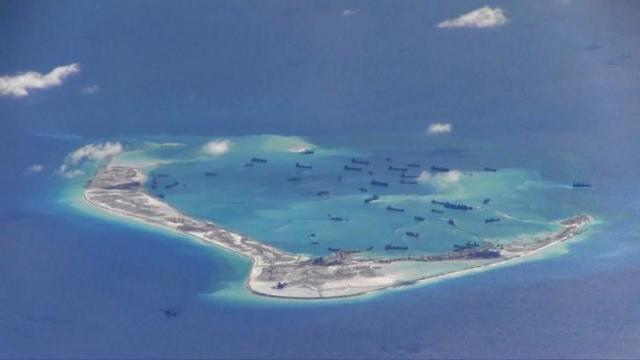
Exclusive: U.S. sees new Chinese activity around South China Sea shoal

From Omen to Opportunity: How Cheap Oil Is Accelerating Sustainable Energy Investment
An increasingly unprofitable global oil market is driving fuel prices to historic lows and hemorrhaging investment in conventional energy sources. Breaking with tradition, cheap oil no longer foretells disaster for renewable energy companies. On the contrary, disillusioned fossil fuel investors are seeking high-growth opportunities—just in time to ride the renewables wave in the wake of the 2015 Paris climate talks.
worldwatch – Crashing out in February at $27 per barrel, crude oil prices have reached their lowest point in over 13 years, since the 2003 U.S.-led invasion of Iraq. Despite a modest recovery in March driven by expectations for reduced production, investors remain skeptical of underlying oil market fundamentals and are reducing their exposure. These selloffs have dragged down the stock prices of large conventional energy companies listed in the Standard & Poor’s 500 Index by 13 percent and have cost investors more than $703 billion since the record-high oil prices of June 2014.
Responding to these selloffs, oil companies have tightened their belts, decommissioning two-thirds of their rigs and sharply cutting investment in oil field exploration and development, while an estimated 250,000 oil workers have lost their jobs. A Wood Mackenzie report identified 68 major oil and natural gas projects—representing a combined value of $380 billion and output of 2.9 million barrels of oil equivalent (boe) per day—that have been put on hold since late 2014. Besides reducing operating costs, oil companies hope that these measures will have a stabilizing effect on the market by reducing productive capacity in the medium to long term. Tiếp tục đọc “From Omen to Opportunity: How Cheap Oil Is Accelerating Sustainable Energy Investment”
CSIS: Southeast Asia from Scott Circle – March 17, 2016
Southeast Asia Dances to the Tune of Japan’s Abe DoctrineBy Phuong Nguyen (@PNguyen_DC), Associate Fellow, Chair for Southeast Asia Studies (@SoutheastAsiaDC), CSIS March 17, 2016 In Southeast Asia, Japan can be said to enjoy unrivaled popularity. According to the 2015 Pew Global Attitudes survey, an average of about 80 percent of respondents surveyed across four Southeast Asian countries said they hold a favorable view of Japan. While China’s expanding military footprint in the disputed South China Sea has a headline-grabbing impact, Japan’s influence in this critical region is felt more steadfastly, but increasingly so, in recent years. Tiếp tục đọc “CSIS: Southeast Asia from Scott Circle – March 17, 2016” |
CSIS Southeast Asia SIT-REP, March 10, 2016
This issue includes an overview of U.S. policy toward Myanmar as the National League for Democracy government prepares to take power, and analyses on Australia’s 2016 Defence White Paper, Prime Minister Malcolm Turnbull’s shift on the South China Sea, and the role of ASEAN in defending rules and norms in the South China Sea. Links will take you to the full publications, multimedia, or to registration for upcoming programs when available. To jump to a section, select one of the following:
- Commentaries on Myanmar
- CogitAsia articles covering Australia, the South China Sea, and China
Commentaries
Deep insight into developments that move the dial
“Aung San Suu Kyi Is Key to Further Unlocking of U.S. Sanctions against Myanmar,” by Murray Hiebert (@MurrayHiebert1) Tiếp tục đọc “CSIS Southeast Asia SIT-REP, March 10, 2016”
Công việc của phụ nữ: mẹ, trẻ em và khủng hoảng chăm sóc trẻ em toàn cầu
ENGLISH: Women’s work: mothers, children and the global childcare crisis
Báo cáo và tóm tắt này thảo luận về những thất bại của chính sách chăm sóc trẻ em hiện tại ở một nhóm các quốc gia nghiên cứu, bao gồm Việt Nam, Gaza, Mexico, Ấn Độ và Etiopia, và nêu bật các ví dụ về tiến bộ ở các quốc gia ứng phó thành công với những thách thức này.
—
Thế giới đang đối mặt với một cuộc khủng hoảng tiềm ẩn về chăm sóc trẻ em. Cuộc khủng hoảng này là sự bỏ rơi hàng triệu đứa trẻ không có sự hỗ trợ mà chúng cần, cùng với những hậu quả gây tổn hại đến tương lai của chúng. Điều này cũng đang gây ra những tác động nghiêm trọng đến ba thế hệ của phụ nữ – thế hệ người mẹ, người bà và con gái. Giải pháp để ứng phó với cuộc khủng hoảng chăm sóc trẻ em toàn cầu là một nhu cầu cấp bách để cải thiện cuộc sống của cả hai nhóm phụ nữ và trẻ em để phát triển kinh tế.
Thế giới ngày nay có 671 triệu trẻ em dưới 5 tuổi. Trong bối cảnh tỉ lệ tham gia lao động vượt quá 60% khắp toàn cầu, một lượng lớn các trẻ em này cần đến một số hình thức chăm sóc hàng ngày mà không phải từ cha mẹ. Dịch vụ chăm sóc trẻ em lứa tuổi đầu đời và lập kế hoạch giáo dục đang không được quản lý và vận hành để để đáp ứng nhu cầu này. Nhiều nhất, một nửa số trẻ em từ 3 đến 5 tuổi ở các nước đang phát triển tham gia vào hoạt động giáo dục trẻ em lứa tuổi đầu đời, thông thường là một vài giờ mỗi ngày. Chúng ta biết rất ít về những gì xảy ra đối với những trẻ em còn lại, nhưng tất cả các bằng chứng chỉ ra một cuộc khủng hoảng chăm sóc trẻ em. Cuộc khủng hoảng này tập trung chủ yếu ở các trẻ em nghèo nhất bị hạn chế nhiều nhất khả năng tiếp cận hoạt động hỗ trợ trẻ em ở lứa tuổi đầu đời.
Tiếp tục đọc “Công việc của phụ nữ: mẹ, trẻ em và khủng hoảng chăm sóc trẻ em toàn cầu”
Bức tranh ngân hàng Việt Nam 10 năm qua
Gia Anh – Thứ Tư, 16/3/2016, 08:41 (GMT+7)
TPHCM, trung tâm kinh tế lớn nhất nước, cũng là nơi diễn ra nhiều cuộc sáp nhập ngân hàng những năm qua. Ảnh: Hồng Phúc
(TBKTSG Online) – Một báo cáo có tên “Ngân hàng thương mại Việt Nam: Từ những thay đổi về luật và chính sách giai đoạn 2006-2010 đến các sự kiện tái cơ cấu giai đoạn 2011-2015” của tác giả Nguyễn Xuân Thành – Chương trình Giảng dạy Kinh tế Fulbright TP.HCM, được ông Thành công bố ở dạng bản thảo đã điểm lại một số cột mốc quan trọng của hệ thống ngân hàng Việt Nam trong 10 năm qua.
Câu lạc bộ… tạo niềm tin vào giáo dục
Từ nhiều năm nay, CLB Face (CLB xây dựng một nền giáo dục sạch, không tham nhũng, tiêu cực – PV) của Đại học Hoa Sen TPHCM gây được tiếng vang lớn, thu hút đông đảo cộng đồng sinh viên tham gia. Nhưng ít ai biết rằng, thành viên FACE đã từng bị chính các bạn cùng lớp tẩy chay với lý do “không quay cóp không phải sinh viên”.
ASEAN PLAN OF ACTION FOR ENERGY COOPERATION (APAEC) 2016-2025
EXECUTIVE SUMMARY
Energy is key to the realisation of the ASEAN Economic Community (AEC) which calls for a well-connected ASEAN to drive an integrated, competitive and resilient region. Energy is key to the realisation of the ASEAN Economic Community (AEC) which calls for a well-connected ASEAN to drive an integrated, competitive and resilient region.
ASEAN is now one of the most dynamic and fastest growing economic regions in the world, and through the implementation of the AEC by end of December 2015, this growth is expected to continue. The region is projected to grow by at least 4% per year on average over the next five years, but could be as high as 6% – provided ASEAN moves towards greater integration, where member states continuously implement domestic structural reforms to raise their productivity and competitiveness under the framework of the AEC.
1 To fuel this growth, the demand in primary energy
2 is expected to grow by an average of 4.7% per year from 2013 to reach 1,685 Mtoe in 2035, according to the ASEAN Centre for Energy’s (ACE) 4 th ASEAN Energy Outlook (AEO4).
Addressing this growing demand for energy, which is driven by both economic and demographic growth, has been a challenge for ASEAN ahead of the AEC. Against this backdrop, the 32 nd ASEAN Ministers on Energy Meeting (AMEM) held on 23 rd September 2014 in Vientiane, Lao PDR, endorsed the theme of the new ASEAN Plan of Action for Energy Cooperation (APAEC) 2016-2025 as “Enhancing Energy Connectivity and Market Integration in ASEAN to Achieve Energy Security, Accessibility, Affordability and Sustainability for All” .
The theme also reflects the central elements of connectivity and energy security captured in the Nay Pyi Taw Declaration on the ASEAN Community’s Post 2015 Vision adopted by the ASEAN Leaders at the 25 th ASEAN Summit in Nay Pyi Taw, Myanmar, on 12 th November 2014 The key initiatives under this APAEC include embarking on multilateral electricity trading to accelerate the realisation of the ASEAN Power Grid (APG), enhancing gas connectivity by expanding the focus of the Trans-ASEAN Gas Pipeline (TAGP) to include Liquefied Natural Gas (LNG) regasification terminals as well as promoting clean coal technologies. It also includes strategies to achieve higher aspirational targets to improve energy efficiency and increase the uptake of renewable energy (RE) sources, in addition to building capabilities on nuclear energy.
Plans to broaden and deepen collaboration with ASEAN’s Dialogue Partners (DPs), International Organisations (IOs), academic institutions and the business sector will be stepped up to benefit from their expertise and enhance capacity building in the region. The APAEC 2016-2025 will be implemented in two phases. Phase I will cover the period 2016-2020 for the implementation of short to medium-term measures to enhance energy security cooperation and to take further steps towards connectivity and integration. In 2018, there will be a stocktake of the progress of Phase I, which will guide ASEAN in charting the pathways and directives for Phase II (2021-2025).
Nearly 1 in 3 companies in Vietnam bribe tax officials: survey
HANOI – Tuesday, August 11, 2015 16:29
Taxpayers wait at a tax office in Vietnam. Photo credit: VietNamNet
thanhniennews – Nearly a third of companies in Vietnam say they have to pay “unofficial fees” to tax officials, even as recent tax procedure reforms have improved the country’s business environment, a new report found.
The Vietnam Chamber of Commerce and Industry (VCCI), which represents thousands of businesses in the country, on Tuesday released the report based on its survey of more than 2,500 companies last year.
The General Tax Department said it has saved businesses more than 420 hours at tax offices by abolishing hundreds of procedures. And yet half of the businesses questioned said they still faced trouble in certain procedures, especially tax registration and tax declaration.
“Tax officials usually demanded different unnecessary papers and dragged cases out for a long time,” VCCI said in the report.
It said that 32 percent of companies in Vietnam had to pay “unofficial fees” and 40 percent believed that a business would be treated badly without that under-the-table money.
The survey was the first conducted by VCCI on tax procedures. It has given an idea of how prevalent corruption in the country can be.
Sức mạnh Thuế (3 bài)
Sức mạnh thuế
Chiến dịch Sức mạnh Thuế – Thông tin cơ bản
Chiến dịch Sức mạnh Thuế: Các tiêu điểm nổi bật
***
Sức mạnh thuế