
Blunt, rushed and potentially costly regulation: we need to do much better for consumer-owned assets
FacebookTwitterLinkedInEmailShare
Everyone agrees we want to avoid another ‘system black’ in South Australia. What’s contested is whether household solar exports should be allowed to be cut off by the system operator, under what circumstances, and who gets to decide?
New measures giving energy authorities powers to remotely switch off solar panels without householders’ knowledge has set a worrying precedent.
Now state energy ministers are considering adopting a similar rule that would allow behind-the-meter appliances such as hot water systems, air conditioners, electric vehicle chargers and pool pumps to also be switched off.
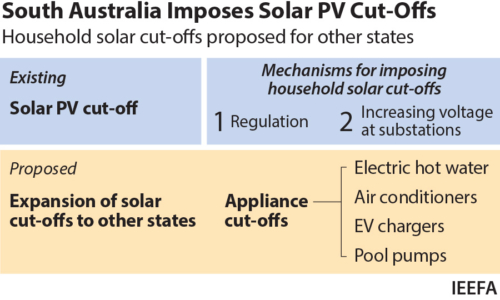
South Australia’s rooftop solar cut-off measure was used for the first time on 14 March 2021 affecting around 12,500 households in Adelaide.
When this cut-off occurred, solar households were not compensated, and everyone affected had to purchase electricity from the grid.
Tiếp tục đọc “IEEFA: South Australia’s household solar export a warning to other states and territories”

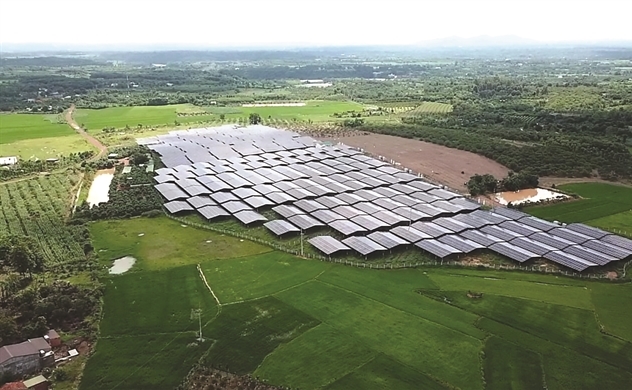
 A worker installs solar power panels in Ninh Thuan Province, central Vietnam. Photo by VnExpress/Quynh Tran.The increasing solar power capacity has made it difficult for national utility Vietnam Electricity (EVN) to ensure stable power distribution nationwide.
 An aerial view of the 500kV substation of the Trung Nam Thuan Nam Solar Power Plant in the central province of Ninh Thuan. Photo courtesy of Trungnam Group.
 An artist’s impression of a 257MW solar power plant backed by the Asian Development Bank (ADB) in the central province of Phu Yen. Photo courtesy of the ADB.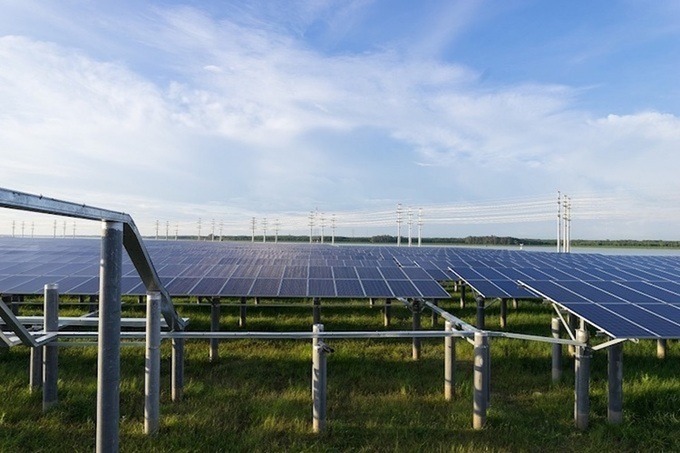
 Workers install solar power panels on a rooftop in Ho Chi Minh City. Photo courtesy of Vietnam Electricity.
 The total capacity of solar power projects registered by investors has become nearly 10 times higher than the targeted level.
 CVD
CVD 