Fri 11 Nov 2022 05.00 GMT Last modified on Fri 11 Nov 2022 17.40 GMT
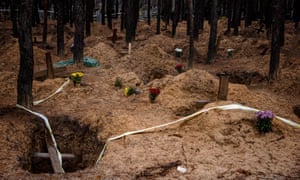
Across the country, fact-finding teams are tirelessly gathering evidence and testimony about Russian atrocities, often within hours of troops retreating. Turning this into convictions will not be easy, or quick, but the task has begun
Chừng nào vẫn còn khoảng trống chính sách về quyền kiểm soát dữ liệu, chừng đó các cơ quan nhà nước vẫn chưa chú trọng nghĩa vụ – trách nhiệm của mình đối với dữ liệu cá nhân của người dân.
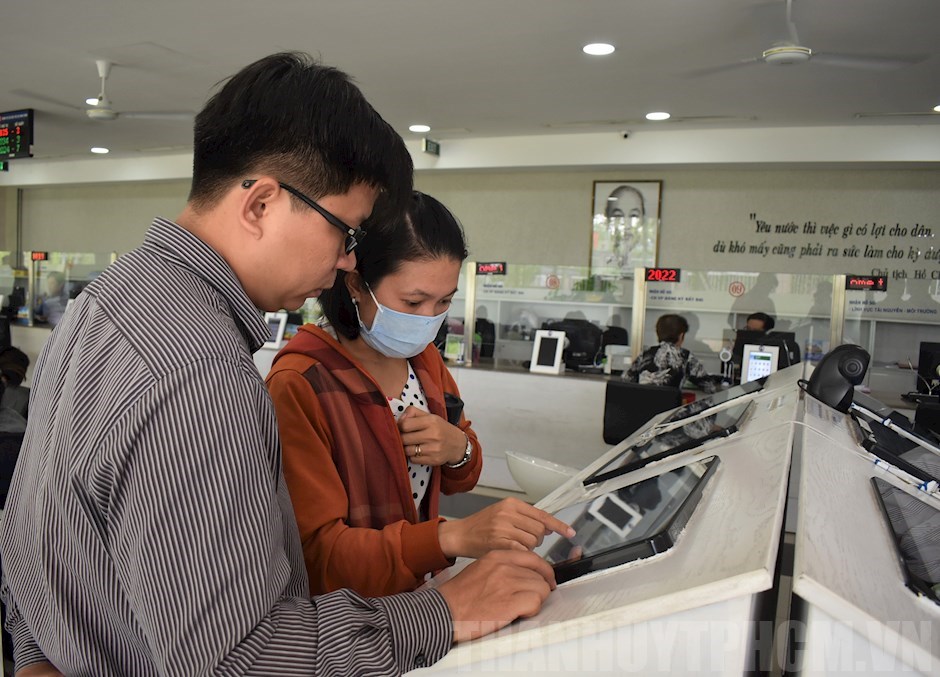
Người dân làm các thủ tục qua cổng dịch vụ công ở TP. Hồ Chí Minh. Ảnh: Thành ủy TP. Hồ Chí Minh.
Vào năm 2020, tỉnh Đồng Tháp thông báo rằng có hiện tượng sử dụng không đúng mục đích thông tin cá nhân của người dân phản ánh kiến nghị qua tổng đài 1022 – nơi để người dân phản ánh, góp ý, kiến nghị về hiệu quả dịch vụ công, tiếp cận thông tin, chính sách của tỉnh. Điều này không chỉ ảnh hưởng đến người dân phản ánh, kiến nghị mà còn cả quá trình tương tác với người dân của tỉnh.
Trong khi Chính phủ Việt Nam nỗ lực ngăn ngừa các đơn vị tư nhân lạm dụng khai thác dữ liệu cá nhân thì dường như lại quên nhìn lại chính mình – các đơn vị nhà nước trong việc sử dụng và quản lý các dữ liệu cá nhân của người dân. Tiếp tục đọc “Bảo vệ dữ liệu cá nhân: Cơ quan nhà nước cần làm gương”→
VNE – By Phan Duong November 6, 2022 | 07:53 pm GMT+7
Two boys the northern Thanh Hoa Province in 2019. Photo by VnExpress/P.D
Bich Thao and her husband are still trying to get a son after seven years and five in vitro fertilization attempts despite knowing sex selection is illegal.
The couple, both 34 and from the northern Vinh Phuc Province, say they have been unlucky in that all five IVF attempts failed either to faulty embryos or a faulty Y (male) chromosome.
Thao married her husband in 2010 and their first child was a girl. With her husband being the oldest son, the expectation is that she, too, will produce a male heir.
Machinery and mechanical equipment top category of products shipped from region, whose month-on-month decline aligns with weakening in Chinese exportsUS customs chief insists ‘seeing good examples of compliance so far’ with recently implemented Uygur Forced Labour Prevention Act
Published: 2:00am, 25 Oct, 2022
Xinjiang’s exports to the United States dropped in September after soaring for two consecutive months, but were still nearly three times as high as the same month last year, according to the latest Chinese customs data – despite a Washington law that seeks to ban goods from the far-west region of China due to forced labour allegations.
The shipments from Xinjiang to the US have appeared to continue even as officials from the US customs agency insist that they have been effectively enforcing the Uygur Forced Labour Prevention Act, which kicked in on June 21.
Companies from the Xinjiang Uygur autonomous region in September exported US$21.05 million worth of goods to the US, slashed by more than half compared with the figure for August, but more than double the tally in June, trade data showed.
The month-on-month decline of Xinjiang exports to the US was in line with the overall weakening of Chinese exports.
Tucked away within Toronto’s inner city is a small enclave known as “Little Tibet”.
Located in the Parkdale neighbourhood, the restaurants here are famous for delicious Tibetan dumplings known as momos.
Parkdale is also home to one of the largest concentrations of Tibetans outside Asia, stemming from the 1970s when Tibetan refugees flocked to Canada. The community has thrived here, establishing Little Tibet’s reputation as a food mecca and setting up a cultural centre.
But today, rapid gentrification and Toronto’s sky-high rents threaten the area’s unique social fabric. Amid China’s increasing global influence, the Tibetan community is striving to hold on to its past and maintain its traditions in an adopted land.
Explore Little Tibet and meet an immigrant community working to preserve its identity in this episode of A Sense of Community, a four-part series about unique neighbourhoods around the world and the challenges they face.
A rare look inside Bangladesh’s island camp for Rohingya refugees | 101 East Documentary
Al Jazeera English – 6-10-2022
Bangladesh is home to the world’s largest refugee camp, hosting more than a million Rohingya refugees who fled a brutal crackdown by Myanmar’s military in 2017.
ew accessories have lived as complicated a life as the headscarf. The versatile fabric has been chosen by and impressed upon people for political, religious and practical purposes for centuries. It has been favored by revolutionaries and royalty alike. It can be either conservative or rebellious. Beyond its utilitarian origins as a source of protection from the elements, the headscarf remains at the center of contentious debate about women’s rights, identity, power and class.
In recent history, conversations about the headscarf have often centered on its use in Islam and the prejudice Muslim women have faced.
In 2013, Nazma Khan founded World Hijab Day — a day for both Muslim and non-Muslim women to experience wearing a headscarf. Celebrated on February 1, the initiative began in response to the bullying Khan, originally from Bangladesh, experienced growing up in theBronx, New York. “In middle school, I was ‘Batman’ or ‘ninja.’ When I entered university after 9/11, I was called Osama bin laden or terrorist. It was awful,” reads a statement on the World Hijab Day’s website. “I figured the only way to end discrimination is if we ask our fellow sisters to experience hijab themselves.”
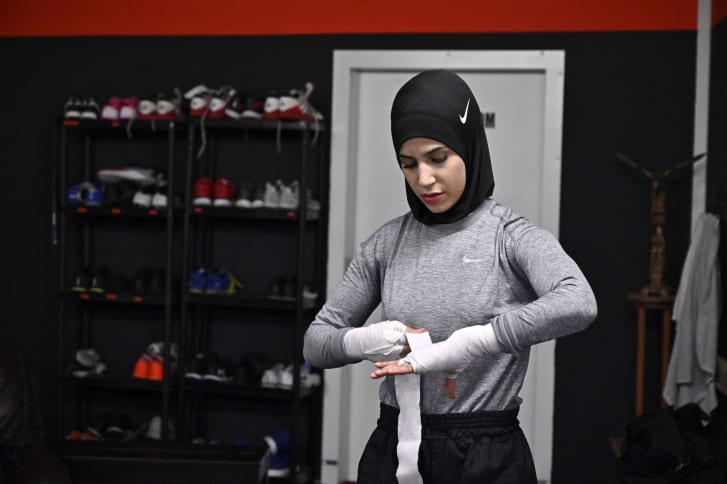
German boxer Zeina Nassar has fought to wear the hijab in the ring. Credit: Tobias Schwarz/AFP/Getty Images
Throughout history, the headscarf has sat atop the heads of culture defining women — and men — from monarchs including Queen Victoria and Queen Elizabeth II to the daring flappers of the 1920s. Ranging from patterned prints to luxe fabrics to simple sheaths, the fashion item is wrapped in centuries of interpretation.
“There’s a reason why the (head)scarf has transcended time,” said Lynn Roberts, vice president of advertising and public relations at fashion outfitter Echo Design Group, over the phone from New York City. “When you’re wearing one, people pay attention.”
Giáo dục giới tính và tình dục toàn diện (GDGTTDTD) là một quá trình dạy và học tích hợp trong chương trình giáo dục về các khía cạnh nhận thức, tâm lý, thể chất và xã hội của giới tính và tình dục. GDGTTDTD hướng tới trang bị cho trẻ em và thanh thiếu niên các kiến thức, kỹ năng, thái độ và giá trị cần thiết để giúp các em: nhận thức được sức khoẻ, lợi ích và giá trị con người của bản nhân mình; hình thành các mối quan hệ xã hội và quan hệ tình dục trên cơ sở tôn trọng lẫn nhau; nhận thức được lựa chọn của mình ảnh hưởng tới bản thân và người khác như thế nào; nhận thức cũng như đảm bảo việc bảo vệ các quyền của mình trong suốt cuộc đời.
VNE – By Kim Ngan October 3, 2022 | 08:02 am GMT+7
Vietnamese laborers attend a meeting in Hanoi where they are prepared for working in South Korea, July 21, 2022. Photo by VnExpress/Hong ChieuBoth Hai in the northern-central Ha Tinh Province and Thang in Hanoi have the same dream: to go to South Korea to work.
But Thang is trying to achieve what he wants at Hai’s expense.
Hai is waiting anxiously for the South Korean government to lift its ban on workers from his home district, Cam Xuyen.
Cam Xuyen is one of eight districts in Vietnam whose residents cannot enter South Korea until the end of 2022.
Seoul slapped the bans after discovering many people from these districts are working illegally in South Korea.
Theo nghiên cứu trong giai đoạn 2020- 2021, tỷ lệ phá thai cao nhất là ở phụ nữ độ tuổi từ 25- 29 tuổi, tình trạng phá thai lặp lại còn khá phổ biến.
Theo Tổng cục Dân số- Kế hoạch hóa gia đình (KHHGĐ), ước tính trong Điều tra các mục tiêu phát triển bền vững về trẻ em và phụ nữ Việt Nam 2020-2021 cho thấy, tỷ lệ phá thai cao nhất là ở phụ nữ độ tuổi từ 25- 29 tuổi (9 lần/1.000 phụ nữ), tiếp theo là nhóm từ 20- 24 tuổi (7 lần/1.000 phụ nữ), rồi đến nhóm từ 30-39 tuổi (6 lần/1.000 phụ nữ). Nhóm vị thành niên từ 15- 19 tuổi có tỷ lệ phá thai là 1 lần/1.000 phụ nữ.
Tư vấn chăm sóc sức khỏe sinh sản cho phụ nữ trong độ tuổi mang thai tại CDC Đồng Nai.
Luật khám bệnh, chữa bệnh đang trong quá trình sửa đổi và trình lên Quốc Hội cho ý kiến và dự kiến xem xét thông qua tại Kỳ họp thứ 4, Quốc hội khóa XV vào tháng 10.
Luật khám bệnh, chữa bệnh có tác động rất lớn đến hệ thống ngành y tế cũng như vấn đề chăm sóc sức khỏe của người dân, trong đó có người Dân tộc thiểu số, Mạng lưới Tiên Phong Vì Tiếng Nói Người Dân Tộc Thiểu Số đã có một buổi trao đổi cùng chuyên gia trong lĩnh vực luật khám bệnh, chữa bệnh đồng thời thảo luận nội bộ để cùng đưa ra ý kiến đối với những vấn đề vẫn còn bỏ ngỏ trong luật.
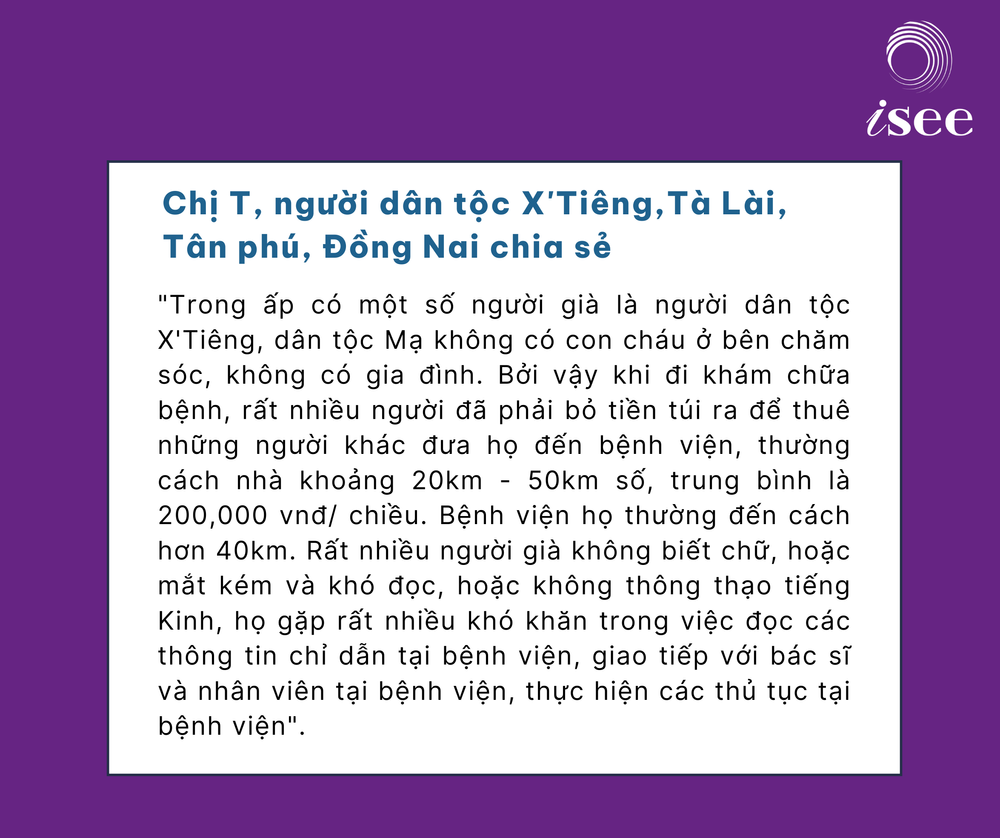
Qua quá trình thảo luận, nhóm nhận ra rằng rào cản ngôn ngữ giữa bác sĩ và bệnh nhân là người dân tộc thiểu số ở tại địa phương và đặc biệt là cơ sở khám chữa bệnh tuyến Trung Ương là một vấn đề ảnh hưởng trực tiếp đến quyền và chất lượng sử dụng dịch vụ khám chữa bệnh của người dân tộc thiểu số. Dưới đây là những trải nghiệm cá nhân và quan sát của chính các thành viên Tiên Phong về vấn đề này:
Since 2015, the Cambodian government has been addressing the politically and diplomatically sensitive issue of illegal Vietnamese immigrants through methods such as documentation, deportation, eviction, relocation and registration. In this picture, Cambodia’s Prime minister Hun Sen (R) and his then Vietnamese counterpart Nguyen Xuan Phuc (L) inspect the guard of honour during a welcome ceremony at the Presidential Palace in Hanoi on 4 October 2019. Photo: Nhac NGUYEN/AFP.
EXECUTIVE SUMMARY
Since 2015, the Cambodian government has been addressing the politically and diplomatically sensitive issue of illegal Vietnamese immigrants through methods such as documentation, deportation, eviction, relocation and registration.
These actions are the ruling Cambodian People’s Party’s response to the opposition Cambodia National Rescue Party’s successful politicisation of anti-Vietnamese sentiments among Cambodian voters.
The Cambodian government’s Vietnamese immigrant policies also serve the ecological development goal of improving Cambodian water systems, as well as beautifying and developing its urban areas.
Given Cambodia’s asymmetrical power relationship with Vietnam and the sensitive issue of illegal Vietnamese immigrants, the closer bond between Cambodia and China serves as an enabling factor for the Cambodian government in adopting tougher policies.
The Cambodian government’s measures will however neither reduce the fear held by many Cambodians of Vietnamese domination nor will they alleviate the potential diplomatic fallout.
*Jing Jing Luo is Post-Doctoral Researcher at the School of Public Affairs, Xiamen University, China. Kheang Un is Professor of Political Science at Northern Illinois University, USA.
ILO – Lao động giúp việc gia đình đóng góp quan trọng cho xã hội, cung cấp dịch vụ chăm sóc thiết yếu cho gia đình và hộ gia đình, nhưng họ vẫn chưa được đánh giá đúng mức.
GENEVA ‒ Theo một báo cáo mới của Tổ chức Lao động Quốc tế (ILO), chỉ có 6% lao động giúp việc gia đình trên toàn thế giới được tiếp cận an sinh xã hội toàn diện.
Điều này đồng nghĩa với việc hơn 94% trong số họ không được tiếp cận đầy đủ các cơ chế bảo vệ, bao gồm chế độ liên quan đến chăm sóc y tế, ốm đau, thất nghiệp, tuổi già, tai nạn nghề nghiệp, gia đình, thai sản, thương tật và tử tuất.
The families of some 9/11 victims are still pursuing compensation from those complicit in the attacks – but is Sudan, already ravaged by years of US sanctions, really the right target?
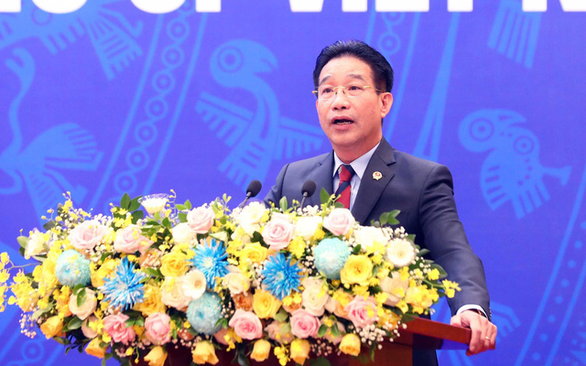
Pham Thanh Ha, deputy head of the Presidential Office, speaks at the press briefing held on August 31, 20222 to announce the decision of State President Nguyen Xuan Phuc to amnesty over 3,200 inmates on the National Day, September 2. Photo: Mai Huong / Tuoi Tre
State President Nguyen Xuan Phuc has signed a decision to parole 2,434 prisoners, including 16 foreign nationals, on the coming Vietnam’s National Day, September 2.
The 16 foreign inmates to be released include four Chinese, three American, two Cambodian, two Malaysian, and one from each of Canada, France, Australia, Nigeria, and Laos, according to the decision issued by the Presidential Office at a press conference on Wednesday.