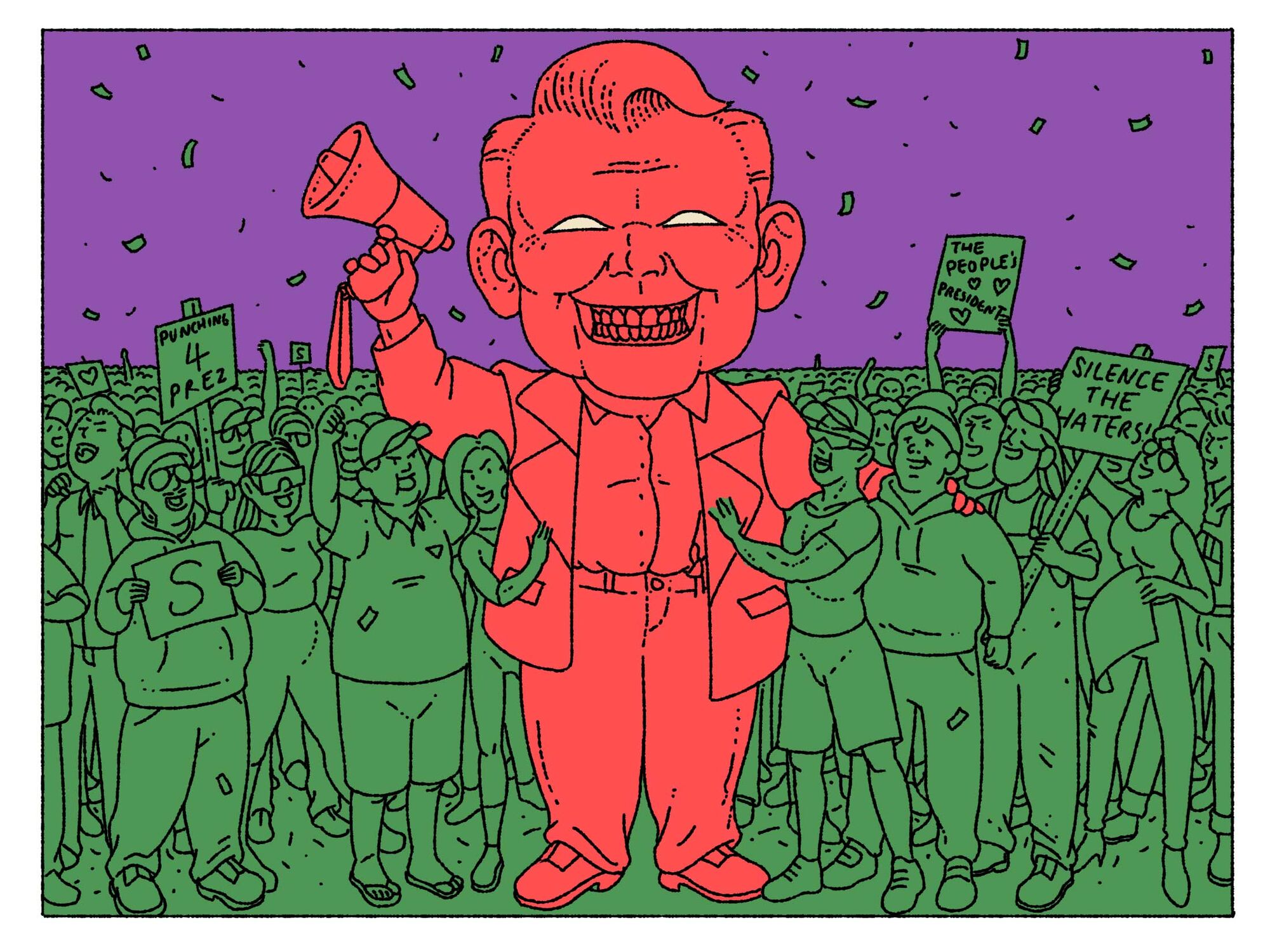
Dân trí là gì và làm sao để nâng cao dân trí?

Chào các bạn,

Câu mà rất nhiều người, nhiều lãnh đạo, nhiều quan chức, nhiều trí thức Việt Nam thường nói là “dân trí Việt Nam thấp”. Nhưng dân trí là gì? Làm sao để đo lường dân trí? Và làm sao để nâng cao dân trí?

Nếu bạn google tìm đề tài dân trí thì lời giải thường là các nhà bán sách và các quán cà phê sách nói rằng đọc sách để nâng cao dân trí. Còn hầu hết, hình như người ta chỉ nói dân trí ta thấp, mà chẳng có chứng minh tại sao thấp, thấp đến độ nào, và làm sao để nâng cao dân trí. Tiếp tục đọc “Dân trí là gì và làm sao để nâng cao dân trí?”

IEEFA/JMK Research: Round-the-clock tenders can help meet demand for firm renewable power

Tenders have evolved from “vanilla” solar or wind, to hybrid, to round-the-clock

IEEFA

24 November (IEEFA/JMK Research India): Electricity distribution companies (discoms) demand firm and uninterrupted renewable power. A new report by IEEFA and JMK Research highlights the important role that different mixes of generation sources and storage technologies can play in overcoming the intermittency challenge of variable renewable energy (VRE) and ensuring grid stability.

Renewable energy blended with either conventional thermal power sources that have low plant load factors (PLFs) or energy storage systems (ESS) can provide firm round-the-clock (RTC) power required by discoms, according to the report.

Tiếp tục đọc “IEEFA/JMK Research: Round-the-clock tenders can help meet demand for firm renewable power”

China’s disappearing ships: The latest headache for the global supply chain

CNN

 A cargo ship loaded with exhibits for the upcoming 4th China International Import Expo (CIIE) is seen at Yangshan Deepwater Port on October 23 in Shanghai.

Ships in Chinese waters are disappearing from global trackers, creating yet another headache for the global supply chain. China’s growing isolation from the rest of the world — along with a deepening mistrust of foreign influence — may be to blame.

Analysts say they started noticing the drop-off in shipping traffic toward the end of October, as China prepared to enact legislation governing data privacy.

Tiếp tục đọc “China’s disappearing ships: The latest headache for the global supply chain”

Sink or Swim: The future of fisheries in the East and South China Seas

Published: on November 3, 2021

As part of the ongoing Oceans Asia project, commissioned by ADM Capital Foundation in 2014, this report follows the 2015 report Boom or Bust: The Future of Fish in the South China Sea.

Research scientists from the University of British Columbia’s Institute for the Oceans and Fisheries modelled the trajectories of East and South China Sea fisheries under several climate change and fisheries management scenarios. By the 2100, both ecosystems are projected to suffer losses, or even regional extinction, in key marketable species. These outcomes are driven by the impacts of climate change, overexploitation, and the growing demand for fish-based feed by the aquaculture industry, signaling the need for immediate policy action across the region.

Research Report

RESEARCH REPORT, ENGLISH

EXECUTIVE SUMMARY, ENGLISH

EXECUTIVE SUMMARY, CHINESE

Press Release

PRESS RELEASE, ENGLISH

PRESS RELEASE, CHINESE

Companies in Mekong Delta fined, prosecuted for being sources of Covid

vietnamnet 13/11/2021    08:39 GMT+7

Covid developments in Mekong Delta provinces as of November 11 morning remained complicated.

Companies in Mekong Delta fined, prosecuted for being sources of Covid

Chau Ba Thao Company

Bac Lieu reported 291 positive cases within 24 hours, including 97 community transmission cases, raising the total number of infections to 6,200.

Gia Rai commune and Bac Lieu City are the two hotspots in the province. The hotbeds at Tan Khoi Seafood Import/Export Company and Chau Ba Thao Seafood Company in Gia Rai Town are the most serious.

The hotbed at Tan Khoi was found after a worker went to the Gia Rai medical center to have a health examination and tested positive. To date, 700 infections have been found.

Tiếp tục đọc “Companies in Mekong Delta fined, prosecuted for being sources of Covid”

Chilean president Piñera impeached over Pandora papers revelations

  • Lower house approval vote sets up trial in Chile’s senate
  • Papers revealed offshore dealings of conservative president
Sebastián Piñera in October. The leaked documents revealed new details of a controversial deal to sell the family’s stake in the Dominga mining project.
Sebastián Piñera in October. The leaked documents revealed new details of a controversial deal to sell the family’s stake in the Dominga mining project. Photograph: Javier Salvo/AFP/Getty

Associated Press in Santiago Tue 9 Nov 2021 17.46 GMT

Chile’s President Sebastián Piñera has been impeached by the lower house of congress, setting up a trial in the nation’s senate over allegations he favored the sale of a family property while in office.

The vote to impeach passed with the bare minimum of 78 votes needed in the 155-member chamber of deputies, and followed a marathon 20-hour session. Sixty-seven legislators voted against impeachment, including several members of the opposition. Others abstained or were absent.

Tiếp tục đọc “Chilean president Piñera impeached over Pandora papers revelations”

Đừng để bị bỏ lại đằng sau

Chào các bạn,

Mọi thứ trên thế giới đều đang vận hành với vận tốc điện tử. Nếu các bạn chẳng hiểu vận tốc điện tử là gì, thì mở smartphone gọi bạn mình cách xa 1000km, và trong một hay hai giây bạn mình sẽ trả lời. Đó là vận tốc điện tử.

Nào, các bạn có hiểu điều đó có liên quan gì đến chính bạn không?

Nó liên quan kinh khủng. Điều đó có nghĩa là thế giới đang chạy với vận tốc điện tử, và nếu bạn không thể chạy được như thế thì bạn sẽ bị bỏ lại phía sau. Mình đã nói điều này với rất nhiều bạn từ năm 1991, 1992, tức là 30 năm trước. Và đa số những người mình nói lúc đó vẫn cứ bị bỏ rơi phía sau những năm sau này. Bởi vì họ thực sự chẳng mường tượng được điều mình nói thế nào. Tiếp tục đọc “Đừng để bị bỏ lại đằng sau”

COP26: 40 countries agree to phase out coal-fired power

By Zachary Skidmore04 Nov 2021 (Last Updated November 4th, 2021 11:39) Power Technology

More than 40 countries have agreed at COP26 to phase out their use of coal power by 2040 at the latest.

COP26: 40 countries agree to phase out coal-fired power

More than 40 countries have agreed to phase out coal-fired power at the COP26 climate summit. The agreement includes 18 countries promising to phase out or stop investments in new coal-fired plants domestically and internationally for the first time.

The list includes major coal using countries, including Canada, Poland, Ukraine, and Vietnam. Signatories to the agreement have committed to phasing out coal power in the 2030s for major economies and the 2040s for poorer nations. Dozens of private organisations have also signed up to the pledge, with HSBC and Export Development Canada among several major banks agreeing to divest from the coal industry.

Tiếp tục đọc “COP26: 40 countries agree to phase out coal-fired power”

COPs and robbers

Transparency International
05/11/2021: COPs and robbers
The world’s biggest annual climate conference, COP26, is underway in Glasgow. Despite the promise of “the most inclusive COP ever”, activists have had to follow negotiations from the sidelines. Representatives of major gas and oil companies, however, have continued to rub shoulders with decision-makers, just like in previous years.


Young people display placards as ministers prepare COP26. Milan, 1 October 2021. Image: Mauro Ujetto / Shutterstock

Earlier this week, news broke that government leaders achieved a new deal to end and even reverse deforestation by 2030. This is the first COP pledge to recognise protection of the rights of Indigenous Peoples as a climate solution. Indigenous communities play a crucial role in protecting their lands from illegal deforestation but – as Transparency International recently documented – often face discriminatory corruption, so this high-level recognition is both welcome and long overdue.But don’t hold your breath just yet.

The Glasgow declaration fails to mention the need for accountability and good governance measures when delivering on these promises. In this regard, things aren’t much different from 2014, when the New York Declaration on Forests was adopted. Despite ambitious targets set back then, the Declaration has so far failed to achieve its objective, as corruption has continued to fuel deforestation.

Take Nicaragua, for example, whose signature is missing from the Glasgow deforestation deal even though the country is losing its forests at the fastest rate in the world. Deforestation rates have almost doubled since 2014, when Nicaragua’s national forestry agency came under President Daniel Ortega’s direct control.And now, an investigation from the Organized Crime and Corruption Project has found that Nicaragua’s Vice President – and Ortega’s wife – Rosario Murillo and other public officials handed out forestry permits to politically connected companies. What’s more, Nicaragua’s reforestation programmes – which are co-financed by international donors – have allegedly benefitted the private interests of a certain supreme court judge.

In 2018 alone, climate finance totalled US$546 billion globally, and corruption finds fertile ground in such vast sums of money. Cases documented by Transparency International show corruption remains a major barrier to the success of climate adaptation and mitigation measures.  

  Corruption, like climate change, is a threat multiplier with many dangerous tipping points. It not only diminishes the chance of curbing climate change, but unfairly denies the most vulnerable members of society from participating or benefitting from climate funds. Rueben Lifuka, Vice Chair of Transparency International Over the next years, as wealthy nations – many of which are the biggest polluters – scale up the delivery of climate finance, they must also do more to ensure that these funds do not end up in private pockets.Transparency International is working tirelessly around the world to build a range of integrity measures – from advocating on behalf of affected communities to proposing better mechanisms to disburse much-needed climate finance. The aim is, ultimately, to protect our people and our planet.


© Transparency InternationalClimate & Corruption Atlas

From fossil fuel lobbying to the illegal rosewood trade, Transparency International’s Climate & Corruption Atlas documents cases of corruption in climate finance and projects. These stories underscore the importance of protecting these multi-billion-dollar flows of money from corruption. 
Tiếp tục đọc “COPs and robbers”

86 percent of Covid patients in HCMC hospitals are vaccinated: survey – 86% ca nhiễm tại TP HCM đã tiêm vaccine

By Thu Anh   November 5, 2021 | 09:33 am GMT+786 percent of Covid patients in HCMC hospitals are vaccinated: surveyA doctor takes care of a coronavirus patient in HCMC’s Thu Duc City. Photo by VnExpress/Quynh TranAround 86 percent of people hospitalized with Covid-19 in HCMC have been vaccinated at least once, a survey by its Department of Health found.

The survey began on Tuesday at hospitals, deputy director of the city Department of Health, Nguyen Van Vinh Chau, said.

Of the remaining 14 percent, 90 percent are children under 18, and were found mostly at industrial parks and quarantine zones around the city, he said.

Tiếp tục đọc “86 percent of Covid patients in HCMC hospitals are vaccinated: survey – 86% ca nhiễm tại TP HCM đã tiêm vaccine”

What Will Drive China to War?

The Atlantic

A cold war is already under way. The question is whether Washington can deter Beijing from initiating a hot one.By Michael Beckley and Hal Brands

A hand reaches out to grab various flags.
Ben Hickey

NOVEMBER 1, 2021SHARE

About the authors: Michael Beckley is a Jeane Kirkpatrick Visiting Fellow at the American Enterprise Institute, where his research focuses on U.S.-China competition, and is an associate professor at Tufts University. Hal Brands is a senior fellow at the American Enterprise Institute, where he studies US foreign policy and defense strategy, and is the Henry A. Kissinger Distinguished Professor of Global Affairs at the Johns Hopkins School of Advanced International Studies.

President xi jinping declared in July that those who get in the way of China’s ascent will have their “heads bashed bloody against a Great Wall of steel.” The People’s Liberation Army Navy is churning out ships at a rate not seen since World War II, as Beijing issues threats against Taiwan and other neighbors. Top Pentagon officials have warned that China could start a military conflict in the Taiwan Strait or other geopolitical hot spots sometime this decade.

Analysts and officials in Washington are fretting over worsening tensions between the United States and China and the risks to the world of two superpowers once again clashing rather than cooperating. President Joe Biden has said that America “is not seeking a new cold war.” But that is the wrong way to look at U.S.-China relations. A cold war with Beijing is already under way. The right question, instead, is whether America can deter China from initiating a hot one.

MAKE YOUR INBOX MORE INTERESTING

Each weekday evening, get an overview of the day’s biggest news, along with fascinating ideas, images, and people.Email Address (required)Sign Up

THANKS FOR SIGNING UP!

Beijing is a remarkably ambitious revanchist power, one determined to make China whole again by “reuniting” Taiwan with the mainland, turning the East and South China Seas into Chinese lakes, and grabbing regional primacy as a stepping-stone to global power. It is also increasingly encircled, and faces growing resistance on many fronts—just the sort of scenario that has led it to lash out in the past.

The historical record since the founding of the People’s Republic of China in 1949 is clear: When confronted by a mounting threat to its geopolitical interests, Beijing does not wait to be attacked; it shoots first to gain the advantage of surprise.

Continue on The Atlantic >>

Trung quốc: Tan cuộc trỗi dậy – China Is a Declining Power—and That’s the Problem

Original English version >>

Gs.Ts. Hal Brands, ĐH Johns Hopkins
Gs.Ts. Michael Beckley, ĐH Turfs,

24/9/2021, Foreign Policy (Mỹ)

Lời người dịch: Ngày 24/9/2015, giáo sư Graham Allison, thuộc Đại học Havard, dùng cụm từ “Bẫy Thucydides”, để nói đến tiềm năng xảy ra chiến tranh giữa một thế lực đương vị và một thế lực đang lên, như Sparta đã lâm chiến với Athens thời cổ Hy Lap, theo sử gia Thucydides.

Từ đó đến nay, “Bẫy Thucydides” đã thường xuyên được dùng để chỉ tiềm năng xảy ra chiến tranh giữa Mỹ và Trung Quốc – một siêu cường đương vị, đại diện cho hiện trạng, và một siêu cường đang lên, muốn thay đổi hiện trạng.

Nhưng đúng sáu năm sau, đến ngày 24/9/2021 vừa qua, trên tạp chí Foreign Policy (Mỹ), hai tác giả Hal Brands, giáo sư Đại học Johns Hopkins, và Michael Beckley, giáo sư Đại học Turfs, cho rằng, nhận định về Bẫy Thucydides của Allison là “sai lầm”. Cả hai cũng là tác giả bài báo được dịch ở đây.

Trong bài báo đăng ngày 24/9, hai giáo sư cho rằng một siêu cường “đang lên” không nguy hiểm bằng một siêu cường “đã lên tới đỉnh” và bắt đầu xuống. Vì khi đang lên, họ cần bình ổn để hùng mạnh hơn nữa, như Đặng Tiểu Bình từng muốn giấu mình chờ thời. Còn khi các điều kiện giúp phát triển thần tốc không còn, suy thoái trầm trọng kéo dài, cộng thêm đông đảo đối thủ hợp lực chống mình, thì đó là lúc siêu cường trở nên rất nguy hiểm, vì họ có thể liều lĩnh để cứu vãn tình thế, trước khi quá trễ, như Đức và Nhật đã từng gây chiến để thoát hiểm, thời Thế Chiến II. Và xét về tiềm lực, thì không phải Mỹ, mà Trung Quốc mới là siêu cường đã lên tới đỉnh và có vẻ rất khó chấp nhận kết quả đau thương của viễn cảnh suy tàn cận kề.

Tiếp tục đọc “Trung quốc: Tan cuộc trỗi dậy – China Is a Declining Power—and That’s the Problem”

EXCLUSIVE China looks to lock in U.S. LNG as energy crunch raises concerns

A liquified natural gas (LNG) tanker leaves the dock after discharge at PetroChina's receiving terminal in Dalian, Liaoning province, China July 16, 2018.  REUTERS/Chen Aizhu//File Photo

Reuters

A liquified natural gas (LNG) tanker leaves the dock after discharge at PetroChina’s receiving terminal in Dalian, Liaoning province, China July 16, 2018. REUTERS/Chen Aizhu//File Photo

SINGAPORE/NEW YORK, Oct 15 (Reuters) – Major Chinese energy companies are in advanced talks with U.S. exporters to secure long-term liquefied natural gas (LNG)supplies, as soaring gas prices and domestic power shortages heighten concerns about the country’s fuel security, several sources said.

Tiếp tục đọc “EXCLUSIVE China looks to lock in U.S. LNG as energy crunch raises concerns”