91 loài mới được phát hiện tại Việt Nam

VNExpress

Báo cáo được WWF phát hành hôm 26/1 cho biết, trong số 91 loài mới được phát hiện tại Việt Nam, có 85 loài đặc hữu.

Loài ếch đầu to được phát hiện tại Việt Nam. Ảnh: WWF
Loài ếch đầu to được phát hiện tại Việt Nam. Ảnh: WWF

Số liệu từ báo cáo cho thấy, có 133 loài mới tại 4 quốc gia khác của Tiểu vùng sông Mekong Mở rộng bao gồm Lào, Campuchia, Thái Lan và Myanmar. Rất nhiều loài trong số này đang đối mặt với nguy cơ tuyệt chủng do mất sinh cảnh, mất rừng và bị săn bắt, buôn bán bất hợp pháp.

Ông Nguyễn Văn Trí Tín, Quản lý Chương trình Bảo tồn Động vật Hoang dã của WWF-Việt Nam cho biết: “Việt Nam là một trong những nơi đầy tiềm năng cho việc nghiên cứu và khám phá các loài mới. Các loài này là những tuyệt tác của hàng triệu năm tiến hoá, nhưng hiện có rất nhiều mối đe doạ. Nhiều loài có thể đã tuyệt chủng trước khi được biết tới”.

Tiếp tục đọc “91 loài mới được phát hiện tại Việt Nam”

 Ro Khanna wants to save Silicon Valley from itself

January 24, 2022

By Blake Hounshell and Leah Askarinam

On Politics


Representative Ro Khanna writes in a new book that too much wealth is concentrated in too few hands, and too many digital jobs are crowded into a handful of tech hubs.

T.J. Kirkpatrick for The New York Times

Not your average political book

It’s not often that you meet a member of Congress who is eager to discuss the German philosopher Jürgen Habermas.

But Representative Ro Khanna is not like most members of Congress. He represents one of the wealthiest districts in America — a chunk of Silicon Valley that is home to tech behemoths like Apple and Intel — yet he was a co-chair of Bernie Sanders’ 2020 presidential campaign. He’s a former intellectual property lawyer whose 2016 House bid was backed by venture capitalists and tech moguls, but he’s also a prominent critic of social media companies like Facebook.

Tiếp tục đọc ” Ro Khanna wants to save Silicon Valley from itself”

Personal profits in US Congress

January 24, 2022
By David Leonhardt, New York Times
Some members of Congress have strangely good timing when it comes to stock investments.
Senators Richard Burr and Dianne Feinstein.Erin Schaff/The New York Times
Selling at the right time
In an academic paper published a few years ago, an economist named Serkan Karadas highlighted a suspicious pattern: Members of Congress earned higher than average returns on their stock investments.
The findings suggested that at least some Congress members were profiting off their jobs. With inside knowledge about forthcoming policy changes or economic developments, the members could buy stocks shortly before they rose in price or sell them shortly before they fell.
Tiếp tục đọc “Personal profits in US Congress”

Các vụ án thao túng thị trường cổ phiếu

Thứ hai, 24/1/2022, 15:29 (GMT+7)

Cựu giám đốc bị điều tra thao túng 7 triệu cổ phiếu ASA

HÀ NỘINguyễn Văn Nam, cựu giám đốc Công ty cổ phần liên doanh SANA WMT, bị bắt với cáo buộc “tạo cung cầu giả” tạo để thao túng giá cổ phiếu.

Ngày 24/1, trung tướng Tô Ân Xô, Chánh văn phòng, người phát ngôn Bộ Công an cho biết, Cơ quan Cảnh sát điều tra (Bộ Công an) đã ra quyết định khởi tố, tạm giam ông Nam để điều tra về tội Lừa đảo chiếm đoạt tài sản, theo điều 104 Bộ luật Hình sự. Các lệnh, quyết định đã được VKSND Tối cao phê chuẩn.

Nam tại cơ quan điều tra. Ảnh: Công an cung cấp
Nam tại cơ quan điều tra. Ảnh: Công an cung cấp

Theo trung tướng Xô, điều tra ban đầu xác định, Công ty cổ phần liên doanh SANA WMT, nay là Công ty cổ phần ASA, có mã chứng khoán: ASA.

Tiếp tục đọc “Các vụ án thao túng thị trường cổ phiếu”

The State of Conflict and Violence in Asia 2021

DOWNLOAD >>

The second edition of The Asia Foundation’s State of Conflict and Violence in Asia explores recent events and patterns of events through regional assessments and country-specific overviews. In particular, this report addresses contemporary concerns over political polarization and identity-based tensions. Following the overview chapter, three keynote essays featuring regional experts offer closer assessments of recent conflict trends. Ten concise country summaries then present greater detail. The data draws from a range of primary and secondary sources, including country-level and regional datasets on violence and conflict, academic analyses, reporting on contemporary events, and other research conducted by The Asia Foundation.

POSTED OCTOBER 20, 2021

RELATED PROGRAMS:Conflict and Fragile Conditions

All publications »

Solutions coming thick and fast for draft PDP

21/01/2022    09:51 GMT+7

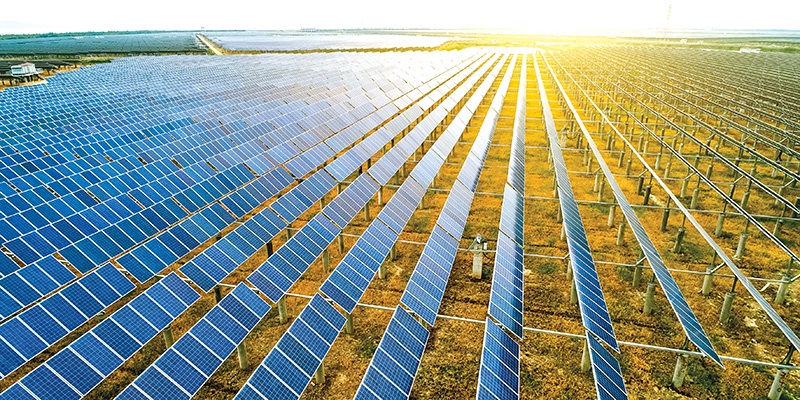
According to a report published by the World Bank, Vietnam can develop 5-10GW of offshore wind power by 2030, generating about $60 billion in added value.

The policymakers of the latest draft of Vietnam’s mammoth Power Development Plan VIII see themselves confronted with additional wind and solar demand, as well as the scrutiny of a deputy prime minister, requiring the Ministry of Industry and Trade to remedy issues to meet the national goals of energy security and net zero emissions by 2050.

Solutions coming thick and fast for draft PDP
Tiếp tục đọc “Solutions coming thick and fast for draft PDP”

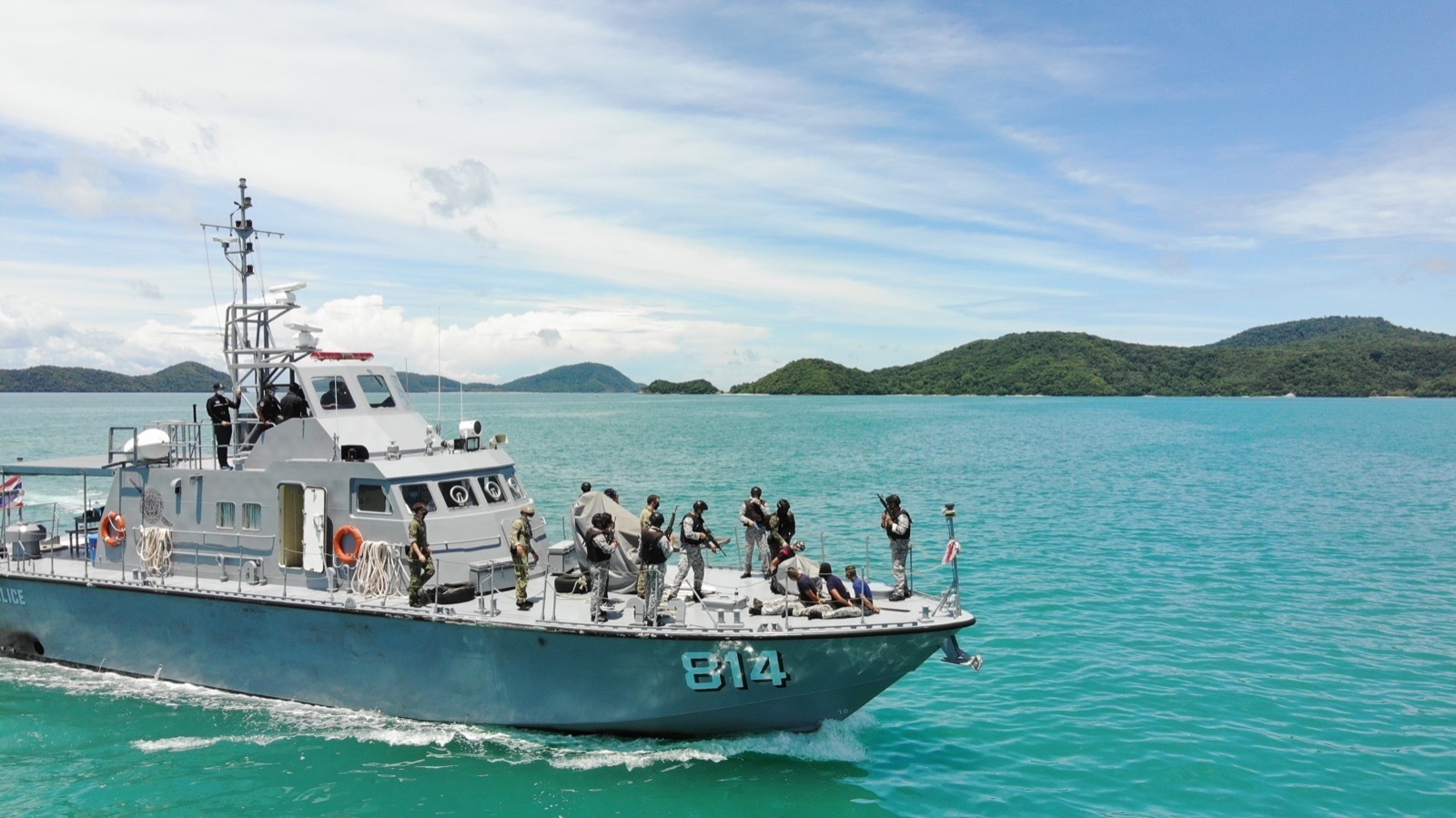
CONCEPTUALIZATION OF “MARITIME SECURITY” IN SOUTHEAST ASIA: CONVERGENCE AND DIVERGENCE


PUBLISHED: DECEMBER 15, 2021 CSIS

“Maritime Security” has emerged as a central concept in Southeast Asia’s policy lexicon. However, as is the case in much of the world, the term’s precise meaning is not consistently clear. Which challenges and state activities should be categorized as maritime security and which should be considered elements of another domain is generally ambiguous. This ambiguity can be useful to leaders seeking to build unity of action among government agencies with overlapping maritime policy mandates and to diplomats seeking to rely on euphemistic qualities to support flexible political narratives that minimize the risks associated with security dilemmas.  However such linguistic polysemy only works for so long and introduces risk. Left unclarified, terms will develop assumed meanings. For example, many Southeast Asians regard contemporary American talk about maritime security as a thin veil for something better understood as “Great Power Competition at Sea.” Therefore, even the most benign initiatives are factored into regional calculations aimed at balancing between external powers. Within the region, it is also possible for lexical disconnects to lead to problematic misinterpretations of policy intent and diplomatic signals.

Recognizing that understanding the varied conceptualizations of maritime security is an academic puzzle with real-world practical implications in Southeast Asia, the S. Rajaratnam School of International Studies convened a roundtable of experts to take stock of regional maritime security definitions. These specialists surveyed national policy documents and policymaker discourse to assess how maritime security is defined, used, and conceptualized in seven key Southeast Asian coastal states (the Philippines, Vietnam, Brunei, Malaysia, Indonesia, Singapore, and Thailand), ASEAN as a multinational institution, and the Quad members (Australia, Japan, India, and the United States). This stocktaking enabled the team to identify and discuss the significance of the convergences and divergences. Noting the transnational nature of discourse, the phrase “Southeast Asian conceptualizations” was adopted as a shorthand.  This does not specifically mean usage by Southeast Asian individuals or the region’s national governments but refers to the security-related discourse taking place in the region.  While the primary goal of the project was to improve communication by providing common reference points, the project also discovered findings of practical policy importance.

Discussions of each country’s conceptualization of maritime security and the implications of the term’s varying definitions across the region are available in the following 14 article series:

Evolving Conceptualizations of Maritime Security in Southeast Asia by John Bradford

The Philippines’ Conceptualizations of Maritime Security by Jay Batongbacal

Vietnam’s Conceptualizations of Maritime Security by Nguyen Nam Duong

Brunei Darussalam’s Conceptualizations of Maritime Security by Asyura Salleh

Malaysia’s Conceptualizations of Maritime Security by Tharishini Krishnan

Indonesia’s Conceptualizations of Maritime Security by Gilang Kembara

Singapore’s Conceptualization of Maritime Security by YingHui Lee

Thailand’s Conceptualizations of Maritime Security by Somjade Kongrawd

ASEAN Conceptualizations of Maritime Security by Dita Liliansa

Australia’s Conceptualization of Maritime Security by David Letts

India’s Conceptualization of Maritime Security by Prakash Gopal

Japan’s Conceptualization of Maritime Security by Kentaro Furuya

The United States’ Conceptualization of Maritime Security by Blake Herzinger

Maritime Security Conceptualizations in Southeast Asia: The Implications of Convergence and Divergence by John Bradford

US Department of State – Republic of China: Maritime Claims in the South China Sea

Download full report >>

Executive Summary

This study examines the maritime claims of the People’s Republic of China (PRC) in the SouthChina Sea. The PRC’s expansive maritime claims in the South China Sea are inconsistent with international law as reflected in the 1982 United Nations Convention on the Law of the Sea (“Convention”).

The PRC asserts four categories of maritime claims* in the South China Sea:

• Sovereignty claims over maritime features. The PRC claims “sovereignty” over more than one hundred features in the South China Sea that are submerged below the sea surface at high tide and are beyond the lawful limits of any State’s territorial sea. Such claims areinconsistent with international law, under which such features are not subject to a lawfulsovereignty claim or capable of generating maritime zones such as a territorial sea.

• Straight baselines. The PRC has either drawn, or asserts the right to draw, “straight baselines” that enclose the islands, waters, and submerged features within vast areas of ocean space in the South China Sea. None of the four “island groups” claimed by the PRCin the South China Sea (“Dongsha Qundao,” “Xisha Qundao,” “Zhongsha Qundao,” and“Nansha Qundao”) meet the geographic criteria for using straight baselines under the Convention. Additionally, there is no separate body of customary international law that supports the PRC position that it may enclose entire island groups within straight baselines.

• Maritime zones. The PRC asserts claims to internal waters, a territorial sea, an exclusive economic zone, and a continental shelf that are based on treating each claimed South China Sea island group “as a whole.” This is not permitted by international law. The seaward extent of maritime zones must be measured from lawfully established baselines, which are normally the low-water line along the coast. Within its claimed maritime zones, the PRC also makes numerous jurisdictional claims that are inconsistent with international law.

• Historic rights. The PRC asserts that it has “historic rights” in the South China Sea. Thisclaim has no legal basis and is asserted by the PRC without specificity as to the nature orgeographic extent of the “historic rights” claimed.

The overall effect of these maritime claims is that the PRC unlawfully claims sovereignty or someform of exclusive jurisdiction over most of the South China Sea. These claims gravely underminethe rule of law in the oceans and numerous universally-recognized provisions of international lawreflected in the Convention. For this reason, the United States and numerous other States haverejected these claims in favor of the rules-based international maritime order within the SouthChina Sea and worldwide.

* Islands in the South China Sea over which the PRC claims sovereignty are also claimed by other States. This studyexamines only the maritime claims asserted by the PRC and does not examine the merits of sovereignty claims toislands in the South China Sea asserted by the PRC or other States. The United States takes no position as to whichcountry has sovereignty over the islands in the South China Sea, which is not a matter governed by the law of the sea.

Limits in the Seas

US DEPARTMENT OF STATE

OFFICE OF OCEAN AND POLAR AFFAIRS

This series, issued by the Office of Ocean and Polar Affairs, Bureau of Oceans and International Environmental and Scientific Affairs in the Department of State, aims to examine coastal States’ maritime claims and/or boundaries, and assess their consistency with international law.  The studies represent the views of the United States Government only on the specific matters discussed therein and do not necessarily reflect an acceptance of the limits claimed.

Tiếp tục đọc “Limits in the Seas”

Bảng lương tối thiểu vùng năm 2022 của 63 tỉnh, thành phố

THƯ VIỆN PHÁP LUẬT trân trọng gửi tới quý khách hàng Bảng lương tối thiểu vùng năm 2022 của của 63 tỉnh, thành phố theo quy định tại Nghị định 90/2019/NĐ-CP như sau:

bảng tra cứu lương tối thiểu vùng 2022

1. Hà Nội

Quận/huyện/thị xã/thành phố thuộc tỉnhVùngLương tối thiểu(đồng/tháng
– Các quận: Ba Đình, Bắc Từ Liêm, Cầu Giấy, Đống Đa,  Hà Đông, Hai Bà Trưng, Hoàn Kiếm, Hoàng Mai, Long Biên, Nam Từ Liêm, Tây Hồ, Thanh Xuân.- Các huyện: Gia Lâm, Đông Anh, Sóc Sơn, Thanh Trì,  Thường Tín, Hoài Đức, Thạch Thất, Quốc Oai, Thanh Oai, Mê Linh, Chương Mỹ- Thị xã Sơn TâyI4.420.000
– Các huyện: Ba Vì, Đan Phượng, Phú Xuyên, Phúc Thọ , Ứng Hòa, Mỹ ĐứcII3.920.000
Tiếp tục đọc “Bảng lương tối thiểu vùng năm 2022 của 63 tỉnh, thành phố”

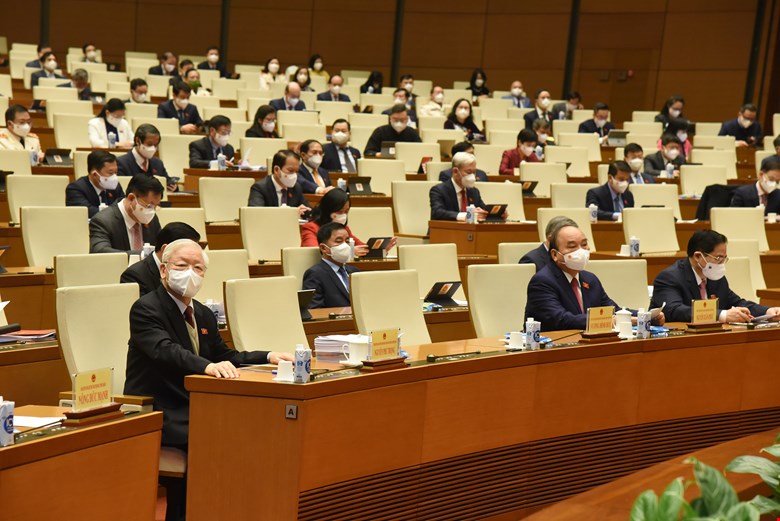
Trình Quốc hội gói phục hồi kinh tế – xã hội gần 350.000 tỷ đồng

11:07 04/01/2022 CAND

Gói phục hồi kinh tế – xã hội (KTXH) gồm 5 nhóm giải pháp chủ yếu với quy mô thực hiện trong hai năm 2022 – 2023.

Sáng 4/1, tại Phiên khai mạc Kỳ họp bất thường lần thứ nhất, Quốc hội khóa XV, thừa ủy quyền của Thủ tướng Chính phủ trình bày Tờ trình tóm tắt Dự thảo Nghị quyết của Quốc hội về chính sách tài khóa, tiền tệ để hỗ trợ Chương trình phục hồi và phát triển KTXH, Bộ trưởng Bộ Kế hoạch và Đầu tư (KH&ĐT) Nguyễn Chí Dũng cho biết, Chương trình xác định khung những vấn đề trọng tâm, cần tập trung giải quyết, bao gồm 5 nhóm nhiệm vụ, giải pháp chủ yếu với quy mô thực hiện dự kiến trong năm 2022-2023 như sau:

Trình Quốc hội gói phục hồi kinh tế - xã hội gần 350.000 tỷ đồng -0
Các đồng chí lãnh đạo, đại biểu tham dự phiên khai mạc.

Thứ nhất, mở cửa nền kinh tế gắn với đầu tư nâng cao năng lực y tế, phòng, chống dịch bệnh (60 nghìn tỷ đồng). Thứ hai, bảo đảm an sinh xã hội và hỗ trợ việc làm (53,15 nghìn tỷ đồng). Thứ ba, hỗ trợ phục hồi doanh nghiệp, hợp tác xã, hộ kinh doanh (110 nghìn tỷ đồng). Thứ tư, phát triển kết cấu hạ tầng, khơi thông nguồn lực xã hội cho đầu tư phát triển (113,85 nghìn tỷ đồng). Thứ 5, cải cách thể chế, cải cách hành chính, cải thiện môi trường đầu tư kinh doanh. Ngoài ra, huy động từ các Quỹ tài chính ngoài ngân sách Nhà nước (NSNN) khoảng 10 nghìn tỷ đồng.

Tiếp tục đọc “Trình Quốc hội gói phục hồi kinh tế – xã hội gần 350.000 tỷ đồng”

Lawmakers reveal mixed thoughts over $15 bln stimulus package

By Hoai Thu, Hoang Thuy   January 5, 2022 | 04:30 pm GMT+7 vnexpressLawmakers reveal mixed thoughts over $15 bln stimulus packageA man prepares food inside an eatery in Hanoi, December 26, 2021. Photo by VnExpress/Pham Chieu

Lawmakers have expressed mixed opinions on the government’s VND347 trillion ($15 billion) stimulus package, with some urging for more cash while others worry about inflation.

“We plan to provide a large amount through fiscal policy but the amount through monetary policy is not meeting expectations from businesses and the people,” said Trinh Xuan An, a member of the National Assembly’s National Defense and Security Committee.

Tiếp tục đọc “Lawmakers reveal mixed thoughts over $15 bln stimulus package”

Freedom House Report 2021: Democracy under Siege

Explore Country Data >>

As a lethal pandemic, economic and physical insecurity, and violent conflict ravaged the world, democracy’s defenders sustained heavy new losses in their struggle against authoritarian foes, shifting the international balance in favor of tyranny.

WRITTEN BYSarah RepucciAmy Slipowitz, Freedom House

As a lethal pandemic, economic and physical insecurity, and violent conflict ravaged the world in 2020, democracy’s defenders sustained heavy new losses in their struggle against authoritarian foes, shifting the international balance in favor of tyranny. Incumbent leaders increasingly used force to crush opponents and settle scores, sometimes in the name of public health, while beleaguered activists—lacking effective international support—faced heavy jail sentences, torture, or murder in many settings.

These withering blows marked the 15th consecutive year of decline in global freedom. The countries experiencing deterioration outnumbered those with improvements by the largest margin recorded since the negative trend began in 2006. The long democratic recession is deepening.

Tiếp tục đọc “Freedom House Report 2021: Democracy under Siege”

Luật Năng lượng Nguyên tử

QUỐC HỘI
——-
CỘNG HÒA XÃ HỘI CHỦ NGHĨA VIỆT NAM
Độc lập – Tự do – Hạnh phúc
————–
Luật số: 18/2008/QH12Hà Nội, ngày 03 tháng 06 năm 2008

LUẬT

NĂNG LƯỢNG NGUYÊN TỬ

Căn cứ Hiến pháp nước Cộng hòa xã hội chủ nghĩa Việt Nam năm 1992 đã được sửa đổi, bổ sung một số điều theo Nghị quyết số 51/2001/QH10;
Quốc hội ban hành Luật năng lượng nguyên tử,

Chương 1.

NHỮNG QUY ĐỊNH CHUNG

Điều 1. Phạm vi điều chỉnh

Luật này quy định về các hoạt động trong lĩnh vực năng lượng nguyên tử và bảo đảm an toàn, an ninh trong các hoạt động đó.

Điều 2. Đối tượng áp dụng

Luật này áp dụng đối với tổ chức, cá nhân trong nước, người Việt Nam định cư ở nước ngoài, tổ chức, cá nhân nước ngoài, tổ chức quốc tế tiến hành các hoạt động trong lĩnh vực năng lượng nguyên tử tại Việt Nam.

Tiếp tục đọc “Luật Năng lượng Nguyên tử”