Japan to join US in South China Sea patrols

Story highlights

  • Japan also plans to give aid to other South China Sea nations
  • There are competing claims to vast areas of sea by countries in the region

(CNN)Japan is planning on upping its activities in the South China Sea through joint training patrols with the United States and exercises with regional navies, Japanese Defense Minister Tomomi Inada said.

Japan would also be giving military aid to countries such as the Philippines and Vietnam as it increases its role in the contested waters of the South China Sea, Inada said Thursday at the Center for Strategic and International Studies, a think tank in Washington, DC.
Inada also welcomed the US’s plan to allocate 60% of its Navy and Air Force assets to the Asia Pacific region by 2020.


Sứ điệp văn hóa nơi cuộc sống tha hương

People who are socially isolated may be at a greater risk of dying sooner, a British study suggests. But do Facebook friends count? How about texting?

Nguyễn Đăng Trúc

Rằng: hay thì thiệt là hay,
Nghe ra ngậm đắng nuốt cay thế nào! (ĐTTT, 489-490).
Vui là vui gượng kẻo là,
Ai tri âm đó mặn mà với ai ! (ĐTTT, 1247-1248)

Nỗi xót xa đó của Kiều trong cuộc sống tha hương, hẳn nhiều người trong cộng đồng người Việt hải ngoại chúng ta đã từng cảm nhận. Nhưng, nếu đại thi phẩm của Nguyễn Du không phải chỉ là câu truyện tình cảm, mà còn là một sứ điệp văn hóa, thì hoàn cảnh xa quê của chúng ta hôm nay không chỉ là khổ đau, nhưng còn là cơ duyên để tiếp cận được một sứ điệp về ý nghĩa và thân phận con người. Tiếp tục đọc “Sứ điệp văn hóa nơi cuộc sống tha hương”

Văn hóa là học làm người

Nguyễn Đăng Trúc

Vào khoảng giữa tiền bán thế kỷ 20, trước cao trào Việt-hóa văn học với những lối định hướng khác nhau, hoặc bảo tồn nếp cũ của truyền thống Á Đông, hoặc đoạn tuyệt với nếp cũ để triệt để theo chân trời mới của Tây phương, kẻ sĩ Sào Nam Phan Bội Châu đã lên tiếng trong Phàm-Lệ của cuốn Khổng Học Đăng như sau:

Cái danh từ học cũ chẳng phải là cái đồ để đánh cắp áo mũ cân đai đâu? Cái danh từ học mới chẳng phải là cái mồi để hót gạt mề đay kim-khánh đâu…! Tiếp tục đọc “Văn hóa là học làm người”

Đất lành chim đậu

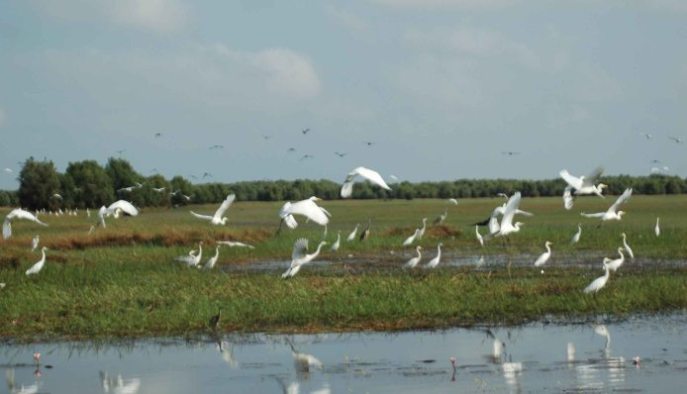
tram-chim

 
Đất lành chim đậu là lẽ tự nhiên; đất nghiệt ngã thì chim đi nơi khác cũng là lẽ tự nhiên . Điều này ai cũng hiểu.

Nhưng đất lành là gì? Làm thế nào để nước Việt là đất lành để người nước ngoài thích đến đầu tư và làm việc, để sinh viên du học thích trở về quê hương sinh sống?

Đất lành. Chúng ta nghĩ đến “đất”, nhưng thực sự “đất” mà là đất đá, núi non, sông nước, thì chẳng quan trọng, vì thời nay, với kỹ thuật xây dựng và tiếp liệu, thiên hạ có thể sống ở Bắc cực hay Nam cực hay trong sa mạc Sahara để làm việc, đất đá là yếu tố ít quan trọng nhất của “đất”.

Yếu tố quan trọng nhất của “đất” là con người và những hệ thống làm việc và sinh sống của con người. Điều này rất dễ hiểu, như là vợ chồng, nếu yêu nhau thì nhà mình là thiên đường, ghét nhau thì nhà thành địa ngục. Cái nhà chỉ là 4 bức tường và mái, không hơn không kém. Tiếp tục đọc “Đất lành chim đậu”

CSIS – Southeast Asia Sit-Rep – September 8, 2016

CSIS Southeast Asia SIT-REP

This issue features analyses on U.S.-Myanmar relations in coming years in light of State Counselor Aung San Suu Kyi’s visit to Washington and U.S.-Laos cooperation on the Agent Orange war legacy as the two countries expand ties; and includes upcoming CSIS events on Myanmar and the Philippines. Links will take you to the full publications, multimedia, or to registration for upcoming programs when available. To jump to a section, select one of the following: Tiếp tục đọc “CSIS – Southeast Asia Sit-Rep – September 8, 2016”

The internet is… saved??!!

Dear Avaaz movement,

For 7 years we’ve fought corporate giants to save the internet, and it’s looking like WE’VE WON!!!!!

First in the US, then Brazil, India and now here’s what the top French official (and key swing vote) told us last week before he announced the EU law safeguarding the internet for half a billion people:

Sebastien Soriano
“I must confess that some of these tweets and messages that I received made me emotional… people asking me to “Save the Internet” and “Stop corporate capture…” I really wanted to respond to them.”
— Sebastien Soriano, Head of French Internet Regulator ARCEP

Officials announcing the law showed charts of unprecedented numbers of public comments – up to 640 per minute, the overwhelming majority from Avaaz!

Corporations wanted a fast internet for the mega-rich, and a slow one for the rest of us. We fought for the principle of “net neutrality” – equal internet for all! Tiếp tục đọc “The internet is… saved??!!”

Explaining President Obama’s Rebalance Strategy

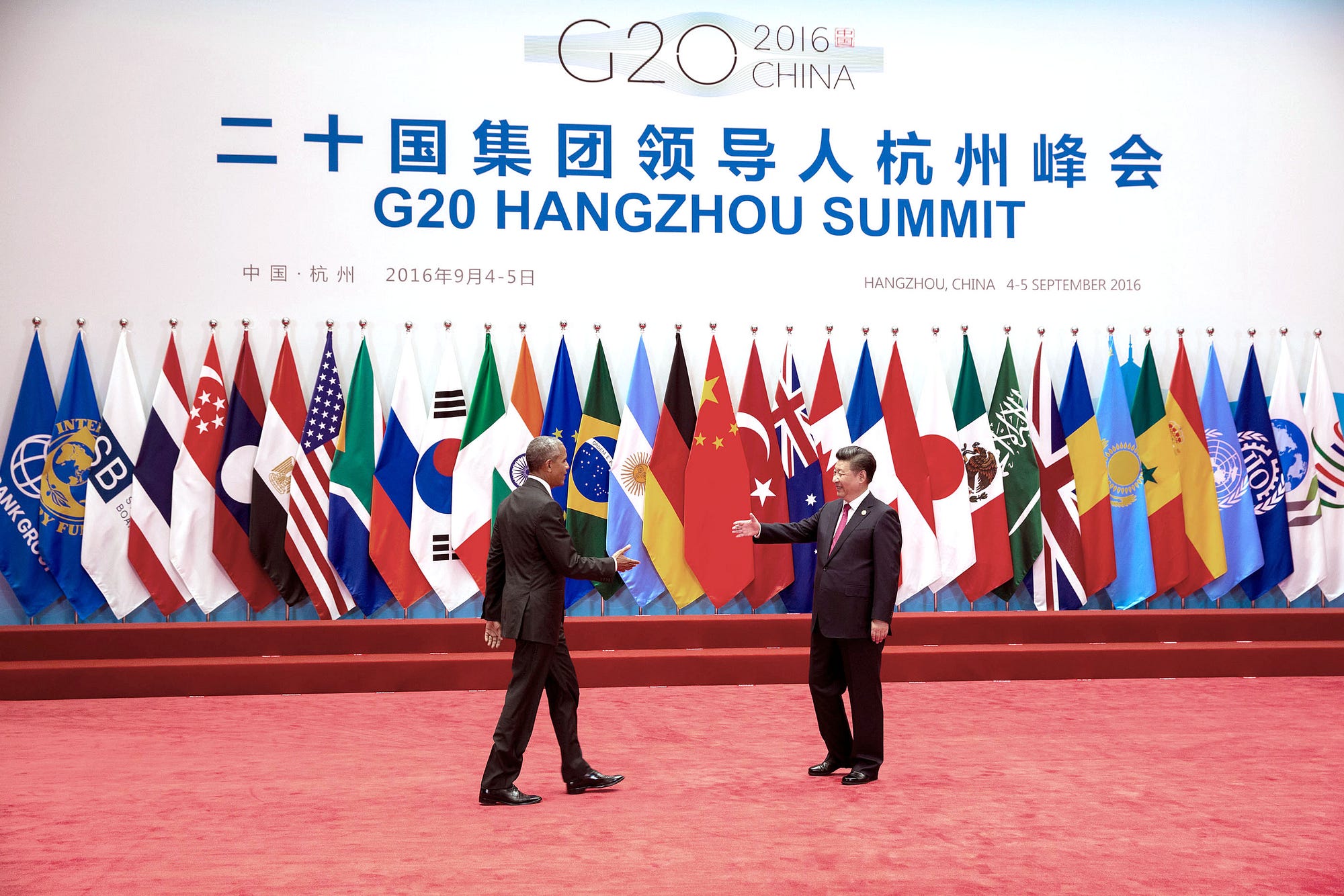
Chinese President Xi Jinping greets President Barack Obama upon arrival for the G20 Summit at the Hangzhou International Expo Center in Hangzhou, China, Sept. 4, 2016. (Official White House Photo by Pete Souza)

Explaining President Obama’s Rebalance Strategy

By Ambassador Susan Rice, National Security Advisor

In January of 2009, American foreign policy was largely defined by the horrific aftermath of the September 11th attacks, two ground wars in the Middle East, and the worst financial crisis in decades, with the global economy, by many measures, on a worse trajectory than in 1929.

Tiếp tục đọc “Explaining President Obama’s Rebalance Strategy”

China’s economic corridor creating new conflicts in Pakistan

DW

Pakistani PM Sharif has inaugurated a two-day China-Pakistan Economic Corridor summit in Islamabad, hailing the project as a milestone for his country. But opposition to the project is increasing amid new conflicts.

Addressing the inaugural session of the two-day CPEC Summit in the Pakistani capital Islamabad on Monday, August 29, Prime Minister Nawaz Sharif said the project would be a “game-changer” for Pakistan. He said the CPEC would also bring peace and prosperity to the entire region. Tiếp tục đọc “China’s economic corridor creating new conflicts in Pakistan”

CSIS – Southeast Asia from Scott Circle – September 1, 2016

Cementing a New Normal in U.S.-Myanmar Relations

By Murray Hiebert (@MurrayHiebert1), Senior Adviser and Deputy Director, and Phuong Nguyen (@PNguyen_DC), Associate Fellow, Southeast Asia Program (@SoutheastAsiaDC), CSIS

September 1, 2016

Aung San Suu Kyi’s visit to the United States on September 13-14 as state counselor and de facto leader of Myanmar will be one of the highlights in U.S.-Myanmar relations since the two countries normalized diplomatic ties in 2012, after the military began political reforms. Now that a democratically elected government has taken office, the next five years will allow the two countries to lay the foundation for a new chapter in their bilateral relations. Tiếp tục đọc “CSIS – Southeast Asia from Scott Circle – September 1, 2016”

Why did China fly ‘combat patrols’ over the Spratly Islands?

csmonitor

In the wake of an international court’s ruling rejecting China’s claims to disputed territory in the South China Sea, China said the combat exercises were an effort to protect its ‘maritime interests.’

  • U.S. Navy/Handout/Reuters/Files

China’s air force has sent bombers and fighter jets on “combat patrols” near the islands at the center of a long-running territorial dispute in the South China Sea, a senior colonel said, according to the Xinhua news agency.

“The Air Force is organizing normalized South China Sea combat patrols, practicing tactics … increasing response capabilities to all kinds of security threats and safeguarding national sovereignty, security and maritime interests,” Senior Col. Shen Jinke of the People’s Liberation Army Air Force told Xinhua, Reuters reports. Tiếp tục đọc “Why did China fly ‘combat patrols’ over the Spratly Islands?”

Secrets of a Global SuperCourt


Mike McQuade for BuzzFeed News

A parallel legal universe, open only to corporations and largely invisible to everyone else, helps executives convicted of crimes escape punishment. Part one of a BuzzFeed News investigation. Part one of a BuzzFeed News investigation — read the whole series here.

Imagine a private, global supercourt that empowers corporations to bend countries to their will.

Say a nation tries to prosecute a corrupt CEO or ban dangerous pollution. Imagine that a company could turn to this super court and sue the whole country for daring to interfere with its profits, demanding hundreds of millions or even billions of dollars as retribution. Tiếp tục đọc “Secrets of a Global SuperCourt”

csis – AMTI Brief, Aug. 24, 2016

Shifting Sands:
What Countries Are Taking Sides After the South China Sea Ruling?

On July 12, a tribunal at the Permanent Court of Arbitration in The Hague issued its long-awaited ruling on Manila’s case against Beijing’s claims in the South China Sea. How many countries recognize the decision as legally binding on both parties and call for it to be respected will determine its ultimate value, as international pressure is the court’s only enforcement mechanism. In recent months, AMTI scoured publicly available, official statements in an effort to determine the real positions taken by countries toward the ruling. It is enlightening to compare the level of global support expressed since the July 12 ruling to the positions of countries in the months leading up to the verdict. A full list of official statements, both pre- and post-ruling, is available at the bottom of this feature. Tiếp tục đọc “csis – AMTI Brief, Aug. 24, 2016”

CSIS – Southeast Asia Sit-Rep – August 25, 2016

CSIS Southeast Asia SIT-REP

This issue includes a look at the new Malaysian political party that could challenge Prime Minister Najib Razak’s United Malays National Organization, analysis of Vietnam’s latest economic reforms, a podcast assessing U.S.-Taiwan relations, and much more. Links will take you to the full publications, multimedia, or to registration for upcoming programs when available. To jump to a section, select one of the following:

Tiếp tục đọc “CSIS – Southeast Asia Sit-Rep – August 25, 2016”

Chinese fishermen caught up in Asian geopolitical conflict

 Local fish stock collapse pushes fleet further away from domestic waters
Chinese fishing boats anchored off Zhoushan in eastern China © Lucy Hornby

Tiếp tục đọc “Chinese fishermen caught up in Asian geopolitical conflict”

Cơn khát Thái có thể hút cạn nước Cửu Long và Đồng bằng sông Cửu Long có thể tan rã

HanoiTV

Kỳ 1: Cơn khát Thái có thể hút cạn nước Cửu Long

(HanoiTV) – Thái Lan đang cân nhắc thực hiện hàng trăm dự án chuyển nước từ sông Mêkông để giải quyết nỗi lo hạn hán. Nếu dự án này thành hiện thực, nguy cơ thiếu nước của đồng bằng sông Cửu Long có thể tăng nhanh, trong những năm tới.

Kỳ 2: Đồng bằng sông Cửu Long có thể tan rã

Kỳ 3: Những gia đình quyết tử bên sông Mekong

Mô hình cửa kiểm soát chuyển nước từ sông Mekong vào Thái Lan. Nguồn: PGS- TS Lê Anh Tuấn

Kong – Loei – Chi – Mun và 990 dự án tưới nước

Cách đây gần một thập kỷ, năm 2008, Cục Tưới Hoàng gia Thái Lan (RID) đã xây dựng nhiều dự án chuyển nước từ sông Mekong vào các dòng sông nhánh để giữ nước cho mùa khô, theo Mekong Eye, trang web cung cấp thông tin về các hoạt động liên quan đến Mekong – dòng sông huyết mạch của nhiều nước Đông Nam Á và Trung Quốc. Tiếp tục đọc “Cơn khát Thái có thể hút cạn nước Cửu Long và Đồng bằng sông Cửu Long có thể tan rã”