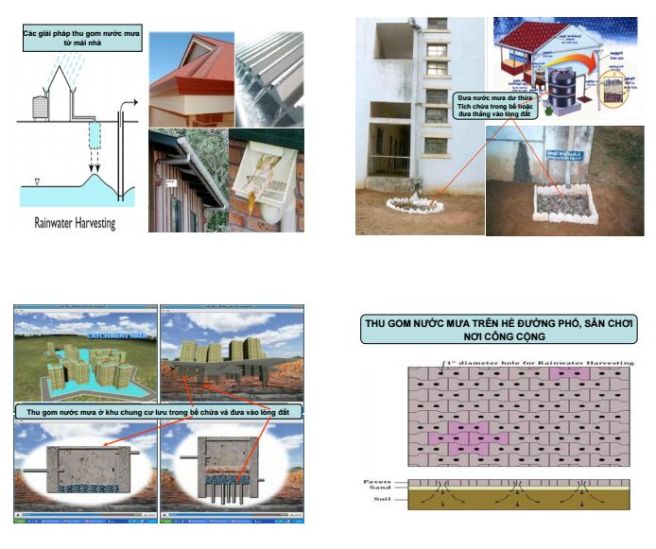
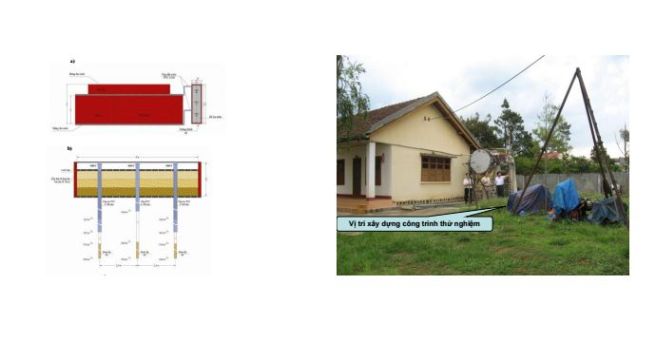
Thu gom nước mưa, nước mặt đưa vào lòng đất bổ sung nhân tạo cho nước dưới đất

Mekong-Cuulong Blog Sunday, October 9, 2016

Báo cáo tham luận

Người trình bày; PGS TS Đoàn Văn Cánh- Giảng viên cao cấp trường ĐH Mỏ Địa chất,

Chủ tịch Hội Địa chất thủy văn Việt Nam

PLEIKU : 21 – 23/7/2016

https://drive.google.com/file/d/0B7vxHAQlq7jzWWJJTWNhcHZZMmoxb2tabDQ5V1ZQOEhlNUJB/view?usp=sharing

Photos:


China blockades streets around military building as hundreds protest in capital

 Reuters Tue Oct 11, 2016 | 6:15am EDT
Uniformed people take part in a protest outside the Bayi Building, a major Chinese military building in Beijing, China, October 11, 2016. REUTERS/Thomas Peter

 
Police in the Chinese capital on Tuesday blocked off streets near a major military building, as hundreds of people wearing green camouflage uniforms chanted and waved national flags to protest against the loss of their posts. Tiếp tục đọc “China blockades streets around military building as hundreds protest in capital”

Chinese fishing boats sink a Korean coast guard vessel

Korea Herald
Published : 2016-10-09 17:35

South Korea on Sunday filed a protest against China after two Chinese boats illegally fishing in Korean waters sank a Korean coast guard boat in their attempt to flee.

According to Incheon Coast Guard, the vessels, assumed to be 100-plus ton steel ships, on Friday deliberately crashed into an Incheon coastguard’s 4.5-ton speed boat, which was patrolling the area for illegal fishing in waters off Incheon in the western side of the peninsula, and fled the scene. Tiếp tục đọc “Chinese fishing boats sink a Korean coast guard vessel”

Improving Relief and Development Responses to Climate Variability: Lessons from the 2015 – 2016 El Niño in Southern Africa

Improving Relief and Development Responses to
Climate Variability: Lessons from the 2015 – 2016 El Niño in Southern Africa

El Niño weather system was one of the strongest on record, causing drought and flooding in locations across the world. Parts of sub-Saharan Africa were particularly hard hit. In Southern Africa, low or erratic rainfall caused serious drought and associated food insecurity in 10 countries, severely testing the coping strategies of households, communities, and governments and prompting an emergency response by donors. In June 2016, a team from the CSIS Global Food Security Project and CSIS Africa Program visited two of the hardest-hit countries—Malawi and Mozambique—to assess the scale of the disaster, observe the relief effort, and consider efforts by the United States to boost agricultural growth and build the resilience of affected countries.

Download the Report & Watch the Film Here

This report is made possible by generous support from the Bill & Melinda Gates Foundation.

Tracking China’s Compliance with the South China Sea Arbitral Award

Lawfareblog

By Julian Ku, Chris Mirasola

Monday, October 3, 2016, 2:39 PM

Since the arbitral tribunal formed pursuant to the UN Convention for the Law of the Sea (UNCLOS) handed China a stunning legal defeat in July, China has loudly proclaimed its intention to ignore the arbitral award.  For most analysts of the region, it has been a working assumption that China has not and will not comply with any parts of the award.   But China’s statements that it will ignore the award do not necessarily mean that it is currently in complete non-compliance or that it will never come into compliance in the future.  China’s actions, as opposed to terse public statements, must be assessed as a measure of its compliance. Tiếp tục đọc “Tracking China’s Compliance with the South China Sea Arbitral Award”

Senators Call For Global Super Court To Be Renegotiated

BuzzFeed News’ investigation of investor-state dispute settlement provokes a call for change on Capitol Hill.

Senators Sherrod Brown, Bernie Sanders, and Elizabeth Warren, who seek to limit the scope of ISDS. BuzzFeed News; Getty

Citing a BuzzFeed News investigation, a dozen senators urged President Obama to remove a controversial element of the Trans-Pacific Partnership (TPP), the massive trade deal the administration is pushing Congress to ratify in the coming months. Tiếp tục đọc “Senators Call For Global Super Court To Be Renegotiated”

China says interests outweigh differences with Vietnam

Chinese Premier Li Keqiang (R) and Vietnamese Prime Minister Nguyen Xuan Phuc attend a signing ceremony at the Great Hall of the People in Beijing, China, September 12, 2016. REUTERS/Lintao Zhang/Pool

Common interests between China and Vietnam far outweigh differences, Chinese President Xi Jinping told Vietnam’s prime minister on Tuesday, calling for their dispute in the South China Sea to be resolved through talks. Tiếp tục đọc “China says interests outweigh differences with Vietnam”

Singapore accuses Chinese paper of fabricating South China Sea story

Tue Sep 27, 2016 | 6:22am EDT

Singapore’s ambassador to China on Tuesday accused a major state-run Chinese newspaper of fabricating a report about Singapore’s position on the South China Sea, but the paper stuck by its story. Tiếp tục đọc “Singapore accuses Chinese paper of fabricating South China Sea story”

Anti-Land Grab Regulations

Global Witness

Anti-Land Grab Regulations

Land grabs are closer than you think. Holes in international law mean we have very little way of ensuring that our supply chains and savings don’t link us to land that has been illegally or violently taken.

Land grabbing crises in Asia and Africa are closer than you think. We’re occasionally made aware of this – of how Coca Cola’s sugar was linked to land seizures and human rights violations or how European banks and pension funds are financing Wilmar – the world’s biggest palm oil company – to grab land in Uganda, for example. But more often than not we are oblivious to the social and environmental footprint of our everyday life choices.

This is largely due to a lack of regulation. While companies in Europe, the US and Australia caught importing illegal timber can be prosecuted, there are no international regulations on the trade of land or the products grown on it, such as coffee, sugarcane, rice, rubber or palm oil. This means there is no legal incentive for companies to ensure that agricultural products don’t originate from land that was forcibly taken from the people who live on it.

Likewise, despite efforts in Europe and the US to improve regulations of the finance sector following the 2008 economic crisis, there are still almost no rules stopping investors profiting from land grabbing. In 2013, we showed how rubber companies linked to land grabbing in Cambodia and Laos were backed by investors including Deutsche Bank, Credit Suisse and the International Finance Corporation, the private lending arm of the World Bank.

Global Witness has been documenting land grabbing crises in countries such as Cambodia, Myanmar, Papua New Guinea and Liberia, where governments strike secretive deals with agri-business companies for land at the expense of communities that have relied on it for generations. These communities are often unable to access justice domestically, but right now the only recourse they have internationally is to voluntary standards and industry round-tables that lack teeth.

As global demand for food and other agricultural commodities increases, commercial pressure on land will too. Global Witness is calling on Europe and the US to introduce binding regulations to ensure that companies and investors are punished for their role in land grabbing, not profiting from it.

Hostile takeover

hun-sen-family Report / July 7, 2016

Global Witness

Hostile Takeover

How Cambodia’s ruling family are pulling the strings on the economy and amassing vast personal fortunes with extreme consequences for the population.

Few prime ministers have served for as long as Cambodia’s Hun Sen, in power for 30 years. Even when democratically voted out he has refused to step down, and has systematically quashed political opposition including through the murder, torture and arbitrary imprisonment of his critics.

Tiếp tục đọc “Hostile takeover”

Company executives could now be tried for land grabs and environmental destruction

Global Witness
Press release / Sept. 15, 2016

Today’s announcement in The Hague is critical first step in crackdown on violence and theft in global trade in land and natural resources

A move by the Prosecutor of the International Criminal Court to expand its focus signals a landmark shift in international criminal justice and could reshape how business is done in developing countries, says Global Witness. Company executives, politicians and other individuals could now be held criminally responsible under international law for crimes linked to land grabbing and environmental destruction. Tiếp tục đọc “Company executives could now be tried for land grabs and environmental destruction”

Should Free Traders Support the Trans- Pacific Partnership? An Assessment of America’s Largest Preferential Trade Agreement

CATO Institute

After nearly six years of negotiations, a Trans-Pacific Partnership agreement was reached in October 2015. The deal was subsequently signed by the governments of the United States and 11 other parties in Wellington, New Zealand in February 2016. In terms of the value of trade and share of global output accounted for by the 12 member countries, the TPP is the largest U.S. trade agreement to date. Tiếp tục đọc “Should Free Traders Support the Trans- Pacific Partnership? An Assessment of America’s Largest Preferential Trade Agreement”

CSIS – Southeast Asia Sit-Rep – September 22, 2016

CSIS Southeast Asia SIT-REP

This issue brings you insight into the role of diplomacy and security in U.S. policy following the arbitral tribunal ruling on the South China Sea, an overview of Cambodia’s deteriorating political situation, analysis on the challenges in Myanmar’s peace process awaiting Aung San Suu Kyi, discussions with Philippine foreign secretary Perfecto Yasay and Japanese defense minister Tomomi Inada, and much more. Links will take you to the full publications, multimedia, or to registration for upcoming programs when available. To jump to a section, select one of the following:

Tiếp tục đọc “CSIS – Southeast Asia Sit-Rep – September 22, 2016”

One Belt, One Road: an economic roadmap

The Economist Intelligence Unit

OBOR_ECN_IMAGE_wide.jpg

One Belt, One Road – business opportunities from China’s investment strategy

The One Belt, One Road (OBOR) initiative creates significant opportunities for organisations to participate in a range of projects, especially those involved in the infrastructure, construction, heavy equipment, energy, water and related industries.  Our report, One Belt, One Road: an economic roadmap attempts to make sense of this programme, addressing the opportunities and challenges presented by this important global development policy. Tiếp tục đọc “One Belt, One Road: an economic roadmap”

Taiwan’s new facilities on Taiping Island may have military use

scmp

Outpost is part of the Spratly Islands and is also claimed by mainland China, the Philippines and Vietnam.

PUBLISHED : Tuesday, 20 September, 2016, 3:15pm
UPDATED : Wednesday, 21 September, 2016, 12:09am
 Taiwan is building four concrete structures on the disputed ­Taiping Island in the South China Sea, in what might be a facility to increase its military alertness.

The structures, about three to four storeys high, were found to have been built on the coastline of the west side of Taiping surrounding a circular structure still under construction on the shore, ­according to a recent Google Earth map.

Taiping is part of the Spratly Islands and is also claimed by mainland China, the Philippines and Vietnam.

Tiếp tục đọc “Taiwan’s new facilities on Taiping Island may have military use”