Hạn mặn khốc liệt ở miền Tây: 5 tỉnh công bố tình huống khẩn cấp

TTO – Tính đến ngày 4-3, đã có 5 tỉnh Kiên Giang, Bến Tre, Tiền Giang, Cà Mau và Long An công bố tình huống khẩn cấp về hạn, mặn. Dù các địa phương đã rút kinh nghiệm từ những đợt hạn, mặn trước đây nhưng vẫn không tránh được thiệt hại.

Tiếp tục đọc “Hạn mặn khốc liệt ở miền Tây: 5 tỉnh công bố tình huống khẩn cấp”

HÀN QUỐC SẼ ĐÓNG CỬA TỚI 28 NHÀ MÁY NHIỆT ĐIỆN THAN ĐỂ CHỐNG Ô NHIỄM KHÔNG KHÍ TRONG THÁNG 3/2020

Bộ Năng lượng Hàn Quốc vừa công bố sẽ tạm dừng hoạt động tới 28 nhà máy nhiệt điện than vào tháng 3/2020 để chống ô nhiễm không khí. Nước này hiện có khoảng 60 nhà máy nhiệt điện than, đóng góp vào 40% sản lượng điện cả nước.

Ô nhiễm bụi mịn ở Hàn Quốc xếp thứ 26 trên thế giới, theo bảng xếp hạng chất lượng không khí 2019 (IQAir), với nồng độ bụi mịn trung bình là 24,8µg/m³. Việt Nam đứng thứ 15 với nồng độ bụi mịn trung bình 34.1µg/m³. [1]
Tiếp tục đọc “HÀN QUỐC SẼ ĐÓNG CỬA TỚI 28 NHÀ MÁY NHIỆT ĐIỆN THAN ĐỂ CHỐNG Ô NHIỄM KHÔNG KHÍ TRONG THÁNG 3/2020”

These 11 EU states already meet their 2020 renewable energy targets

Weforum.org

Steam billows from the cooling towers of Vattenfall's Jaenschwalde brown coal power station behind wind turbines near Cottbus, eastern Germany December 2, 2009. Most world leaders plan to attend a climate summit in Copenhagen December 7-18, boosting chances that a new U.N. deal to fight climate change will be reached, host Denmark said on Tuesday. REUTERS/Pawel Kopczynski (GERMANY - Tags: ENERGY ENVIRONMENT) - BM2E5C21BNF01

The Nordic countries are among the strongest performers.

Almost half of the European Union’s (EU) 28 member states have already hit, or are close to hitting, their 2020 renewable energy targets.

But despite this, there has been a gradual slow-down in the rate of renewable energy use across the EU, and some member states have a lot of ground to make up this year.
Tiếp tục đọc “These 11 EU states already meet their 2020 renewable energy targets”

Energy Policy Experiments: Lessons from the Korean Experience

Development.asia

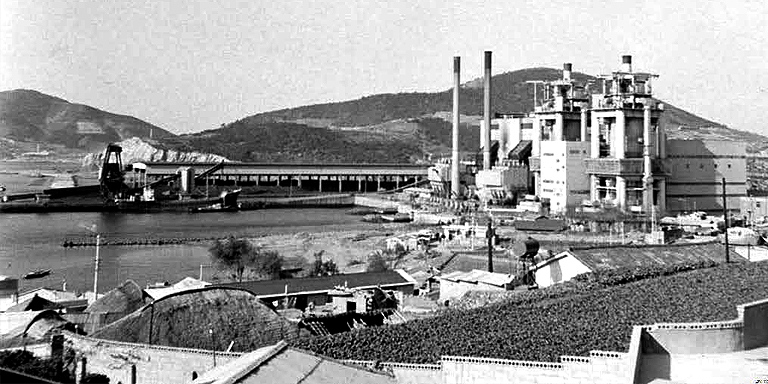
Policies in the Republic of Korea initially focused on improving energy supply and security to support its economic growth. Photo of the Busan thermoelectric power plant courtesy of the National Archives of Korea.

Despite a lack of domestic energy resources, the Republic of Korea has become one of the largest economies in the world.

Overview

The Republic of Korea rose from being one of the poorest countries in the 1960s to one of the top 10 economies in the 21st century. This achievement would not have been possible without the key role of energy. Over the last half-century, the country has rapidly built and upgraded its electricity infrastructure, diversified its energy supply mix, developed a robust nuclear industry, and become a pioneer in liquefied natural gas (LNG) trade. Tiếp tục đọc “Energy Policy Experiments: Lessons from the Korean Experience”

Vietnam May Back Off From Coal as Plants Get Harder to Build

(Bloomberg) — Follow Bloomberg on LINE messenger for all the business news and analysis you need. Vietnam may scale back a plan to boost coal’s role in its power generation as financial restrictions and local environmental concerns make it more difficult to build plants. The National Steering Committee for Power Development has recommended eliminating about 15 gigawatts of planned new coal plan

Read more at: https://www.bloombergquint.com/business/vietnam-may-back-away-from-coal-as-plants-get-harder-to-build?utm_source=Mekong+Eye&utm_campaign=583690c75e-EMAIL_CAMPAIGN_2018_01_10_COPY_01&utm_medium=email&utm_term=0_5d4083d243-583690c75e-527526165
Copyright © BloombergQuint

Could water solve the renewable energy storage challenge?

IIASA
Seasonally pumped hydropower storage could provide an affordable way to store renewable energy over the long-term, filling a much needed gap to support the transition to renewable energy, according to a new study from IIASA scientists.

© Alin Neamtu | Dreamstime.com

© Alin Neamtu | Dreamstime.com

Seasonal pumped hydropower storage (SPHS), an already established yet infrequently used technology, could be an affordable and sustainable solution to store energy and water on an annual scale, according to new IIASA research published in the journal Nature Communications. Compared with other mature storage solutions, such as natural gas, the study shows that there is considerable potential for SPHS to provide highly competitive energy storage costs.

Tiếp tục đọc “Could water solve the renewable energy storage challenge?”

Vietnam Energy strategy fit for private backers

14:00 | 26/02/2020
Vietnam has enacted its strategic orientations for energy development through to 2030 and with a vision for the next quarter of a century, encouraging more of the private sector to develop for the future, and ensuring energy security to meet new demands.
energy strategy fit for private backers
The country is to prioritise both wind and solar energy, and encourage deep investment in the sector, among others. Photo: Shutterstock

Under the Politburo’s recently-enacted Resolution No.55 NQ/TW on the country’s development strategy for energy over the next 10 years and with a vision towards 2045, targets have been set for sufficient and stable supply energy with reasonable prices, as well as accelerated development of a comprehensive, competitive, and transparent energy market, and diversified ownership and business models.

Doan Van Binh, director of the Institute of Energy and Science at the Vietnam Academy of Science and Technology, said that since implementing 2007’s Resolution No.18 NQ/TW, which had a vision towards 2050, specific goals have been reached. However, the international and domestic context requires an energy strategy with breakthrough solutions that meet the country’s new development and integration requirements. “The new resolution played an important role as it pointed out weakness during the past and the reason for these. But new situations force us to restructure,” said Binh.

Tiếp tục đọc “Vietnam Energy strategy fit for private backers”

Điểm nghẽn: Lao động lành nghề Việt Nam thiếu hụt nặng từ chiến tranh thương mại Trung-Mỹ

English: Choke point: Vietnam’s skilled labour shortage

Năm 2016, chính phủ Việt Nam đã công bố chiến lược phát triển lực lượng lao động lành nghề để đáp ứng nhu cầu trong nước và quốc tế và đưa đất nước ngang tầm với phần còn lại của khu vực ASEAN, mặc dù có rất ít chi tiết được công bố kể từ đó.

(Reuters) – Một mặt trận mới mở ra trong cuộc chiến thương mại Mỹ-Trung khi các công ty chuyển sản xuất sang Việt Nam tham gia vào một cuộc chiến khốc liệt thu hút lao động lành nghề, làm trầm trọng thêm tình trạng thiếu hụt lao động lành nghề và thúc đẩy cải cách giáo dục để giải quyết vấn đề này.

Sinh viên thực tập tại phòng thí nghiệm của một trường cao đẳng dạy nghề công nghiệp tại Hà Nội, Việt Nam ngày 9 tháng 10 năm 2019. Ảnh chụp ngày 9 tháng 10 năm 2019 bởi REUTERS / Kham

Việt Nam trở thành một trong những nước hưởng lợi lớn nhất từ ​​cuộc chiến thương mại giữa Washington và Bắc Kinh.

Xuất khẩu sang Hoa Kỳ đã tăng 21,5% trong 8 tháng đầu năm 2019 và một số công ty bao gồm cả công ty mẹ của Google là Alphabet Inc ( GOOGL.O ) và Nintendo ( 7974.T ) đã công bố kế hoạch mới để mở các cơ sở tại nước này. Tiếp tục đọc “Điểm nghẽn: Lao động lành nghề Việt Nam thiếu hụt nặng từ chiến tranh thương mại Trung-Mỹ”

Điện gió ngoài khơi: Kỳ vọng “đầu tàu” mới trong phát triển năng lượng tái tạo tại Việt Nam

ĐCSVN – Theo Hiệp hội Năng lượng Việt Nam, điện gió có thể thay thế nhiệt điện than, khí, phát điện 24/24 giờ…. Do đó, phát triển điện gió ngoài khơi sẽ là mũi nhọn, nòng cốt thay thế cho năng lượng hóa thạch hiện tại.

Việt Nam có tổng công suất gió ước tính khoảng 513.360 MW, lớn nhất khu vực Đông Nam Á, cao gấp 6 lần công suất dự kiến của ngành điện vào năm Đ2020 và lớn hơn nhiều so với tiềm năng các nước trong khu vực như Thái Lan (152.392 MW), Lào (182.252 MW) và Campuchia (26.000 MW). Tiếp tục đọc “Điện gió ngoài khơi: Kỳ vọng “đầu tàu” mới trong phát triển năng lượng tái tạo tại Việt Nam”

Market to Watch: Vietnam Offshore Wind

Offshore wind is primed to become an optimal source of power reserve for Vietnam’s energy system. Its various advantages such as a high scalability, predictability flexibility, and of course its low environmental impact mean that this renewable energy technology can be used to stabilise and decarbonise Vietnam’s electricity system.
Tiếp tục đọc “Market to Watch: Vietnam Offshore Wind”

Vì sao Bộ Chính trị khuyến khích tư nhân đầu tư lĩnh vực năng lượng?

07:07 03/03/2020

Theo các chuyên gia, đầu tư vào ngành năng lượng yêu cầu lượng vốn khổng lồ, nếu chỉ có Nhà nước thì không thể theo kịp, ảnh hưởng đến an ninh năng lượng và sự phát triển bền vững.

Ngày 11/2, Tổng bí thư, Chủ tịch nước Nguyễn Phú Trọng thay mặt Bộ Chính trị ký ban hành Nghị quyết về định hướng chiến lược phát triển năng lượng quốc gia của Việt Nam đến năm 2030, tầm nhìn đến năm 2045. Tiếp tục đọc “Vì sao Bộ Chính trị khuyến khích tư nhân đầu tư lĩnh vực năng lượng?”

Environmental damage to coral reefs in South China Sea

Sciencedaily.com 

Date: February 27, 2020
Source: James Cook University
Summary: New research reveals the unseen environmental damage being done to coral reefs in the hotly contested South China Sea, as China and other nations jostle for control of the disputed sea lanes.

New research reveals the unseen environmental damage being done to coral reefs in the hotly contested South China Sea, as China and other nations jostle for control of the disputed sea lanes.

Professor Eric Wolanski and Dr Severine Chokroun from James Cook University in Australia are physical oceanographers, researching the distribution, circulation, and physical properties of water.

In a new scientific paper, they argue that the disputed Spratly Islands in the South China Sea are in even more serious trouble than first believed.

“The Spratlys are the sites of a military build-up and gross overfishing, mainly by China. Reefs and islands have been destroyed to construct military outposts to further territorial claims,” said Professor Wolanski. Tiếp tục đọc “Environmental damage to coral reefs in South China Sea”

A plague of locusts has descended on East Africa. Climate change may be to blame.


Human activity has made an ocean circulation pattern misbehave—triggering a weird confluence of events that has caused the infestations.

Desert locusts have swarmed into Kenya by the hundreds of millions from Somalia and Ethiopia, where such numbers haven’t been seen in a quarter-century. The insects are decimating farmland, threatening an already vulnerable region.

East Africa is in the midst of a crisis that sounds like something out of the Book of Exodus: A plague of locusts is spreading across the region, threatening the food supply of tens of millions. City-sized swarms of the dreaded pests are wreaking havoc as they descend on crops and pasturelands, devouring everything in a matter of hours. The scale of the locust outbreak, which now affects seven East African countries, is like nothing in recent memory. Tiếp tục đọc “A plague of locusts has descended on East Africa. Climate change may be to blame.”