Aims of Fairtrade Standards – Mục đích của Tiêu chuẩn Công bằng Thương mại

Fairtrade.net – Fairtrade Standards are designed to support the sustainable development of small producer organizations and agricultural workers in the poorest countries in the world.

Below you can find out about:

Tiếp tục đọc “Aims of Fairtrade Standards – Mục đích của Tiêu chuẩn Công bằng Thương mại”

Chứng nhận thương mại công bằng: Mở thêm cánh cửa cho hàng Việt vào EU

Thứ ba, 24 Tháng 5 2016 12:19

VIETRADE –  Chứng nhận “thương mại công bằng” sẽ giúp hàng hóa của Việt Nam dễ dàng xâm nhập vào thị trường châu Âu, nhất là khi Hiệp định thương mại tự do Việt Nam – EU đã được ký kết.

Chương trình Thương mại công bằng là một chuỗi khép kín từ nhà xuất khẩu, nhà nhập khẩu, doanh nghiệp chế biến, phân phối đến tay người tiêu dùng với các tiêu chuẩn rất chặt chẽ. Để tham gia chương trình này, doanh nghiệp hay các hợp tác xã phải đóng phí cho các tổ chức nước ngoài và được chứng nhận. Hằng năm, các tổ chức này đều cử người sang tận nơi để kiểm tra, nếu doanh nghiệp vi phạm sẽ bị dừng cấp chứng nhận.
Tiếp tục đọc “Chứng nhận thương mại công bằng: Mở thêm cánh cửa cho hàng Việt vào EU”

Child Labor in Vietnam – Lao động trẻ em tại Việt Nam

https://i0.wp.com/borgenproject.org/wp-content/uploads/Child-Labor-in-Vietnam.jpg

borgenproject – Over 1.75 million Vietnamese children, 9.6 percent of the population of people under 18 in the country, are laborers. Child Labor in Vietnam consists of children who are forced to work long hours, normally with little to no pay, in crowded factories or on agricultural farms. One third of the children work an average of 42 hours per week, and the majority are not able to attend school. Tiếp tục đọc “Child Labor in Vietnam – Lao động trẻ em tại Việt Nam”

Việt Nam: Một phần mười trẻ em 5-17 tuổi là lao động trẻ em

ILO – Điều tra quốc gia đầu tiên cho thấy khoảng 1,75 triệu trẻ em được thống kê vào nhóm lao động trẻ em. Tỷ lệ lao động trẻ em tại Việt Nam thấp hơn tỷ lệ trung bình của toàn thế giới và rất gần với tỷ lệ của khu vực.

Tin | Ngày 14 tháng 3 năm 2014

© ILO/Nguyen The Duc

HÀ NỘI – Ước tính 9,6% dân số trẻ em trong độ tuổi từ 5 đến 17 ở Việt Nam là lao động trẻ em. Đây là một trong những kết quả chính từ cuộc Điều tra Quốc gia về Lao động trẻ em  được công bố tại Hà Nội ngày 14/3.

Khoảng 1,75 triệu trẻ em (hai phần năm trong số đó dưới 15 tuổi) đang làm viêc (được thống kê vào nhóm lao động trẻ em theo định nghĩa sử dụng trong báo cáo này. Đó là việc trẻ em ở những nhóm độ tuổi nhất định làm việc với thời gian làm việc có thể ảnh hưởng không tốt đến việc tham gia giáo dục và sự phát triển của trẻ em và/hoặc trẻ em tham gia làm những công đoạn (phần việc) ở các công việc có điều kiện lao động có hại và công việc cấm sử dụng lao động chưa thành niên theo pháp luật Việt Nam và các quy định quốc tế do Tổ chức Lao động Quốc tế (ILO) đưa ra. Tiếp tục đọc “Việt Nam: Một phần mười trẻ em 5-17 tuổi là lao động trẻ em”

Xanh hóa gói điện năng: Các chính sách mở rộng điện mặt trời ở Việt Nam

UNDP VIETNAM

Những chính sách đó đã đặt ra các mức cắt giảm phát thải khí nhà kính chủ yếu trong tương lai của Việt Nam nhằm giúp giảm thiểu mối đe dọa nguy hiểm của BĐKH toàn cầu.

Tài liệu thảo luận chính sách này tập trung vào cách làm mà Việt Nam có thể thực hiện được những mục tiêu đề ra trong các chính sách bằng việc tính các chi phí điện đốt than mà người dân, môi trường và nền kinh tế phải gánh chịu, cũng như khuyến khích phát triển phát điện mặt trời.

Hơn nữa, thế giới còn thông qua các Mục tiêu Phát triển bền vững (PTBV) trong năm 2015. Việt Nam đã tích cực ủng hộ việc xây dựng các Mục tiêu PTBV và dự định sẽ thực hiện các mục tiêu này ở cấp quốc gia. Tiếp tục đọc “Xanh hóa gói điện năng: Các chính sách mở rộng điện mặt trời ở Việt Nam”

Why rise of solar, and fall in costs, still shocks energy experts

renewableconomy – The solar revolution is upon us, and yet many still don’t get it. Yes, they say, solar will play an increasing role in the world’s energy systems, but they still fail to comprehend to what extent solar will become the dominant energy provider in the decades to come.

This is true even of the International Energy Agency, which nevertheless concedes that solar will become the biggest individual source of power by 2050. It is true of Bill Gates, who is still searching for an energy miracle when there is one right in front of him. And it is certainly true of the fossil fuel industry which, having given up fighting for its future on environmental grounds, still wants to believe that coal is the key to unlocking “energy poverty”. Tiếp tục đọc “Why rise of solar, and fall in costs, still shocks energy experts”

Những thách thức về an toàn và bảo vệ phóng viên

English: Challenges to the Safety and Protection of Journalists

gijn: Quỹ Truyền Thông Phụ Nữ Quốc Tế (International Women’s Media Foundation  – IWMF) đã soạn thảo báo cáo này, Tổng quan những thách thức về an toàn và bảo vệ phóng viên, trong việc hỗ trợ  cuộc họp của UNESCO, Những tổ chức đưa tin  đang đứng lên bảo vệ cho sự an toàn của những người làm báoGIJN biết ơn IWMF đã cho chúng tôi trích đoạn phần bên dưới, những khuyến nghị và thực hành về an toàn. Bản báo cáo đầy đủ ở đây

NHỮNG THỰC HÀNH VÀ HƯỚNG DẪN VÀ NHỮNG LỖ HỎNG VỀ AN TOÀN CỦA PHÓNG VIÊN

Gần đây, đã có một sự nỗ lực phối hợp để cải thiện an toàn cho phóng viên bởi những người làm truyền thông chuyên nghiệp trên toàn thế giới. Tiếp tục đọc “Những thách thức về an toàn và bảo vệ phóng viên”

Compelling questions for young Vietnamese

1. On education

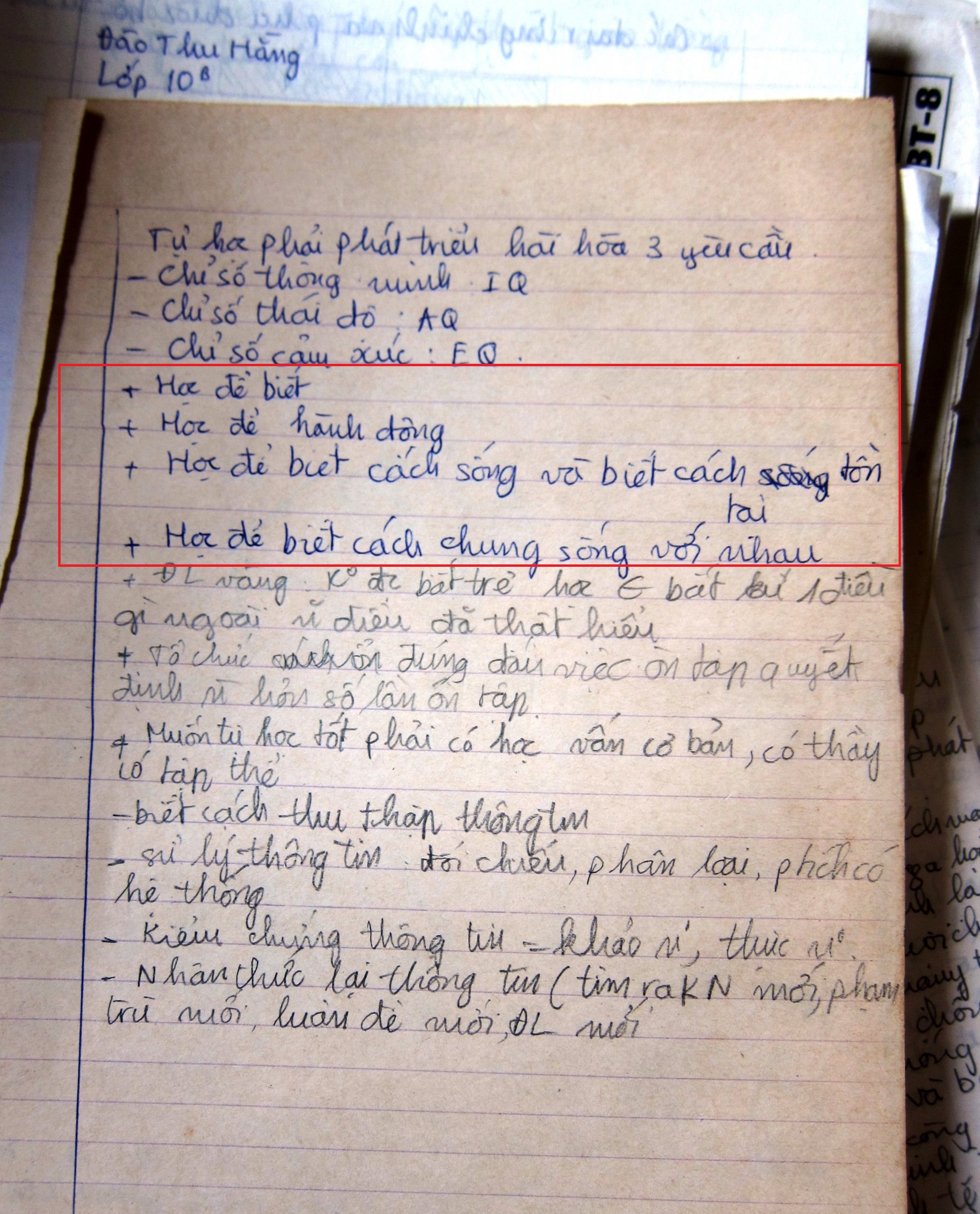
This was the note that I took in a class-discussion session (sinh hoạt lớp) in 10th grade at my high school. This was what my head teacher (giáo viên chủ nhiệm) talked about among many things he talked in the usual sessions. Back then, I had a habit of writing down things that were the most appealing to me during these sessions.

My head teacher was a gymnastic teacher (not a usual thing back then – being a gymnastic teacher and a head teacher of a leading class in a high school).

IMG_0271

Tiếp tục đọc “Compelling questions for young Vietnamese”

Snow in Vietnam and Other New Climate Patterns Threaten Farmers

In Vietnam climate change has scrambled the seasonal monsoons, leaving farmers struggling.

technologyreview – At around 5:00 each morning, loudspeakers crackle on in Ma Village, Vietnam (population 731). Mounted on concrete poles atop hilltops—a remnant of the 1950s information and propaganda apparatus—these loudspeakers, rather than the smartphones popular with Hanoi’s young office workers, are what provide locals in this mountain village with important news bulletins. Tiếp tục đọc “Snow in Vietnam and Other New Climate Patterns Threaten Farmers”

Dams, Drought and Disaster Along the Mekong River

By: Jennifer Rigby
Date: Tuesday, May 10, 2016

This article originally appeared in IRIN News.

A dry riverbed in Cambodia.

A dry riverbed in Cambodia.IRIN

CHONG PRA LAY/CAMBODIA, 10 May 2016

internationalriver – The dry months before the monsoon rains arrive are often tough for Cambodian fishermen and farmers. But with rivers drying up and drinking water running out, conditions have rarely been as bad as they are now.

The current drought is linked to El Niño, which has been disrupting weather patterns around the world. But the harsh conditions today might only be foreshadowing far worse to come. Climate change will continue to affect the Mekong Basin region, while future droughts are expected to be exacerbated by a string of major hydropower dam projects.

Experts fear that the present crisis could become the new normal for Cambodia and its neighbours, which have also been hit hard by record temperatures and a long period of extremely dry weather.

“The combined effects of drought, climate change and dam building are pushing the resources of the Mekong Basin to the brink of disaster,” said Maureen Harris, Southeast Asia programme director of the river protection organisation, International Rivers. Tiếp tục đọc “Dams, Drought and Disaster Along the Mekong River”

The Food Security Solution

May 20, 2016

CSIS – In a world that has become increasingly interconnected and chaotic, with more displaced persons since World War II, and with an array of humanitarian disasters that has outstripped the international community’s budgets and capacity to respond, why should global food security remain an imperative development priority? Why has the United States invested so heavily, to the tune of $5.6 billion over the past five years, in agricultural development and nutrition to reduce extreme poverty?

Agriculture’s Economic Power

Agriculture is the primary source of employment and income for 70 percent of the world’s rural poor, and it contributes more than a third of gross domestic product (GDP) in many of the least developed countries. In light of evidence that GDP growth originating in agriculture can be four times more effective than growth in other sectors in raising incomes of the extremely poor, the economic leverage of agriculture for development is hard to dispute.

Aligning foreign assistance with country-led strategies for agricultural growth is the most effective approach to achieving results for vulnerable smallholder farmers, their families, and their communities. Government ownership is critical to sustaining development investments and to ensuring a sound policy environment for private-sector engagement. In order for agriculture to reach its potential to generate employment, raise smallholder incomes, and catalyze markets, both the will of country leadership to dedicate resources and the ability of local and international private companies to invest along the value chain are required. In some cases, this translates into tough policy reforms that take time to understand, to implement, and to enforce.

National Security Risks Tiếp tục đọc “The Food Security Solution”

Vietnam needs clean energy strategy

Update: May, 14/2016 – 09:00
Việt Nam needs a strategy on renewable energy development to ensure energy safety in the context of the country’s rapid economic growth and global climate change, said energy experts. – Photo nhandan.com.vn

vietnamnews – HÀ NỘI – Việt Nam needs a strategy on renewable energy development to ensure energy safety in the context of the country’s rapid economic growth and global climate change, said energy experts.

The economic growth rate, high demand of energy consumption, and world hike in the price of fuel have all caused challenges to the country’s energy security.

In fact, Việt Nam has a great potential for developing clean energy sources but the current investment in the field has still been modest.

According to the Energy General Department, Viet Nam was endowed with excellent renewable energy resources throughout the country.

The country has about 2,000-2,500 sunny hours a year, equivalent to 43.9 million tonnes of oil, while the geographic orientation with approximately 3,400km of coastline, provides abundant wind energy at an estimated potential of 800-1,400kW per sq.m. per year.
Tiếp tục đọc “Vietnam needs clean energy strategy”

EU lawmakers reject granting China the market economy status

Bayer Makes $62 Billion Bid for Monsanto

Combination would create one of the world’s largest agrochemical businesses
By Christopher Alessi

Bayer said the $122-a-share offer represents ‘value at a substantial premium’ for Monsanto shareholdersUpdated May 23, 2016 8:59 a.m. ET

14 COMMENTS

wsj – FRANKFURT—German pharmaceutical and chemicals giant Bayer AG on Monday said it made an all-cash offer to acquire Monsanto Co. for $62 billion, valuing the U.S. company at a substantial premium in a deal that would create the world’s largest agrochemicals company.

Bayer, which confirmed last week that it had approached Monsanto about a takeover, said the $122-a-share bid values Monsanto at 37% over its closing share price of $89.03 on May 9, the day before Bayer made a written proposal to the U.S. company.
Tiếp tục đọc “Bayer Makes $62 Billion Bid for Monsanto”

Chính sách tái cân bằng Xuyên Đại Tây Dương hướng tới Châu Á-Thái Bình Dương

English: A Rebalanced transatlantic policy toward the asia-pacific region

Heather A. Conley,  James Mina, and Phuong Nguyen

Mỹ và Liên minh châu Âu cùng chia sẻ lợi ích và các mục tiêu chung trong khu vực châu Á Thái Bình Dương. Thương mại và đầu tư là các thành phần chính yếu của chính sách của Mỹ và của Liên minh châu Âu, và cả hai đã mở nhiều điều đình đầy kỳ vọng với các đối tác trong vùng để tự do hóa thương mại với các nền kinh tế phát triển mạnh ở Đông Á. Cả hai cũng đã tìm  cách củng cố các quy luật quốc tế, thủ tục pháp lý và khả năng của các tổ chức trong vùng. Tuy nhiên, bất chấp những mục tiêu chung, Hoa Kỳ và Liên minh châu Âu dường như đã theo đuổi các chính sách độc lập – và có lúc cạnh tranh với nhau – tại Châu Á Thái Bình Dương, do đó thỉnh thoảng gây cản trở việc thực hiện các lợi ích chiến lược chung. Khi Hoa Kỳ và Liên minh châu Âu tham gia sâu thêm vào khu vực và với các quyết định quan trọng  dần xuất hiện ở tầm nhìn (đáng chú ý liên quan đến việc chấp nhận Trung Quốc là nền kinh tế thị trường và phán quyết của Tòa án trọng tài về chủ quyền lãnh thổ ở Biển Đông), làm thế nào các mối quan hệ xuyên Đại Tây Dương được sử dụng hiệu quả hơn để thúc đẩy phát triển kinh tế của khu vực, đảm bảo việc áp dụng các tiêu chuẩn kinh tế mạnh mẽ, tăng cường cấu trúc thể chế của khu vực, và duy trì các nguyên tắc pháp lý quốc tế? Tiếp tục đọc “Chính sách tái cân bằng Xuyên Đại Tây Dương hướng tới Châu Á-Thái Bình Dương”