Indian man jailed for 10 years over wife’s ‘dowry death’

By Rhea Mogul, CNN

Updated 0545 GMT (1345 HKT) May 25, 2022 CNN

Despite being outlawed under the 1961 Dowry Prohibition Act, India’s dowry system remains deeply entrenched in society and has become associated with violence against women.

Vismaya Nair is seen in this undated image.

Vismaya Nair is seen in this undated image.

(CNN)A court in southern India on Tuesday sentenced a man to 10 years in prison in a ruling that found he abused his wife over their wedding dowry, leading to her death by suicide.

The district court in Kerala state found Kiran Kumar guilty under India’s “dowry death” law, which allows charges to be brought against people for causing the death of a woman within the first seven years of a marriage featuring dowry gifts and payments.

Tiếp tục đọc “Indian man jailed for 10 years over wife’s ‘dowry death’”

Rome Statute of the International Criminal Court – the Crime of Aggression – Đạo luật Rome của Tòa Hình sự Quốc tế về Tội Xâm lược: Điều 8 bis – Hình tội xâm lược

Rome Statute of the International Criminal Court – the Crime of AggressionĐạo luật Rome của Tòa Hình sự Quốc tế – Tội Xâm lược
Article 8 bis -Crime of aggressionĐiều 8 bis – Hình tội xâm lược
1. For the purpose of this Statute, “crime of aggression” means the planning, preparation, initiation or execution, by a person in a position effectively to exercise control over or to direct the political or military action of a State, of an act of aggression which, by its character, gravity and scale, constitutes a manifest violation of the Charter of the United Nations.1. Cho mục đích của Đạo luật này, “tội xâm lược” nghĩa là lập kế hoạch, chuẩn bị, khởi sự hay xúc tiến, bởi một người trong một chức vị hành xử hiệu lực sự kiểm soát hay điều khiển hành vi chính trị hay quân sự của một Quốc gia, một hành vi xâm lược mà, bởi bản chất, tính nghiêm trọng và quy mô của nó, tạo nên một vi phạm hiển nhiên đến Hiến chương Liên hợp quốc.
2. For the purpose of paragraph 1, “act of aggression” means the use of armed force by a State against the sovereignty, territorial integrity or political independence of another State, or in any other manner inconsistent with the Charter of the United Nations. Any of the following acts, regardless of a declaration of war, shall, in accordance with United Nations General Assembly resolution 3314 (XXIX) of 14 December 1974, qualify as an act of aggression:

a) The invasion or attack by the armed forces of a State of the territory of another State, or any military occupation, however temporary, resulting from such invasion or attack, or any annexation by the use of force of the territory of another State or part thereof;

b) Bombardment by the armed forces of a State against the territory of another State or the use of any weapons by a State against the territory of another State;

c) The blockade of the ports or coasts of a State by the armed forces of another State;

d) An attack by the armed forces of a State on the land, sea or air forces, or marine and air fleets of another State;

e) The use of armed forces of one State which are within the territory of another State with the agreement of the receiving State, in contravention of the conditions provided for in the agreement or any extension of their presence in such territory beyond the termination of the agreement;

f) The action of a State in allowing its territory, which it has placed at the disposal of another State, to be used by that other State for perpetrating an act of aggression against a third State;

g) The sending by or on behalf of a State of armed bands, groups, irregulars or mercenaries, which carry out acts of armed force against another State of such gravity as to amount to the acts listed above, or its substantial involvement therein.
2. Cho mục đích của đoạn 1, “hành vi xâm lược” nghĩa là sự sử dụng vũ lực quân sự bởi một Quốc gia chống lại chủ quyền, toàn vẹn lãnh thổ hay độc lập chính trị của một Quốc gia khác, hay dưới bất kỳ hình thức nào không phù hợp với Hiến chương Liên hợp quốc. Bất kỳ hành vi nào sau đây, dù có tuyên chiến hay không, đều, theo đúng Nghị quyết 2214 (XXIX) ngày 14 tháng 12 năm 1974, là hành vi xâm lược:

a) Xâm lấn hay tấn công do các lực lượng vũ trang của một Quốc gia vào lãnh thổ của một Quốc gia khác, hay sự chiếm đóng quân sự, dù tạm thời đến đâu, sinh ra từ sự xâm lấn hay tấn công đó, hay bất kỳ sự sát nhập nào bằng vũ lực lãnh thổ hay một phần lãnh thổ của một Quốc gia khác;

b) Oanh kích do các lực lượng vũ trang của một Quốc gia vào lãnh thổ của một Quốc gia khác hay sự sử dụng bất kỳ vũ khí nào bởi một Quốc gia vào lãnh thổ của một Quốc gia khác;

c) Phong tỏa các cảng và bờ biển của một Quốc gia bằng các lực lượng vũ trang của một Quốc gia khác;

d) Một cuộc tấn công do các lực lượng vũ trang của một Quốc gia vào các lực lượng trên bộ, trên biển hay trên không hay các hạm đội hoặc phi đội của một Quốc gia khác;

e) Sử dụng các lực lượng vũ trang của một Quốc gia đang ở trong lãnh thổ của một Quốc gia khác với sự thỏa thuận của Quốc gia tiếp nhận, ngược với những điều kiện đã quy định trong thỏa thuận hay trong bất kỳ sự gia hạn hiện diện nào của các lực lượng vũ trang đó trong lãnh thổ đó sau khi sự thỏa thuận đã hết hạn.

f) Hành động của một Quốc gia, đã đặt lãnh thổ của mình dưới quyền sử dụng của một Quốc gia khác, cho phép lãnh thổ của mình được Quốc gia khác đó sử dụng để thực hiện một hành vi xâm lược chống lại một Quốc gia thứ ba;

g) Việc gửi, bởi hay thay mặt một Quốc gia, các băng đảng, các nhóm, các lực lượng không chính quy hay lính đánh thuê vũ trang, để thực hiện các hành vi vũ lực quân sự vào một Quốc gia khác nghiêm trọng đến mức tạo thành các hành vi xâm lược kể trên, hay nhúng tay đáng kể vào việc gửi quân đó.
(TĐH chuyển ngữ)
mmmmmmm

Chuỗi bài:

Vietnam an easier destination after return to pre-COVID rules

A Nikkei reporter reflects on a milestone in the country’s path out of pandemic

Roadblocks in Ho Chi Minh City were common in October, but now Vietnam has eliminated almost all COVID restrictions for foreign and domestic travel. (Photo by Lien Hoang)

LIEN HOANG, Nikkei staff writerMay 24, 2022 12:23 JST NIKKEI

HO CHI MINH CITY — Last week after a trip to California, I returned to Vietnam with a COVID vaccine certificate, negative PCR test and smartphone tracing app in hand. The green-uniformed immigration officer at the airport asked for none of it. Inside his plexiglass cage, the 20-something officer gestured for me to pull down my mask for a second. I spent less than a minute and zero words at passport control and then was back outside on the balmy, car horn-filled streets of Ho Chi Minh City.

Tiếp tục đọc “Vietnam an easier destination after return to pre-COVID rules”

Quad Joint Leaders’ Statement

MAY 24, 2022•STATEMENTS AND RELEASES The White House

Today, we – Prime Minister Anthony Albanese of Australia, Prime Minister Narendra Modi of India, Prime Minister Fumio Kishida of Japan, and President Joe Biden of the United States – convene in Tokyo to renew our steadfast commitment to a free and open Indo-Pacific that is inclusive and resilient.

Just over one year ago, Leaders met for the first time. Today in Tokyo, we convene for our fourth meeting, and our second in person, to demonstrate, at a time of profound global challenge, that the Quad is a force for good, committed to bringing tangible benefits to the region. In our first year of cooperation, we established the Quad’s dedication to a positive and practical agenda; in our second year, we are committed to deliver on this promise, making the region more resilient for the 21st century.

Tiếp tục đọc “Quad Joint Leaders’ Statement”

‘Looty’ project launches digital art heists to reclaim African artifacts

Previous

'Looty' project launches digital art heists to reclaim African artifacts
View of a computer-rendered image, with an added design to a looted artwork from Nigeria, that now resides in a British museum, with project’s aim to give part of its non-fungible token (NFT) sale proceeds to fund young African artists, in this handout obtained May 23, 2022. Looty Art/Handout via REUTERS
'Looty' project launches digital art heists to reclaim African artifacts
Screenshot of the design process on an image of a looted artwork from Nigeria, that now resides in a British museum, with project’s aim to give part of its non-fungible token (NFT) sale proceeds to fund young African artists, in this handout obtained May 23, 2022. Looty Art/Handout via REUTERS

Tiếp tục đọc “‘Looty’ project launches digital art heists to reclaim African artifacts”

Tired of being ‘fetishized and invisible,’ Asian artists are changing the narrative

Published 24th May 2022 CNN

Credit: Courtesy of Chelsea Ryoko Wong, Jessica Silverman, San Francisco, and Jeffrey Deitch, New York

Tired of being ‘fetishized and invisible,’ Asian artists are changing the narrative

SHARE

Written byAnn Binlot, CNN

In much of Western art, Asian women have often appeared as one-dimensional characters — sometimes seen as meek and docile, and at other times hypersexualized and exoticized. But such portrayals fail to show individuals coming from a myriad of cultural backgrounds, their identities rooted in distinctly different countries and histories.

“Wonder Women,” a new exhibition at the Jeffrey Deitch gallery in New York, seeks to counter stereotypical representations made by outsiders, presenting works by Asian American and diasporic women and non-binary artists “portraying themselves or their family members as heroes in their own ways,” explained show curator Kathy Huang.

“I had always grappled with ideas of being both fetishized and invisible in pop culture and visual culture,” said Huang, adding that she drew inspiration from the 1981 poem “Wonder Woman” by Genny Lim.

“In the poem, the narrator is observing the different lives of Asian women,” she explained. “That’s something that I had wondered myself … because I have my individual experience as a Chinese American woman, but there were so many other experiences that I don’t know about.”

Tiếp tục đọc “Tired of being ‘fetishized and invisible,’ Asian artists are changing the narrative”

Japan-U.S. Joint Leaders’ Statement: Strengthening the Free and Open International Order 


MAY 23, 2022•STATEMENTS AND RELEASES The White House

Today, Japan and the United States affirm a partnership that is stronger and deeper than at any time in its history. Guided by our shared values; anchored by our common commitment to democracy and the rule of law; inspired by the innovation and technological dynamism of our economies; and rooted in the deep people-to-people ties between our countries, the Japan-U.S relationship is the cornerstone of a free and open Indo-Pacific region.

It is in this spirit that Prime Minister of Japan KISHIDA Fumio welcomed Joseph R. Biden, Jr to Japan in his first visit as President of the United States. President Biden commended Prime Minister Kishida’s global leadership, including in the Japan-Australia-India-U.S. (Quad) Summit meeting.

Tiếp tục đọc “Japan-U.S. Joint Leaders’ Statement: Strengthening the Free and Open International Order “

Biden’s new trade deal is based on two big ideas: moving away from neoliberalism and containing China.

May 23, 2022
By David Leonhardt, New York Times newsletter

President Biden in Japan.Doug Mills/The New York Times
Biden in Asia
The politics of trade policy have become toxic in the U.S.
For decades, the mainstream of both the Democratic and Republican parties favored expanding trade between the U.S. and other countries. Greater globalization, these politicians promised, would increase economic growth — and with the bounty from that growth, the country could compensate any workers who suffered from increased trade. But it didn’t work out that way.
Tiếp tục đọc “Biden’s new trade deal is based on two big ideas: moving away from neoliberalism and containing China.”

What a Nobel laureate’s take on Donald Trump reveals about today

Opinion by Jane Greenway Carr

Updated 1734 GMT (0134 HKT) May 22, 2022, CNN

'It is White supremacy': CNN speaks to son of Buffalo massacre victim

(CNN) Shortly after Donald Trump was elected President of the United States, Nobel laureate Toni Morrison wrote in The New Yorker: “Unlike any nation in Europe, the United States holds whiteness as the unifying force. Here, for many people, the definition of ‘Americanness’ is color.” Reflecting on efforts — largely by White men — to define themselves by sustaining that poisonous definition, Morrison argues that those “who are prepared to abandon their humanity out of fear of black men and women, suggest the true horror of lost status.”

Tiếp tục đọc “What a Nobel laureate’s take on Donald Trump reveals about today”

How Haiti became the poorest country in the Americas

May 22, 2022

Good morning. The Times reveals how Haiti became the poorest country in the Americas.


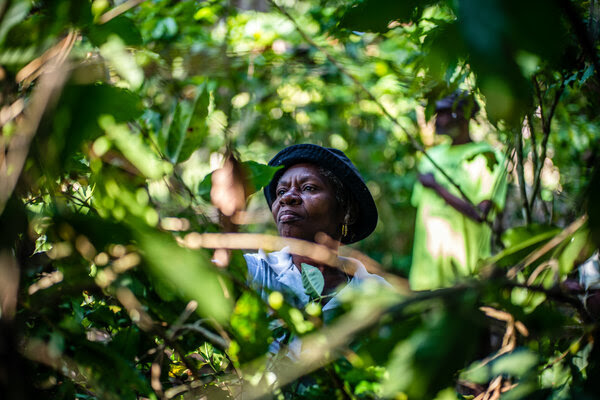
Adrienne Present harvesting coffee beans in Haiti.Federico Rios for The New York Times

Catherine Porter, New Yorl Times newsletter

Haiti is one of the poorest countries in the world, and a new Times investigative series explores why. One stunning detail: France demanded reparations from Haitians it once enslaved. That debt hamstrung Haiti’s economy for decades — and kept it from building even basic social services, like sewage and electricity.

The series is based on more than a year of reporting, troves of centuries-old documents and an analysis of financial records. I spoke to my colleague Catherine Porter, one of the four reporters who led the project, about what they found.

Why tell Haiti’s story now?

I’ve been covering Haiti since the earthquake in 2010, and returned dozens of times. Any journalist that spends time in Haiti continually confronts the same question: Why are things so bad here?

Tiếp tục đọc “How Haiti became the poorest country in the Americas”

Politics of denial: South Korean war crimes in Vietnam

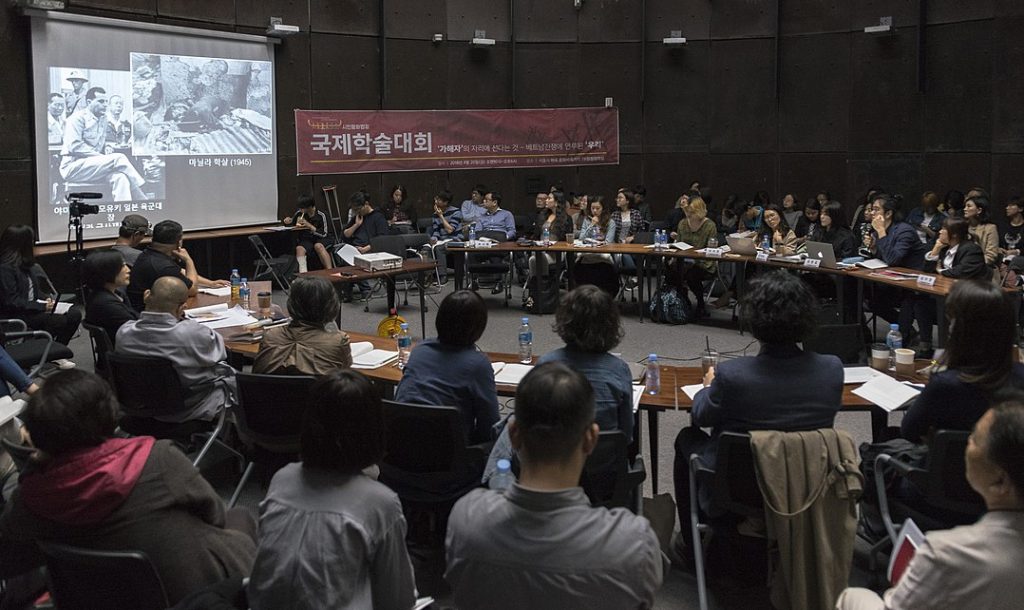
People’s Tribunal on War Crimes by South Korean Troops during the Vietnam War to hold by Minbyun and the Korea-Vietnam Peace Foundation. IMAGE BY JJW ON WIKIMEDIA COMMONS. (CC BY-SA 4.0)

newmandala.com

ANDRE KWOK AND NATHANEAL KWON – 13 MAY, 2022

In 2018, two survivors of massacre perpetrated by South Korean troops in Vietnam during the Vietnamese-American war, instigated the People’s Tribunal on War Crimes by South Korean Troops during the Vietnam War. This signalled a watershed moment in the history of civil activism and transitional justice in South Korea; yet, there is still much to be done.

Following the outbreak of conflict in Vietnam (1955-1975), U.S. President Lyndon Johnson initiated the Many Flags campaign to consolidate a united front against communism in Indochina. While several countries, including Thailand, Australia and New Zealand participated, South Korea contributed by far the largest number of troops after the U.S.: around 300,000 rotating troops by the end of the war.

Dictator Park Chung-hee sought to build a stable South Korean government, and so he agreed to take a leading role in the war in exchange for American military support in the Korean peninsula and economic support for Park’s ambitious development plans. The estimated $1 billion USD worth of American aid and other war-related income was a vital lifeline for the crumbling Korean economy.

Tiếp tục đọc “Politics of denial: South Korean war crimes in Vietnam”

The European Union is planning new legislation aimed at curbing the worst harms associated with artificial intelligence.

technologyreview.com

By Melissa Heikkilä

May 13, 2022

Europe's AI Act concept

MS TECH | NGA

It’s a Wild West out there for artificial intelligence. AI applications are increasingly used to make important decisions about humans’ lives with little to no oversight or accountability. This can have devastating consequences: wrongful arrests, incorrect grades for students, and even financial ruin. Women, marginalized groups, and people of color often bear the brunt of AI’s propensity for error and overreach. 

The European Union thinks it has a solution: the mother of all AI laws, called the AI Act. It is the first law that aims to curb these harms by regulating the whole sector. If the EU succeeds, it could set a new global standard for AI oversight around the world.

But the world of EU legislation can be complicated and opaque. Here’s a quick guide to everything you need to know about the EU’s AI Act. The bill is currently being amended by members of the European Parliament and EU countries. 

What’s the big deal?

The AI Act is hugely ambitious. It would require extra checks for “high risk” uses of AI that have the most potential to harm people. This could include systems used for grading exams, recruiting employees, or helping judges make decisions about law and justice. The first draft of the bill also includes bans on uses of AI deemed “unacceptable,” such as scoring people on the basis of their perceived trustworthiness. 

Tiếp tục đọc “The European Union is planning new legislation aimed at curbing the worst harms associated with artificial intelligence.”

Understanding The China-Russia Trade, Investment & Economic Relationship In The Context Of The Ukraine Conflict

silkroadbriefing.com

 May 10, 2022Posted bySilk Road Briefing

Surging Trade As Bilateral Relations Grow Closer

China and Russia have grown increasingly close in recent years, including as trading partners, in a relationship that brings both opportunities and risks as Russia reels from tough new sanctions led by the West in response to its invasion of Ukraine. Total trade between China and Russia jumped 35.9% in 2021 last year to a record US$147.9 billion, according to Chinese customs data, with Russia serving as a major source of oil, gas, coal and agriculture commodities, and running a trade surplus with China.

Since sanctions were imposed in 2014 after Russia annexed Ukraine’s Crimea, bilateral trade has expanded by more than 50% and China has become Russia’s biggest export destination The two were aiming to boost total trade to US$200 billion by 2024, but according to a new target unveiled last month during Russian President Vladimir Putin’s visit to Beijing for the Winter Olympics, the two sides want bilateral trade to grow to US$250 billion.

Tiếp tục đọc “Understanding The China-Russia Trade, Investment & Economic Relationship In The Context Of The Ukraine Conflict”