‘Iran was our Hogwarts’: my childhood between Tehran and Essex – podcast

Growing up in Essex, my summers in Iran felt like magical interludes from reality – but it was a spell that always had to be broken. By Arianne Shahvisi 

Illustration of a young woman looking at a magical scene of Tehran

Illustration: Nathalie Lees/The Guardian

Written by Arianne Shahvisi, read by Serena Manteghi and produced by Esther Opoku-Gyeni

theguardian – Fri 29 Oct 2021 05.00 BST

Listen here

  • Read the text version here

Tiếp tục đọc “‘Iran was our Hogwarts’: my childhood between Tehran and Essex – podcast”

‘We tried to be joyful enough to deserve our new lives’: What it’s really like to be a refugee in Britain – podcast

As a child, I fled Afghanistan with my family. When we arrived in Britain after a harrowing journey, we thought we could start our new life in safety. But the reality was very different.

Photograph of Zarlasht Halaimzai. Photograph: Sarah Lee/ The Guardian
 Photograph: Sarah Lee/The Guardian

The Guardian – By Zarlasht Halaimzai – Fri 21 Jan 2022 09.00 GMT

Written by Zarlasht Halaimzai, read by Serena Manteghi, and produced by Hattie Moir.

Listen here

• Read the text version here

Tiếp tục đọc “‘We tried to be joyful enough to deserve our new lives’: What it’s really like to be a refugee in Britain – podcast”

China and the West begin the big face-off

Plain English Version – July 27, 2021

Chinese President Xi Jinping at the Great Hall of the People in Beijing Photo Credit: Aly Song/Reuters.

China is challenging the West. What is the West? It is not only nations in Europe or North America. It is countries that practice democracy.

India, Japan, South Korea, and Australia are Western nations that surround China. They worry about China’s size and ambitions. They view China with suspicion. Also, in the West, the United States and most of Europe see China as an adversary.

China is one country against the West.

Tiếp tục đọc “China and the West begin the big face-off”

In New York City, Asians are the growing population

Plain English Version – October 19, 2021

There is a surge in the number of Asian residents across New York City. Photo Credit: Janice Chung for The New York Times.

It looked like the number of people living in New York City was shrinking. The 2020 census data would tell us how much.

Surprise! The city’s population actually grew by almost eight percent. Most of the population increase was Asian people. Today, people who call themselves Asian are sixteen percent of all the residents of New York City.

Tiếp tục đọc “In New York City, Asians are the growing population”

War Crimes in Ukraine

War Crimes by Russia’s Forces in Ukraine

PRESS STATEMENT

ANTONY J. BLINKEN, SECRETARY OF STATE

MARCH 23, 2022

Since launching his unprovoked and unjust war of choice, Russian President Vladimir Putin has unleashed unrelenting violence that has caused death and destruction across Ukraine.  We’ve seen numerous credible reports of indiscriminate attacks and attacks deliberately targeting civilians, as well as other atrocities.  Russia’s forces have destroyed apartment buildings, schools, hospitals, critical infrastructure, civilian vehicles, shopping centers, and ambulances, leaving thousands of innocent civilians killed or wounded.  Many of the sites Russia’s forces have hit have been clearly identifiable as in-use by civilians.  This includes the Mariupol maternity hospital, as the UN Office of the High Commissioner for Human Rights expressly noted in a March 11 report.  It also includes a strike that hit a Mariupol theater, clearly marked with the word “дети” — Russian for “children” — in huge letters visible from the sky.  Putin’s forces used these same tactics in Grozny, Chechnya, and Aleppo, Syria, where they intensified their bombardment of cities to break the will of the people.  Their attempt to do so in Ukraine has again shocked the world and, as President Zelenskyy has soberly attested, “bathed the people of Ukraine in blood and tears.”

Every day that Russia’s forces continue their brutal attacks, the number of innocent civilians killed and wounded, including women and children, climbs.  As of March 22, officials in besieged Mariupol said that more than 2,400 civilians had been killed in that city alone.  Not including the Mariupol devastation, the United Nations has officially confirmed more than 2,500 civilian casualties, including dead and wounded, and emphasizes the actual toll is likely higher.

Tiếp tục đọc “War Crimes in Ukraine”

Gang rule in Haiti: kidnappings, no fuel, no power, no food.

Plain English Version – October 28, 2021

A woman shouting during an anti-government protest. Photo Credit: AP Rodrigo Abd.

In Haiti, gangs block ports. Fuel shipments cannot get through. Hospitals are shutting down. Cellphones are losing power. Hunger is growing.

In recent months, assassins killed the president. An earthquake shook a part of the country. The nation is on the brink of collapse.

Gangs now rule about half the capital of Haiti. Workers are afraid to drive their fuel trucks. A gang kidnapped missionaries. It is demanding a ransom of $1 million for each of the seventeen captives. The police know where the hostages are. But the police can’t enter the neighborhood because the gangs outgun them.

Tiếp tục đọc “Gang rule in Haiti: kidnappings, no fuel, no power, no food.”

In Mexico, It is the unions against the workers

Plain English Version – February 3, 2022

The General Motors facility in Silao, Mexico. Photo Credit: Luis Antonio Rojas for The New York Times.

Unions make life better for workers. That is the idea. But what if the unions are corrupt? What if union leadership works for the benefit of employers? That is the reality for labor in Mexico.

Mexico has big factories. It is a rich country in Latin America. Yet its workers still earn low wages compared to other countries in the region.

The unions in Mexico are the reason. Big unions are closely allied with politicians and employers. They have kept wages low. They have made it hard to organize new unions. Their leaders have wealth and power. There is suspicion of corruption.

Tiếp tục đọc “In Mexico, It is the unions against the workers”

The war comes to Asia

nikkeiFrom refugees to sanctions, Asian countries are being forced to pick sides in the Russia-Ukraine war.

Nikkei staff writers – March 18, 2022 11:43 JST

NEW YORK — Welcome to Nikkei Asia’s podcast: Asia Stream.

LISTEN HERE

Every week, Asia Stream tracks and analyzes the Indo-Pacific with a mix of expert interviews and original reporting by our correspondents from across the globe.

Tiếp tục đọc “The war comes to Asia”

War crimes – The Geneva Conventions of 1949 and their Additional Protocols on war crimes

Geneva Conventions of 1949 and Additional Protocols, and their Commentaries

Geneva Convention (I) on Wounded and Sick in Armed Forces in the Field,1949 and its commentary

12.08.1949

Geneva Convention (II) on Wounded, Sick and Shipwrecked of Armed Forces at Sea, 1949 and its commentary

12.08.1949

Geneva Convention (III) on Prisoners of War, 1949 and its commentary

12.08.1949

Geneva Convention (IV) on Civilians, 1949 and its commentary

12.08.1949

Additional Protocol (I) to the Geneva Conventions, 1977 and its commentary

08.06.1977

Annex (I) AP (I), as amended in 1993 and its commentary

30.11.1993

Annex (I) AP (I), 1977 and its commentary

08.06.1977

Annex (II) AP (I), 1977 and its commentary

08.06.1977

Additional Protocol (II) to the Geneva Conventions, 1977 and its commentary

08.06.1977

Additional Protocol (III) to the Geneva Conventions, 2005 and its commentary

08.12.2005

29-10-2010 Overview

Inernational Committee of the Red Cross

The Geneva Conventions and their Additional Protocols are international treaties that contain the most important rules limiting the barbarity of war. They protect people who do not take part in the fighting (civilians, medics, aid workers) and those who can no longer fight (wounded, sick and shipwrecked troops, prisoners of war).

The Geneva Conventions and their Additional Protocols are at the core of international humanitarian law, the body of international law that regulates the conduct of armed conflict and seeks to limit its effects.  They specifically protect people who are not taking part in the hostilities (civilians, health workers and aid workers) and those who are no longer participating in the hostilities, such as wounded, sick and shipwrecked soldiers and prisoners of war.  The Conventions and their Protocols call for measures to be taken to prevent or put an end to all breaches. They contain stringent rules to deal with what are known as “grave breaches“. Those responsible for grave breaches must be sought, tried or extradited, whatever nationality they may hold.

Tiếp tục đọc “War crimes – The Geneva Conventions of 1949 and their Additional Protocols on war crimes”

Genocide, Crimes against Humanity, War Crimes, Ethnic Cleansing

United Nations: Office of Genocide Prevention and the Resposibility to Protect

DEFINITIONS

Genocide

Background

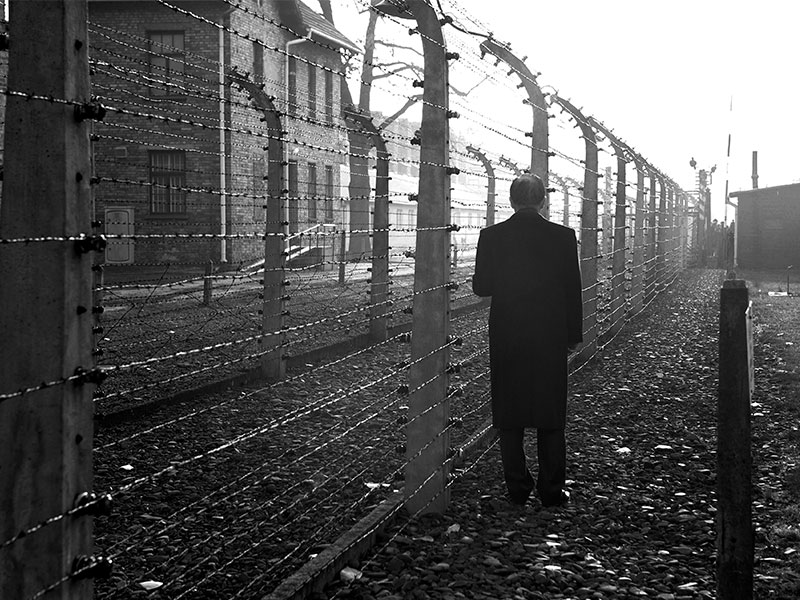
Secretary-General visits Auschwitz-Birkenau, Poland. UN Photo/Evan Schneider

The word “genocide” was first coined by Polish lawyer Raphäel Lemkin in 1944 in his book Axis Rule in Occupied Europe. It consists of the Greek prefix genos, meaning race or tribe, and the Latin suffix cide, meaning killing. Lemkin developed the term partly in response to the Nazi policies of systematic murder of Jewish people during the Holocaust, but also in response to previous instances in history of targeted actions aimed at the destruction of particular groups of people. Later on, Raphäel Lemkin led the campaign to have genocide recognised and codified as an international crime. Tiếp tục đọc “Genocide, Crimes against Humanity, War Crimes, Ethnic Cleansing”

India and elsewhere: Religious wars are forever

thetimesinplainenglish.com – February 10, 2022

Plain English Version

At the Dasna Devi temple, a placard read: “This is a holy place for Hindus. Entry of Muslims is forbidden.” Photo Credit: Saumya Khandelwal for The New York Times.

People of different backgrounds live together. Unless, for some reason, they decide not to live together. They do seem to get along better in dictatorships. Tito ran Yugoslavia, Hussein ran Iraq and Khaddaffi ran Libya. Their people had no freedom of choice about with whom they lived. And so, for the most part, they got along.

Tiếp tục đọc “India and elsewhere: Religious wars are forever”

Teaching resources to help students make sense of the War in Ukraine

nytime.com Articles, maps, photos, videos, podcasts and more, as well as suggestions for using them in your classroom.

Residents salvage their belongings from their homes on March 14 after the shelling of a residential building in Kyiv, Ukraine. Related ArticleCredit…Lynsey Addario for The New York Times

By Katherine SchultenMichael Gonchar and Jeremy Engle

March 16, 2022

Young people all over are avidly following what some have called “the first TikTok war.” In late February, we created a place on our site for teenagers to react to the invasion, and within a week, over 900 had. This comment from Winn Godier, a high school student in North Carolina, echoes what we have heard from many teenagers:

Tiếp tục đọc “Teaching resources to help students make sense of the War in Ukraine”