Information and public health advice: heat and health

Protecting health from rising temperatures and extreme heat

WHO

Key facts

  • Population exposure to heat is increasing due to climate change, and this trend will continue. Globally, extreme temperature events are observed to be increasing in their frequency, duration, and magnitude. Between 2000 and 2016, the number of people exposed to heat waves increased by around 125 million. In 2015 alone, 175 million additional people were exposed to heat waves compared to average years.

Tiếp tục đọc “Information and public health advice: heat and health”

The World Health Organization’s decision about traditional Chinese medicine could backfire

nature.com

Traditional therapies have been included in a global diagnostic compendium. That comes with risks.
 PDF version
A man wearing 'walnut' glasses is treated with smoking wormwood to relieve his oculomotor paralysis.

There is little substantial evidence for the efficacy of many treatments in traditional Chinese medicine.Credit: VCG/Getty

Donkeys are a hot item in Africa. In the past few years, prices for the animals and their hides have jumped so high that people have been stealing them. Some countries, including Niger, Tanzania and Botswana, have resorted to banning exports to preserve their donkey populations. And last month, Nigeria’s government moved to make the killing and export of donkeys illegal there. Tiếp tục đọc “The World Health Organization’s decision about traditional Chinese medicine could backfire”

Traffic accidents are eighth leading cause of death globally, according to WHO

The future of road safety 03:26

(CNN)The number of traffic-related deaths reached a high of 1.35 million in 2016, according to the 2018 Global Status Report on Road Safety, released by the World Health Organization on Friday. It has also moved up to the eighth leading cause of death for people of all ages, ahead of HIV/AIDS and tuberculosis.

“Road safety is an issue that does not receive anywhere near the attention it deserves — and it really is one of our great opportunities to save lives around the world,” Michael Bloomberg, former New York mayor and the WHO global ambassador for noncommunicable diseases and injuries, said in the foreword of the report.
Although the report points out that progress has been made in certain areas, such as legislation, it has not happened quickly enough to meet the UN’s goals to halve road traffic deaths between 2016 and 2020.
Traffic deaths are now the leading global cause of deaths for children and young adults between 5 and 29 years old.

Tiếp tục đọc “Traffic accidents are eighth leading cause of death globally, according to WHO”

COP24 special report on health and climate change

3-14 December 2018, Katowice, Poland – In its latest report, WHO highlights health as the biggest issue to be prioritized during COP-24 and provides key recommendations to the negotiators on how to maximize the health benefits of tackling climate change and avoid the worse health impacts of this global challenge. Although there has been hugely positive progress in tackling health and climate change issues, there is a still a long way to go. Millions of people are still exposed to air pollution globally, resulting in 7 million premature deaths every year; 3 billion people still lack access to clean and reliable energy; and nearly a quarter of all deaths worldwide result from people having to live or work in unhealthy environments. Unless significant changes are made and stronger action taken, we are risk of failing to meet the targets of the Paris Agreement and the SDGs. Tiếp tục đọc “COP24 special report on health and climate change”

WHO reveals shocking figures on air pollution deaths

UNITED NATIONS — You may want to put on a gas mask after you read the latest report from the World Health Organization (WHO) on urban air pollution. The WHO says nine out of ten people are subjected to high levels of pollutants from the air they breathe. Tiếp tục đọc “WHO reveals shocking figures on air pollution deaths”

Surgical care – an overlooked entity in health systems

Worldbank.org

Five billion peopletwo thirds of world populationlack access to safe and affordable surgical, anesthesia and obstetric (SAO) care while a third of the global burden of disease requires surgical and/or anesthesia decision-making or treatment. Treating the sick very often requires surgery and anesthesia. Despite such huge burden of disease, safe and affordable SAO care is often overlooked.

Why? It may be because surgery and anesthesia are not disease entities. They are treatment modalities that address the breadth of human disease — infections, non-communicable, maternal, child, geriatric and trauma-related disease and injuries, and international development agencies have been focusing on vertical disease-based programs. Tiếp tục đọc “Surgical care – an overlooked entity in health systems”

UN: About 11 percent of drugs in poor countries are fake

WTHR

UN: About 11 percent of drugs in poor countries are fake
In this Thursday, July 21, 2016 file photo, residents of the Kisenso district receive yellow fever vaccines, in Kinshasa, Democratic Republic of Congo.
Published:
Updated:

LONDON (AP) — About 11 percent of medicines in developing countries are counterfeit and likely responsible for the deaths of tens of thousands of children from diseases like malaria and pneumonia every year, the World Health Organization said Tuesday.

It’s the first attempt by the U.N. health agency to assess the problem. Experts reviewed 100 studies involving more than 48,000 medicines. Drugs for treating malaria and bacterial infections accounted for nearly 65 percent of fake medicines. Tiếp tục đọc “UN: About 11 percent of drugs in poor countries are fake”

Dược phẩm kém chất lượng, sai nhãn mác, thuốc nhái và thuốc giả (SSFFC)

English:  Substandard, spurious, falsely labelled, falsified and counterfeit (SSFFC) medical products

  • Dược phẩm kém chất lượng, sai nhãn mác, thuốc nhái, thuốc giả – SSFFC – có thể gây nguy hiểm đến bệnh nhân và khiến việc điều trị không đạt hiệu quả.
  • SSFFC là nguyên nhân chính gây mất lòng tin vào dược phẩm, nhà cung cấp các sản phẩm chăm sóc sức khỏe và hệ thống chăm sóc sức khỏe.
  • SSFFC ảnh hưởng đến tất cả các khu vực trên thế giới
  • Dược phẩm SSFFC thuộc danh mục thuốc điều trị chính được báo cáo đến WHO gồm thuốc, vac xin, chẩn đoán in vitro.
  • Thuốc điều trị sốt rét và thuốc kháng sinh là hai loại thuốc bị làm giả nhiều nhất
  • Cả thuốc phổ thông và thuốc đặc trị cao cấp đều bị làm giả, từ những thuốc đắt tiền như thuốc điều trị ung thư đến những loại thuốc không quá đắt tiền như thuốc giảm đau.
  • Những loại thuốc này có thể tìm thấy ở những chợ vỉa hè bất hợp pháp, trên những website không được kiểm soát, các hiệu thuốc, phòng khám, bệnh viện

Tiếp tục đọc “Dược phẩm kém chất lượng, sai nhãn mác, thuốc nhái và thuốc giả (SSFFC)”

Monsanto’s Superfund Secret

DISSENT Magazine

Monsanto elemental phosphorous plant, Soda Springs, Idaho (Kevin Beebe / Flickr)

The world’s most widely used herbicide, Roundup, has faced intense scrutiny in recent weeks, since documents surfaced revealing a close relationship between Monsanto, the creator of Roundup, and EPA officials tasked with regulating herbicide use in the United States. One email exchange included a Monsanto executive boasting that an EPA official had told him he “should get a medal” if he could “kill” an agency investigation into the herbicide.Ư

This news was troubling, considering the fact that the World Health Organization recently declared Roundup’s active ingredient “probably carcinogenic to humans.” The 2015 WHO announcement raised major alarms because roughly 89 percent of American corn and over 90 percent of all soybeans produced in the United States—millions of tons of which are exported every year to dozens of countries around the world—are genetically engineered to be herbicide resistant, Roundup Ready being a preferred variety. These findings gave new scientific fodder to many GMO opponents who have long alleged that the world’s food supply is awash in dangerous chemicals. Tiếp tục đọc “Monsanto’s Superfund Secret”

Sốt vàng da: Một thảm kịch có thể phòng ngừa

English: Yellow fever: A preventable tragedy 

Châu Phi hiện đang trong vòng kìm kẹp của một trong những dịch bệnh tồi tệ nhất  bùng phát trong 30 năm qua: sốt da vàng. Và một thảm họa lớn hơn đang đe doạ

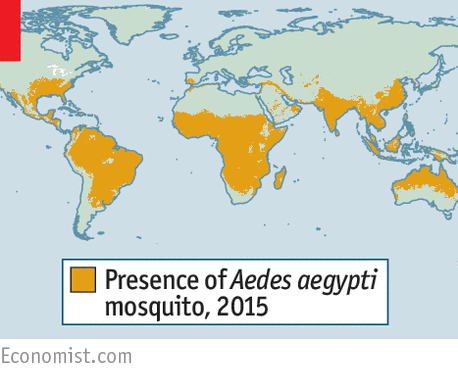
Bản đồ những nơi xuất hiện muỗi vằn

Một trong những bí ẩn của dịch tễ học là tại sao châu Á không bị sốt vàng da. Dịch bệnh hoành hành ở châu Phi, lục địa nơi dịch đã tiến hóa. Dịch sốt da vàng lan rộng ở Nam Mỹ, khi dịch bệnh được mang đến Nam Mỹ bằng tàu nô lệ Châu Phi của châu Âu. Sốt da vàng đã từng được tìm thấy ở cả Bắc Mỹ và Nam Âu, nhưng nó đã bị tận diệt bởi việc áp dụng các nỗ lực đáng kể và nhiều tiền của, và cả hai nơi này có chung may mắn là không có nhiều khỉ, động vật có vai trò chứa và lưu trữ các virus sốt da vàng. Tuy nhiên, mặc dù phần lớn châu Á là nơi tập trung của muỗi vằn – Aedes aegypti, một loại muỗi lây lan bệnh sốt vàng da, thật lành thay châu Á vẫn miễn nhiễm với dịch sốt vàng da. Tiếp tục đọc “Sốt vàng da: Một thảm kịch có thể phòng ngừa”

Antibiotic Resistance Requires Global Response Similar to AIDS, Climate Change

Unregulated sales of antibiotics are contributing to growing resistance. Credit: Adil Siddiqi/IPS

IPSnews – UNITED NATIONS, Jun 12 2016 (IPS) – Addressing antibiotic resistance will require a global political response similar to the way the world has reacted to climate change or HIV / AIDS, Sweden’s Minister of Public Health Gabriel Wikstrom, told IPS recently.

“(These problems) began with a small group of experts discussing and trying to warn the rest of us and it was not until it was politically addressed that it really became an issue that was solvable.”
Tiếp tục đọc “Antibiotic Resistance Requires Global Response Similar to AIDS, Climate Change”

Sexuality Education

UNESCO

https://i0.wp.com/www.unesco.org/new/fileadmin/MULTIMEDIA/HQ/HIV-AIDS/images/teacher_sex_education.haiti.amelia.shaw_photoshare.jpg

Comprehensive Sexuality Education (CSE) is an age-appropriate, culturally relevant approach to teaching about sex and relationships by providing scientifically accurate, realistic, non-judgemental information. Sexuality education provides opportunities to explore one’s own values and attitudes and to build decision-making, communication and risk reduction skills about many aspects of sexuality.   Tiếp tục đọc “Sexuality Education”

Xuất khẩu vắc xin: Bước tiến đầy ngưỡng mộ của ngành Y tế Việt Nam (3 bài)

IFNăm 2015 đánh dấu mốc quan trọng trong ngành sản xuất vắc xin của Việt Nam: Tổ chức Y tế thế giới (WHO) đã cấp Chứng nhận Hệ thống quản lý quốc gia về vắc xin (NRA) của Việt Nam.
Hình ảnh nghiên cứu và sản xuất vắc xin tại VABIOTECH

Tiếp tục đọc “Xuất khẩu vắc xin: Bước tiến đầy ngưỡng mộ của ngành Y tế Việt Nam (3 bài)”

Việt Nam sản xuất vaccine viêm gan A và viêm gan B tái tổ hợp

VB – Thứ năm, 13 Tháng ba 2003, 13:48 GMT+7


Vaccine viêm gan A do Viện Vệ sinh Dịch tễ Trung ương bào chế.

Các nhà khoa học thuộc Viện Vệ sinh Dịch tễ Trung ương đã nghiên cứu xây dựng quy trình công nghệ sản xuất vaccine viêm gan A và viêm gan B tái tổ hợp đạt tiêu chuẩn quốc tế ở quy mô phòng thí nghiệm và trên thực địa lâm sàng. Thành công này có ý nghĩa quan trọng khi có khoảng 10% người Việt Nam nhiễm viêm gan B và 90% dân số đến độ tuổi 50-60 nhiễm viêm gan A. Tiếp tục đọc “Việt Nam sản xuất vaccine viêm gan A và viêm gan B tái tổ hợp”

Hiểm họa từ ngành công nghiệp thuốc giả

20/04/2016 12:37 GMT+7

TTCTTử vong liên tiếp ở Mỹ vì dùng fentanyl, một loại thuốc giảm đau gây nghiện “mạnh hơn heroin 50 lần”, chủ yếu được nhập lậu vào từ Mexico, nơi các băng đảng chế tạo với nguyên liệu rẻ tiền hoặc mua trực tiếp từ Trung Quốc, đã hé lộ cả một ngành công nghiệp sản xuất các loại thuốc giả và độc hại khổng lồ.

Hiểm họa từ ngành công nghiệp thuốc giả
Một cảnh sát Trung Quốc đi trên đống thuốc giả bị tịch thu ở Bắc Kinh-Newsweek

Tiếp tục đọc “Hiểm họa từ ngành công nghiệp thuốc giả”