Raised White: How Korea’s Fake “Orphan Rescue” To USA, Sweden Stole Lives | One “Orphan” Every Hour

Channelnewsasia.com

Nearly 250,000 South Korean children were adopted to the West as “orphans” in the 60 years following the Korean War. Some to loving homes. Others to tragic ends. Raised in places where they looked like nobody else, many were told to forget their past and be grateful.

But the innate desire to understand where you came from has led many Korean adoptees to search for their roots. In the process, they discover lies in their past and families they never knew existed. In this documentary, correspondent Wei Du travels around the world to meet Korean adoptees and accompany a few on their journey to reclaim who they are. Together, they reveal how an “orphan rescue” mission separated families and erased the roots of hundreds of thousands.

00:00 Meet the adoptees
01:44 The lie of Korea’s “orphans”
03:04 A song I no longer recognise
05:15 Why 10,000 Korean children were sent to Sweden
07:11 How Sweden became a hub for Korean adoptions
10:29 Why the US took in so many Korean children
15:06 GI babies: Korea’s children of US soldiers
19:54 Cult leader’s adopted Korean children
24:13 “Saved from prostitution”? The truth of my adoption
27:55 Why this US couple adopted in 2005
32:03 Lies in our adoption stories
38:22 How Sweden pressured Korea to give up more children
42:49 Chase’s biological sister visits for his 20th birthday
46:15 Anna’s life in Sweden: Always different
48:54 Phil’s search for his birth family
52:46 Rebuilding siblinghood: Mary & Chase’s struggle
58:17 Catherine’s complex relationship with her adoptive mother
1:00:47 Catherine and Anna reunite after 50 years
1:06:58 Phil returns to Korea after 50 years
1:08:58 Koroot: NGO supporting Korean adoptees
1:10:15 Were adoption agencies in it for the money?
1:11:53 “A child supply market”: Moses Farrow
1:17:24 Korea investigates human rights violations in adoption
1:19:26 Confronting the orphanage manager who sent him abroad
1:23:41 Adoptees find comfort in each other
1:26:25 Han Tae-soon’s hunt for her kidnapped daughter
1:29:28 The fight for truth continues
Laos Maps Showing Sites of US Bombings Resurface: ‘Kissinger’s Legacy’

newsweek.com By Ellie Cook Security & Defense Reporter

Resurfaced maps showing the heavy Cold War bombardment of Laos have fed the controversial legacy of diplomatic giant Henry Kissinger following his death.

Kissinger, a former secretary of state and national security adviser who is credited with shaping decades of U.S. foreign policy, died at his Connecticut home aged 100 on Wednesday.

Kissinger “played central roles in the opening to China, negotiating the end of the Yom Kippur War in the Middle East, and helping to bring America’s role in the Vietnam War to a close,” the diplomat’s international geopolitical consulting firm said in a statement on his passing.

The influential diplomat won the 1973 Nobel Peace Prize along with Vietnamese diplomat Le Duc Tho “for jointly having negotiated a cease-fire in Vietnam in 1973.” The latter declined the prize.

But as tens of thousands of U.S. soldiers died in Vietnam, anger in the U.S. was also spurred on by the extensive bombing of neighboring countries Laos and Cambodia.

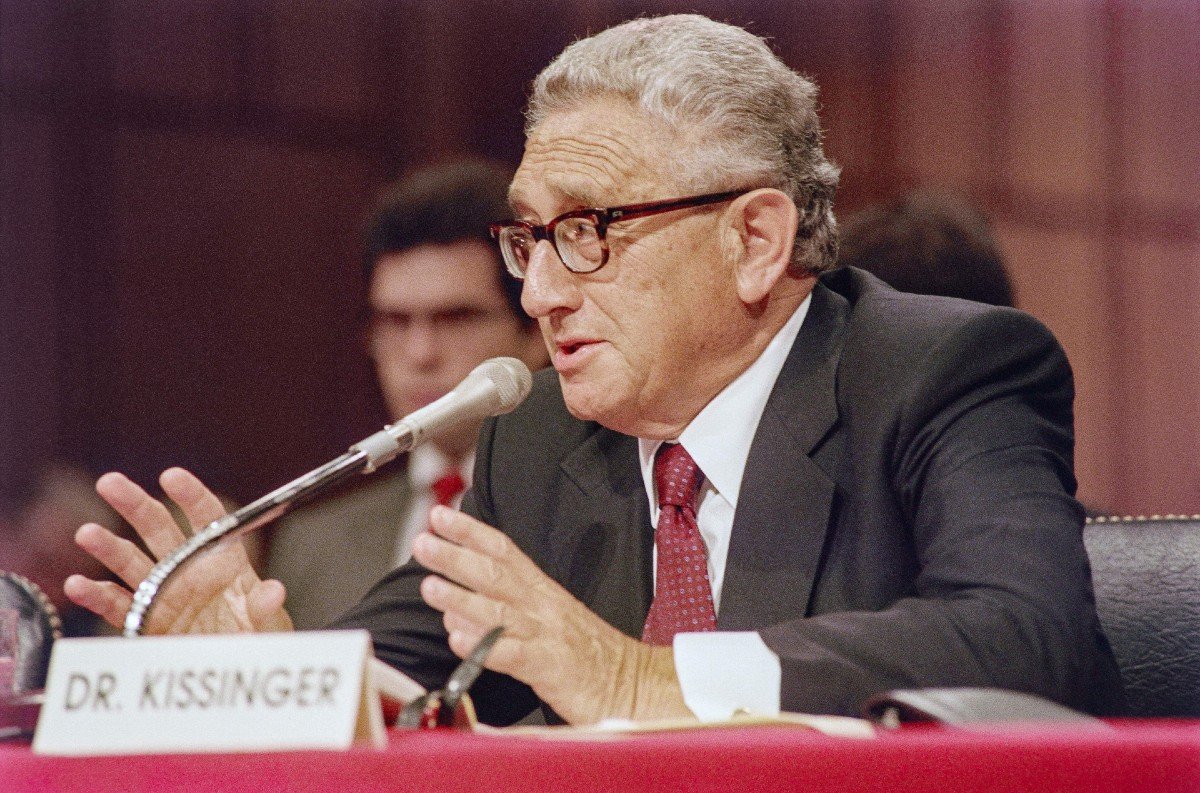
Former US Secretary of State Henry Kissinger
Former US Secretary of State Henry Kissinger on September 22, 1992 in Washington. Newly resurfaced maps showing the heavy Cold War bombardment of Laos feed the controversial legacy of diplomatic giant Henry Kissinger following his death on Wednesday.ROBERT GIROUX/AFP VIA GETTY IMAGES

The U.S. was attempting to disrupt a logistics chain — known as the Ho Chi Minh trail — running from Laos into Vietnam, which was used by North Vietnamese forces.

Laos is the most bombed country in the world. Between 1964 and 1973, the U.S. dropped more than 270 million bombs on the country, which had a population of around 3 million at the time.

U.S. aircraft dropped a new wave of bombs on Laos every eight minutes for nearly 10 years on average.

Tiếp tục đọc “Laos Maps Showing Sites of US Bombings Resurface: ‘Kissinger’s Legacy’”

At least 15 people are killed when a bomb brought home by children explodes in eastern Congo

A community leader says at least 15 people are dead after a group of children brought home an explosive device they had found while playing

ABCnews.go.com

ByJUSTIN KABUMBA Associated Press October 8, 2023, 12:11 AM

GOMA, Congo — At least 15 people were killed in eastern Congo after a group of children brought home an explosive device that they had found while they were playing, a community leader said Saturday.

The tragedy took place Friday evening in the village of Kyangitsi, located in Masisi territory in North Kivu province.

“At around 8 p.m. local time, while some of the residents were trying to find out what it was, the bomb exploded,” said Telesphore Mitondeke, a member of a Masisi grouping of civil society organizations.

For the past two weeks, the region has been the scene of hostilities between local armed groups vying for control of villages.

Tiếp tục đọc “At least 15 people are killed when a bomb brought home by children explodes in eastern Congo”

We Can Heal War’s Traumas; U.S. and Vietnam Show How

US Institute of Peace 50 years after a peace accord that wasn’t, one-time enemies salve a long war’s wounds.

Wednesday, March 1, 2023 / BY: USIP Staff PUBLICATION TYPE: Analysis and Commentary

This winter marks 50 years since U.S. and Vietnamese diplomats in Paris ceremoniously signed “peace accords” that did not end the Vietnam War, but that achieved America’s withdrawal from it. Thus, the accords permitted, a half-century later, what is now a durable American-Vietnamese reconciliation. In the face of seemingly intractable wars — in Ukraine, Afghanistan, the eastern Congo basin, Yemen or elsewhere — the growing U.S.-Vietnamese relationship shows that even a peace that seems impossible today can indeed be built for our children.

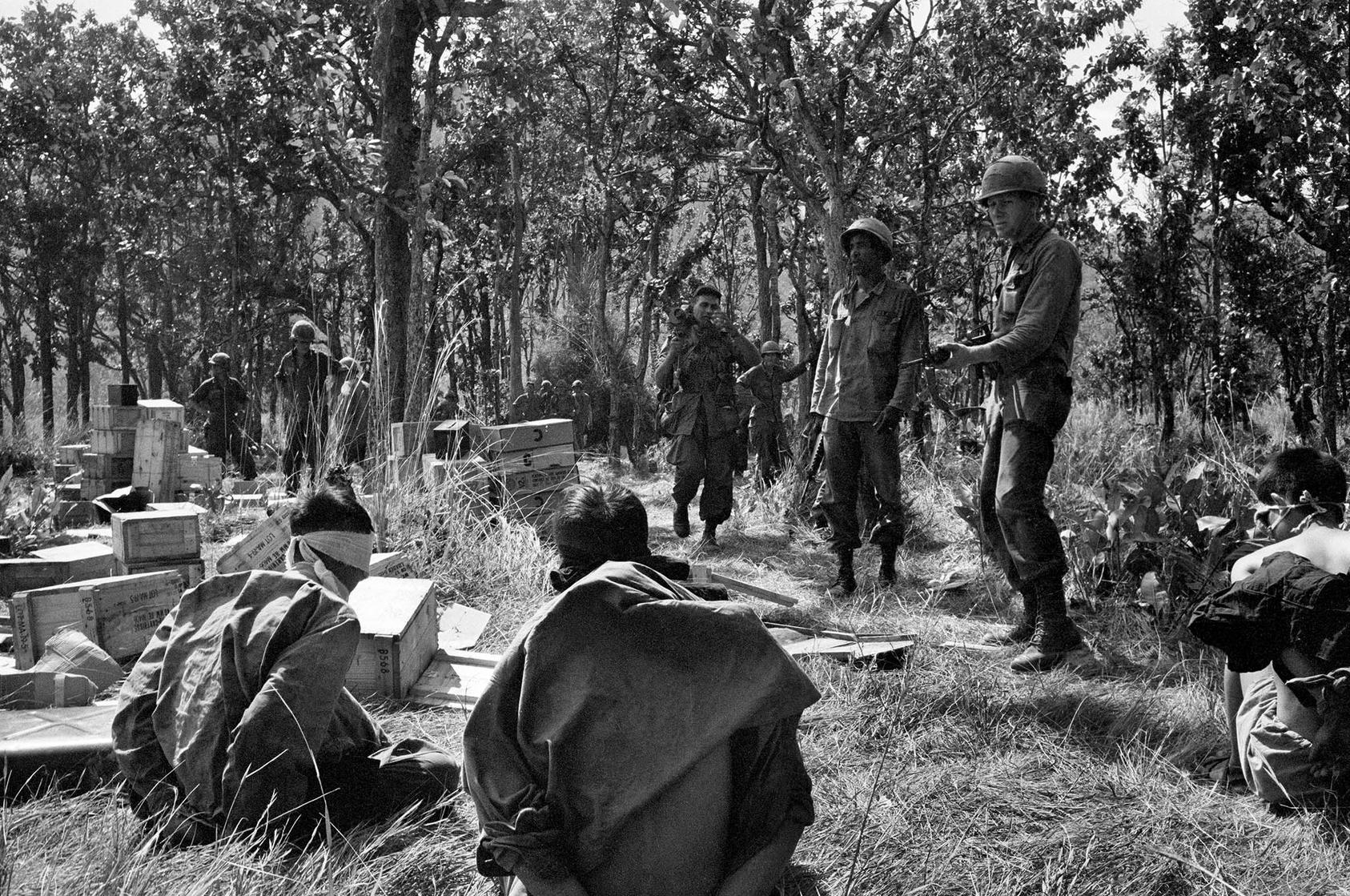
U.S. troops guard North Vietnamese prisoners in 1965, early in the Vietnam War. U.S. and Vietnamese veterans have led reconciliation work in decades since, notably in searching for remains of those killed in the war. (Neil Sheehan/The New York Times)
Tiếp tục đọc “We Can Heal War’s Traumas; U.S. and Vietnam Show How”