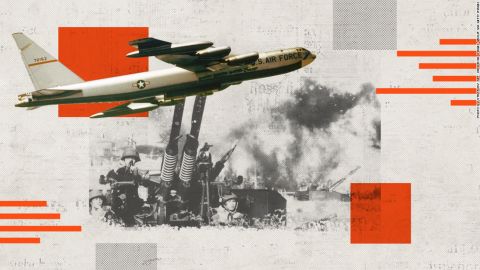
Operation Linebacker II saw more than 200 American B-52 bombers fly 730 sorties and drop over 20,000 tons of bombs on North Vietnam over a period of 12 days in December 1972.
CNN — It was one of the heaviest bombardments in history. A shock-and-awe campaign of overwhelming air power aimed at bombing into submission a determined opponent that, despite being vastly outgunned, had withstood everything the world’s most formidable war machine could throw at it.
Operation Linebacker II saw more than 200 American B-52 bombers fly 730 sorties and drop over 20,000 tons of bombs on North Vietnam over a period of 12 days in December 1972, in a brutal assault aimed at shaking the Vietnamese “to their core,” in the words of then US national security adviser Henry Kissinger.
Deputy spokeswoman for the Ministry of Foreign Affairs Pham Thu Hang. Photo courtesy of the Ministry of Foreign AffairsThe government says the U.S. decision to put Vietnam on a Special Watch List regarding religious freedom was based on inaccurate information.
Supporting Taiwan: Congress included the Taiwan Enhanced Resilience Act, which includes a number of important provisions to bolster Taiwan’s defense capabilities. If Taiwan increases its defense spending, the act authorizes up to $2 billion per year in Foreign Military Financing for the next five years. In addition, the act provides $1 billion per year in drawdown authority to provide defense articles to Taiwan. The act also requires the submission of reports assessing Taiwan’s defense capabilities, proposing a multi-year plan to address Taiwan’s capability gaps, explaining undelivered arms exports to Taiwan and other regional partners, reviewing Taiwan’s civil defense and resilience, describing a strategy to counter China’s influence operations against Taiwan, addressing Taiwan’s participation in various international organizations, and listing recent travel by officials to Taiwan. Additional provisions authorize funding for regional stockpiling, enhancing training and interoperability with Taiwan, fast-tracking Foreign Military Sales to Taiwan, and establishing a Taiwan Fellowship Program.
The National Defense Authorization Act (NDAA) for 2023 authorizes $857.9 billion in national defense spending and includes numerous important provisions related to the Indo-Pacific region. Below are five of the top items related to Asia, followed by a full list of relevant NDAA sections.
Supporting Taiwan: Congress included the Taiwan Enhanced Resilience Act, which includes a number of important provisions to bolster Taiwan’s defense capabilities. If Taiwan increases its defense spending, the act authorizes up to $2 billion per year in Foreign Military Financing for the next five years. In addition, the act provides $1 billion per year in drawdown authority to provide defense articles to Taiwan. The act also requires the submission of reports assessing Taiwan’s defense capabilities, proposing a multi-year plan to address Taiwan’s capability gaps, explaining undelivered arms exports to Taiwan and other regional partners, reviewing Taiwan’s civil defense and resilience, describing a strategy to counter China’s influence operations against Taiwan, addressing Taiwan’s participation in various international organizations, and listing recent travel by officials to Taiwan. Additional provisions authorize funding for regional stockpiling, enhancing training and interoperability with Taiwan, fast-tracking Foreign Military Sales to Taiwan, and establishing a Taiwan Fellowship Program.
How has piracy/sea robbery evolved over the last 20 years?
Piracy has existed since ancient times, wherein pirates looted vessels carrying commodities. Today, piracy and armed robbery against ships (PAR) continues to pose threats to maritime trade.[1]
In the late 1990s and early 2000s Southeast Asia witnessed a surge in piracy and sea robbery incidents in Asia. Over 200 incidents per year were reported which prompted Asian countries to seek expanded frameworks for regional cooperation.[2] One incident that particularly stood out was the hijacking of the Japan-registered vessel, Alondra Rainbow on October 22, 1999. Within hours of departure from Kuala Tanjung, Indonesia for Port Miike, Japan, ten criminals armed with pistols and knives boarded the ship from a speed boat and seized command. On 29 Oct, the 17 crew were set adrift in an inflatable life raft. The Japan Coast Guard and Japan Ship Owners’ Association appealed to coastal states for assistance, and on November 13 the Indian Coast Guard and Indian Navy boarded the vessel, now renamed Mega Rama, and arrested the pirates. These events, coupled with the escalating situation of PAR in the Straits of Malacca and Singapore (SOMS), led Japan to champion the deliberation of an agreement among the Asian countries to combat PAR in Asian waters.
First Minister Nicola Sturgeon, leader of the Scottish National Party, attends a pro-independence demonstration outside Holyrood, the Scottish Parliament, on November 23, 2022. Peter Summers/Getty Images
The decades-long campaign for Scotland’s independence from the United Kingdom (UK) suffered a setback last month when the UK Supreme Court ruled that no new referendum can be held without London’s approval. Can the Scottish Parliament, controlled by the pro-independence Scottish National Party (SNP) and led by First Minister Nicola Sturgeon, keep the flame alive?
French President Emmanuel Macron and U.S. President Joe Biden stand together onstage during an official state arrival ceremony on the South Lawn of the White House on December 1, 2022. Elizabeth Frantz/ReutersEuropeans consider vast U.S. subsidies for cars, clean energy, and semiconductors a danger to their economies. Read the analysis
Europeans need a more substantial plan to support Ukraine, not just to ensure their own security, but also to signal their long-term commitment and head off U.S. criticism of European free-riding on Ukraine ahead of the 2024 U.S. elections. Read the opinion
For years, controversy has surrounded FIFA’s choice of the 2022 World Cup host. Thanks to new Qatargate revelations, scathing headlines will haunt this year’s World Cup well after the final showdown between Argentina and France this weekend.
Last Friday, allegations emerged that the Qatari government has bribed current and former members of the European Parliament and their staff to tone down criticism in the lead-up to the prestigious tournament and win other favours. European Parliament’s Bureau met without Eva Kaili, who has been implicated in the Qatargate scandal, on 12 December. Photo: Daina Le Lardic/European Parliament
Intellectual property (IP) law reform and enforcement in Vietnam has been at the center of a broad range of trade agreements the country has signed onto. But change has been slow, and enforcement has been lacking. Here’s how a spat between a cartoon wolf and a cartoon pig could change that.
The owners of the UK’s Peppa Pig, EOne, are suing Vietnam’s Sconnect, the owners of popular YouTube cartoon Wolfoo, alleging trademark and copyright infringement. More specifically, EOne is alleging Sconnect created Wolfoo to look and feel like Peppa Pig to imply the two cartoons were connected.
In its complaint, EOne claims that parts of Wolfoo’s audio have been taken directly from episodes of Peppa Pig and that images of Peppa Pig herself appear on items like clocks and watering cans in the background of Wolfoo videos.
This is currently before the courts in the UK.
But the courts have not been EOne’s only means of recourse.
YouTube, for example, took down 2,000 Wolfoo videos from August to October this year for copyright infringement at the request of EOne. This cost Sconnect US$2 million in lost revenue up to October, according to their own estimates.
In response, Sconnect has made overtures to the Vietnamese government looking for support. It has also countersued in Vietnam and has launched a lawsuit in Russia where, earlier in the year, a copyright infringement case brought by EOne was dismissed in response to sanctions imposed over the war in the Ukraine.
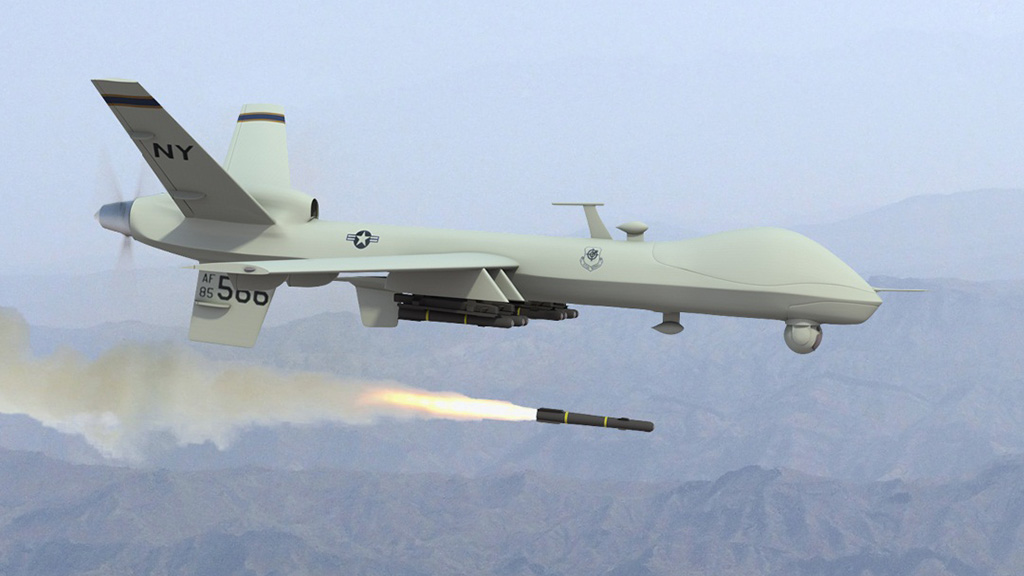
UAV – Bóng ma sát thủ từ trên không – Kỳ 1: Máy bay ném bom thời thế chiến
03/12/2022 11:07 GMT+7
TTO– Chiến sự Nga – Ukraine đã chứng minh vai trò quan trọng của vũ khí máy bay không người lái trên chiến trường hiện đại.
Từ chức năng trinh sát ban đầu, loại máy bay này đã biến thành sát thủ tấn công từ trên không và có thể định hình cuộc chiến trong tương lai.
Tại triển lãm hàng không ở Thổ Nhĩ Kỳ vào đầu tháng 9-2022, lần đầu tiên nước chủ nhà đã giới thiệu thế hệ máy bay không người lái (UAV) siêu thanh Bayraktar Kizilelma. UAV mới có tính năng tàng hình, bay gần 980km/h với tốc độ tối đa Mach 1.
Chuyến bay đầu tiên dự kiến được thực hiện vào đầu năm 2023. Đến cuối tháng 9, báo chí Pháp đưa tin Tổng cục Vũ khí Pháp đang thử nghiệm thế hệ UAV mới AVATAR trang bị súng trường tấn công.
Chất nổ Torpex phát nổ sớm đã phá hủy máy bay BQ-8 giết chết Kennedy và Willy ngay lập tức.
The electric-car startup brought me to its Vietnam headquarters to drive its first EV meant for the U.S. market. It was the most bizarre experience of my life.
I was in Vietnam to sample the automotive fruits of VinFast; the fast-moving automotive startup had just begun selling electric cars in its home country and was already promising to bring them to the United States. I definitely learned something about VinFast, but it wasn’t exactly what the company wanted me to see.
Full Disclosure: VinFast flew me from Columbus, Ohio, to San Francisco, put me in a really nice hotel for one night, then flew me and at least 100 other journalists, influencers, YouTubers, TikTokers, VinFast reservation holders (called VinFirst), VinFast employees, and other persons of interest from SFO to Vietnam on a chartered plane, all so we could sample the company’s new EVs. We stayed at two private-island resorts and spent a night in Hanoi at the same hotel where Donald Trump and Kim Jong Un met for the first time.
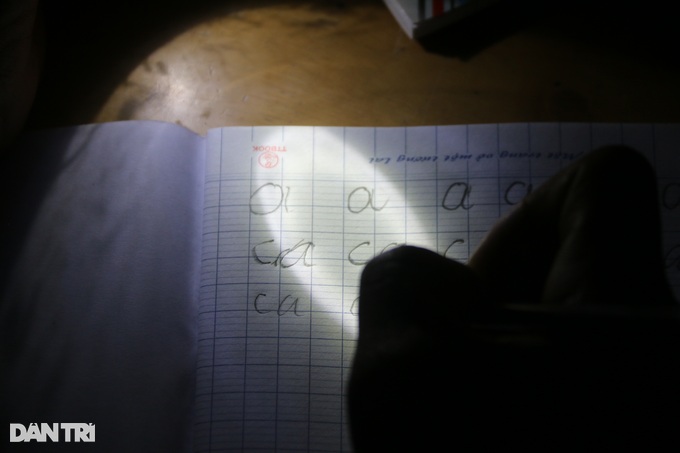
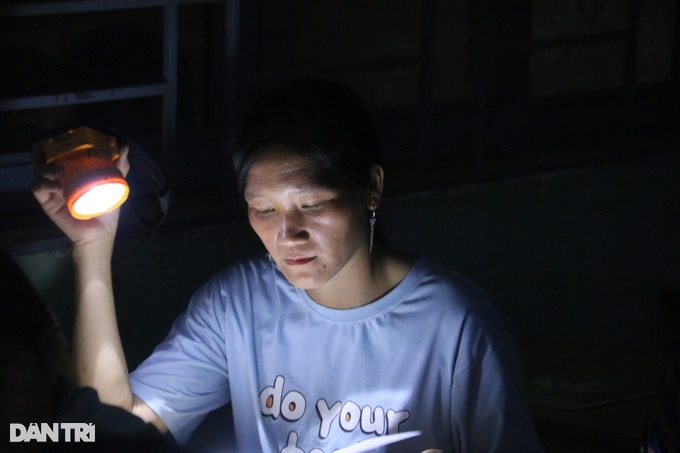
Giang Thi So slowly wrote down some new words in a small notebook under her classmate’s weak light torchlight. After travelling 20 kilometres and studying for over an hour, her own torch had already run out of battery.
Giang Thi So learns to write at the evening class in Dak Nong Province
“It has been raining for some days and there was no sunlight so I couldn’t charge it,” she said. “We don’t have access to the electricity grid so we depend on solar power.”
So is attending an illiteracy course organised by authorities for the Mong Ethnic Group in Dak R’mang Commune, Dak Glong District in the central highlands province of Dak Nong. The class is held every Friday evening at 7 pm in the classroom of a local primary school. The students are all adults who mostly farm.
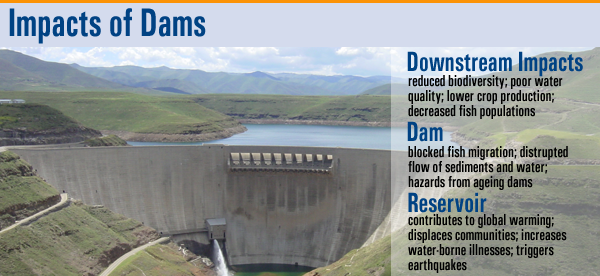
Earthquakes can be induced by dams. Globally, there are over 100 identified cases of earthquakes that scientists believe were triggered by reservoirs (see Gupta 2002). The most serious case may be the 7.9-magnitude Sichuan earthquake in May 2008, which killed an estimated 80,000 people and has been linked to the construction of the Zipingpu Dam.
How Do Dams Trigger Earthquakes?
In a paper prepared for the World Commission on Dams, Dr. V. P Jauhari wrote the following about this phenomenon, known as Reservoir-Induced Seismicity (RIS): “The most widely accepted explanation of how dams cause earthquakes is related to the extra water pressure created in the micro-cracks and fissures in the ground under and near a reservoir. When the pressure of the water in the rocks increases, it acts to lubricate faults which are already under tectonic strain, but are prevented from slipping by the friction of the rock surfaces.”
Given that every dam site has unique geological characteristics, it is not possible to accurately predict when and where earthquakes will occur. However, the International Commission on Large Dams recommends that RIS should be considered for reservoirs deeper than 100 meters.
Depth of the reservoir is the most important factor, but the volume of water also plays a significant role in triggering earthquakes.
RIS can be immediately noticed during filling periods of reservoirs.
RIS can happen immediately after the filling of a reservoir or after a certain time lag.
Many dams are being built in seismically active regions, including the Himalayas, Southwest China, Iran, Turkey, and Chile (see map). International Rivers calls for a moratorium on the construction of high dams in earthquake-prone areas.
By 2015, the dam industry had choked more than half of the Earth’s major rivers with some 57,000 large dams. The consequences of this massive engineering program have been devastating. The world’s large dams have wiped out species; flooded huge areas of wetlands, forests and farmlands; and displaced tens of millions of people.
Courtesy of James Syvitski at Colorado University, who produced the video with Bob Stallard of the USGS and Albert Kettner at CSDMS. Data from Alex de Sherbinin (CIESIN, University of Colorado), and Bernhard Lehner (Department of Geography, McGill University).
The “one-size-fits-all” approach to meeting the world’s water and energy needs is also outdated: better solutions exist. While not every dam causes huge problems, cumulatively the world’s large dams have replumbed rivers in a massive experiment that has left the planet’s freshwaters in far worse shape than any other major ecosystem type, including tropical rainforests. In response, dam-affected communities in many parts of the world are working to resolve the legacies of poorly planned dams. Elsewhere (and especially in North America), communities are starting to take down dams that have outlived their usefulness, as part of a broader river restoration movement.
A map shows the location of an earthquake epicenter in Kon Tum Province (red star), April 18, 2022. Photo courtesy of the Institute of GeophysicsRecent earthquakes in the Central Highlands are a cause for concern, says the Institute of Geophysics, calling for extensive studies and research to ascertain causes and draw up response plans.
In a report released Wednesday, it said that the earthquakes that occurred from March 2021 to April 2022, with magnitudes of 1.6 to 4.5 on the Richter scale in Kon Plong District, Kon Tum Province and other nearby areas were not “severe” but there was a need to evaluate risks and dangers.
“To ascertain the causes of the earthquakes and to have a foundation for predicting seismic trends and earthquakes’ intensity in the future so that the risk of damage to residential structures and hydropower plants can be evaluated, there needs to be surveys and research on Kon Tum and neighboring areas’ geological characteristics,” the Voice of Vietnam cited the report as saying.
International Backers Plan New Infrastructure, Military Aid for Ukraine
At a conference in Paris yesterday, donor nations pledged to provide Ukraine (AP) more than $1 billion worth of financial aid and donations of health, food, and other supplies. The support aims to meet Ukraine’s humanitarian needs and help repair infrastructure damaged by Russia’s ongoing bombardment. The conference was attended (NYT) by representatives of multinational organizations and some fifty countries. In a video address, Ukrainian President Volodymyr Zelenskyy told attendees that power outages are affecting around twelve million Ukrainians as winter arrives. Separately, U.S. officials said Washington is preparing to send Ukraine a Patriot missile defense system, while European Union (EU) finance ministers are set to approve around $19 billion in loans to Ukraine today.