As the clock struck midnight, crowds across the country burst out in cheers, applauses and exchanged hugs as the fireworks exploded to welcome the new year.
00h10Fireworks explode in Saigon Fireworks explode over the Saigon River. Photo by Quynh TranFireworks explode over the Saigon River. Photo by Quynh TranPeople capture photos of exploding fireworks in HCMC. Photo by Thanh TungA girl sits on her parent’s neck to watch the fireworks. Photo by Thanh Tung
The poverty and equity agenda is no longer only about raising minimum living standards and tackling chronic poverty; it is also about creating new and sustainable economic pathways for a more aspirational population.
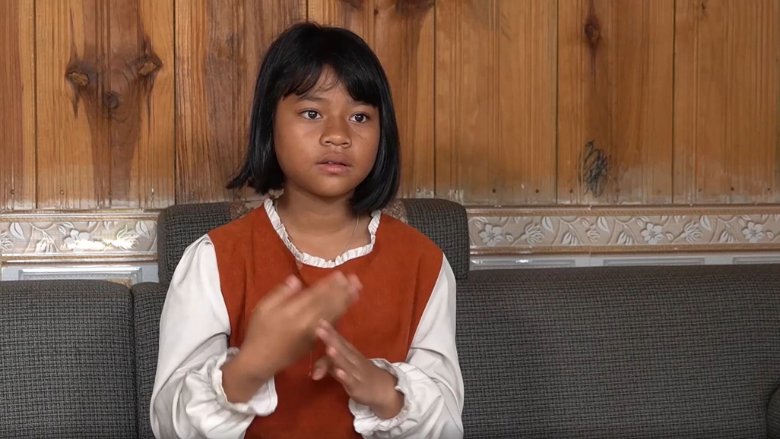
Ly-Et was enrolled in a school accommodating deaf children. The headmaster remembers her arrival.
STORY HIGHLIGHTS
The Quality Improvement of Primary Education for Deaf Children Project developed new sign language gestures and trained deaf teachers, mentors, and caregivers.
Expanded sign language facilitated the integration of deaf children in Vietnam into the mainstream and special education.
The success of the project makes it suitable for expansion around the country and to older students.
Lo Mu Du Ly-Et was born in 2010 to deaf parents belonging to the Cil (K’ho) ethnic group in the central highland province of Lam Dong in Vietnam. Ly-Et’s parents’ deafness was considered a burden to their families, but they overcame that stigma, raised a family together, and wanted their child to have opportunities that had been unavailable to them.
March 23 this year marks the fifth anniversary of the founding of the Lancang-Mekong Cooperation (LMC) mechanism.
On that day in 2016, the first leaders’ meeting of the LMC gathered leaders from China, Cambodia, Laos, Myanmar, Thailand and Vietnam in Sanya, Hainan to launch the LMC mechanism.
Over the past five years, the six LMC countries have united as one to deepen practical cooperation. Now their cooperation has entered a new era, setting an example for building a human community with a shared future.
Yesterday, the event celebrating the 5th Anniversary of Lancang-Mekong Cooperation and a seminar on LMC was held in Kunming, Yunnan province.
Bringing into full play its geographical and cultural closeness to the Mekong countries, Yunnan has integrated the LMC mechanism into local socio-economic development and opening up over the past five years, bearing fruits in cooperation. A shared river gives rise to a shared future.
TP – Trong chiều dài một km nhưng sông Nậm Mộ đã phải gánh 3 nhà máy thủy điện. Hệ lụy nhãn tiền, người dân oằn mình chịu đựng. Lợi đâu chưa thấy nhưng khó khổ đã thấy nhiều.
Những hộ dân ở bến thượng lưu lòng hồ thủy điện Bản Vẽ
Ngược dòng Nậm Mộ
Giữa tháng 7, chúng tôi trở lại xã Tà Cạ, huyện Kỳ Sơn (Nghệ An). Con đường xưa cũ nay được mở rộng, thảm nhựa giúp chúng tôi đến với Tà Cạ nhanh hơn. Những bản làng nằm vắt vẻo bên sườn núi, bờ sông là nơi sinh tồn bao đời nay của cộng đồng dân tộc Thái, Khơ Mú…. Giao thông đã thuận lợi hơn những năm về trước nhưng Tà Cạ vẫn thế, như một đóa hoa rừng chưa đến thì bung nở. “Thủy điện lần lượt chắn dòng, sông Nậm Mộ bị chia cắt thành nhiều đoạn, chỉ 1km đã có 3 nhà máy, nếu tính mật độ và số lượng nhà máy thủy điện thì không địa phương nào nhiều hơn Tà Cạ. Thế nhưng, 3 bản của xã vẫn chưa có điện lưới. Ánh sáng từ điện còn chưa có, nói gì đến phát triển kinh tế”, ông Vi Văn Mằn – Chủ tịch xã Tà Cạ trầm buồn lí giải.
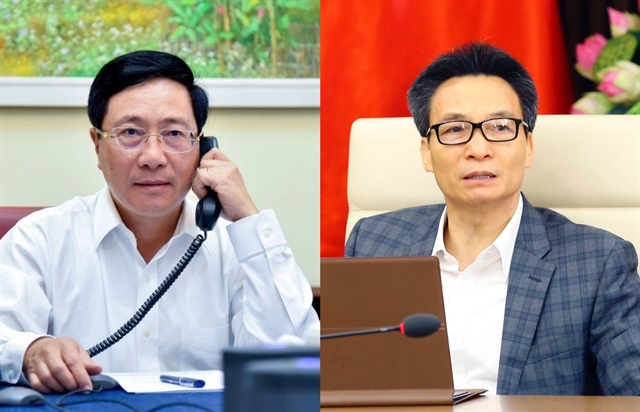
Deputy Prime Ministers Phạm Bình Minh and Vũ Đức Đam (right) are no longer members of the 13th Party Central Committee. VNA/VNS Photos
HÀ NỘI — Deputy Prime Ministers Phạm Bình Minh and Vũ Đức Đam are no longer members of the 13th Party Central Committee, according to a decision made on Friday.
Phạm Bình Minh’s membership at the Politburo was also removed, according to the decision made at the Central Committee of the Communist Party of Việt Nam’s extraordinary meeting held Friday afternoon.
During the meeting, the Committee also gave opinions on two individuals that the Politburo would recommend to the 15th National Assembly to be approved as deputy prime ministers for the 2021-26 term.
2022 PacNet Commentary Index The comprehensive 2022 index includes each PacNet commentary below. Pacific Forum will continue to publish timely insight and analysis in 2023.
PacNet commentaries and responses represent the views of the respective authors. Alternative viewpoints are always welcomed and encouraged. Click here to request a PacNet subscription.ShareTweetForward
Sharia guides the personal religious practices of Muslims worldwide, but whether it should influence modern legal systems remains a subject of intense debate.
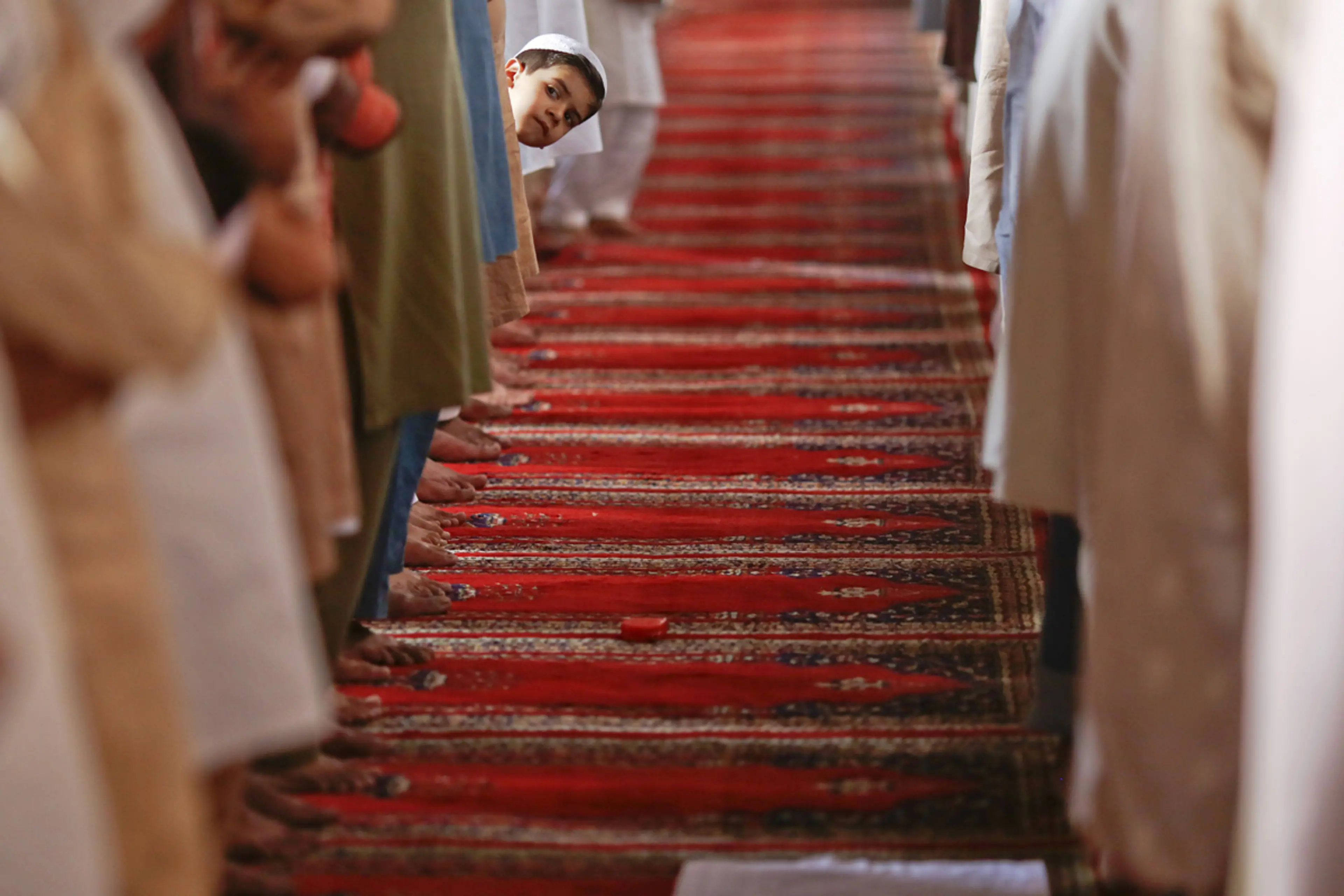
Friday prayers at the Wazir Khan mosque in Lahore, Pakistan. Damir Sagolj/Reuters
WRITTEN BY Kali Robinson Last updated December 17, 2021 2:00 pm (EST)
Summary
Sharia is the ideal form of divine guidance that Muslims follow to live a righteous life. Human interpretations of sharia, or fiqh, are the basis of Islamic law today.
About half the world’s Muslim-majority countries have sharia-based laws, and most Muslims worldwide follow aspects of sharia in their private religious practices.
Debate continues to flare over sharia’s place in the modern world, particularly with regard to its teachings relating to criminal justice, democracy, and social equality.
Most of the world’s nearly fifty Muslim-majority countries have laws that reference sharia, the guidance Muslims believe God provided them on a range of spiritual and worldly matters. Some of these nations have laws that call for what critics say are cruel criminal punishments, or place undue restrictions on the lives of women and minority groups. However, there is great diversity in how governments interpret and apply sharia, and people often misunderstand the role it plays in legal systems and the lives of individuals.
What is sharia?
Sharia means “the correct path” in Arabic. In Islam, it refers to the divine counsel that Muslims follow to live moral lives and grow close to God. Sharia is derived from two main sources: the Quran, which is considered the direct word of God, and hadith—thousands of sayings and practices attributed to the Prophet Mohammed that collectively form the Sunna. Some of the traditions and narratives included in these sources evolved from those in Judaism and Christianity, the other major Abrahamic religions. Shiite Muslims include the words and deeds of some of the prophet’s family in the Sunna. However, sharia largely comprises the interpretive tradition of Muslim scholars.
In the Declaration of the High-level Meeting on the Rule of Law, Member States noted that “the rule of law and development are strongly interrelated and mutually reinforcing, that the advancement of the rule of law at the national and international levels is essential for sustained and inclusive economic growth, sustainable development, the eradication of poverty and hunger and the full realization of all human rights and fundamental freedoms, including the right to development, all of which in turn reinforce the rule of law”. They therefore called for consideration of that interrelationship in the post-2015 international development agenda. At the international level, the body of international instruments, including those concerning international trade and finance, climate change and protection of the environment and the right to development, establishes internationally agreed standards which support sustainable development.
At the national level, the rule of law is necessary to create an environment for providing sustainable livelihoods and eradicating poverty. Poverty often stems from disempowerment, exclusion and discrimination. The rule of law fosters development through strengthening the voices of individuals and communities, by providing access to justice , ensuring due process and establishing remedies for the violation of rights . Security of livelihoods, shelter, tenure and contracts can enable and empower the poor to defend themselves against violations of their rights. Legal empowerment goes beyond the provision of legal remedies and supports better economic opportunities.
Oakland’s Next Mayor Highlights Political Rise of Hmong Americans
new york times – Sheng Thao, the daughter of refugees, will become the most prominent Hmong American politician when she leads the California city of 440,000 residents.
Sheng Thao at Joaquin Miller Park in Oakland last month. Carolyn Fong for The New York Times
Over platters of fried rice, egg rolls and crab rangoon, Sheng Thao took the microphone and asked for support in June from several dozen people gathered at a Hmong restaurant in Wisconsin.
Ms. Thao, 37, was running to become the mayor of Oakland, Calif., but she took a detour to the Upper Midwest because it has some of the nation’s largest communities of Hmong Americans.
When Ms. Thao spoke, Zongcheng Moua, 60, found himself nodding along, never mind that he lived 2,000 miles away from California. Like Ms. Thao’s parents, Mr. Moua landed in a refugee camp in Thailand after fleeing the war in Laos nearly 50 years ago. His siblings, like Ms. Thao’s parents, struggled to adapt to life in the United States after arriving with no money, formal education or language skills.
Editor’s note: There will be no Daily Brief until Tuesday, January 3, in observance of New Year’s Day.
Top of the Agenda
Russia Rejects Ukraine’s Peace Conditions, Bombards Its Power Grid
Russia fired nearly seventy missiles (WaPo) at Kyiv and other Ukrainian cities today in what appeared to be one of its biggest strikes on Ukraine’s energy grid. Ukraine’s military said it shot down fifty-four of the missiles. The attack came hours after Russian Foreign Minister Sergei Lavrov reiterated Moscow’s rejection (Al Jazeera) of Ukrainian President Volodymyr Zelenskyy’s conditions for peace. In recent weeks, Zelenskyy has promoted a peace plan in which Russia would face a war crimes tribunal and give up occupied territories in eastern Ukraine. A Kremlin spokesperson yesterday rejected the possibility (NYT) of ceding the territories, while Lavrov said today that Kyiv’s plans to drive Russia out of eastern Ukraine were an “illusion.”
Good morning. Today we look at some of the most memorable photos published in The Times this year.
Photographers for The New York Times trod around the globe in 2022 to document news, history and everyday life, whether embedded alongside troops on the front lines in Ukraine, chronicling lawmakers in the halls of Congress or reporting from floods and wildfires on several continents.
Near the end of the year, The Times publishes its annual Year in Pictures feature. This edition of The Morning is a tribute to the work of The Times’sphotographers.
The photos
Millions of people fled Ukraine in the early weeks of Russia’s invasion, seeking refuge in other countries. Desperate families shoved their way onto a train leaving the capital, Kyiv, in early March:
Proponents describe regional power grids as a way to promote economic growth, energy security and renewables in Southeast Asia, but this might come at a heavy cost
Lat Tha Hae temple in Luang Prabang province, Laos, half submerged by the Nam Ou 1 hydropower dam (Image: Ton Ka/China Dialogue)
On 23 June 2022, the import of 100 megawatts (MW) of hydropower from Laos to Singapore through Thailand and Malaysia was hailed as a historic milestone. Part of a pilot project known as the Lao PDR-Thailand-Malaysia-Singapore Power Integration Project (LTMS-PIP), this event represented Singapore’s first ever import of renewable energy, and also the first instance of cross-border electricity trade involving four countries from the Association of Southeast Asian Nations (ASEAN).
However, this development takes place amid rising concerns for the ecological future of the transboundary Mekong River and the millions of people who depend on it. A 2018 study by the Mekong River Commission concluded that further hydropower development on the river would negatively affect ecosystems, and would reduce soil fertility, rice production, fish yields and food security, while increasing poverty in the river basin.

 Fireworks explode over the Saigon River. Photo by Quynh Tran
 Fireworks explode over the Saigon River. Photo by Quynh Tran
 People capture photos of exploding fireworks in HCMC. Photo by Thanh Tung
 A girl sits on her parent’s neck to watch the fireworks. Photo by Thanh Tung
Tiếp tục đọc “Vietnam rings in 2023”