Coming to Na Khuong hamlet, in Ban Bo commune, Tam Duong district of the northern mountainous province of Lai Chau, visitors are impressed by 25 giant water wheels used for irrigational purposes.
|
Conversations on Vietnam Development
Coming to Na Khuong hamlet, in Ban Bo commune, Tam Duong district of the northern mountainous province of Lai Chau, visitors are impressed by 25 giant water wheels used for irrigational purposes.
|
English: One Earth: Why the World Needs Indigenous Communities to Steward Their Lands
Chỉ vào hình con quạ trong cuốn truyện tranh, tôi đọc “kaak” bằng tiếng Bengali, tiếng nói của vùng này. Trong khi những người khác đồng thanh lặp lại tiếng đó thì các em học sinh lớp một người dân tộc trả lời với cái nhìn trống rỗng. Các em chỉ biết con quạ là “koyo”. Các em sẽ vui vẻ lôi những viên bi thuỷ tinh ra đếm nhưng hỏi đếm được mấy viên, các em sẽ im lặng bởi trong ngôn ngữ mẹ đẻ của các em, một nghĩa là “mit”, hai là “bariah” – rất khác tiếng Bengali là “ek” và “du”.

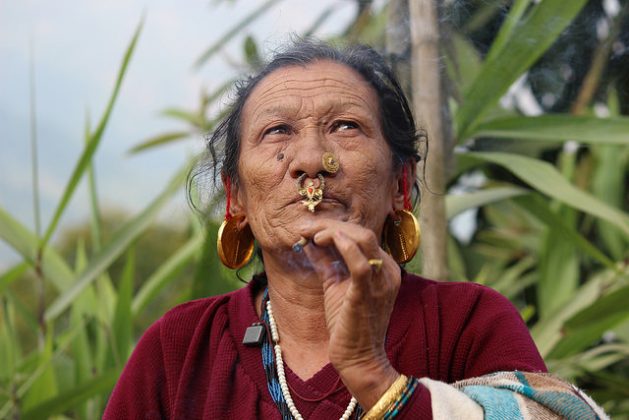
Một bà mẹ đứng đầu gia đình người dân tộc ở tỉnh Sikkim, giàu có về đa dạng sinh học, ngọn đồi dưới chân núi Himalayan. Bà là một kho kiến thức về cây thuốc và cây thực phẩm truyền thống . Tiếp tục đọc “Tại sao thế giới cần các cộng đồng dân tộc bản địa quản lý đất đai của chính họ?”

internationalrivers – The Son La Hydropower Project is the largest and most complex dam project ever built in Vietnam. The project will displace more than 91,000 ethnic minority people, requiring the largest resettlement in Vietnam’s history. Most of these people will be moved between 50 to 100 kilometers away from their current homes and without access to the Da River—a source of livelihood for most of them.
The affected people include ten different ethnic groups, of which the Thai people comprise the majority. These people live mainly by the river and practice wet rice cultivation. One of the major concerns is a shortage of arable land for resettling the tens of thousands of displaced people. Tiếp tục đọc “Son La Dam”
Phóng sự của Hoàng Thiên Nga
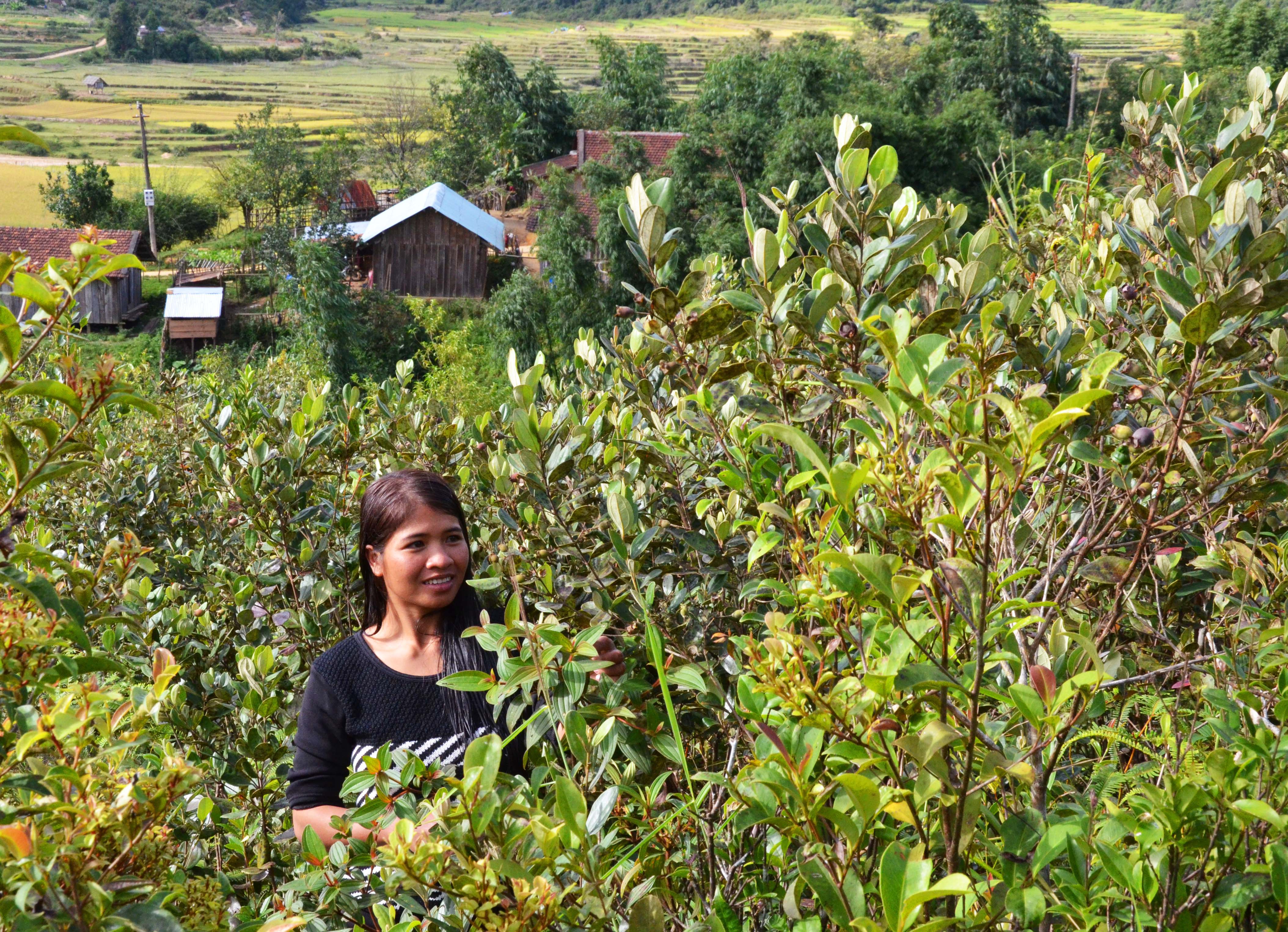
Từ giữa tháng tám, tiếng cười giòn tan bắt đầu lan tỏa từ những dãy đồi chập chùng ngan ngát gió thơm về tận thôn làng của đồng bào các dân tộc Xê đăng, Mơ Nâm, Ka Dong, Hre phía Đông Bắc Tây Nguyên. Những gùi sim tím rười rượi không chỉ ngọt môi sơn nữ, mà còn khiến bếp lửa mỗi nhà thêm ấm áp, tươi vui.

The H’mong King’s Palace is considered a gem of the northern mountainous province of Ha Giang, and is a popular tourist destination besides the Dong Van Stone Plateau.
Lying some 130 kilometres north of Ha Giang Town, the century-old palace is still the largest construction in the area and boasts special architecture style.
According to a tour guide who is also a woman member of the King’s family at the palace, Vuong Chinh Duc (1865 – 1947), known as the king of the H’mong or Meo ethnic minority group in the area, built the palace which cost 150,000 Indochina silver coins equivalent to VND150 billion (USD 6.61 million). Duc earned his fortune from growing and trading opium. Tiếp tục đọc “Explore the H’mong King’s Palace in Ha Giang”
The northern mountainous province of Tuyen Quang is home to nearly 100,000 people of Dao ethnicity whose culture boasts unique customs, rituals and arts.

A ritual at the coming-of-age ceremony of Dao ethnic people
Tuyen Quang is the only province in Vietnam home to all nine Dao subgroups, namely Dao Do, Dao Tien, Dao Cooc Mun, Dao Quan Chet, Dao O Gang, Dao Cooc Ngang, Dao Quan Trang, Dao Thanh Y, and Dao Ao Dai.
Unique worship rituals
Phung Chuong Chi, a shaman in Tho Binh commune of Lam Binh district, said the group’s worship customs are very diverse, including typical rituals like coming-of-age ceremonies and funerals. Tiếp tục đọc “Special culture of Dao ethnic minority people in Tuyen Quang”
Snake hunters have been risking their lives in order to make a living
![]() |
| The hunters wade across streams throughout the night to stalk on snakes and other wild animals. Photo: Tuoi Tre |
As night falls, men from the Chau Ma and S’tieng ethnic minority groups will leave their hamlets inside a strictly protected area of Cat Tien National Park and head toward the springs. Tiếp tục đọc “Snake-hunting rampant in protected Vietnamese forest”
VietNamNet Bridge – Disconnected from the outside world for a long time, a village in the middle of a huge reservoir is discovering the benefits of community-based tourism, Luong Thu Huong reports.
![]() |
| Winding down: Sunset in Ngoi Village. VNS Photos Thai Ha |
Not too long ago, Ngoi Village was living in a world of its own, quietly minding its own business, virtually unnoticed in the midst of a massive reservoir created by a hydropower project.
Accessible only by boat, its inhabitants wiled away their time fishing and farming.
That was until two months ago. Tiếp tục đọc “A new dawn breaks over Ngoi Village”

Over the past 10 years, French photographer Réhahn Croquevielle has motorcycled to every corner of Vietnam to explore its land and people. The decade-long journey has produced hundreds of thousands of stunning photos of the country.
Réhahn’s intimate bond with Vietnam began 10 years ago when he joined a volunteering mission to help local people with difficulties. Mesmerized by the Southeast Asian country, Réhahn decided to settle in the UNESCO-recognized town of Hoi An, considering it his second home. Tiếp tục đọc “Vietnam’s ethnic minorities through the lens of French photographer”
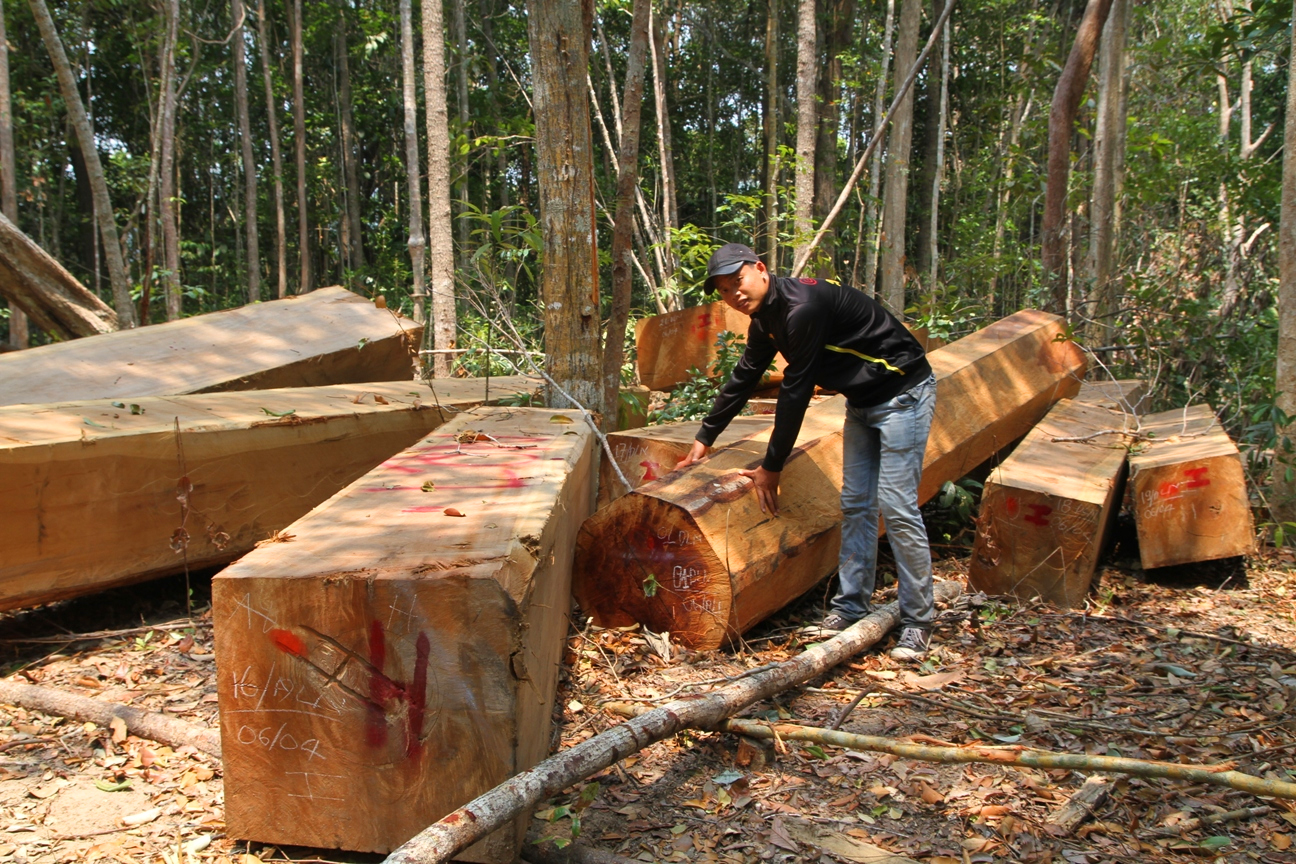
Rừng Tây Nguyên- “Lá phổi xanh” đặc biệt quý giá xưa nay đã góp phần sinh thủy, điều hòa nguồn nước, cân bằng sinh thái và môi trường không chỉ trên cao nguyên mà còn cho các tỉnh duyên hải Miền Trung, Miền Đông Nam Bộ và toàn bộ vùng hạ lưu sông Mê Kông. Thực trạng rừng Tây Nguyên bị tàn phá không ngừng, chất lượng rừng nhanh chóng suy giảm, đã khiến việc tìm kiếm và triển khai các giải pháp khả thi nhằm quản lý rừng bền vững trở nên cấp bách hơn bao giờ hết!

Tiếp tục đọc “Ký sự 3 kỳ “Giữ cho đại ngàn Tây Nguyên xanh mãi””
VietNamNet Bridge – Many people are familiar with grilled pork, but far fewer have ever tasted grilled pork wrapped in grapefruit leaves. The dish is even unfamiliar to many food connoisseurs in Viet Nam, but not for the Muong ethnic group in Hoa Binh Province, the third largest among Viet Nam’s 53 minority groups.
![]() |
| Unique: Cha cuon la buoi can only be found in Hoa Binh Province. — VNS Photo Thai Ha |
The dish, known as cha cuon la buoi, is very popular in the country’s northwestern region. Bui Van Thao, a Muong resident of Ban Ngoi Village in Tan Lac District says he saw his grandparents making it since he was a child. Previously, the dish was only prepared on festive days, but now it has become a daily family staple. Tiếp tục đọc “Pork in grapefruit leaves: a Muong delicacy”
VietNamNet Bridge – Rice is not only the staple of Vietnamese diets, but also the major ingredient in many signature dishes.
![]() |
| Blended flavors: Before being grilled, the chicken is soaked in salt, herbs as well as ground mac khen grain (a type of pepper), chili and lemongrass. —VNA/VNS Photo Huong Vien |
Besides the better known ubiquitous stir fried rice, the chicken rice of Hoi An Town and the rice cooked with coconut typical of the south, com lam is a feature of traditional festivals of several ethnic groups. These include the Tay, Dao, Muong, Nung, Thai in some northern mountain provinces like Cao Bang, Son La, Yen Bai, Lao Cai and Hoa Binh, as well as in the Central Highlands provinces.
There is no official document indicating the origin of this dish. But based on its name, it is said to have originated in the Thai ethnic community of Viet Nam. In the Thai language, lam means “grill”, indicating the cooking method. While lam in the Viet language means “green blue”, a reference to the colour of the bamboo tube covering the dish.
It is said the ethnic people who lived in remote mountainous areas often went to the forest to gather wood for cooking or building houses. These long-distance trips could take several days, and the men would bring along rice, salt and a knife as basic necessities. As they also had to find a way of cooking without a pot people eventually discovered how to grill rice in a bamboo tube. Tiếp tục đọc “Rice and chicken: fun, fired up and flavourful”
TTCT – “Lanh gắn với dân tộc Mông như vợ với chồng. Lanh là sự kết tinh của tri thức, của bản sắc, là tinh hoa văn hóa dân tộc Mông trên núi cao… Còn công việc của chúng tôi là cố gắng đưa lanh của dân tộc mình tỏa khắp năm châu!”.
![]() |
| Nghệ nhân Vàng Thị Mai (đội mũ) cùng làm việc với các vị khách quốc tế và trẻ em Mông ở Lùng Tám -NGỌC HIỂN |
Nghệ nhân dệt lanh Vàng Thị Mai (55 tuổi) tự tin giới thiệu về Hợp tác xã (HTX) lanh Lùng Tám do bà sáng lập và làm chủ nhiệm. Tiếp tục đọc “Nơi vải lanh đi muôn phương”
46 nữ sinh của 22 dân tộc thiểu số đến từ 28 tỉnh, thành được nhận học bổng của dự án “Mở đường đến tương lai” do Quỹ học bổng Vừ A Dính và VinaCapital Foundation thực hiện – đã đi đến đích với hành trình 7 năm. Từ những cô gái da đen nhẻm, mỗi tháng đi viện một lần vì… ốm đói, nguy cơ bỏ học, lấy chồng sớm, sinh con như cái án treo lơ lửng trên đầu… Nay, họ đã là những cô gái tự tin: Tự tin nói về mình, giấc mơ lớn của cuộc đời mình, dân tộc của mình…
NN – 12/07/2017, 14:30 (GMT+7) Chỉ một cái bản thôi mà đã có ít nhất 5 trường hợp bị sảy thai nghi do thuốc trừ cỏ là Lò Thị Nhom (1 lần), Lù Thị Dung (1 lần), Lò Thị Thắm (1 lần), Hoàng Thị Thương (1 lần), Lường Thị Vân (2 lần).
Hương ước cấm thuốc độc
Nếu các loại vật tư nông nghiệp khác như giống, phân bón thường được các chủ đầu tư bán trả chậm dạng nặng lãi cho nông dân vì giá trị lớn thì ngược lại thuốc trừ cỏ tuy độc hại lại có giá rất rẻ. Thêm vào đó là những lời khuyến cáo hời hợi hay thậm chí thổi phồng lợi ích của giới kinh doanh, của ngành quản lý khiến cho nông dân lạm dụng thuốc.
Tiếp tục đọc “Những biến dị hình hài ẩn chứa phía sau những nương ngô ‘ướt đẫm’ thuốc trừ cỏ” |