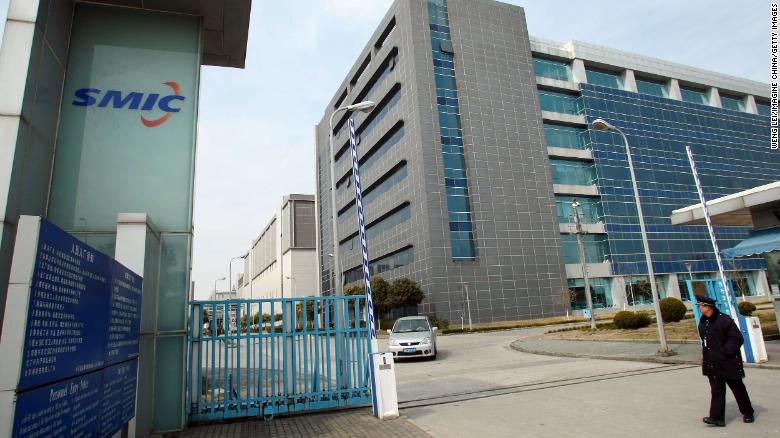
Hong Kong (CNN Business)Shares in Chinese chipmaker SMIC plummeted nearly 23% in Hong Kong on Monday on fears that it could become the latest casualty of the US-China tech war.The US Department of Defense and other US agencies are reportedly considering banning exports to Semiconductor Manufacturing International Corp., according to Reuters and other news outlets. The chipmaker could be added to a list of companies that the US government considers to be undermining American interests.SMIC’s relationship to the Chinese military is under scrutiny, according to the Reuters report, which cited an unnamed US official and two former officials briefed on the matter. The plunge in SMIC stock wiped 31 billion Hong Kong dollars ($4 billion) off its market value.Companies on the US list face significant challenges obtaining vital technology because American firms are banned from selling to them without first obtaining a license to do so. Escalating restrictions on Chinese tech firm Huawei, which was added to the list last year, threaten to cripple its global business, for example.
The situation has grown fraught since the onset of Covid-19, with Indonesia, Malaysia, the Philippines and Vietnam also hardening their stanceBut China is unlikely to terraform further land features, while Vietnam will also refrain from legally challenging Beijing’s claims or actions
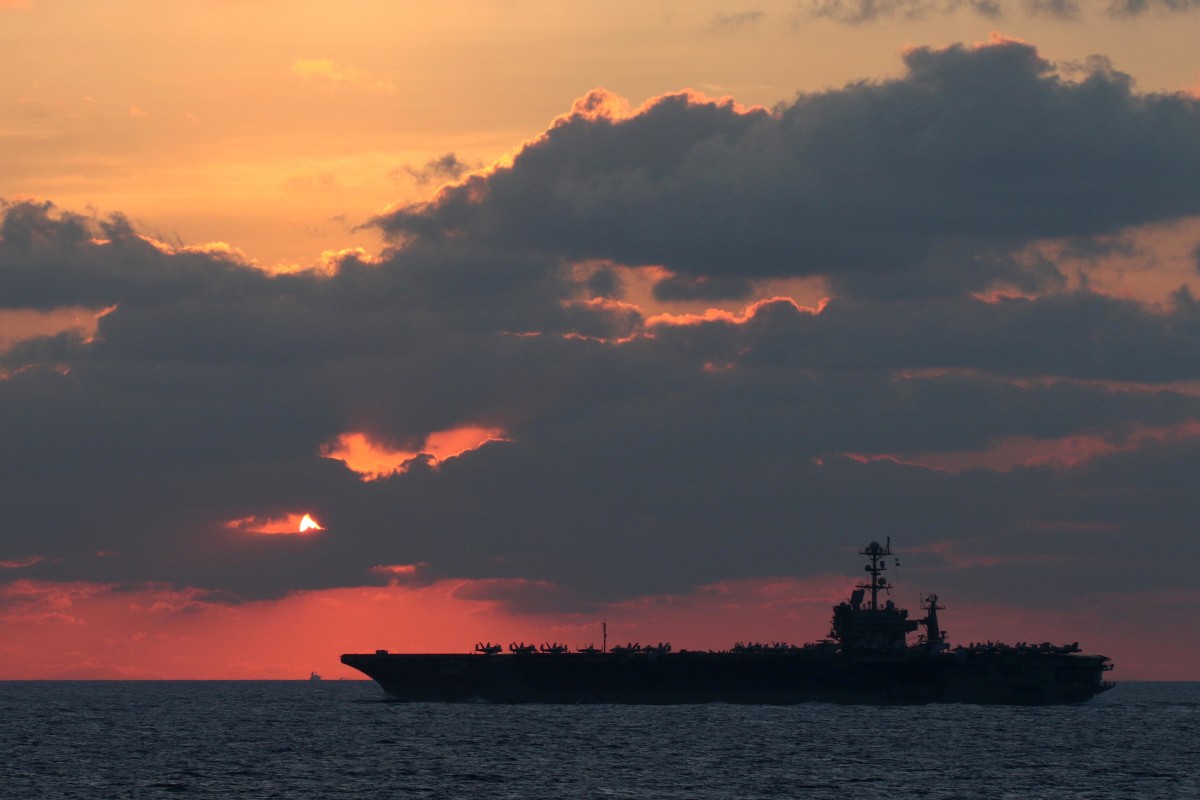
The US Navy aircraft carrier USS John C. Stennis transits the South China Sea in 2019. Photo: Reuters
Since the onset of the Covid-19 pandemic in March, tensions in the South China Sea have surged. This is mainly the result of China’s continued assertiveness coupled with the sharp deterioration in US-China relations over a variety of issues including the South China Sea itself.
TOKYO — Antagonism between the U.S. and China has moved beyond trade and technology and is now intensifying in the financial sector as well.
Global attention has been drawn to the Hong Kong Autonomy Act, signed into law by U.S. President Donald Trump. It imposes sanctions, including seizure of assets and exclusion from dollar-denominated account settlements, on officials and entities in the city and mainland China that are deemed to aid in the violation of the former British colony’s guaranteed autonomy.
By Kai He07 Sep 2020 06:09AM(Updated: 07 Sep 2020 06:10AM)
There have been a series of rhetorical attacks directed at the CCP from high-ranking US officials since late June.Advertisement
National Security Adviser Robert O’Brien, FBI Director Christopher Wray, Attorney General William Barr and Secretary of State Mike Pompeo have been dubbed the “four horsemen of the apocalypse” tasked by Trump to overthrow the CCP.
The Trump administration has taken concrete actions to decouple bilateral relations by closing the Chinese Consulate General in Houston, sending Health Secretary Alex Azar to Taiwan and attempting to ban Chinese social-media giants TikTok and WeChat in the United States.
China’s reactions have been surprisingly conciliatory given its reputation for tit-for-tat actions against the United States.
In an interview with Xinhua in early August, China’s Foreign Minister Wang Yi firmly rejected the idea of a new Cold War and proposed easing current tensions through dialogue “at any level, in any area and at any time”.
Two days later Yang Jiechi, Director of the Office of Foreign Affairs of the CCP, published an article titled Respect History, Look to the Future and Firmly Safeguard and Stabilise China–US Relations.
Yang praised the legacy of US engagement with China — pioneered by the Richard Nixon administration — and called for more “mutually beneficial cooperation in all fields”.
China’s goodwill diplomacy seems too little too late because no one in the Trump administration is taking it seriously. Beijing’s call for dialogue is falling on deaf ears in Washington in part because any such communication is seen as diplomatic kowtowing by the United States.
China’s State Councillor Wang Yi in Rome, Italy, Aug 25, 2020. (Photo: REUTERS/Yara Nardi)
But this interpretation of Chinese diplomacy seems overly simplistic. Chinese culture and history offer a better way to understand the three messages China intends to convey to salvage relations with the United States.
CHINA DOES NOT WANT CONFLICT
First, China does not want a Cold War with the United States. Wang Yi remarked that China was not the former Soviet Union and it had no intention of becoming another United States.
This might be wishful thinking from the CCP, but it takes two to tango, and China has said it wants to avoid the Cold War trap that ensnared the Soviet Union and the United States.
Wang and Yang highlighted the good old days of US–China relations after Richard Nixon’s 1972 visit to remind their US counterparts that the two countries co-existed by transcending their ideological differences. This is a taichi response to the punches thrown by the “four horsemen”.
The second message is that the United States is unable to wage this Cold War alone. China wants to make it clear to US allies — including five-eyes countries Australia, New Zealand, the United Kingdom and Canada — that it has no intention to fight a new Cold War with the United States.
By striking a conciliatory tone, China aims to reduce the likelihood of the United States building a coalition against it. China’s anti-Cold War effort can also be seen in Wang Yi’s recent visits to five European countries.
Other interested countries — especially US allies — will need to choose whether to turn the Cold War into a reality or treat it as an illusion of the four horsemen.
While the Trump administration is trying to checkmate China through short-term confrontation, Chinese leaders are playing a game of Go insofar as they are seeking to position themselves for future advantages. This avoids direct confrontation in a game of high stakes, even if it forsakes short-term gains.
THE DANGERS OF CONFLICT
The third and final message is a warning to the international community about the danger of a potential conflict between the United States and China.
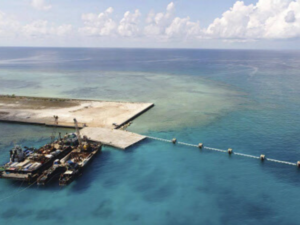
Beijing claims historical rights to vast swathes of the South China Sea, including islands, reefs and atolls in the Spratlys. (Photo: AFP/TED ALJIBE)
There are worries about the guns of August in the Asia Pacific — any strategic miscalculation or military accident might trigger a hot and potentially nuclear conflict in the South China Sea, East China Sea or over the Taiwan Strait.
The recent visit by US Health Secretary Azar to Taiwan may have led to Chinese military exercises around the Taiwan Strait as well as the carrier killer missile test in the South China Sea.
An early and sincere call for international cooperation during the pandemic is potentially China’s way of taking the moral high ground in preparation for something more heated with the United States.
Will China’s messages cut through to the United States? Will China behave according to the gentle signals it is trying to convey?
The coming months before the US election will be critical for US–China relations. It is time for the United States and China to work together to avoid a real, even if accidental, conflict.
Kai He is Professor of International Relations at the Griffith Asia Institute and the Centre for Governance and Public Policy, Griffith University. This commentary first appeared in The Conversation. Source: CNA/sl
Last Updated : Sep 07, 2020 11:06 AM IST | Source: Moneycontrol.com
Whoever wins in the US on November 3, there will be a new normal in US-China ties. There will be new opportunity for India if it builds on its Comprehensive Global Strategic Partnership with the US, to consolidate a ‘trusted partner’ status, or ‘supply chain resilience’
On August 7, under the United States International Emergency Powers Act, US President Donald Trump issued an executive order banning, after 45 days, any transaction by a US entity with TikTok, and its parent company ByteDance. The order cited need to secure the information and communications technology and services supply chain, and asserted that “spread in the United States of mobile applications developed and owned by companies in China continues to threaten the national security, foreign policy, and economy of the United States”.
Concerns listed included TikTok automatically capturing vast swathes of information from users about network activity, location data, browsing and search histories. This, in turn, enabled the Chinese Communist Party (CCP) to get Americans’ personal and proprietary information, with the potential for future blackmail and corporate espionage. Among its justifications for arriving at this assessment, the order specifically referred to recent Indian government action banning TikTok. In a subsequent order of August 14, ByteDance was given 90 days to divest itself of all its properties in the US.
Several years earlier, Chinese hackers had been suspected to have stolen personal data of nearly 15 million US federal officials, and insurance-related data of more than 100 million people in US.
The US action against TikTok followed earlier steps against Chinese technology companies Huawei and ZTE, controlling any further access by them to US technology, equipment, software etc. It was followed by restrictions on US entities using Weibo and WeChat. The US has also been running an aggressive international campaign to prevent use of Huawei in 5G rollouts, with some success so far in Europe and Asia.
The Chinese had so far been restrained in their responses, recognising the continued US technology inter-linkages for many of their leading companies, and not wanting to provoke the unpredictable Trump as he headed into a difficult re-election campaign. In the TikTok case, however, they have barred any sale of AI-related technology, and the algorithm used by the App — a clear signal of some countervailing technology power.
In an article in the May issue of The Atlantic, HR McMaster, a former Trump national security advisor, cited Chinese Premier Li Keqiang telling Trump in November 2017 that “China, having already developed its industrial and technology base, no longer needed the US….its role in the future would merely be to provide China with raw materials, agricultural products, and energy to fuel its production of the world’s cutting- edge industrial and consumer products”.
It can now be legitimately asked if the US-China economic and technology rivalry has finally crossed the Rubicon, and if some measure of decoupling is inevitable. The US has been struggling with its China policy for more than a decade now. For a long time, mainstream opinion supported ‘integrating China into the international mainstream’, which was assessed as leading to inevitable economic and political liberalisation. This did not happen.
China gamed the WTO and international trading systems, initially keeping the Yuan devalued, and then subsidising heavily its State-owned enterprises, and building excess capacity in many areas, including steel. It sponsored national champions in technology. Under President Xi Jinping, China abandoned the Deng Xiaoping era policy of ‘hide your strength and bide your time’, and threw the gauntlet through its China Dream, and Made in China 2025, seeking to make China a leading global high-tech manufacturer.
Trump has, no doubt, seized on a sharp anti-China rhetoric as electoral strategy, hoping to retain the votes of his 2016 base, which had seen its jobs vanish under globalisation, and to deflect the anger of those impacted by COVID-19. At the same time, his administration has taken the strongest measures, since the 1971 US opening to China, on tariffs, trade, technology denial, sanctions against Chinese officials and others for their actions in Xinjiang, Hong Kong, Tibet, and the South China Sea.
Aside from Trump, many senior US officials, including the Vice-President, have made sustained statements calling out China on cyber hacking, disinformation, intellectual property theft, forced technology transfers, human rights violations, and transgressions of international law. Democratic Presidential candidate Joe Biden issued a statement on September 3, asserting that as US President he would “put values back at center of American foreign policy”, meet with Dalai Lama, and appoint a Special Coordinator for Tibetan issues.
Whoever wins in US on November 3, there will be a new normal in US-China ties. Tech rivalry and reordering of supply chains will continue. There will be new opportunity for India if it builds on its Comprehensive Global Strategic Partnership with the US, to consolidate a ‘trusted partner’ status, or ‘supply chain resilience’ in areas of strength such as digital and pharma, or in new tech areas such as AI, cyber, quantum and big data.
Arun K Singh is former Indian Ambassador to the United States. Views are personal.
The missiles launched into the South China Sea on Wednesday included the DF-21D and DF-26B, the South China Morning Post reported, citing a person close to the People’s Liberation Army.
(c) 2020 Bloomberg Bloomberg News Updated: August 28, 2020 11:50 am ISTndtv
China rolled out new PLA Rocket Force as part of a massive military parade in October4
China’s latest volley of missile launches into the world’s most hotly contested body of water served as a warning to two key U.S. targets: aircraft carriers and regional bases.
Defence secretary says the region has become ‘the epicentre of great power competition’ with BeijingHe warns the PLA’s bid to become a world-class military will ‘undoubtedly embolden’ its actions in the East China and South China seas
Bloomberg Last Updated: Aug 27, 2020, 10:10 AM EconomicTimes
China launched four medium-range ballistic missiles into the South China Sea on Wednesday amid broader military exercises by the PLA, according to a U.S. defense official who asked not to be identified. The missiles landed in the sea in an area between Hainan Island and the Paracel Islands, the official said. The move came a day after Beijing protested a flyover by a U.S. spy plane.
By David Wainer and Tony Capaccio U.S.-China tensions over the South China Sea escalated on Wednesday with Beijing firing four missiles into the disputed waterway and the Trump administration strengthening action against companies that helped set up outposts in the region.
TĐH: List of Russian and Chinese entities blacklisted by the US (not confirmed yet)
Russia
Power Machines China
1/ China Communications Construction Company Dredging Group Co., Ltd.
2/ China Communications Construction Company Tianjin Waterway Bureau
3/ China Communications Construction Company Shanghai Waterway Bureau
4/ China Communications Construction Company Guangzhou Waterway Bureau
5/ China Communications Construction Company Second Navigation Engineering Bureau
6/ Beijing Huanjia Telecommunication Co., Ltd.
7/ Changzhou Guoguang Data Communications Co., Ltd.
8/ China Electronics Technology Group Corporation, 7th Research Institute (CETC-7)
9/ Guangzhou Hongyu Technology Co., Ltd., (a subordinate institute of CETC-7)
10/ Guangzhou Tongguang Communication Technology Co., Ltd. (a subordinate institute of CETC
11/ China Electronics Technology Group Corporation, 30th Research Institute (CETC-30)
12/ China Shipbuilding Group, 722nd Research Institute
13/ Chongxin Bada Technology Development Co., Ltd.
14/ Guangzhou Guangyou Communications Equipment Co., Ltd.
15/ Guangzhou Haige Communication Group Co., Ltd.
16/ Guilin Changhai Development Co., Ltd.
17/ Hubei Guangxing Communications Technology Co., Ltd.
18/ Shaanxi Changling Electronic Technology Co., Ltd.
19/ Shanghai Cable Offshore Engineering Co., Ltd.
20/ Telixin Electronics Technology Co., Ltd.
21/ Tianjin Broadcasting Equipment Co., Ltd.
22/ Tianjin 764 Avionics Technology Co., Ltd.
23/ Tianjin 764 Communication and Navigation Technology Co., Ltd.
24/ Wuhan Mailite Communication Co., Ltd.
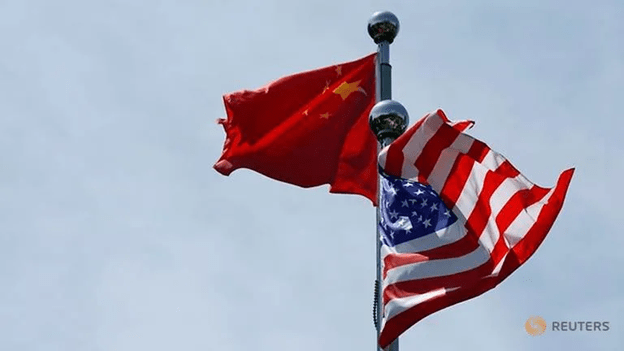
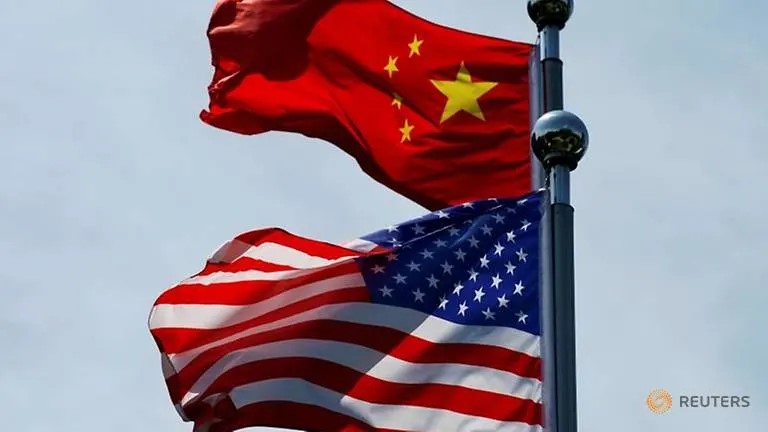
File photo of Chinese and US flags fluttering near The Bund in Shanghai, China, Jul 30, 2019. (Photo: REUTERS/Aly Song)
26 Aug 2020 09:15PM(Updated: 27 Aug 2020 08:59AM) CNA
WASHINGTON: The United States on Wednesday (Aug 26) blacklisted 24 Chinese companies and targeted individuals it said were part of construction and military actions in the South China Sea, its first such sanctions move against Beijing over the disputed strategic waterway.
The writer is a senior fellow at the Center for International Security and Strategy at Tsinghua University, and a China Forum expert
The relationship between China and the US is in freefall. That is dangerous. US defence secretary Mark Esper has said he wants to visit China this year, which shows the Pentagon is worried. That Wei Fenghe, China’s defence minister, spoke at length with Mr Esper in August shows that Beijing is worried too. Both men have agreed to keep communications open and to work to reduce risks as they arise.
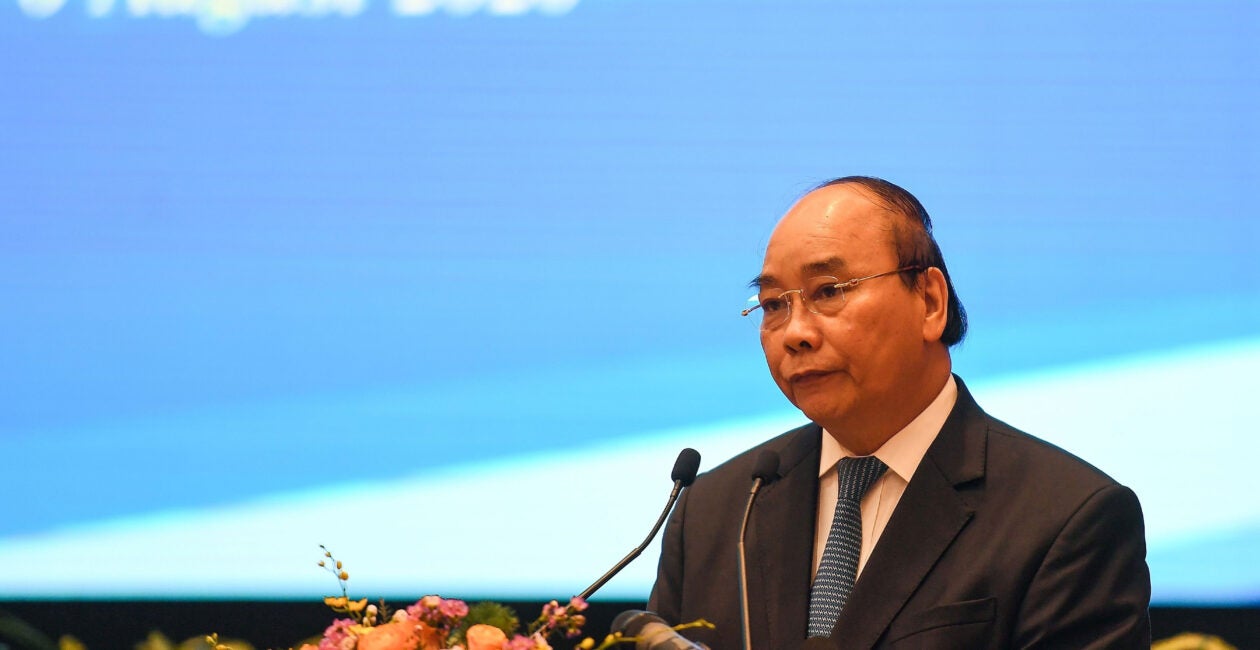
Vietnam was the United States’ 13th-largest trading partner last year, with bilateral trade increasing by more than 30%. Pictured: Vietnamese Prime Minister Nguyen Xuan Phuc addresses an Aug. 6 videoconference on the European Union-Vietnam Free Trade Agreement in Hanoi. (Photo: Nhac Nguyen/Agence France-Presse/Getty Images)
Anthony B. Kim researches international economic issues at The Heritage Foundation, with a strong focus on economic freedom. Kim is the research manager of the Index of Economic Freedom, the flagship product of the Heritage Foundation in partnership with The Wall Street Journal. Read his research.
This year marks the 25th anniversary of the United States and Vietnam reestablishing diplomatic relations.
Over the past 25 years—particularly since Vietnam’s accession to the World Trade Organization in December 2016, when the U.S. granted its former foe permanent normal trade relations status—U.S.-Vietnam economic and trade relations have expanded rapidly.
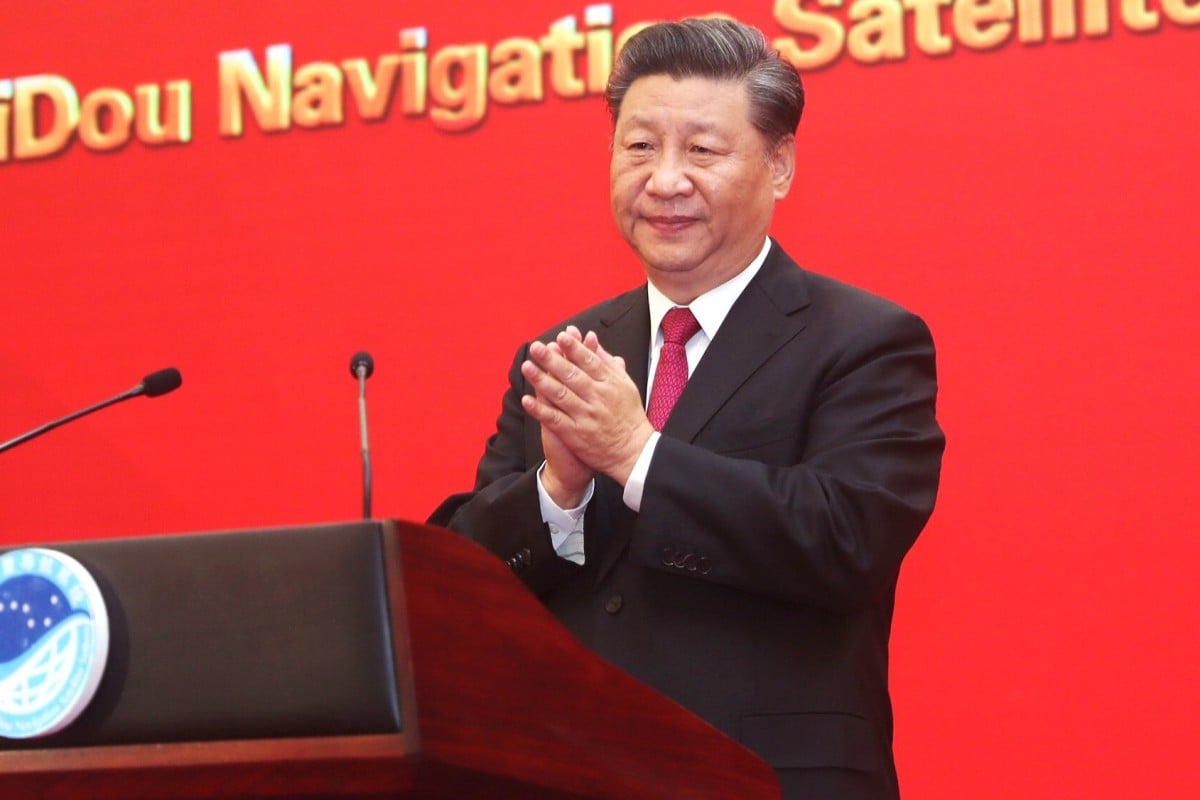
A bill introduced in the US Congress would ban US government documents from referring to Xi Jinping, shown at a ceremony last month in Beijing for the BeiDou navigational satellite system, as China’s president. Photo: Xinhua
Lawmakers in Washington have introduced a bill to change the way the federal government refers to the leader of China, prohibiting the use of the term “president”.