Vietnam powerless to stop illegal gold mining

An accident last Tuesday that killed four gold miners in the south-central province of Quang Nam has once again given rise to public disquiet over illegal gold mining in central Vietnam.

Despite nearly 40 people having been killed in nine separate gold mine accidents in Quang Nam alone since 2009, thousands continue to put their lives at risk while digging up ranges of mountains in the unlawful pursuit of the precious metal.

Despite nearly 40 people having been killed in nine separate gold mineaccidents in Quang Nam alone since 2009, thousands continue to put their lives at risk while digging up ranges of mountains in the unlawful pursuit of the precious metal.

Tiếp tục đọc “Vietnam powerless to stop illegal gold mining”

Vietnam’s latest minimum wage rise business as usual

17 October 2015
Author: Tu Phuong Nguyen, ANUeastasiaforum – In September 2015, the National Wage Council (NWC) of Vietnam proposed an increase of 12.4 per cent to the minimum wage in 2016. The key parties — representatives of business in the Vietnam Chamber of Commerce and Industry (VCCI) and the state-sanctioned national union of workers, the Vietnam General Confederation of Labour (VGCL) — finally reached a consensus after two stalled meetings. The process, after all, is within the state’s annual schedule and hardly goes with any substantive changes to labour market institutions.

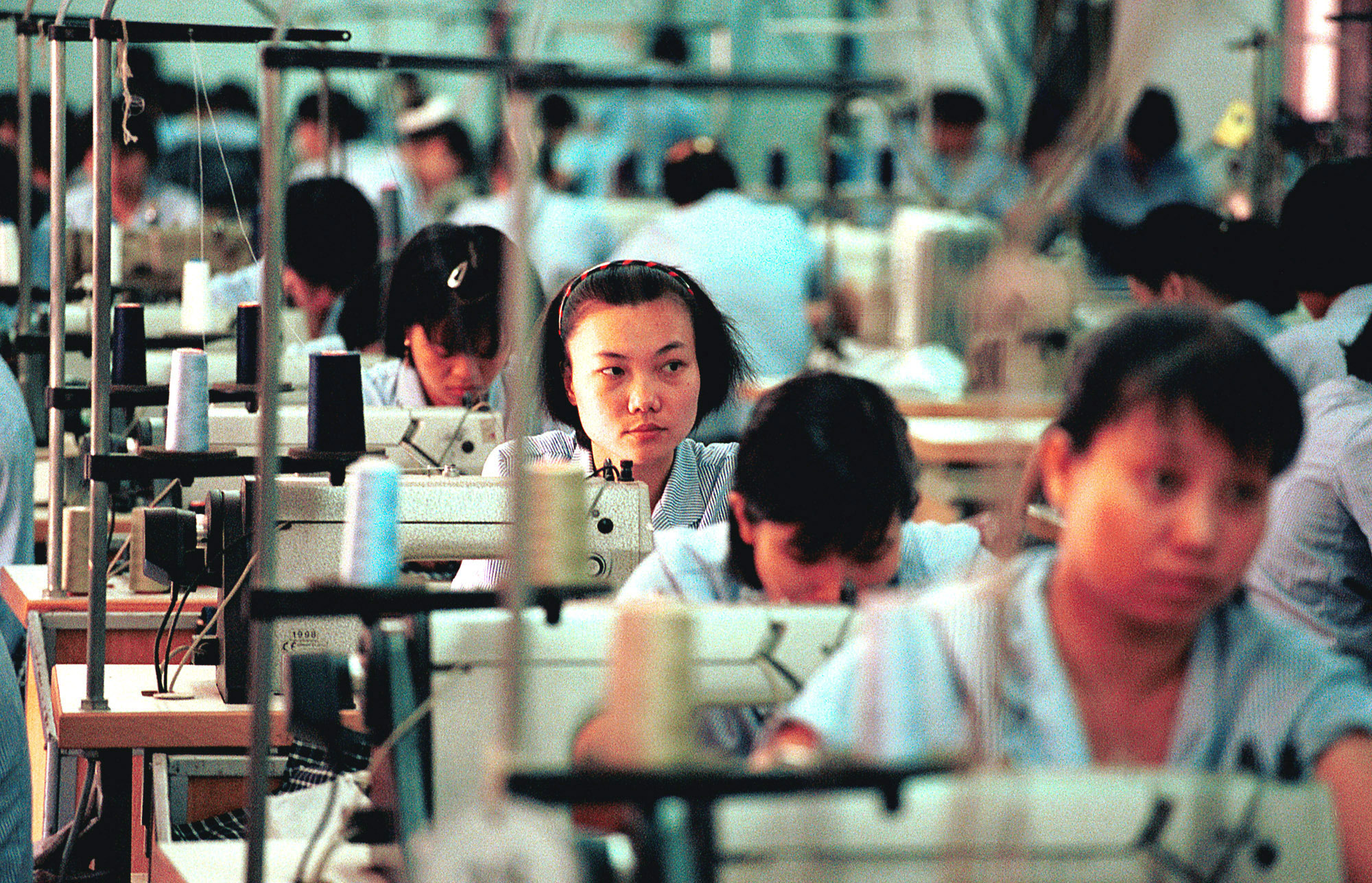
Vietnamese workers sew trousers and shirts destined for the U.S. market at the state-owned Thang Long garment factory in Hanoi (Photo: AAP).State-led wage bargaining is conducted annually in Vietnam and thus has become a key part of maintaining harmonious industrial relations in the country. There are four different minimum wages, which are categorised according to a region’s consumer price index. The first region covers urban and industrialised areas, while the others apply to different rural areas. The NWC has proposed raising the minimum monthly wage for this region from 3.1 million dong (approximately US$138) in 2015 to 3.5 million dong (approximately US$155.7) in 2016. It is likely that the proposal will make its way into a government decree at the end of 2015. Tiếp tục đọc “Vietnam’s latest minimum wage rise business as usual”

Thức dậy giữa thảo nguyên

                                                         Ký sự của Hoàng Thiên Nga

        Một sớm tháng tư, tôi tỉnh giấc trong không gian yên tĩnh, thanh sạch, rực rỡ muôn sắc hoa tại khu nhà chuyên gia tọa lạc giữa những trang trại bò sữa mang thương hiệu TH True Milk, dự án đầy kiêu hãnh của bà Thái Hương, người vừa được tạp chí Forbes vinh danh là “nữ doanh nhân quyền lực nhất Châu Á”.

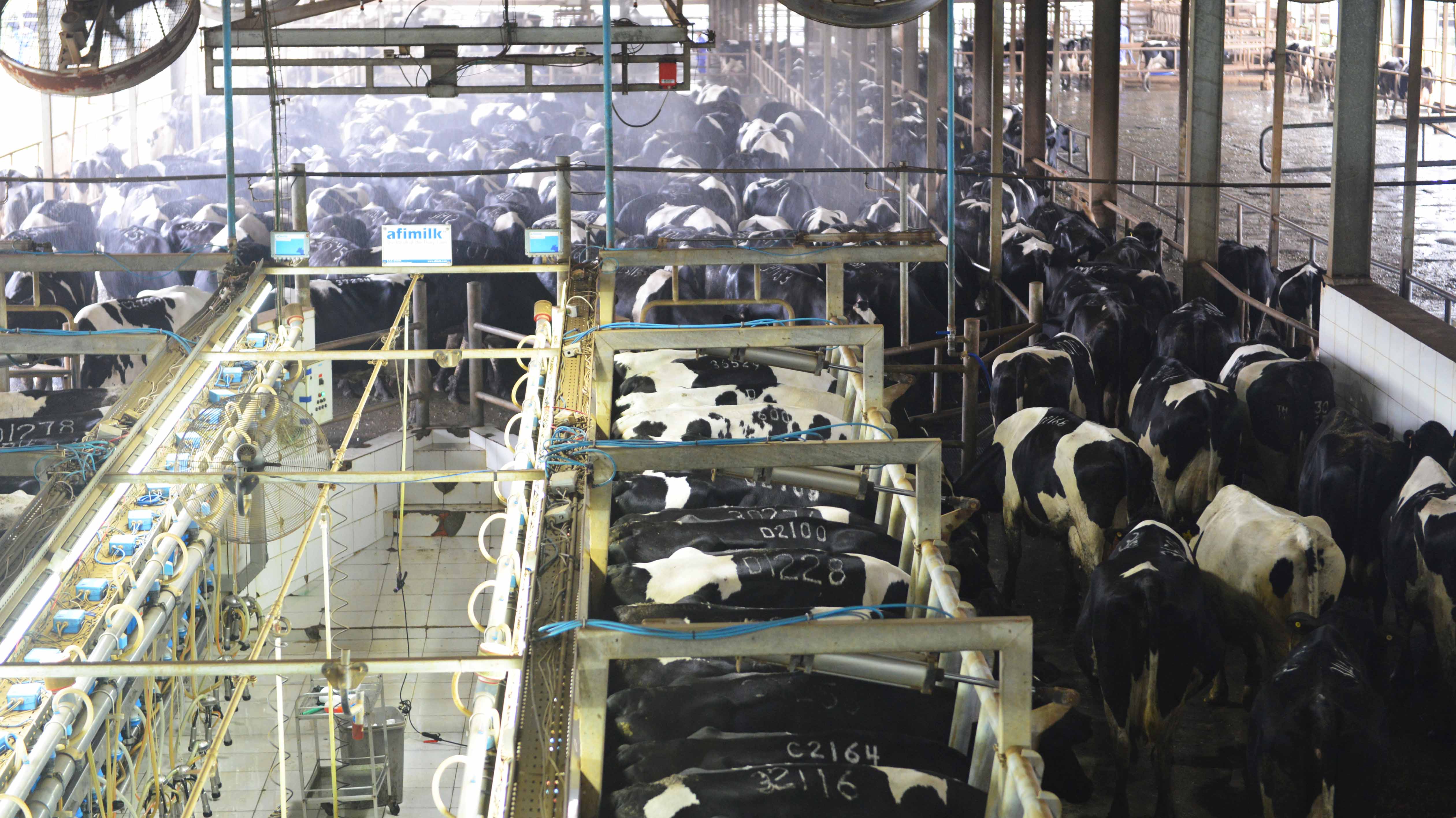
Bò được tắm và nghe nhạc trước khi vào ô vắt sữa
Tiếp tục đọc “Thức dậy giữa thảo nguyên”

E-government as a vehicle to reduce white-collar crimes

By and . Posted March 31, 2016

https://i0.wp.com/www.asiapathways-adbi.org/wp-content/uploads/2016/03/E-government-as-a-vehicle-to-reduce-white-collar-crimes.jpg

asiapathway – The increasing use of the internet in recent years has caught the fancy of consumers and producers, in commodities, services, and leisure activities. The wide prevalence of wireless internet access and the portability of devices such as smartphones and tablets have increased access and diffusion of related services and products as possibly no other technology in history.

Slowly but surely, governments are getting into the act by using the cyberspace to provide services. This range of government activities related to the internet is loosely termed e-government. For instance, governments use the internet to provide information and access to various government services such as health advice, tax filings, passport applications, applications for government employment, and business registrations. E-government serves to increase accountability through transparency, enhance the efficient use of public resources, and improve the delivery of public services. Given the wide geographical area over which government services offered via the internet can be accessed, e-government can also be viewed as a form of virtual government decentralization. Tiếp tục đọc “E-government as a vehicle to reduce white-collar crimes”

Human Rights Guide to the SDGs?

What is the Human Rights Guide to the SDGs?

sdg.humanrights

The Guide illustrates the human rights anchorage of the 17 goals and provides concrete links between the 169 targets and the range of human rights instruments and labour standards.

Thereby, the Guide reaffirms that human rights instruments and the 2030 Agenda are tied together in a mutually reinforcing way: human rights offer a legally-binding framework as well as guidance for the implementation of the 2030 Agenda. In turn, the SDGs can contribute substantially to the realization of human rights.

How to use the Guide?

The Guide is the essential tool to:

  • Understand the interlinkages between human rights and the SDGs. Concretely, 156 of the 169 targets (more than 92%) are linked with human rights instruments and labour standards.
  • Develop a human rights-based approach to sustainable development programming, implementation as well as follow-up and review (monitoring, evaluation and reporting)

Tiếp tục đọc “Human Rights Guide to the SDGs?”

Climate Change Vulnerability Mapping for Greater Mekong Sub-Region

01.02.2016

UNESCOBKK –  Thailand’s adaptive capacity to climate change is high among Mekong countries, while the western coastline of Myanmar and the Cambodian Mekong lowland region are the areas of the sub-region most vulnerable to the phenomenon’s effects.

These were among the key findings of the report, “Climate Change Vulnerability Mapping for the Mekong River Basin”, based on a study carried out by UNESCO Bangkok and the Water Resources and Environment Institute (WREI) of Khon Kaen University’s Faculty of Engineering in Thailand.

The study sought to identify the areas most vulnerable to climate change and climate-induced water problems in five Mekong countries: Cambodia, Lao PDR, Myanmar, Thailand, and Vietnam. The study used a framework developed by the Intergovernmental Panel on Climate Change (IPCC), which conceptualizes vulnerability to climate change by looking at the exposure to and sensitivity of a system to a climate hazard and the ability of the system to cope with, adapt to or recover from the effects of hazardous conditions.

The study finds that Mekong countries are adversely affected by major natural hazards, such as tropical cyclones, floods and droughts. The study also mapped adaptive capacity and areas that are vulnerable to the impacts of climate change, which can be a useful tool for determining degrees of adaptation and mitigation responses at the provincial level. The findings of this study will be valuable for the five Mekong countries in ensuring sustainable adaptation to climate change.

Download PDF

—–

Climate Change Vulnerability Mapping for Greater Mekong Sub-Region
Bangkok: UNESCO Bangkok; Khon Kaen: Water Resources & Environment Institute, Khon Kaenn University, 2015, 49p.

TH/SC/15-01

There are 168 million victims of child labour – and we’re failing them

Written by
Nina Smith, Executive Director, GoodWeave
Published
Thursday 31 March 2016

weforum – On a recent trip to India, I met a 12-year-old girl, Kushboo, in the village of Bhairupura, not far from Jaipur. Bhairupura is a village of the Raigar people, a scheduled caste who traditionally work in shoe-making. There’s nothing beyond the village but forest. Few outsiders visit Bhairupura, except for the agents working for the carpet manufacturers who operate modern factories in Jaipur.

Those factories are where international buyers are brought to tour. But many of their rugs are not produced at these locations. Rather, they are being made in villages like Bhairupura, by children like Kushboo – a cheap, captive and unseen workforce.

Millions of modern-day slaves

Most of us don’t imagine that the goods we buy with the label Made in India, or any number of other countries, are tainted by child or forced labour. But the International Labour Organization estimates that 168 million child labourers and 21 million forced labourers are toiling away in the global economy. We also know that many people work in informal sectors – sub-contracted production outside of factory settings – where exploitation is commonplace. Tiếp tục đọc “There are 168 million victims of child labour – and we’re failing them”

CSIS – AMTI Brief – April 14, 2016

East China Sea Tensions: Approaching a Slow Boil


Mounting tensions over the disputed Senkaku Islands have been a constant in Sino-Japanese relations since Tokyo purchased three of the five islands in 2012. For the last four years, Chinese coast guard vessels have regularly patrolled in the vicinity of the East China Sea islands and have often entered within the 12-nautical-mile territorial sea around the Senkakus, engaging in a cat-and-mouse game with their Japanese counterparts tasked with maintaining Tokyo’s control over the features. Meanwhile, People’s Liberation Army Air Force (PLAAF) patrols around the Senkakus and Japan’s southern islands have led to regular scrambles by the Japanese Air Self Defense Force. Tiếp tục đọc “CSIS – AMTI Brief – April 14, 2016”

Sustainable Development Goals Can Transform Small-Scale Forestry

15 March 2016

Alison Hoare

Senior Research Fellow, Energy, Environment and Resources – Eleanor GloverWebsite and Digital Coordinator, Energy, Environment and Resources

Governments can use the SDG framework to combat illegality and increase sustainability in this important sector.
Girls look on as a logging truck disembarks from a ferry in the Amazonian state of Para, Brazil. Photo via Getty Images.Girls look on as a logging truck disembarks from a ferry in the Amazonian state of Para, Brazil. Photo via Getty Images.

chathamhouse Small- and medium-sized forestry enterprises (SMFEs) make up a large proportion of the forest sector, accounting for over half the timber production and supporting hundreds of thousands of livelihoods in developing countries − over 50 per cent of the forest sector workforce. But they often operate outside the realms of the law – making them difficult to monitor and control, and providing a window for corruption and poor management practices. Consequently, SMFEs are often seen as a problem to eliminate rather than an opportunity for sustainable development. However, the Sustainable Development Goals (SDGs) offer an opportunity to change perceptions while also bringing more attention and resources to the small-scale sector. Tiếp tục đọc “Sustainable Development Goals Can Transform Small-Scale Forestry”

Gender equality, the MDGs and the SDGs: Achievements, lessons and concerns

Naila Kabeer

Professor of Gender and Development at the Gender Institute – London School of Economics and Political Science (LSE)

theIGC – Following the formal announcement of the Sustainable Development Goals, Naila Kabeer reflects on lessons from the Millennium Development Goals through a feminist lens, which she argues were weakened by their very narrow interpretation of women’s empowerment. She writes that much more is needed to dismantle more resilient structures of inequality, and while the SDGs offer some grounds for cautious optimism, there is a continued lack of emphasis on rights.

This post forms part of a cross-blog series on the 2030 Agenda for Sustainable Development run by the IGC, Africa at LSE, and South Asia at LSE blogs. View more posts in this series. Tiếp tục đọc “Gender equality, the MDGs and the SDGs: Achievements, lessons and concerns”

Trust Empirical View – Levels of Trust across Countries

ourworldindata – Levels of Trust by Country: ‘Generally speaking, would you say that most people can be trusted or that you need to be very careful in dealing with people?’ Possible Answers ‘Most people can be trusted’ or ‘Can’t be too careful’ – Max Roser1

Trust 1

Correlates, Determinants & Consequences

Percentage of people who trust people in general vs GNP per capita – Beinhocker (2006)2

The Relationship Between Trust and Economic Performance – Beinhocker (2006)

Percentage of people expressing high level of trust in others (2008) vs. income inequality by Gini index (mid-2000s) – Max Roser3

Những đứa trẻ cho rằng (được dạy rằng) người khác có xu hướng thù ghét mình – bản thân trẻ sẽ có xu hướng hung hăng

English: Kids expecting aggression from others become aggressive themselves

Trẻ em được dạy phải cảnh giác với sự thù ghét từ người khác có xu hướng hành xử hung hăng

Việc cảnh giác quá mức tới lo lắng đối với sự thù ghét từ người khác sẽ kích hoạt thái độ hung hăng ở trẻ em, một nghiên cứu mới đây cho biết. Nghiên cứu bao gồm 1299 trẻ em và phụ huynh tham gia, được thực hiện theo chiều dọc -longitudinal study – (1) kéo dài trong 4 năm, nghiên cứu lớn nhất từ trước đến nay về đề tài này. Phát hiện của nghiên cứu là một khuynh hướng đúng với 12 nhóm văn hoá khác biệt từ 9 nước khác nhau trên toàn thế giới.

Young people fighting.
Credit: © Monkey Business / Fotolia

Sciencedaily –

Khuynh hướng này phổ biến hơn ở một số quốc gia, so với các quốc gia khác khác, điều này giúp lý giải tại sao một số nền văn hoá có nhiều vấn đề trẻ em cư xử hung hăng hơn các nền văn hoá khác, theo như nghiên cứu cho biết.

Các phát hiện, được xuất bản trực tuyến vào ngày thứ hai trong Bản lưu của Học viện Khoa học Quốc gia (Proceedings of the National Academy of Sciences), chứa nhiều hàm ý. Hàm ý chỉ ra không chỉ đối với việc giải quyết các vấn đề về thái độ thù ghét ở các cá nhân, mà còn đối với việc hiểu rõ hơn về những mâu thuẫn có từ lâu và trên diện rộng giữa các nhóm như xung đột A rập – I-sa-rel và xung đột sắc tộc ở Mỹ.

“Nghiên cứu của chúng tôi nhận ra được quá trình tâm lý cơ bản để dẫn một đứa trẻ đến bạo lực,” Kenneth A. Dodge, giám đốc của Trung tâm Chính sách Gia đình và Trẻ em tại Đại học Duke đồng thời là tác giả chính của nghiên cứu nói.

“Khi một đứa trẻ cho rằng mình đang bị đe doạ bởi ai đó và cho rằng người khác đang hành động với ý định gây hấn, thì đứa trẻ đó dường như sẽ phản ứng lại bằng sự hung hăng. Nghiên cứu này chỉ ra rằng kiểu hành xử này là phổ biến đối với tất cả mọi người trong 12 nhóm văn hoá được nghiên cứu trên toàn thế giới.”
“Nghiên cứu của chúng tôi cũng chỉ ra rằng các nền văn hoá khác nhau trong cách tác động khiến trẻ em trở nên đề phòng theo cách này, và những khác biệt khác giải thích tại sao một số nền văn hoá có những đứa trẻ hành xử hung hăng hơn các nền văn hoá khác” Dodge nói. “Nó hướng đến nhu cầu thay đổi cách chúng ta tác động khiến những đứa trẻ của chúng ta trở nên ôn hoà hơn, khoan dung hơn và bớt phòng thủ hơn.” Tiếp tục đọc “Những đứa trẻ cho rằng (được dạy rằng) người khác có xu hướng thù ghét mình – bản thân trẻ sẽ có xu hướng hung hăng”

Báo cáo VN 2035: Ba trụ cột phải cải cách

Tư Hoàng – Thứ Ba,  23/2/2016, 15:50 (GMT+7)

(TBKTSG Online) – Đến năm 2035, Việt Nam đạt mức thu nhập bình quân đầu người từ 15.000-18.000 đô la Mỹ. Để đạt được mục tiêu này con đường duy nhất là phải tăng năng suất.

Chủ tịch Ngân hàng Thế giới Jim Yong Kim (giữa) trong buổi họp báo công bố báo cáo Việt Nam 2035. Ảnh TG

Báo cáo Việt Nam 2035 gồm 7 chương nghiên cứu sâu về 3 trụ cột phát triển với 6 chuyển đổi lớn, đề xuất nhiều khuyến nghị quan trọng để đưa Việt Nam trở thành nước thu nhập trung bình cao vào năm 2035. Tiếp tục đọc “Báo cáo VN 2035: Ba trụ cột phải cải cách”

UN warns of nuclear material falling into terrorist hands

Associated Press

VIENNA (AP) — The head of the U.N. nuclear agency warned Monday of the dangers of nuclear material falling into the hands of terrorists and urged world nations to apply an agreement meant to minimize such dangers.

Two-thirds of the 89 countries agreeing with the Amendment to the Convention on the Physical Protection of Nuclear Material must ratify it for it to enter into force. Yukiya Amano of the International Atomic Energy Agency says ratification by 11 more nations is needed.

Its application would “reduce the likelihood of terrorists being able to detonate a …’dirty bomb,'” which can spread radioactivity over a wide area and also reduce the risk of an attack on a nuclear power plant, said Amano.

 He noted that nearly 2,800 incidents of radioactive material going missing have been reported to his agency since 1995.
 Some are of serious concern. Moldovan police working with the FBI last year stopped four attempts by smugglers to sell nuclear material to extremists in the Middle East over the past five years. In one instance a year ago, undercover agents were offered a large amount of radioactive cesium.

In the most recent reported case, the agency said last week that it had been informed by Iraq of the theft of an industrial radiography device in the city of al-Zubair in November.

Experts say the amount of the substance is too small to pose a terrorist threat. But if mismanaged, it could be fatal on exposure over several days, or in some cases as little as a few hours.

The Next Great GMO Debate

Biomedicine

Deep inside its labs, Monsanto is learning how to modify crops by spraying them with RNA rather than tinkering with their genes.

by Antonio Regalado August 11, 2015

technologyreview – The Colorado potato beetle is a voracious eater. The insect can chew through 10 square centimeters of leaf a day, and left unchecked it will strip a plant bare. But the beetles I was looking at were doomed. The plant they were feeding on—bright green and carefully netted in Monsanto’s labs outside St. Louis—had been doused with a spray of RNA.
The experiment took advantage of a mechanism called RNA interference. It’s a way to temporarily turn off the activity of any gene. In this case, the gene being shut down was one vital to the insect’s survival. “I am pretty sure 99 percent of them will be dead soon,” said Jodi Beattie, a Monsanto scientist who showed me her experiment.

The discovery of RNA interference earned two academics a Nobel Prize in 2006 and set off a scramble to create drugs that block disease-causing genes. Using this same technology, Monsanto now thinks it has hit on an alternative to conventional genetically modified organisms, or GMOs. It can already kill bugs by getting them to eat leaves coated with specially designed RNA. And if the company succeeds in developing sprays that penetrate plant cells, as it’s attempting to, it could block certain plant genes, too. Imagine a spray that causes tomatoes to taste better or helps plants survive a drought. Tiếp tục đọc “The Next Great GMO Debate”