COP28: The climate crisis is also a health crisis

UN.org

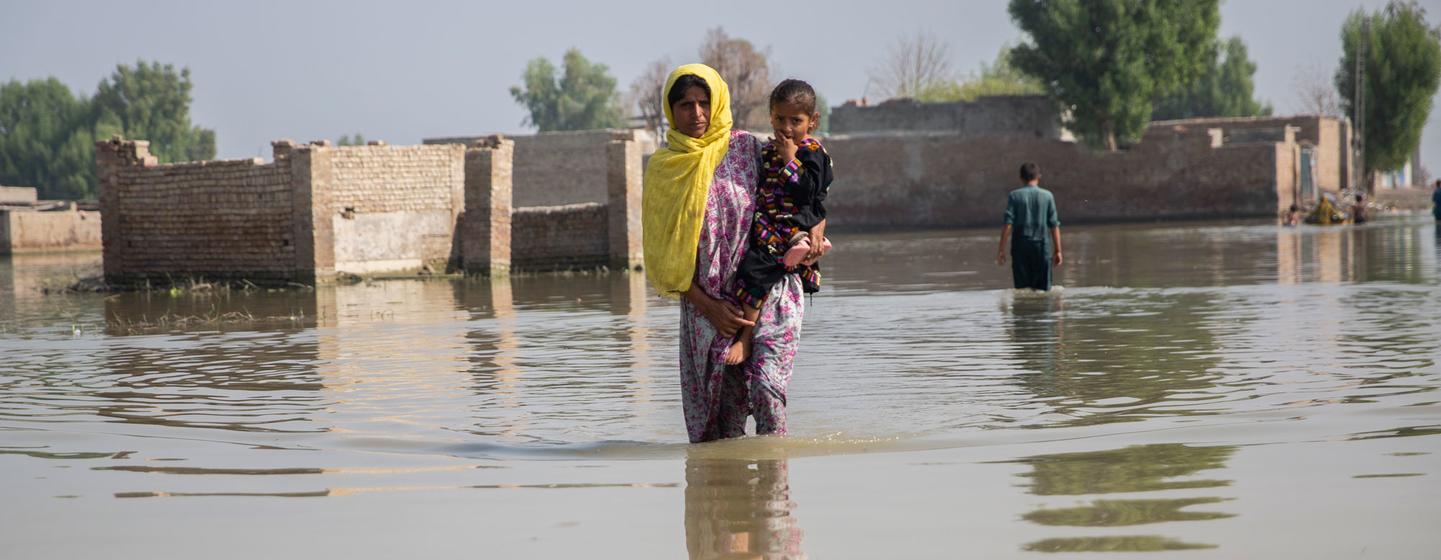
Malaria and other diseases were on the rise after floods earlier in the year in Sindh province, Pakistan.

COP28: The climate crisis is also a health crisis

© UNICEF/Saiyna Bashir Malaria and other diseases were on the rise after floods earlier in the year in Sindh province, Pakistan.

3 December 2023Climate and Environment

Health has made it onto the agenda of a UN climate conference, and health advocates at COP28 in Dubai on Sunday said the topic was long overdue for discussion as climate inaction is costing lives and impacting health every single day.

Our planet has logged higher mean temperatures each year, with 2023 set to be the hottest on record. Ice sheets are melting at an unprecedented rate. Wildfires have made the air hazardous in some regions, while in others, floods regularly threaten to contaminate drinking water.

Tweet URL

Against this backdrop, more and more people are being affected by disasters, climate-sensitive diseases and other health conditions.

Climate change exacerbates some existing health threats and creates new public health challenges. Worldwide, only considering a few health indicators, an additional 250,000 deaths per year will occur in the next decades because of climate change, according to the UN World Health Organization (WHO).

WHO Director General Dr. Tedros Adhanom Ghebreyesus told delegates at COP28 that it was long overdue for talks around environmental health, rising sea levels, and melting glaciers to include the direct impacts of such climate shocks on human health.

Tiếp tục đọc “COP28: The climate crisis is also a health crisis”

British research ship crosses paths with world’s largest iceberg as it drifts out of Antarctica

APnews.com BY SYLVIA HUIUpdated 4:23 PM GMT+7, December 5, 2023

Britain’s polar research ship RRS Sir David Attenborough has crossed paths with the world’s largest iceberg as it was drifting out of Antarctic waters. (Dec. 5)Photos

BY SYLVIA HUIUpdated 4:23 PM GMT+7, December 5, 2023Share

LONDON (AP) — Britain’s polar research ship has crossed paths with the largest iceberg in the world — a “lucky” encounter that enabled scientists to collect seawater samples around the colossal berg as it drifts out of Antarctic waters, the British Antarctic Survey said Monday.

The RRS Sir David Attenborough, which is on its way to Antarctica for its first scientific mission, passed the mega iceberg known as the A23a on Friday near the tip of the Antarctic Peninsula.

Tiếp tục đọc “British research ship crosses paths with world’s largest iceberg as it drifts out of Antarctica”

History fades as rising sea levels slowly destroy Thailand’s temple murals

theguardian.com Saltwater damage could see precious historical Buddhist artworks dating back hundreds of years slowly fade entirely from view

by Rebecca Ratcliffe and Navaon Siradapuvadol in NonthaburiWed 29 Nov 2023 02.37 GMT

If you look closely, you can just about see the characters and scenes that once stretched across the walls of Wat Prasat, a temple in Nonthaburi. There’s the dark shape of an elephant’s head, a figure slouching on its back; outlines of swords pointing upwards to the centre of the display; patches of curved roofs.

“The mural used to be more vivid,” says Phra Maha Natee, the abbot of Wat Prasat. Even when he was a novice monk, 20 years ago, the image – which shows one of the jātakas stories that recall the Buddha’s past lives – was easier to understand. “The colour was brighter and sharper,” he says.

The murals offer a glimpse into a past era – a time of prosperity but also social upheaval, when a more empowered nobility had emerged, as did a desire, say historians, for Buddhism to play a more stronger role in reinforcing discipline in society. They date back to the mid or later years of the Ayutthaya kingdom in Siam, which existed from 1351 to 1767, in what is now Thailand and are a treasured early example of the art form.

Tiếp tục đọc “History fades as rising sea levels slowly destroy Thailand’s temple murals”

COP28 climate summit just approved a ‘loss and damage’ fund. What does this mean?

theconversation.com Published: December 1, 2023 2.24am GMT

Day one of the COP28 climate summit saw the first big breakthrough: agreement on a “loss and damage” fund to compensate poor states for the effects of climate change.

Met with a standing ovation in Dubai, the agreement means wealthy states and major polluters will put millions of dollars towards a fund that will in turn distribute funds to poor states harmed by climate change. The fund will be administered by the World Bank. Initial commitments amount to US$430 million.

It will come as a huge relief to the United Arab Emirates, the summit’s host. The country was under pressure even before talks began about its fossil fuel expansion plans and the fact the president of the climate talks is chief executive of a national oil company. This undoubtedly featured in the UAE’s decision to commit US$100 million to the fund.

Other countries to make initial commitments to the fund include the United Kingdom ($75 million), United States ($24.5 million), Japan ($10 million) and Germany (also US$100 million). Pressure will now build on other wealthy countries, including Australia, to outline their own commitments to the fund.

Tiếp tục đọc “COP28 climate summit just approved a ‘loss and damage’ fund. What does this mean?”

COP28: four key issues that will dominate the latest UN climate summit

theconversation.com Published: November 29, 2023 4.56pm GMT

The United Nations Environment Programme recently published a report with an unusually strong title for a UN body: “Emissions Gap Report 2023: Broken Record – Temperatures hit new highs, yet world fails to cut emissions (again)”. Yet again, it highlights how far countries are off track from safeguarding the planet – and us.

As the world gathers in the United Arab Emirates for the annual UN climate change conference (or, more formally, Conference of the Parties, COP), the stakes are as high as ever. The head of the UN climate change secretariat Simon Stiell has urged for this meeting – COP28 – to be a “turning point.”

Can this COP deliver on that goal? Perhaps.

As an academic focused on international climate governance, I’ve seen how trust is vital for an ambitious outcome. Delegates negotiate all night. They trade off issues against another. And at the end of the long summit, negotiators and ministers rely on each other to uphold bargains made over hundreds of hours of talks. But, though COP28 will be my 11th climate COP, I’ve never seen trust so low among countries.

Tiếp tục đọc “COP28: four key issues that will dominate the latest UN climate summit”

Most sponsors of Cop28 have not signed up to UN-backed net zero targets

theguardian.com

Firms including Bank of America have made no commitment to cut emissions in line with target system, analysis finds

Sandra Laville Environment correspondentWed 29 Nov 2023 06.00 GMT

Most companies sponsoring the UN climate talks in Dubai are not committed to cutting their greenhouse gas emissions in line with globally recognised net zero targets, it has been revealed.

Only one of the more than 20 sponsors of Cop28 has signed up to UN-backed net zero science-based targets, (SBTi), according to an analysis.

Most of the corporate sponsors, which include the oilfield services company Baker Hughes as well as Bank of America, have made no commitment to reduce emissions to net zero in any time period under the target system.

The global accountancy firm EY, formerly Ernst and Young, which has been hired as the independent verifier of the climate record of all the sponsors, has also not set targets with the net zero scheme.

The targets are recognised as one of the leading voluntary global validations of a company’s commitment to tackling global heating.

The targets are clearly defined science-based pathways for companies and financial institutions to reduce greenhouse gas emissions, and they are reviewed and validated by the SBTi.

Six firms sponsoring the Dubai climate talks, which begin on 30 November, including EY, have made a commitment to set net zero targets, by registering with the scheme. This requires them to submit their plans for validation within 24 months.

Tiếp tục đọc “Most sponsors of Cop28 have not signed up to UN-backed net zero targets”

What drought in the Amazon means for the planet

washingtonpost.com By Nicolás Rivero November 10, 2023 at 6:30 a.m. EST

View of an area affected by severe drought in the Rio Negro, Amazonas, Brazil, on Oct. 28. (Andre Coelho/EPA-EFE/Shutterstock)

The Amazon — the lush, tropical basin that holds the world’s biggest river, rainforest and a fifth of its fresh water — is running dry.

The region is entering its fifth month of a drought that has been particularly punishing in the northern reaches of the rainforest, in the region around the city of Manaus. The Rio Negro, a northern Amazon tributary, fell to the lowest levels in its recorded history last month. Wildfires have advanced where waterways have retreated.

Tiếp tục đọc “What drought in the Amazon means for the planet”

A moment of truth for the oil and gas industry

Climate change and clean energy confront oil and gas producers with profound choices

Full report here

Oil and gas producers face pivotal choices about their role in the global energy system amid a worsening climate crisis fuelled in large part by their core products, according to our major new special report.

The Oil and Gas Industry in Net Zero Transitions finds that the oil and gas sector – which provides more than half of global energy supply and employs nearly 12 million workers worldwide – has been a marginal force at best in transitioning to an energy system with net zero emissions, accounting for just 1% of clean energy investment globally.

The report shows how the industry can take a more responsible approach and contribute positively to the new energy economy, highlighting that the UN’s COP28 climate summit in Dubai is “a moment of truth” for the oil and gas sector.To start, all oil and gas companies should commit to tackling emissions from their own operations, according to the report. These emissions need to decline by 60% by 2030 to align with the Paris Agreement goal of limiting global warming to 1.5 °C. Companies also need to dramatically change how they allocate their financial resources. In 2022, clean energy investments accounted for a mere 2.5% of the industry’s total capital spending. The report finds that producers looking to align with the aims of the Paris Agreement would need to put 50% of capital expenditures towards clean energy projects by 2030.What’s more, companies must abandon the notion that they can continue with business as usual simply by ramping up the deployment of carbon capture technologies.

The report finds that if oil and gas consumption were to evolve as projected under today’s policy settings, limiting warming to 1.5 °C would require an entirely inconceivable 32 billion tonnes of carbon capture by 2050, with annual investment rising from $4 billion last year to $3.5 trillion.Opportunities lie ahead despite these challenges, however. Nearly a third of the energy consumed in 2050 in a decarbonised energy system comes from technologies that could benefit from the oil and gas industry’s skills and resources, including hydrogen, offshore wind and liquid biofuels.

Rice Markets Are In Crisis Mode

Global supplies of rice are facing its most significant shortage in two decades, exacerbating food insecurity fears. Rice is a staple food for over half the world’s population. India’s export bans sent shockwaves through markets as some argue the country is using food as a political pawn. America’s $34 billion rice industry must compete against the same market uncertainty while managing droughts, floods and changing temperatures. Watch this video to learn more about how global rice markets influence food security, geopolitics and the livelihoods of millions of farmers.

Volunteers Battle Fiery Infernos In World’s Most Densely Populated City, Manila

In Metro Manila, Philippines, an increase in devastating fires has put volunteer firefighters at the front lines, battling blazes in some of the city’s most vulnerable neighbourhoods. These are the lives of Danie Cabillo, Joanna Mandap (who runs a female dominant fire brigade), and Marvin Bustamante – and their families, as we unmask the emotional complexities and high-risk conditions associated with their heroic roles. From facing life-or-death scenarios that test their limits, these are stories of sacrifice, courage, and triumph – where every second is a battle against time.

 00:00 Introduction

02:29 Civilian firefighters face dangers from fires – and people

06:07 How to establish a fire volunteer team

08:45 Female-led fire brigade challenges stereotypes

17:10 Teamwork strategies with other brigades and residents

23:46 Volunteers rely on donations and their own income to keep operations running

29:45 Training community residents to be first responders

31:55 Keeping a cool head to fight fires

33:36 Devastating damage caused by fire

38:22 Do they ever feel like giving up?

42:26 Working alongside official government fire responders

How Do Governments Combat Climate Change?

cfr.org

In this free resource, explore seven ways countries are responding to a changing environment, from cap and trade policies to clean energy standards.

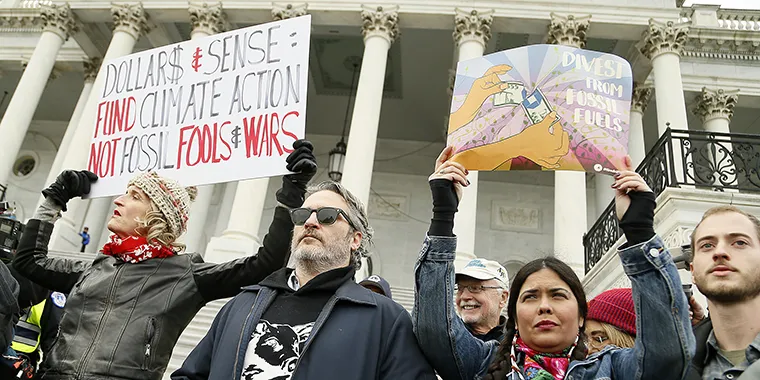
Actor Joaquin Phoenix (center) stands with protestors waiting to be arrested on the steps of the U.S. Capitol Building during a climate change protest and rally on Capitol Hill on January 10, 2020 in Washington, D.C.

Source: Paul Morigi/Getty ImagesSHARE

Teaching Resources—Climate Change: Policy (including lesson plan with slides)
Higher Education Discussion Guide

Have you ever brought a reusable tote bag to the grocery store? Or refilled a water bottle rather than buying a disposable one? Do you separate your recycling from your trash? 

If you answered yes to any of those questions, you’re not alone. In the United States, more than half of all adults claim to have taken some action to protect the environment. But will individual actions be enough to address the massive, transnational challenge of climate change? Unfortunately, no.

Tiếp tục đọc “How Do Governments Combat Climate Change?”

Lizards, fish and other species are evolving with climate change, but not fast enough

theconversation.com

Climate change is threatening the survival of plants and animals around the globe as temperatures rise and habitats change.

Some species have been able to meet the challenge with rapid evolutionary adaptation and other changes in behavior or physiology. Dark-colored dragonflies are getting paler in order to reduce the amount of heat they absorb from the sun. Mustard plants are flowering earlier to take advantage of earlier snowmelt. Lizards are becoming more cold-tolerant to handle the extreme variability of our new climate.

However, scientific studies show that climate change is occurring much faster than species are changing.

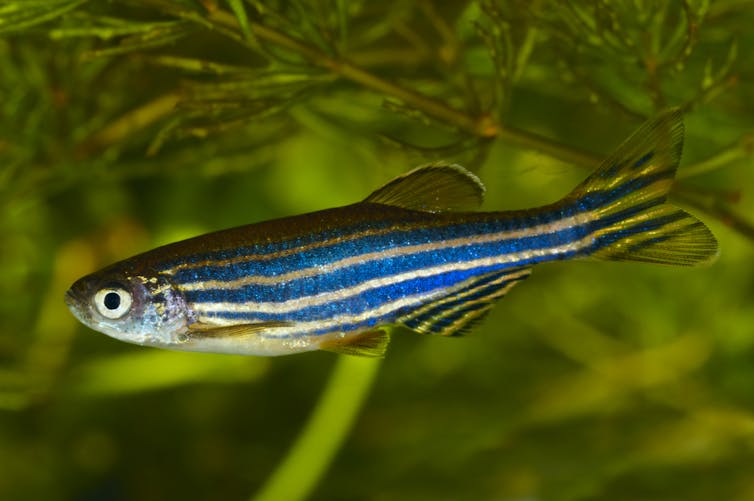
A tiny, royal blue fish with gold stripes looks into the camera. The downward slant of its mouth and shadow at the top of its eye give it an annoyed look.
Zebrafish have evolved to thrive in water a degree or so warmer than normal, but they struggle to survive at higher temperatures. isoft/E+ Getty Images

What is evolutionary adaptation?

Tiếp tục đọc “Lizards, fish and other species are evolving with climate change, but not fast enough”

Asia’s climate-driven health crisis raises alarm ahead of COP28

asia.nikkei.com

New Delhi residents use clothes and books to protect their faces from the scorching sun on a hot June day in India. 2023 could be the hottest year on record.   © EAP/Jiji

Summit’s first health ministerial follows record summer spike in heatstroke and dengue cases

SAYUMI TAKE, Nikkei staff writerNOVEMBER 22, 2023 06:00 JST

TOKYO — 2023 is set to be the world’s hottest year on record, and the consequences for the human body are deadly.

Record-shattering temperatures can cause headaches, dizziness and nausea. Disease-carrying mosquitoes flourish after torrential rain and devastating floods. Polluted air causes shortness of breath and respiratory illnesses. The health emergencies that accompany climate change are shaking communities across the globe.

The impact on Asia is already profound. The continent has warmed at twice the speed of the global average in the past 30 years due to its huge land mass, according to the World Meteorological Organization (WMO).

More people in Asia are dying or falling ill than ever before due to high temperatures, the United Nations scientific body Intergovernmental Panel on Climate Change (IPCC) reported in 2022. Heat stress is one of many health risks. Dengue and malaria are increasing in Thailand and Malaysia, while respiratory diseases caused by air pollution are rising in Indonesia. Even mental disorders like depression and anxiety are associated with climate change, according to a 2022 report by the IPCC.

“These impacts that we’re seeing today could be just a symptom of a very dangerous future unless we tackle climate change urgently,” warned Marina Romanello, executive director of the authoritative Lancet Countdown on Health and Climate Change report.

Tiếp tục đọc “Asia’s climate-driven health crisis raises alarm ahead of COP28”

Biến đổi khí hậu làm thay đổi mô hình lây truyền các bệnh truyền nhiễm

suckhoemoitruong.com.vn

(SK&MT) – Biến đổi khí hậu tác động đến sức khỏe con người theo nhiều cách khác nhau, như làm tăng nguy cơ mắc các bệnh liên quan đến nhiệt, thay đổi mô hình lây truyền và mức độ các bệnh truyền nhiễm. Nhiệt độ tăng 1oC sẽ làm tăng khoảng 7%-11% nguy cơ mắc bệnh sốt xuất huyết, 5,6% mắc bệnh tay chân miệng.

PGS.TS Nguyễn Thị Liên Hương -Thứ trưởng Bộ Y tế tại cuộc họp nhóm đối tác về biến đổi khí hậu và sức khỏe do Bộ Y tế tổ chức với sự hỗ trợ của Tổ chức Y tế thế giới (WHO) và Liên minh Châu Âu.

PGS.TS Nguyễn Thị Liên Hương -Thứ trưởng Bộ Y tế phát biểu.
Tiếp tục đọc “Biến đổi khí hậu làm thay đổi mô hình lây truyền các bệnh truyền nhiễm”