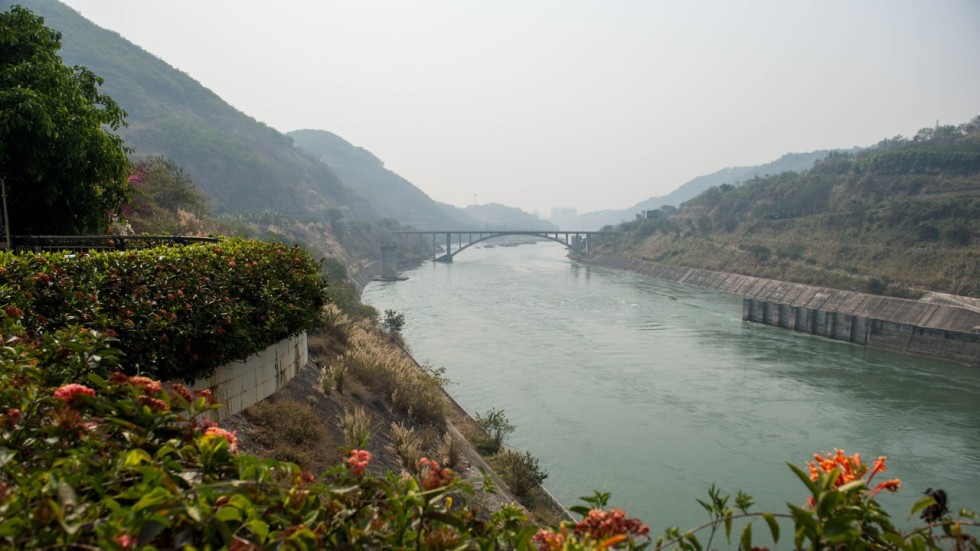
Greenhouse gas emissions of hydropower in the Mekong River Basin can exceed those of fossil fuel energy sources

alphagalileo

04 March 2018 Aalto University

Greenhouse gas emissions of hydropower in the Mekong River Basin can exceed those of fossil fuel energy sources

Hydropower is commonly considered as a clean energy source to fuel Southeast Asian economic growth. Recent study published in Environmental Research Letters finds that hydropower in the Mekong River Basin, largest river in Southeast Asia, might not always be climate friendly. The median greenhouse gas (GHG) emission of hydropower was estimated to be 26 kg CO2e/MWh over 100-year lifetime, which is within the range of other renewable energy sources (<190 kg CO2e/MWh). The variation between the individual hydropower projects was, however, large: nearly 20% of the hydropower reservoirs had higher emissions than other renewable energy sources and in several cases the emissions equalled those from fossil fuel energy sources (>380 kg CO2e/MWh). The study concludes that hydropower in the Mekong cannot be considered categorically as a clean energy source; instead, the emissions should be evaluated case-by-case together with other social and environmental impacts. Tiếp tục đọc “Greenhouse gas emissions of hydropower in the Mekong River Basin can exceed those of fossil fuel energy sources”
5 điểm chính về Hội nghị Thượng đỉnh Hợp tác Lan Thương – MêKông

English: Five things to know about the Lancang-Mekong Cooperation summit

TĐH: Chúng ta chưa hề được nghe các thảo luận của báo chí trong nước về Kế hoạch năm năm của Trung Quốc. Nên tự hỏi, liệu Việt Nam sẽ có cuộc thảo luận công khai về kế hoạch này, hay là bất cứ ai tham dự hội nghị LMC sẽ chỉ đơn giản chấp nhận kế hoạch thay mặt cho Việt Nam?

Kế hoạch phát triển năm năm, bao gồm cả việc xây dựng các đập thủy điện, dự kiến sẽ là chương trình được ưu tiên thảo luận hàng đầu tại hội nghị các quốc gia sông MêKông tại Campuchia.

Khi Trung Quốc và lãnh đạo các quốc gia dọc sông MêKông họp tại hội nghị thượng đỉnh Hợp tác MêKông – Thái Lan tại Cam-pu-chia, thiết lập kế hoạch phát triển 5 năm dự kiến sẽ là mục hàng đầu của chương trình nghị sự, bao gồm việc xây dựng các đập thủy điện và các dự án khác cho khu vực – và chỉ ra tầm quan trọng về kế hoạch vành đai và con đường đầy tham vọng của Trung Quốc. Tiếp tục đọc “5 điểm chính về Hội nghị Thượng đỉnh Hợp tác Lan Thương – MêKông”

Sông Mekong sẽ là Biển Đông thứ hai?

03/01/2018 13:50 GMT+7

tuoitre.vn TTO – Kế hoạch 5 năm phát triển sông Mekong thuộc cơ chế Hợp tác Mekong – Lan Thương (LMC) do Trung Quốc khởi xướng đang gây lo ngại trong giới chuyên gia, đặc biệt là về động cơ chính trị của Bắc Kinh.

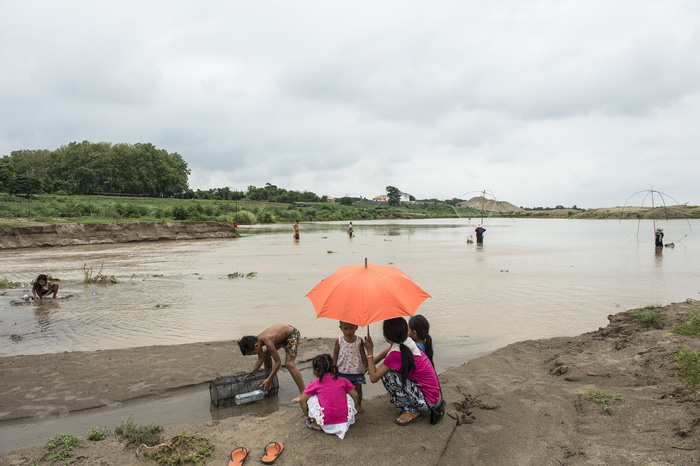
Sông Mekong sẽ là Biển Đông thứ hai? - Ảnh 1.

Người dân đánh bắt cá trên đoạn sông Mekong chảy qua thủ đô Vientiane của Lào – Ảnh: AFP

Tháng 12-2017, ngoại trưởng 6 nước khu vực sông Mekong nhóm họp ở thành phố Đại Lý thuộc tỉnh Vân Nam (Trung Quốc) để thông qua đề cương kế hoạch 5 năm phát triển dòng sông này. Dự kiến các nhà lãnh đạo sẽ chốt lại đề xuất trong cuộc họp dự kiến diễn ra cuối tháng 1-2018 ở Campuchia. Tiếp tục đọc “Sông Mekong sẽ là Biển Đông thứ hai?”

The Mekong river under THREAT

Milton Osborne

Even if no dams are built on the mainstream below China, the cascade to which it is committed will ultimately have serious effects on the functioning of the Mekong once the dams are used to control the river’s flow. This will be the case because the cascade will:

• alter the hydrology of the river and so the current ‘flood pulse’, the regular rise and fall of the river on an annual basis which plays an essential part in the timing of spawning and the migration pattern. This will be particularly important in relation to the Tonle Sap in Cambodia, but will have an effect throughout the river’s course;

• block the flow of sediment down the river which plays a vital part both in depositing nutrients on the agricultural regions flooded by the river and also as a trigger for fish migration — at present well over 50% of the river’s sediment comes from China;

• at least initially cause problems by restricting the amount of flooding that takes place most importantly in Cambodia and Vietnam; and

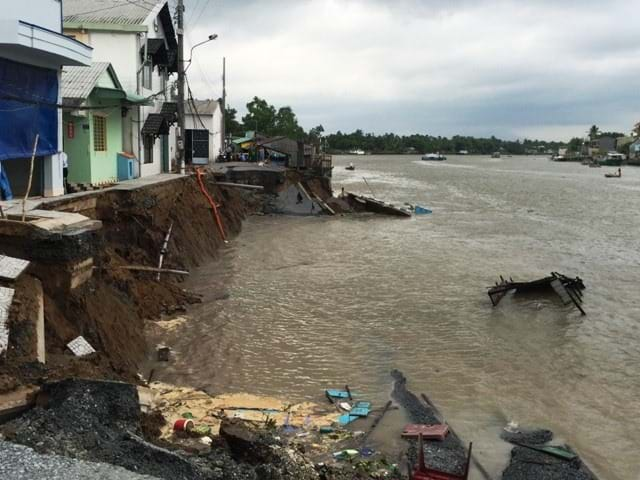
• lead to the erosion of river banks.

So China’s dam-building plans are worrying enough, but the proposed new mainstream dams would pose even more serious concerns. Those built at sites higher upstream would cause the least damage to fish stocks, but if, as currently seems possible, the most likely dams to be built would be at Don Sahong and Sambor the costs to fish stocks could be very serious. This is because unanimous expert opinion judges that there are no ways to mitigate the blocking of fish migration that would occur if these dams are constructed. None of the suggested possible forms of mitigation — fish ladders, fish lifts, and alternative fish-passages — are feasible for the species of fish in the Mekong and the very large biomass that is involved in their migratory pattern. Fish ladders were tried and failed at the Pak Mun dam on one of the Mekong’s tributaries in Thailand in the 1990s. Tiếp tục đọc “The Mekong river under THREAT”

Climate change is triggering a migrant crisis in Vietnam

Theconversation

The Vietnamese Mekong Delta is one of Earth’s most agriculturally productive regions and is of global importance for its exports of rice, shrimp, and fruit. The 18m inhabitants of this low-lying river delta are also some of the world’s most vulnerable to climate change. Over the last ten years around 1.7m people have migrated out of its vast expanse of fields, rivers and canals while only 700,000 have arrived.

On a global level migration to urban areas remains as high as ever: one person in every 200 moves from rural areas to the city every year. Against this backdrop it is difficult to attribute migration to individual causes, not least because it can be challenging to find people who have left a region in order to ask why they went and because every local context is unique. But the high net rate of migration away from Mekong Delta provinces is more than double the national average, and even higher in its most climate-vulnerable areas. This implies that there is something else – probably climate-related – going on here. Tiếp tục đọc “Climate change is triggering a migrant crisis in Vietnam”

Five things to know about the Lancang-Mekong Cooperation summit

TĐH: We don’t hear discussion on the VNese media about this China-pushed five-year development plan at all. I wonder if Vietnam will have a public discussion about this plan, or whoever attending the LMC summit will just simply approve the plan on behalf of Vietnam?


scmp: Five-year development plan, including construction of hydropower dams, is expected to top agenda at Mekong River nations’ conference in Cambodia

PUBLISHED : Tuesday, 09 January, 2018, 8:03am
UPDATED : Tuesday, 09 January, 2018, 2:57pm

When China and the leaders of nations along the Mekong River meet on Wednesday at the Lancang-Mekong Cooperation summit in Cambodia, a top item will be mapping out a five-year development plan that would include building hydropower dams and other projects for the region – pointing to its importance in China’s ambitious belt and road infrastructure plan.

But while the cooperation mechanism was created to help ease tension over development projects, environmentalists remain unsatisfied.

Concern is growing that the potential for causing ecological damage will make the Mekong a flashpoint for China and Southeast Asia’s territorial disputes – effectively creating a new South China Sea.

Amid the backdrop of the river’s importance in connecting Europe through Southeast Asia and beyond in the grand infrastructure programme launched by President Xi Jinping, Chinese delegation leader Premier Li Keqiang will be looking to bolster China’s influence in the Mekong region as he faces his counterparts from Cambodia, Vietnam, Thailand, Laos and Myanmar.

Here are five key things to know about the summit and the significance of the Mekong River:

1. The river’s significance for China and Southeast Asia

Tiếp tục đọc “Five things to know about the Lancang-Mekong Cooperation summit”

Multiple Mekong forums risk igniting rivalry

ASEAN+ January 03, 2018 01:00

THE NATION 

LEADERS FROM six riparian states along the Mekong River will be busy this year as meetings on many cooperation schemes in the region are scheduled in a situaton that observers have said is overlapping.

 The youngest forum, the Lancang-Mekong Cooperation (LMC), will call its second summit meeting next Wednesday in Phnom Penh to endorse a five-year action plan (2018-2022) regarding its cooperation projects.

Its participants – six counties in the Mekong basin comprising China, Myanmar, Laos, Thailand, Cambodia and Vietnam – have all been involved in many cooperation schemes over the past decades.
Tiếp tục đọc “Multiple Mekong forums risk igniting rivalry”

Muddying the Mekong: balancing sediment and sustainable development

By Thanapon Piman Bangkok, Thailand, December 20, 2017

Stockholm Environemnt Institute

mekongeye_Muddy river waters are often seen as a sure sign of poor river health, as a result of inappropriate land management practices, or a consequence of extreme rainfall where great quantities of sediment – silt, sand, clay and organic matter – are discharged.

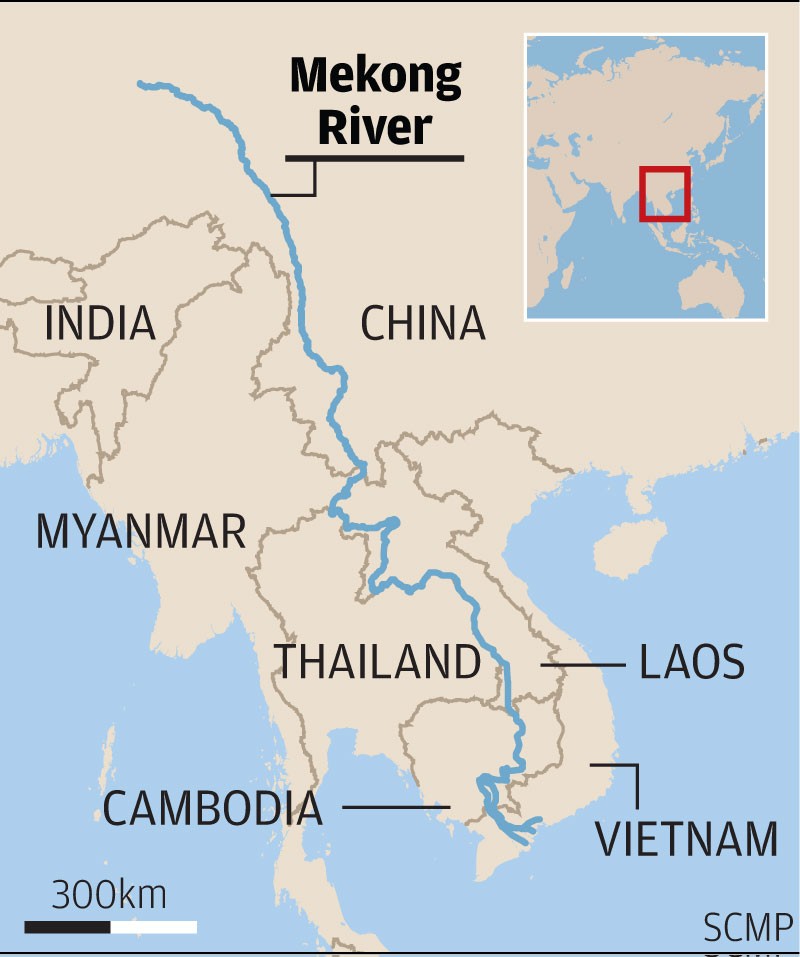
This is a common sight in the major rivers of south-east and east Asia, and has come to characterise rivers such as the Yellow and the Mekong. With its beginnings on the Tibetan Plateau, the Mekong flows for 4,300 kilometres, carrying an estimated sediment load of 160 million tonnes before reaching its delta and discharging into the South China Sea. Tiếp tục đọc “Muddying the Mekong: balancing sediment and sustainable development”

Mẹ thiên nhiên và huỷ diệt bởi thủy điện không phải là vấn đề duy nhất của Đồng Bằng Sông Cửu Long

Không có khu vực đồng bằng nào trên thế giới bị đe doạ bởi biến đổi khí hậu trầm trọng như Sông Cửu Long. Liệu Việt Nam có hành động kịp thời để cứu nơi đây?

Loạt bài của Mongabay – Mongabay series

Tiếng Việt
Phần 1 – Liệu biến đổi khí hậu sẽ nhấn chìm Đồng bằng sông Cửu Long?
Phần 2 – Việt Nam cực kỳ lo lắng vì Trung Quốc và Lào xây đập trên Mekong
Phần 3 – Mẹ Thiên nhiên và huỷ diệt bởi thủy điện không phải là vấn đề duy nhất của Đồng bằng sông Cửu Long
Phần 4 – Kế hoạch cứu nguy Đồng bằng sông Cửu Long

English
Part 1 – Will climate change sink the Mekong Delta?
Part 2 – Vietnam sweats bullets as China and Laos dam the Mekong
Part 3 – Mother Nature and a hydropower onslaught aren’t the Mekong Delta’s only problems
Part 4 – A plan to save the Mekong Delta

Biến đổi khí hậu và các đập nước ở thượng nguồn đang đe dọa khu vực quan trọng này và vấn đề trở nên khó kiểm soát được. Nhưng có phải những vấn đề lớn nhất của ĐBSCL đều do chính Việt Nam tạo ra?

Đồng bằng sông Cửu Long của Việt Nam, nơi ở của gần 20 triệu người, là một trong những môi trường nông nghiệp có năng suất cao nhất trên thế giới, nhờ vào mạng lưới kênh rạch, đê, cửa cống và rãnh thoát nước phức tạp.

Về thế mạnh nông nghiệp của ĐBSCL, Việt Nam đã đi từ một nhà nhập khẩu gạo lâu năm và trở thành một nước xuất khẩu lớn. Tuy nhiên, nông dân trong khu vực rất quan tâm đến các chính sách an ninh lương thực của chính phủ, trong đó yêu cầu hầu hết đất đai của ĐBSCL phải được dành cho sản xuất lúa gạo. Và nhiều người trong số họ đang có biện pháp để phá vỡ các quy tắc, theo những cách mà không phải lúc nào cũng thân thiện với môi trường.
Tiếp tục đọc “Mẹ thiên nhiên và huỷ diệt bởi thủy điện không phải là vấn đề duy nhất của Đồng Bằng Sông Cửu Long”

Cứu dòng Mekong: Việt Nam nên tăng cường mua điện từ Lào?

Thủy điện không còn hấp dẫn và cơ hội của dòng Mekong

***

Cứu dòng Mekong: Việt Nam nên tăng cường mua điện từ Lào?

  19:50 | Thứ năm, 07/12/2017

Phát triển dựa vào dòng dòng Mekong, từ vấn đề và bài toán phát triển năng lượng của Lào hiện nay, theo các phân tích, Việt Nam có thể và nên đóng vai trò chủ động hơn nữa trong vấn đề phát triển thủy điện thượng nguồn sông Mekong.


ĐBSCL hình thành là nhờ lượng phù sa của sông Mekong bồi đắp nên trong 6.000 năm qua. Việc xây thủy điện trên các dòng chính sông Mekong là một trong những nguyên nhân khiến ĐBSCL tăng sạt lở, dần “tan rã”. Ảnh: TL  Tiếp tục đọc “Cứu dòng Mekong: Việt Nam nên tăng cường mua điện từ Lào?”

Mekong River Facts

CGIAR

Upstream Mekong River changes through dam building and water usage could have serious consequences on downstream environments, in particular the Mekong Delta of Vietnam. Considered the rice basket of Vietnam, the Mekong Delta is already at grave risk through climate change sea level rise and intense local development. Mekong Delta citizens are concerned about these risks but and are determined to adapt and survive.

The Mekong has many names.

Mekong

In China, it is known as the Lancang Jiang, meaning ‘turbulent river’. The Thai and the Lao refer to it as Mae Kong or Mae Nam Kong, meaning ‘mother water’. In the delta, where the river splits into multiple branches, the Vietnamese refer to it as Cuu Long, meaning ‘nine dragons’. Tiếp tục đọc “Mekong River Facts”

Farmers shift to more resilient crops in the Delta

Update: November, 05/2017 – 09:00 vietnamnews
Wrapped fruit: Bùi Văn Buôn checks on the tứ quý mangoes in his garden in Bến Tre Province. — VNS Photo Hoàng Nguyên

Viet Nam News Beset by climate change impacts, Mekong Delta farmers give up on rice, but the real answer lies in organic farming, experts aver.

By Hoàng Nguyên

MEKONG DELTA – When Bùi Văn Muôn decided to grow tứ quý mango trees 16 years ago, he did not expect the fruit would become a key agricultural crop cultivated to adapt to climate change.

“Back then, when I asked neighbours to buy and plant tứ quý mango trees here, they showed little interest as the fruit tasted a bit sour and they thought it might not fetch good prices in the market,” the 50-year-old farmer in Bến Tre Province recalled. Tiếp tục đọc “Farmers shift to more resilient crops in the Delta”

China’s Mekong Plans Threaten Disaster for Countries Downstream

Foreignpolicy

Beijing is building hydroelectric dams and dredging to allow bigger boats as worries of environmental devastation grow.
  • CATEGORIES: DISPATCH

BANGKOK — Thirty million people depend for a living on the Mekong, the great Asian river that runs through Southeast Asia from its origins in the snowfields of Tibet to its end in the delta region of Vietnam, where it fertilizes one of the world’s richest agricultural areas. It’s the greatest freshwater fishery on the planet, second only to the Amazon in its riparian biodiversity. If you control its waters, then you control much of the economy of Southeast Asia. Tiếp tục đọc “China’s Mekong Plans Threaten Disaster for Countries Downstream”

Sesan dam goes online, while PM dismisses environmental concerns

A worker stands in front of the Lower Sesan II Dam as it was put online yesterday in Stung Treng province. The controversial hydropower structure is expected to provide a boost to the Kingdom’s electricity supply but is also expected to cause significant damage to fisheries.

A worker stands in front of the Lower Sesan II Dam as it was put online yesterday in Stung Treng province. The controversial hydropower structure is expected to provide a boost to the Kingdom’s electricity supply but is also expected to cause significant damage to fisheries. Hong Menea
Tue, 26 September 2017

The floodgates of the largest and most controversial dam project in the country’s history officially closed yesterday at an inauguration ceremony presided over by Prime Minister Hun Sen, who took aim at environmentalists, ambassadors and NGOs in a wide-ranging speech.

During his one-hour address, the prime minister said the Lower Sesan II Dam, near the border with Laos in Stung Treng province, would lower electricity costs and put the Kingdom on its way to hooking up every village in the country to the electricity grid by 2022. Tiếp tục đọc “Sesan dam goes online, while PM dismisses environmental concerns”

Death by dam for the Mekong

Laos’ Pak Beng dam, developed by China and supported by Thailand, has divided riparian nations over how best to manage the river’s resources

Chiang Khong, September 14, 2017 4:46 PM (UTC+8)

Water levels run low on the Mekong River. Photo: AFP Forum/Paritta Wangkiat

Water levels run low on the Mekong River. Photo: AFP Forum/Paritta Wangkiat