Tóm tắt các vấn đề về ĐBSCL

Đồng bằng Sông Cửu Long ĐBSCL hiện nay đang đối diện một số vấn đề nghiêm trọng.

Vấn đề năng lượng

Đây có lẽ là vấn đề dễ giải quyết nhất đối với VN. Hai nguồn năng lượng tái tạo – NLTT, renewable energy – chính (mặt trời và gió) đủ để giải quyết năng lượng cho cả VN chứ không riêng gì ĐBSCL. Hiện nay giá năng lượng tái tạo càng ngày càng rẻ vì các tiến bộ kỹ thuật. Tuy nhiên VN hiện nay lệ thuộc 100% vào năng lượng hóa thạch (fossil energy) vì than và xăng dầu còn rẻ. Ông Điện lực VN lại là nhà độc quyền nên chẳng muốn thay đổi gì. Tiếp tục đọc “Tóm tắt các vấn đề về ĐBSCL”

Bất cập trong quản lý và khai thác nước ngầm – 2 bài

Bất cập trong quản lý và khai thác nước ngầm – Bài 1

Ông Nguyễn Đăng Biển (bên phải) ở tổ 4, khu phố Phú Hưng.phường Phú Thịnh, thị xã Bình Long khoan giếng tại ấp Quản Lợi A, xã Tân Lợi (Hớn Quản)Ông Nguyễn Đăng Biển (bên phải) ở tổ 4, khu phố Phú Hưng.phường Phú Thịnh, thị xã Bình Long khoan giếng tại ấp Quản Lợi A, xã Tân Lợi (Hớn Quản)

01:33 PM – 05/05/2017

BP – Những năm gần đây, thời tiết diễn biến bất thường dẫn đến khô kiệt nguồn nước, ảnh hưởng sinh hoạt và phát triển sản xuất của người dân. Khi nước mặt cạn kiệt, các hồ chứa trơ đáy, giải pháp khoan để khai thác nước ngầm được cho là hiệu quả nhất, dẫn đến dịch vụ khoan giếng nở rộ và là nguyên nhân chính làm cạn kiệt nguồn nước cục bộ, gia tăng ô nhiễm các tầng chứa nước. Thậm chí làm ô nhiễm mạch nước ngầm do các giếng khoan không gặp nước đã không được trám lấp, về mùa mưa chất bẩn theo dòng nước chảy xuống giếng. Tiếp tục đọc “Bất cập trong quản lý và khai thác nước ngầm – 2 bài”

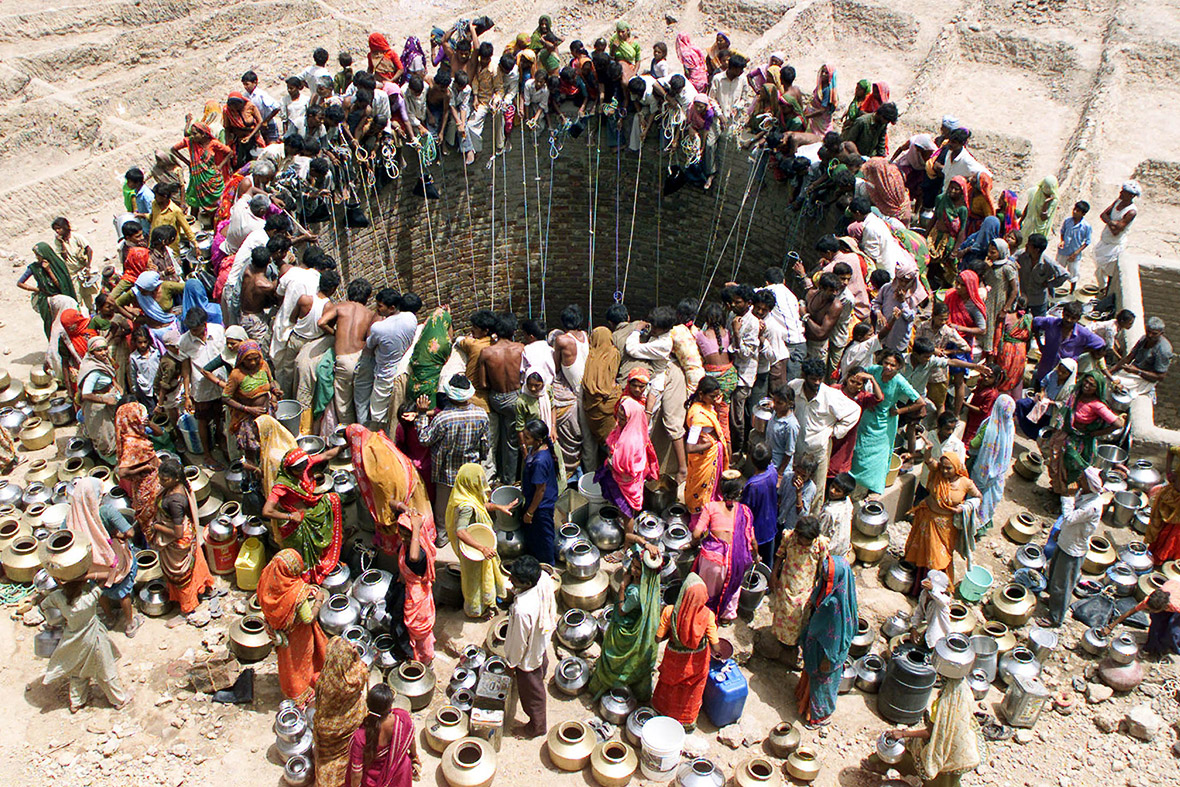
World Water Day 2017: 60 powerful photos to make you think twice about leaving the tap running

Climate change to challenge Mekong River Delta in 2017

Last update 07:40 | 09/03/2017
VietNamNet Bridge – Signs of growth stagnation in the Mekong Delta in recent years have been blamed on climate change, which has contributed to drought and saline intrusion.

vietnamnet bridge, english news, Vietnam news, news Vietnam, vietnamnet news, Vietnam net news, Vietnam latest news, Vietnam breaking news, vn news, Mekong delta, drought, saline intrusion

The growth rate declined in the 2010-2016 period, especially in the last three years, with considerable decreases in 2015 and 2016 due to climate change effects.

The volume of water flowing to the delta has decreased seriously. The Mekong Delta lives on agriculture and fisheries, with services and industries all related to farm produce distribution and processing.

Le Anh Tuan from Can Tho University, in his article on Thoi Bao Kinh Te Sai Gon, warned that 2017 would continue to be a difficult year for agricultural production in the Mekong Delta due to problems in water supply. Water resources have been diminishing rapidly since 2000.

2017 would continue to be a difficult year for agricultural production in the Mekong Delta due to problems in water supply. Water resources have been diminishing rapidly since 2000. 

When rains finished in December 2016 and early 2017, signs of water shortage and saline intrusion at estuaries began appearing.

In late January 2017, the salinity measured in the area 20-25 kilometers from the coastline to the mainland was 2 percent. It is expected to increase rapidly in the dry season. Tiếp tục đọc “Climate change to challenge Mekong River Delta in 2017”

Climate change threatens water security

vietnamnews

Update: April, 20/2017 – 09:55

Ensuring water security is becoming an urgent task for Việt Nam in the context of climate change impacting all aspects of life, heard a conference on Wednesday. — Photo baotainguyenmoitruong.vn

HÀ NỘI – Ensuring water security is becoming an urgent task for Việt Nam in the context of climate change impacting all aspects of life, heard a conference on Wednesday.

Held by Việt Nam’s Association of Foreign Invested Enterprises (VAFIE), the Việt Nam Academy for Water Resources (VAWR), Germany’s Network for Water, Sanitation and Hygiene and German Agency for International Co-operation, the conference aimed to improve public awareness of the consequences of climate change on the environment, especially on water security.

It also allowed domestic and foreign scientists and agencies to discuss science and technology and experience in preventing environmental disasters.

Deputy Minister of Science and Technology Trần Việt Thanh said that climate change has made protecting water resources more complicated.

River water and ground water levels are decreasing, while sea levels, flood tides and salt intrusion are on the rise, he said, adding that the demand for water in production and daily activities has increased due to industrialisation, urbanisation and population growth.

According to Dr Prof Nguyễn Mại, VAFIE chairman, several factors have posed difficulties for Việt Nam in ensuring water security. They include industrialisation, exploitation of energy generated from water and the expansion of irrigation and drainage systems in upstream countries.

Moreover, climate change and natural disasters are also leading to an imbalance of water resources. Prolonged heat and decreases in rainfall are threatening all regions in the country. 

The demand for water in the country has also increased from 50 billion cu.m a year in 1990 to 72 billion cu.m a year in 2010. It is predicted to reach 80 billion cu.m in 2020. 

The United Nations Food and Agriculture Association suggested Việt Nam pay attention to dealing with four issues: socio-economic and environmental impacts of water use, relationship between land use and water resources, consequences of shifting water resources and social matters arising during a water crisis.

VAWR Deputy Director Trần Đình Hòa stressed the need for co-operation between countries to protect and use water resources effectively and equally.

“It is also necessary to have a complete policy system on water resources to increase the efficiency of water management, protection and use, and change public awareness and action in ensuring water security”, he added. – VNS

PM green lights two large-scale reservoirs

vietnamnews

Update: April, 17/2017 – 10:19

Illustrative Image. — Photo baocongthuong.com.vn

HÀ NỘI – Prime Minister Nguyễn Xuân Phúc has given the investment green light to building two large-scale reservoirs with capacities of nearly a million cu.m each..

The Đồng Mít Reservoir in the central province of Bình Định and Cánh Tạng Reservoir in the northern province of Hòa Bình aim to improve irrigation for agriculture production, improve water supply and living standards in the two provinces. Tiếp tục đọc “PM green lights two large-scale reservoirs”

Mekong Delta urged to store fresh water for 2017 dry season

Last update 08:15 | 06/02/2017
VietNamNet Bridge – The dry season in 2017 is expected to be less severe than in 2016, but Mekong Delta will still face a lack of fresh water and saline intrusion, scientists say.

vietnamnet bridge, english news, Vietnam news, news Vietnam, vietnamnet news, MARD,  TPP, US President Obama, Vietnam net news, Vietnam latest news, vn news, Vietnam breaking news, Mekong Delta, saline intrusion,

Localities in Mekong Delta are now taking initiative in storing water and cooperating with each other in exploiting water sources, getting ready to cope with drought and saline intrusion.

According to the Central Center for Hydrometeorology Forecasting, the 2016-2017 dry season is likely to end later than usual. It said the drought would be less severe than in 2015-2016, while the water level on Mekong River would be low and influenced by tides. Tiếp tục đọc “Mekong Delta urged to store fresh water for 2017 dry season”

From dams to basins: mapping across scales

Tiếp tục đọc “From dams to basins: mapping across scales”

What is the right water supply solution for the Mekong Delta?

Last update 08:10 | 18/01/2017
VietNamNet Bridge – International organizations and the government of Vietnam are all considering solutions to supply safe water to the Mekong River Delta, one of three deltas in the world most vulnerable to climate change.


vietnamnet bridge, english news, Vietnam news, news Vietnam, vietnamnet news, TPP, US President Obama, Vietnam net news, Vietnam latest news, vn news, Vietnam breaking news,

Nguyen Hong Tien, a senior official of the Ministry of Construction, said the solution for the Delta is a combination of both inter-provincial water supply plants and smaller-scale water supply works in urban and rural areas.

In small residential quarters, which cannot receive water from regional works, people will use water from salt and brackish-water treatment stations.

He said the Mekong Delta should prioritize the use of surface water from the Tien and Hau Rivers for daily life and production needs. Tiếp tục đọc “What is the right water supply solution for the Mekong Delta?”

Mekong Delta land subsidence causes explained

Vietnam news

Update: March, 23/2017 – 12:00

People drill wells in Lương Tâm Commune, Long Mỹ District in southern Long An Province for daily use and production, particularly during droughts. Underground water exploitation is blamed as main cause for land subsidence in the Mekong Delta region. — VNA/VNS Photo Huỳnh Sử

HCM CITY — Up to four centimetres of land subsidence occurs in the Mekong Delta each year, and exploitation of groundwater is one of several factors causing it.

“The consequences of land sinking are much more serious than those of climate change and rising seas, especially in urban areas where people exploit groundwater,” Assoc Prof Dr Nguyễn Hiếu Trung of Cần Thơ University told a seminar held in Cần Thơ on Tuesday titled “Land subsidence in Mekong Delta: challenges and future solutions”. Tiếp tục đọc “Mekong Delta land subsidence causes explained”

Mekong Delta Plan

Mekong Delta Plan download

Mekong Delta Plan website

Presentation by Dr. Martijn van de Groep, Chief Technical Advisor, MDP (2013)

Speech by Prime Minister Mark Rutte at the Mekong Delta Plan High-Level Meeting (june 17, 2014)

Presentation by Michael Tonneijck, Royal HaskoningDVH (6/6/2015)

Presentation by Dr. Martijn van de Groep, Chief Technical Advisor, MDP (2016)

Assessment studies for the Mekong Delta Plan

Strategic Delta Planning team (for Bangladesh, Vietnam, Netherlands)

Xây thêm 5 nhà máy nước để ĐBSCL ứng phó hạn mặn


Văn Nam, Kinh Tế Sài Gòn
Thứ Năm,  10/11/2016, 18:55 (GMT+7)
Người dân Bến Tre nhận nước hỗ trợ – Ảnh: Trung Chánh

(TBKTSG Online) – Khu vực Đồng bằng sông Cửu Long đang hứng chịu đợt hạn hán và xâm nhập mặn nặng nề nhất trong 100 năm qua, gây thiệt hại hơn 160.000 héc ta lúa và làm hơn 250.000 hộ dân thiếu nước sinh hoạt. Để ứng phó, dự kiến khu vực này sẽ có thêm 5 cụm nhà máy nước tập trung từ nay đến năm 2025.

Trên đây là thông tin được ông Nguyễn Hồng Tiến, Cục trưởng Cục Hạ tầng kỹ thuật thuộc Bộ Xây dựng cho biết tại hội thảo quốc tế “Các giải pháp phát triển cấp thoát nước bền vững trong bối cảnh biến đổi khí hậu, ứng phó với suy thoái nguồn nước, hạn hán, xâm nhập mặn” diễn ra tại TPHCM chiều nay (10-11).

Ông Tiến cho biết trước những diễn biến thất thường của thời tiết, với sự tham mưu các bộ ngành, ngày 8-11 vừa qua, Thủ tướng Chính phủ đã phê duyệt quy hoạch cấp nước vùng Đồng bằng sông Cửu Long (ĐBSCL) đến năm 2030 và tầm nhìn đến năm 2050 nhằm đối phó với tình hình hạn mặn cho dân cư ở vựa lúa lớn nhất cả nước. Tiếp tục đọc “Xây thêm 5 nhà máy nước để ĐBSCL ứng phó hạn mặn”

ĐBSCL xây dựng chiến lược thích ứng với hạn – mặn

cewarec.org 3/2/2017

Mùa khô 2015-2016, ĐBSCL phải hứng chịu đợt hạn – mặn lịch sử chưa từng có, gây thiệt hại nặng nề cho 9/13 tỉnh ven biển.

Ngay sau đợt hạn – mặn xảy ra đã có nhiều ý kiến đề xuất các giải pháp nhằm ứng phó hiệu quả đối với hạn – mặn và phát triển ổn định vùng ven biển.

Hạn – mặn nặng nề

Mùa khô 2015-2016, hạn hán, xâm nhập mặn đã ảnh hưởng đến 13 tỉnh, thành phố khu vực ĐBSCL, ước tính thiệt hại 5.500 tỷ đồng, trong đó sản xuất nông nghiệp bị thiệt hại nặng nề nhất với trên 160.000ha đất canh tác.

Các chuyên gia môi trường cho rằng, biến đổi khí hậu, nước biển dâng được xem là những vấn đề hệ trọng đối với vùng ĐBSCL. Hạn mặn lịch sử 2015 – 2016 cộng với tình hình nước lũ về giảm cho thấy ảnh hưởng của sự phát triển các công trình tích nước ở thượng lưu khiến dòng chảy thay đổi trái quy luật, làm trầm trọng thêm nguy cơ cạn kiệt nguồn nước. Tiếp tục đọc “ĐBSCL xây dựng chiến lược thích ứng với hạn – mặn”