Coal is now more expensive than renewable energy – and while this is good news for the climate, it’s bad news for developing countries who have invested in coal. Renato Redentor Constantino looks at how Japan and Korea are divesting, and the IMF’s opinion on stranded assets.
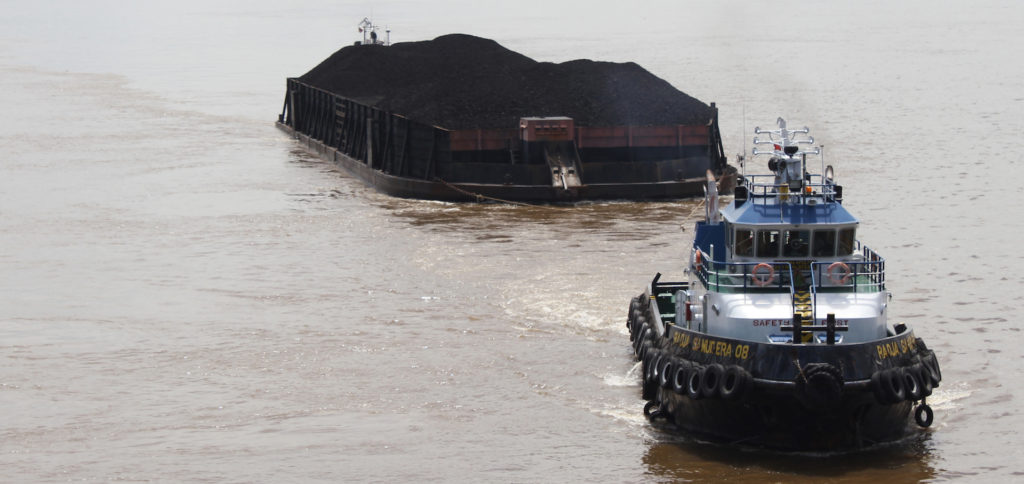
A barge transports coal on the Mahakam river, Indonesia: the country is subsidizing coal, despite its risks (Photo by Andrew Taylor/WDM, CC BY 2.0)
Countries in Southeast Asia who have invested in coal are finding themselves high and dry.
Because of competition from renewable energy, the Philippines is facing at least $21 billion in stranded coal plant assets, representing all new proposals in the pipeline. The figure represents over a fourth of the country’s national budget.
In Indonesia, 133 trillion Indonesian Rupiah is projected to be spent in 2021 to subsidize its thermal coal sector expansion, but the allocation can only delay, not prevent, what is taking place globally. Tiếp tục đọc “Coal assets stranded in Southeast Asia”