Why the U.S. Doesn’t Dominate the Solar-Panel Industry Anymore

theatlantic.com

America invented silicon solar cells in the 1950s. It spent more on solar R&D than any other country in the 1980s. It lost its technological advantage anyway.

Robinson Meyer

American researchers experimented with unconventional solar-energy designs, such as this thermoelectric panel. (Universal History Archive / Universal Images Group / Getty)

You wouldn’t know it today, but the silicon photovoltaic solar cell—the standard, black-and-copper solar panel you can find on suburban rooftops and solar farms—was born and raised in America.

The technology was invented here. In 1954, three American engineers at Bell Labs discovered that electrons flow freely through silicon wafers when they are exposed to sunlight.
It was deployed here. In 1958, the U.S. Navy bolted solar panels to Vanguard 1, the second American satellite in space.

And for a time, it was even made here. In the 1960s and ’70s, American companies dominated the global solar market and registered most solar patents. As late as 1978, American firms commanded 95 percent of the global solar market,  Tiếp tục đọc “Why the U.S. Doesn’t Dominate the Solar-Panel Industry Anymore”
How to make biomedical research (and biosafety labs) less dangerous and more ethical, post-COVID-19

thebulletin.org

By Laura H. Kahn | June 8, 2021

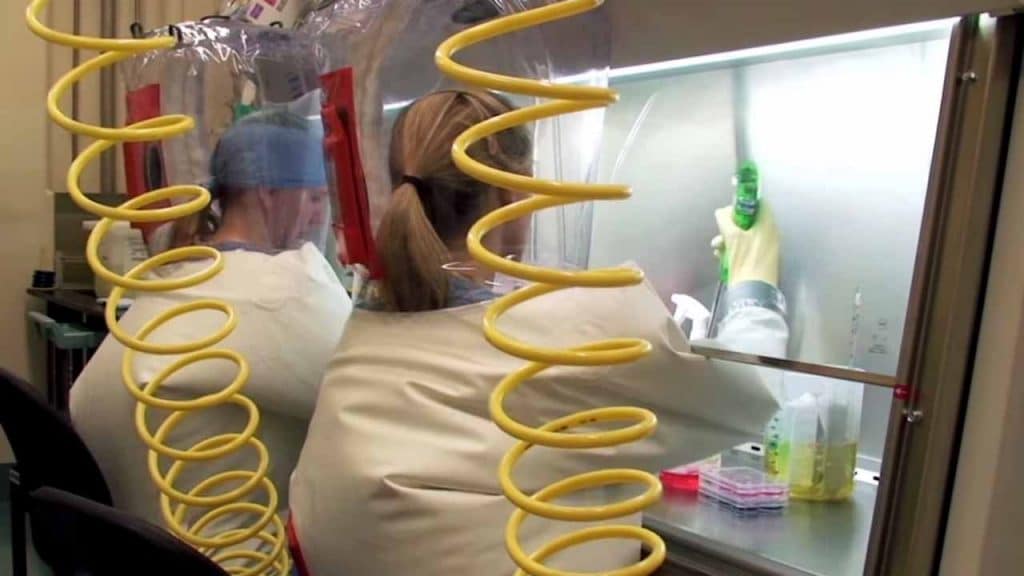
A biosafety level 4 lab. Researchers wearing positive pressure personnel suits at a US National Institute of Allergy and Infectious Diseases biosafety level 4 lab. Credit: National Institute of Allergy and Infectious Diseases.

Our luck has run out. The worst pandemic in a century has killed over 3.7 million people globally. In the United States, almost 600,000 have lost their lives to COVID-19. Societies around the world have been, and many are continuing to be, devastated.

The debate regarding the origins of the virus continues with growing circumstantial evidence that the virus leaked from a laboratory. Knowing the origins of SARS-CoV-2 is important if we want to prevent this catastrophe from happening again.

Tiếp tục đọc “How to make biomedical research (and biosafety labs) less dangerous and more ethical, post-COVID-19”

Class Reflection Activities to Close Out a Tough Year

edutopia.org

After a challenging year of pandemic schooling, these activities help students reflect on what they’ve learned and look forward to what’s coming next.By Hoa P. NguyenJune 4, 2021

Was this school year “The Bestest, Most Funnest and Absolutely Wonderfulest School Year Ever” or “The Baddest, Most Awfulest, Absolutely Worstest School Year Ever?” Fourth graders at Nebo Elementary School in North Carolina are still deciding, says their reading teacher, Lori Brenneise.

Tasked with writing a five-paragraph, humorous essay about the epic last year, Brenneise’s students have come up with different reasons why they picked one answer over the other. For some, “every day is pajamas day” or “noisily slurping cereal through the first block, sleeping through second, and noisily slurping ramen through third” were the highlights of their year. For others, the year brought challenges like messing up a class recording by unmuting and shouting “CHICKEN WINGS!” or getting kicked out of Google Meet and having unsupervised time. The whole class may never forget when they all unmuted at once, screaming and scaring a student who was sleeping through a lesson.

Tiếp tục đọc “Class Reflection Activities to Close Out a Tough Year”

Unlocking a Renewable Energy Future: How Government Action Can Drive Private Investment

WRI.org

Download full paper here >>

This Working Paper is part of the Clean Energy within our Energy Program. Reach out to Norma Hutchinson for more information.AuthorsNorma HutchinsonMaggie Dennis, Emil Damgaard Grann, Tyler Clevenger, Michelle Manion, Johannes Bøggild and Jennifer LaykePrimary Contacts

LicenseCreative Commons

A renewable energy future is within our grasp: the technology is now widely available and cost-effective in most places around the world. But the current rates of deployment remain well below what is required to avert the worst impacts of climate change. The private sector is poised to invest billions of dollars to massively speed up, scale and support the energy transition. However, many investors, particularly in the private sector, are deterred by some of the risks related to renewable energy investments. As the energy transition is likely to be financed largely by the private sector, governments must work with the private sector to remove barriers and incentivize investment in renewable energy.

This working paper, produced in partnership with Ørsted, focuses on the challenges and solutions to scaling investment in renewable energy generation and provides actionable policy solutions to unlock the private sector investment needed to support the energy transition.

Key Findings

  • The global transition to renewable energy is likely to be financed largely by the private sector, including utility companies, corporations, project developers, and various investment funds.
  • One critical element of the energy transition will be decarbonization of the world’s electricity supply. The needed technology is developing rapidly and the scale of the requisite investment is manageable, but current rates of deployment remain well below what is required to avert the worst impacts of climate change.
  • Challenges that inhibit decarbonization of the power sector fall into three categories: market structure that lacks appropriate incentives to catalyze private investment in new projects, lack of public support for siting renewable energy development, and incompatible or inadequate grid infrastructure.
  • Governments will play a critical role in scaling renewable energy capacity by providing regulatory frameworks and policy solutions to the challenges that are slowing down private sector investment.
  • Top priorities for governments will be to establish renewable energy targets, policies, and market instruments that incentivize and de-risk green energy investments; improve planning and permitting, and address community concerns, while balancing other concerns; and invest in modern electricity grids and infrastructure.

First Japan investment treaty claim renewable energy disputes in Asia

ISDS.bilateral.org

by Edwina Kwan, Amanda Lees, Patric McGonigal and Nick Horton

The global energy transition to counteract the impacts of climate change has seen an enormous growth of investments into renewable energy projects around the world. With China pledging to be carbon neutral by 2060 and other countries following suit, there are extensive opportunities for investment in renewables. However, the changing regulatory, political, and technological environment of the renewable energy sector poses real risks for investors. These risks are likely to lead to an increase in disputes between investors, host countries and commercial contracting parties.

Below, we highlight some recent international disputes in the renewable energy sector and consider the impact of these cases, in particular the first case against Japan, for foreign investors in renewable projects.

Big Tech’s attention economy can be reformed. Here’s how.

The business model is doing irreparable harm to society. But there is an alternative, and we don’t need to destroy the tech giants to get there.

by Tristan Harrisarchive page

technologyreview – January 10, 2021attention economy illoMS TECH | GETTY

This week a violent mob mounted the biggest attack on the Capitol, the seat of American democracy, in more than 200 years, driven by the false belief that the presidential election had been stolen. The chief author of that claim was President Donald Trump, but the mob’s readiness to believe it was in large part a product of the attention economy that modern technology has created.

News feeds on Facebook or Twitter operate on a business model of commodifying the attention of billions of people per day, sorting tweets, posts, and groups to determine which get the most engagement (clicks, views, and shares)—what gets the strongest emotional reactions. These commodifying attention platforms have warped the collective psyche. They have led to narrower and crazier views of the world.

Tiếp tục đọc “Big Tech’s attention economy can be reformed. Here’s how.”

Asia’s oil refiners aren’t going away anytime soon

bloomberg.com

Predictions of peak oil and the impending demise of fossil fuels will hit Asian oil refiners especially hard. The region is home to three of the top four oil-guzzling nations, and more than a third of global crude processing capacity. Yet, Asian refiners are expanding at a breakneck pace, even building massive new plants designed to run for at least half a century.

What is going on?

After a century of powering the world’s vehicles, oil refiners are having to plan for an oil-free future in mobility as cars begin switching to batteries, ships burn natural gas, and innovation brings on other energy sources such as hydrogen. Goldman Sachs Group Inc. predicts oil demand for transportation will peak as early as 2026.

Yet, even as a slew of headlines announce oil major BP Plc selling its prized Alaskan fields or Royal Dutch Shell Plc pulling the plug on refineries from Louisiana to the Philippines, Asia’s big refineries are planning for a much longer transition. Chinese refining capacity has nearly tripled since the turn of the millennium, and the nation will end more than a century of U.S. dominancethis year. And China’s capacity will continue climbing – to about 20 million barrels a day by 2025, from 17.4 million barrels at the end of 2020. India’s processing is also rising rapidly and could jump by more than half to 8 million barrels a day in the same time.

Reshore, Reroute, Rebalance: A U.S. Strategy for Clean Energy Supply Chains

CSIS.org

May 19, 2021DOWNLOAD THE REPORT

Clean energy technologies are now big business. Vast sums of money in clean energy supply chains promise to rearrange the geopolitics of industrial competition and energy security. Further, to achieve their increasingly ambitious climate goals, countries are likely to do far more to reshape industrial sectors, compressing in a few years a process that normally takes decades.

Tiếp tục đọc “Reshore, Reroute, Rebalance: A U.S. Strategy for Clean Energy Supply Chains”

What We Know—and Do Not Know—About Achieving a National-Scale 100% Renewable Electric Grid

NREL.GOV

NREL and DOE Experts Offer Fresh Perspective on Technical and Economic Challenges, Call for Collaborative Solutions to Decarbonization

May 19, 2021

3D rendering of a future high-renewable city with frameless solar panels, battery energy storage, wind turbines, and skyscrapers in the background.

With recently announced federal emissions-reduction targets, a push for national power-sector decarbonization, and plummeting wind and solar costs, the United States is poised to deploy major amounts of renewables, and fast.

At smaller scales, hundreds of U.S. cities, states, and corporations have already taken bold action in setting their own local targets for 100% renewable energy—and with recent analyses like the Los Angeles 100% Renewable Energy Study (LA100), we have growing confidence that reliable, 100% renewable power grids are feasible.

Tiếp tục đọc “What We Know—and Do Not Know—About Achieving a National-Scale 100% Renewable Electric Grid”

Asian cities face perfect storm of environmental hazards

phys.org

by Marlowe Hood

Across the globe, more than 400 large cities with a total population of 1.5 billion are at high or extreme risk

Of the 100 cities worldwide most vulnerable to environmental hazards all but one are in Asia, and most are in India or China, according to a risk assessment published Thursday.

Tiếp tục đọc “Asian cities face perfect storm of environmental hazards”

Hãy bình đẳng thực với phụ nữ

Chào các bạn,

Đây là vài mẩu chuyện mình nghe thường từ những người bạn, là những phụ nữ, là những người mẹ xung quanh mình:

Cô là bác sĩ, cô yêu nghề, cô làm việc cật lực, cô vừa đi làm ở bệnh viện, vừa làm thêm và chăm sóc con và tất nhiên cả chồng và gia đình. Giữa ngày bệnh nhân đông nghìn nghịt, trong ca trực, anh chồng nhắn tin nói dạo này cô bỏ bê việc không chăm nom đến con. Chồng cô muốn cô bỏ việc bệnh viện để làm thêm ở nhà. Cô quá mệt mỏi. Cô khóc tức tưởi ngay tại chỗ. Rồi cô đi rửa mặt, lau nước mắt và quay lại tiếp tục thăm khám chăm sóc bệnh nhân.

Đứa nhỏ đi bệnh viện, trong lúc mẹ bé chuẩn bị đồ đạc bồng đứa bé để xuất viện, bác sĩ đưa đơn thuốc dặn dò bố đứa bé cách chăm sóc. Về nhà, mẹ bé tìm đơn thuốc để biết bác sĩ nói sao. Ông bố vì lý do nào đó đã quăng đâu mất tiêu đơn thuốc và cũng không nhớ bác sĩ dặn dò sao. Rồi bé có vấn đề. Gia đình lo lắng, ông bà họ hàng xúm lại sao con mẹ mày đoảng quá, có vậy mà không biết chăm con!

Các bạn, đây là những người phụ nữ, những người mẹ bị xã hội gán cho danh hiệu “vinh quang” gọi là “Phụ nữ giỏi việc nước, đảm việc nhà”. Các bạn có nhìn thấy vấn đề ở đây?

Tại sao không phải là anh chồng bỏ thời gian nhiều hơn chăm sóc con để hỗ trợ vợ, để ủng hộ vợ tiếp tục công việc sự nghiệp? Tại sao không trách ông bố lơ đãng vô trách nhiệm với con mà câu cửa miệng là đổ tội cho mẹ đứa bé?

Tiếp tục đọc “Hãy bình đẳng thực với phụ nữ”

Giá thép tăng cao do đâu?

BNEWS Xu hướng diễn biến giá cả nguyên liệu và thép thành phẩm trên thế giới trong năm 2021 sẽ có nhiều biến động, có thể sẽ thiết lập một mặt bằng giá mới như thời kỳ hậu khủng hoàng tài chính 2008Xu hướng diễn biến giá cả nguyên liệu và thép thành phẩm trên thế giới trong năm 2021 sẽ có nhiều biến động, có thể sẽ thiết lập một mặt bằng giá mới như thời kỳ hậu khủng hoàng tài chính 2008. Ảnh minh họa: TTXVN

Giá thép tăng nhanh thời gian gần đây, khiến cho nhiều chủ đại lý và các chủ thầu xây dựng gặp khó khăn trong hoạt động kinh doanh. Nhiều ý kiến đặt nghi vấn có sự bắt tay giữa các công ty thép hay có hiện tượng đầu cơ nâng giá mặt hàng này. Tuy nhiên, theo các bộ ngành và doanh nghiệp, đây là động thái hết sức bình thường của thị trường.
Khảo sát thông tin giá thép trên thị trường, anh Ngô Khánh, Chủ đại lý sắt thép tại Hà Nội cho hay, hiện giá thép nhập vào ngày hôm nay (6/5) đã ở mức 18.200 đồng/kg, cao hơn 2.000 đồng/kg so với nửa tháng trước và tăng khoảng 5.000 đồng so với hồi đầu năm.

Battery parts can be recycled without crushing or melting

Dailyscience.com Date:April 29, 2021 Source:Aalto University Summary:Researchers have now discovered that electrodes in lithium batteries containing cobalt can be reused as is after being newly saturated with lithium. In comparison to traditional recycling, which typically extracts metals from crushed batteries by melting or dissolving them, the new process saves valuable raw materials, and likely also energy.

The proliferation of electric cars, smartphones, and portable devices is leading to an estimated 25 percent increase globally in the manufacturing of rechargeable batteries each year. Many raw materials used in the batteries, such as cobalt, may soon be in short supply. The European Commission is preparing a new battery decree, which would require the recycling of 95 percent of the cobalt in batteries. Yet existing battery recycling methods are far from perfect.

Researchers at Aalto University have now discovered that electrodes in lithium batteries containing cobalt can be reused as is after being newly saturated with lithium. In comparison to traditional recycling, which typically extracts metals from crushed batteries by melting or dissolving them, the new process saves valuable raw materials, and likely also energy. ‘In our earlier study of how lithium cobalt oxide batteries age, we noticed that one of the main causes of battery deterioration is the depletion of lithium in the electrode material. The structures can nevertheless remain relatively stable, so we wanted to see if they can be reused,’ explains Professor Tanja Kallio at Aalto University. Tiếp tục đọc “Battery parts can be recycled without crushing or melting”

Remarks by President Nguyen Xuan Phuc at Leaders Summit on Climate

Vietnamplus

State President Nguyen Xuan Phuc on April 23 delivered a speech at the virtual Leaders Summit on Climate hosted by the US.VNA Friday, April 23, 2021 21:24 

The virtual Leaders Summit on Climate hosted by the US (Photo: VNA)Hanoi (VNA) – State President Nguyen Xuan Phuc on April 23 delivered a speech on the economic opportunities of climate change at the Leaders Summit on Climate which is held virtually on April 22-23, at the invitation of US President Joe Biden.

Following is the full text of the remarks of President Nguyen Xuan Phuc.

President Joe Biden,

Excellencies,

Ladies and gentlemen,

I thank President Biden for inviting me and other leaders to this very important Summit.

I welcome the United States’ return to the Paris Agreement. I believe that the renewed leadership and strong commitment that President Biden espoused during the opening session, combined with our shared efforts, will lead us on the path towards achieving the goals of the Paris Agreement.

Mr. President,

Climate change is undoubtedly a major existential threat to many countries and to our planet. In Vietnam, last year alone, extreme weather has taken hundreds of lives and reversed decades of progress in poverty reduction. The Mekong Delta, our rice bowl and the home to 20 million Vietnamese, is suffering immensely from sea level rise, especially towards the end of this century.

Tiếp tục đọc “Remarks by President Nguyen Xuan Phuc at Leaders Summit on Climate”