Drought forces Vietnam’s Mekong Delta residents to leave home, family for work

May 6, 2016 by tuoitrenews Leave a Comment

tuoitrenews – The devastating effects of this year’s severe drought and salinization have forced many residents from Vietnam’s Mekong Delta to leave their hometown and earn their living elsewhere.

1881426-yfu3rshf

According to Tran Sang, an official in Soc Trang Province, previously, the situation was only evident in poorer households.

“Now, the climatic condition has been so serious this year that many citizens have lost thousands of square meters of crops, forcing them to abandon their homes to find work in other provinces,” Sang said.
Tiếp tục đọc “Drought forces Vietnam’s Mekong Delta residents to leave home, family for work”
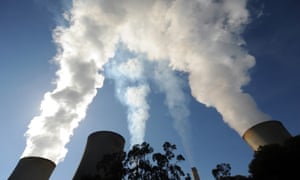
Nghiên cứu mới: Việt Nam có thể tiến tới 100% điện tái tạo vào năm 2050

Posted on 12 May 2016   |

Hà Nội, 12 tháng 5 năm 2016 –  Theo một báo cáo mới ra ngày hôm nay của WWF và Liên minh Năng lượng Bền vững Việt Nam, tới năm 2050, năng lượng tái tạo có thể đáp ứng 100% nhu cầu điện của Việt Nam, đồng thời giảm được đáng kể lượng khí thải các-bon độc hại có liên quan tới biến đổi khí hậu.

Báo cáo “Kịch bản bền vững cho ngành điện Việt Nam – Tầm nhìn đến năm 2050”, phân tích tổng quát về tình hình của ngành điện quốc gia trong bối cảnh tổng thể của ngành năng lượng đồng thời đưa ra các kịch bản phát triển mà Việt Nam có thể lựa chọn cho chiến lược phát triển tới năm 2050.
Tiếp tục đọc “Nghiên cứu mới: Việt Nam có thể tiến tới 100% điện tái tạo vào năm 2050”

Plans for coal-fired power in Asia are ‘disaster for planet’ warns World Bank

Experts have offered stark warnings that proposed power plants in India, China, Vietnam and Indonesia would blow Paris climate deal if they move ahead

 World Bank president Jim Yong Kim said that new coal-fired power plants ‘would spell disaster for us and our planet’.
The World Bank president, Jim Yong Kim, said that new coal-fired power plants ‘would spell disaster for us and our planet’. Photograph: Bloomberg via Getty Images

Không dễ khởi kiện đòi bồi thường do ô nhiễm

Thứ Năm, 20/03/2014 | 07:32:00 AM

Hội Bảo Vệ Thiên Nhiên và Môi trường Việt Nam

Mặc dù trường hợp gây ô nhiễm môi trường, trách nhiệm pháp lý vẫn phát sinh ngay cả khi không có lỗi, song việc chứng minh ba yếu tố còn lại không phải điều dễ dàng đối với người dân muốn khởi kiện.

Trong thời gian qua liên tiếp các vụ việc vi phạm, gây ô nhiễm môi trường trầm trọng của một sô doanh nghiệp được phanh phui. Thế nhưng, việc khởi kiện yêu cầu đòi bồi thường thiệt hại do ô nhiễm môi trường là một chặng đường dài từ quy định cho đến thực tế.

Bồi thường thiệt hại do ô nhiễm môi trường thuộc nhóm bồi thường thiệt hại ngoài Hợp đồng, do đó, về mặt nguyên tắc, trách nhiệm bồi thường chỉ phát sinh khi đáp ứng đủ các yếu tố sau: (i) Phải có thiệt hại xảy ra; (ii) Phải có hành vi trái pháp luật; (iii) Phải có mối quan hệ nhân quả giữa thiệt hại xảy ra và hành vi trái pháp luật; và (iv) Phải có lỗi cố ý hoặc lỗi vô ý của người gây thiệt hại .

Tiếp tục đọc “Không dễ khởi kiện đòi bồi thường do ô nhiễm”

Các công ty tại Việt Nam phải chịu trách nhiệm pháp lý cho các tội ác môi trường

English: Companies in Viet Nam to become liable for environmental crimes

Ở nhiều nơi về luật phổ biến của quốc gia, như Anh và Úc, các khái niệm về pháp nhân (trách nhiệm pháp lý của cá nhân) – legal personhood – theo đó sẽ được áp dụng tương tự cho các doanh nghiệp và các tập đoàn không chỉ về quyền mà còn ở trách nhiệm pháp lý như là một cá nhân. Điều này là một yếu tố cơ bản vốn có của bất kỳ chế độ nào trong việc tuân thủ toàn diện về tội phạm hình sự.

Ngược lại, rất nhiều bộ luật ở các quốc gia trách nhiệm hình sự về mặt pháp lý của các nhân là một khái niệm tương đối mới. Ví dụ, Pháp giới thiệu trách nhiệm hình sự của công ty năm 1994 Tiếp theo là Ý vào năm 2001 và Tây Ban Nha vào năm 2010.

Trong bối cảnh này, các phiên bản sửa đổi toàn diện của Bộ luật hình sự của Việt Nam, được Quốc hội Việt Nam thông qua vào tháng 11 năm 2015 và sẽ có hiệu lực ngày 01 tháng 7 năm 2016. Đây là điều đáng chú ý thể hiện cam kết mạnh mẽ của Việt Nam trong việc bảo vệ môi trường.
Tiếp tục đọc “Các công ty tại Việt Nam phải chịu trách nhiệm pháp lý cho các tội ác môi trường”

Companies in Viet Nam to become liable for environmental crimes

Published on Monday, 25 April 2016

Community forest rangers in Viet Nam.

blogs.adb – In many common law jurisdictions, such as the UK and Australia, the concept of ‘legal personhood’—whereby businesses and corporations can be subject to not only similar rights, but also similar liabilities, as individuals—is an inherent element of any comprehensive criminal enforcement regime. In contrast, in many code-based jurisdictions the criminal liability of legal personhood is a relatively new concept. For example, France introduced corporate criminal liability in 1994, followed by Italy in 2001, and Spain in 2010. Tiếp tục đọc “Companies in Viet Nam to become liable for environmental crimes”

9 Cách nhận diện các đạo sư và thầy Tâm linh giả mạo

English: 9 Ways to Spot a Fake Guru or Spiritual Teacher

Các mẫu hình lỗi thời của hệ thống niềm tin vào việc kiểm soát cuộc sống và mê hoặc tâm trí đã khiến cho nhiều người cuối cùng nhận ra rằng họ đã sống trong một thực tại giả tạo được tạo ra bởi những người ngạo mạn trong những cuộc dạo chơi về quyền lực.

Điều này đã dẫn đến một tình huống khiến nhiều người đi lang thang, cố gắng tìm cách riêng của mình trong thế giới mà không có nhiều nhà lãnh đạo tâm linh chân chính. Và kết quả là, một thị trường mới đã phát triển để cố đưa ra câu trả lời cho những người vỡ mộng với hệ thống giáo lý cũ. Tuy nhiên, có một vài thứ (một cách nói giảm) trong lĩnh vực mới – hướng dẫn tâm linh đương đại đang lợi dụng niềm tin của nhiều người và tạo ra tình trạng có vẻ rất đổi mới từ các mẫu hình lỗi thời. Thực tế, họ chỉ đơn giản là đánh bóng cái vỏ bên ngoài và đưa ra ảo tưởng rằng Tâm linh là một cái gì khác .
Tiếp tục đọc “9 Cách nhận diện các đạo sư và thầy Tâm linh giả mạo”

Năng lượng để thay đổi thế giới – Sáng kiến Khoa học toàn cầu Waterloo – Waterloo Global Science Initiative

English: Power to change the world – Communique Waterloo Global Science Initiative    

Năng lượng để thay đổi thế giới – Thông cáo Sáng kiến Khoa học toàn cầu Waterloo – Waterloo Global Science Initiative

Chúng ta đang sống trong thời điểm của cơ hội kinh tế và xã hội rất lớn. Các công nghệ mới, sáng tạo xã hội và kinh doanh hiện nay có thể tạo điều kiện cho hơn 2 tỷ người có khả năng tiếp cận các nguồn tài nguyên năng mà sẽ chuyển đổi triệt để đời sống của 2 tỷ người này thông qua những cải tiến về giáo dục, kinh doanh, nông nghiệp, y tế và các lĩnh vực khác.
Tiếp tục đọc “Năng lượng để thay đổi thế giới – Sáng kiến Khoa học toàn cầu Waterloo – Waterloo Global Science Initiative”

Power to change the world – Communique – Waterloo Global Science Initiative

Full report – Power to change the world – Communique Waterloo Global Science Initiative

We are living in a moment of great economic and social opportunity. Emerging technological, social and  business innovations mean that it is now possible for more than 2 billion people to gain access to the energy  resources that will radically transform their well-being through improvements in education, business, agriculture, healthcare and other spheres.

Although there are opportunities in opening access to many forms of energy, it is access to electricity that will  bring the most substantive change to the largest number of people. The application of increasingly low-cost,  modular renewable energy technologies to this emerging market also offers an opportunity to mitigate the  effects of climate change and enable energy-poor communities to become hubs of transformative leadership in  the global shift towards decarbonization. Tiếp tục đọc “Power to change the world – Communique – Waterloo Global Science Initiative”

Time to let go: Remaking Humanitarian action for modern area

Despite a decade of system-wide reforms, the humanitarian sector is still falling short in the world’s most enduring crises.

ODI – The humanitarian system is simply not doing a good job in the eyes of the people it aims to help.

It is time for the humanitarian sector to let go of some of the fundamental – but outdated – assumptions, structures and behaviours that prevent it from adapting to meet the needs of people in crises.

This is a proposal for radical change to create a humanitarian system that is fit to respond to the challenges of both today and tomorrow. It calls for:

The case for change

The humanitarian system is caring for more wounded and more hungry people in more places than was conceivable even a generation ago.

 Yet, despite this progress, it is struggling to keep pace with the growing demands placed on it. Tiếp tục đọc “Time to let go: Remaking Humanitarian action for modern area”

9 Ways to Spot a Fake Guru or Spiritual Teacher

The old paradigm of life-controlling and mind-manipulating belief systems has left many to finally realize they have been living in an artificial reality created by egotistical people on power trips. This has led to a situation where many are wandering, trying to find their own way in a world without many true leaders. As a result of this, a new market has developed which attempts to showcase answers to these people who have become disillusioned with the old dogmatic systems. However, there are quite a few (an understatement) in this new domain of contemporary spiritual guidance that are taking outright advantage of people and creating circumstances that vary very little from the old paradigm, they simply polished it and gave the illusion that it’s something else. Tiếp tục đọc “9 Ways to Spot a Fake Guru or Spiritual Teacher”

5 ways public-private partnerships can promote gender equality

blog.worldbank – From my corner of the World Bank, the development objective of promoting gender equality can seem vague or unrelated to what we do. We can give three cheers for our colleagues who focus on gender issues for successfully developing and releasing  the World Bank’s new Gender Equality, Poverty Reduction and Inclusive Growth Strategy — and then return to our work of closing the infrastructure financing gap and helping governments prioritize their infrastructure projects.

But are there areas in our own work on public-private partnerships (PPPs) where we can and should evaluate the role gender plays? Based on the quantity of literature my colleagues at the PPP Infrastructure Resource Center (PPIRC) have amassed in version 1.0 of their impact of PPPs on gender inclusion page of their website, the answer is yes. Tiếp tục đọc “5 ways public-private partnerships can promote gender equality”

Mekong nations take on Golden Triangle narco-empire

By Andrew R.C. Marshall   March 20, 2016 | 03:26 pm GMT+7

Mekong nations take on Golden Triangle narco-empire

A Thai soldier stands guard at Ban Kaen Kai operation base on the Mekong river at the border between Thailand and Laos March 3, 2016. Patrols on the Mekong River by the Laotian army and Myanmar police have subdued pirates who once robbed cargo ships with impunity. But drug production and trafficking in the region, known as the Golden Triangle, is booming – despite the presence of Chinese gunboats and Chinese armed police. The United Nations Office on Drugs and Crime estimates that Southeast Asia’s trade in heroin and methamphetamine was worth $31 billion in 2013. REUTERS/Jorge Silva

“Golden Triangle” is source of most of drugs reaching China

THE MEKONG RIVER – The Lao People’s Army patrol boat was custom-made in China with night-vision capability and two of the most powerful engines on this remote stretch of the Mekong River.

Today, like most days, it sits idle for lack of gasoline, guarded by a single Laotian soldier in flip-flops.

Tiếp tục đọc “Mekong nations take on Golden Triangle narco-empire”

Learning With Documentary Films: Strategies to Engage Students

Documentaries and film can bring the world to students in very real ways. Cleary Vaughan-Lee, Education Director for Global Oneness Project, tells us how and shares resources and strategies. And join Cleary and me on Twitter this Thursday, October 29 at 8pmET/5pmPT for #GlobalEdChat! We will delve deeper into how to use film in the classroom.

edweek Why do we need stories? Stories are universal and create connections across time, place, and cultures. Now more than ever, we need stories to help us understand and connect to our fast-changing world. Impactful stories—a book, a film, or an oral story passed down from generations—have the power to bring us closer to something much greater than ourselves. Tiếp tục đọc “Learning With Documentary Films: Strategies to Engage Students”

Here Come the Unregulated GMOs

technologyreview – People are arguing about whether genetically modified foods should carry labels. But the next generation of GMOs might not only be unlabeled—they might be unregulated.

Over at Scientific American you can read a 6,000-word story about how one such organism, a GM mushroom, was created. The short version is that a plant scientist named Yinong Yang used the gene-editing technique called CRISPR to snip out a few DNA letters in the genome of “Agaricus bisporus, the most popular dinner-table mushroom in the Western world.”
The result: he turned off an enzyme that turns mushrooms brown.

Why wouldn’t a modified mushroom be regulated, you ask? Because regulation of GMOs is a big mess that doesn’t make too much sense. Back in the 1990s, when Monsanto and the like were first coming out with biotech crops, the U.S. cobbled together a way to regulate them from existing rules. Tiếp tục đọc “Here Come the Unregulated GMOs”