Ethics guidelines for trustworthy Artificial Intelligence

Today, the High-Level Expert Group on AI presents their ethics guidelines for trustworthy artificial intelligence. This follows the publication of the guidelines’ first draft in December 2018 on which more than 500 comments were received through an open consultation.

Download the guidelines

Visit the website

According to the guidelines, trustworthy AI should be:

(1) lawful –  respecting all applicable laws and regulations

(2) ethical – respecting ethical principles and values

(3) robust – both from a technical perspective while taking into account its social environment Tiếp tục đọc “Ethics guidelines for trustworthy Artificial Intelligence”

Wetlands help protect us from floods and purify our water

by Zita Sebesvari and Yvonne Walz | United Nations University, Institute for Environment and Human Security
Friday, 22 March 2019 07:53 GMT

Despite the many benefits of wetlands, their potential is still not fully utilisedEvery day climate-related disasters are happening all around the globe, and this trend will keep increasing. Just between 1998 and 2017, “climate-related and geophysical disasters killed 1.3 million people and left a further 4.4 billion injured, homeless, displaced or in need of emergency assistance”, according to U.N. figures.

On this year’s World Water Day, it is important to highlight the importance of protecting wetlands, so that they can maintain their natural structure and way of functioning. Wetlands such as floodplains, marshes, mangroves and peatlands help decrease flooding by increasing the infiltration of excess water into the soil. Along coastlines, they can also act as a natural buffer and reduce the energy of waves and currents, reducing exposure to storms and surges. Tiếp tục đọc “Wetlands help protect us from floods and purify our water”

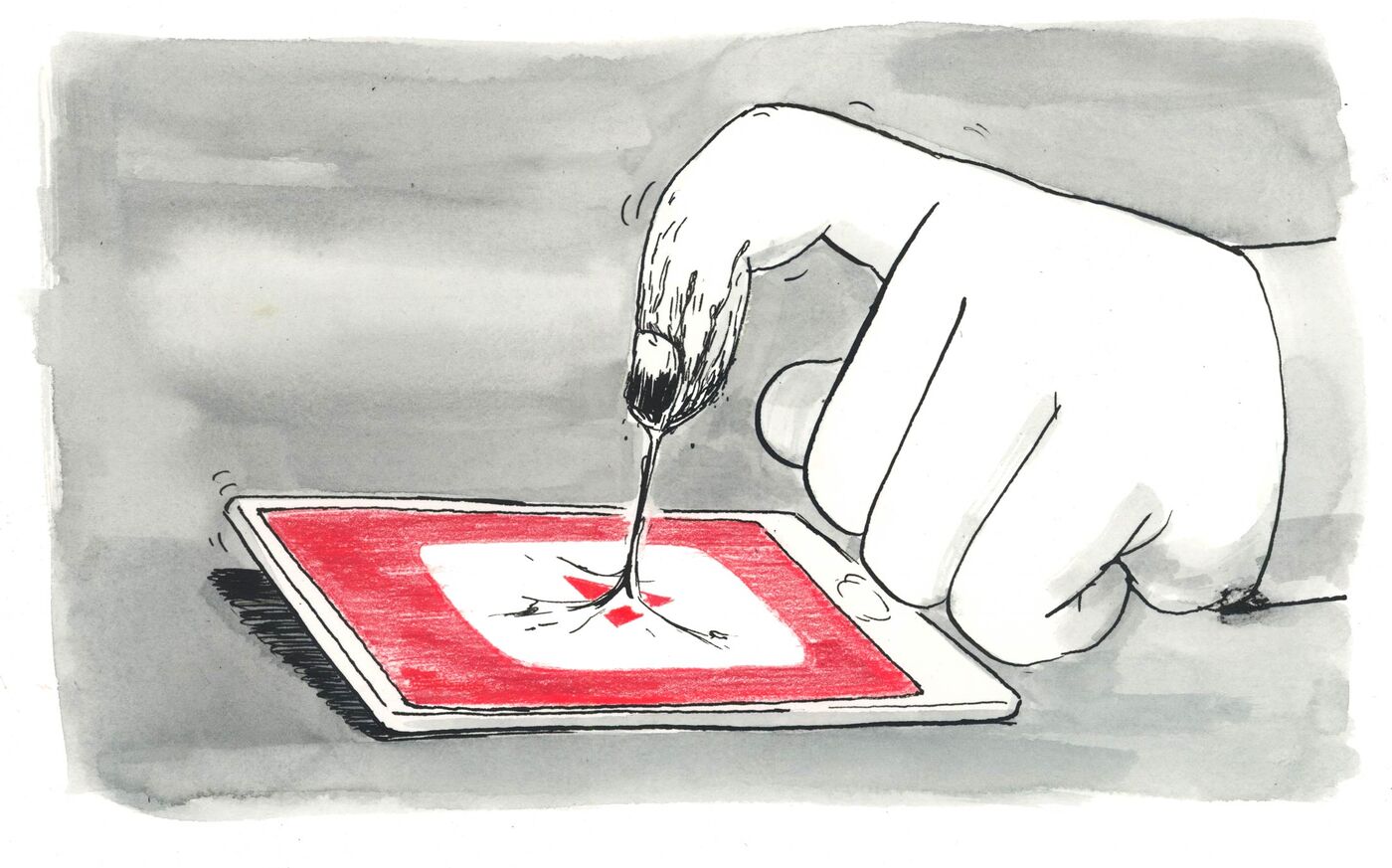
YouTube Executives Ignored Warnings, Letting Toxic Videos Run Rampant

bloomberg

Proposals to change recommendations and curb conspiracies were sacrificed for engagement, staff say.

undefined
Illustration: Graham Roumieu

Wojcicki, YouTube’s chief executive officer, is a reluctant public ambassador, but she was in Austin at the South by Southwest conference to unveil a solution that she hoped would help quell conspiracy theories: a tiny text box from websites like Wikipedia that would sit below videos that questioned well-established facts like the moon landing and link viewers to the truth.

Wojcicki’s media behemoth, bent on overtaking television, is estimated to rake in sales of more than $16 billion a year. But on that day, Wojcicki compared her video site to a different kind of institution. “We’re really more like a library,” she said, staking out a familiar position as a defender of free speech. “There have always been controversies, if you look back at libraries.”

Since Wojcicki took the stage, prominent conspiracy theories on the platform—including one on child vaccinations; another tying Hillary Clinton to a Satanic cult—have drawn the ire of lawmakers eager to regulate technology companies. And YouTube is, a year later, even more associated with the darker parts of the web. Tiếp tục đọc “YouTube Executives Ignored Warnings, Letting Toxic Videos Run Rampant”

How can digitalisation ease the plight of Southeast Asia’s smallholder farmers?

Although smallholders provide four out of every five plates of food eaten in the region, they remain some of the poorest people due to a lack of information, capital and funding. A new digital platform of mobile agri-tech solutions is out to change this.

What if rural, smallholder farmers in Asia could harness the power of digital technology to access solutions that were previously within each of only wealthy, large-scale farmers and agribusiness corporations?

Their labourious work supporting the global production of food and other consumer products would be more productive and profitable, and make farming, a waning profession in Asia, more attractive to young people, according to Paul Voutier, director for knowledge and innovation at Grow Asia, a Singapore-based, multi-stakeholder partnership platform that seeks to improve farmer livelihoods.
Tiếp tục đọc “How can digitalisation ease the plight of Southeast Asia’s smallholder farmers?”

Vietnamese supermarkets go back to leaves, leaving plastic bags

By Thi Ha, Dat Nguyen   April 3, 2019 | 08:13 am GMT+7

Vietnamese supermarkets go back to leaves, leaving plastic bags

At least three supermarket chains in Vietnam are using banana leaves to wrap vegetables. Photo by VnExpress/Nghe Nguyen

Several Vietnamese supermarkets have started using banana leaves to wrap vegetables in an effort to reduce plastic waste.

Shoppers at Lotte Mart in Ho Chi Minh City’s District 7 were recently surprised to see scallions, okra and other vegetables produce wrapped in banana leaves.

Tiếp tục đọc “Vietnamese supermarkets go back to leaves, leaving plastic bags”

Radioactive Glass Beads May Tell the Terrible Tale of How the Fukushima Meltdown Unfolded

ScientificAmerican

The microscopic particles unleashed by the plant’s explosions are also a potential environmental and health concern

Radioactive Glass Beads May Tell the Terrible Tale of How the Fukushima Meltdown Unfolded
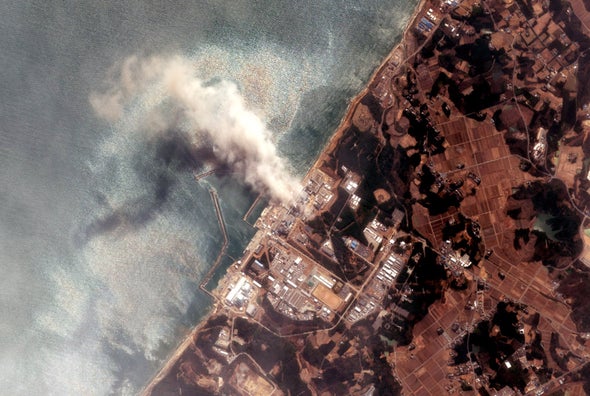
The Fukushima Dai-ichi Nuclear Power plant after a massive earthquake and subsequent tsunami on March 14, 2011 in Futaba, Japan. Credit: Getty Images

On March 14 and 15, 2011, explosions unleashed invisible radioactive plumes from the Fukushima Daiichi Nuclear Power Plant, crippled three days earlier when the strongest recorded earthquake in Japan’s history triggered a massive tsunami. As the plumes drifted over the neighboring countryside, their contents—including radioactive cesium, a by-product of the plant’s fission reactions—fell to the ground and over the ocean.

What no one knew or expected was the fallout also contained bacteria-size glassy beads, with concentrations of radioactive cesium that were far higher than those in similar-size motes of tainted dust or dirt. Tiếp tục đọc “Radioactive Glass Beads May Tell the Terrible Tale of How the Fukushima Meltdown Unfolded”

Glyphosate’s kidney disease link: More science, less politics (commentary)

mongabay

on 5 March 2019

New airport for Vietnam’s Ha Long Bay puts the popular destination at extreme risk of overtourism

Tourist boats in Ha Long Bay in Vietnam’s Quang Ninh province. Picture: AFP

SCMP

  • Improved infrastructure makes the Unesco World Heritage Site increasingly accessible, hopes to welcome 16 million tourists in 2020
  • Travellers already complain of overcrowding and rubbish-infested water

Ha Long Bay’s postcard-perfect karst islets have long attracted travellers to its Unesco-approved seascape. In 2017, the destination (population circa 1,500), in northern Vietnam’s Quang Ninh province, welcomed almost 7 million international and domestic visitors, according to website Halong Bay Tourism. The region’s tourism department hopes to receive up to 16 million tourists by the end of next year, “and to rake in VND30-40 trillion (US$1.3-1.7 billion) in revenue”, it states, on its website.

Taking a major step towards achieving that goal, on December 30, Vietnam opened Van Don International Airport, which considerably cuts travel time to Ha Long Bay for overseas visitors. What was once an eight-hour round trip from Hanoi is now just over an hour from an airport that, when fully operational, will connect the bay with 35 cities, including Hong Kong, Macau and 10 in mainland China.

Tiếp tục đọc “New airport for Vietnam’s Ha Long Bay puts the popular destination at extreme risk of overtourism”

The global impact of coal power

Sciencedaily

Date: February 19, 2019

Source:ETH Zurich

Summary:With data and modelling from almost 8,000 coal power plants, researchers present the most comprehensive global picture to date of climate and human health impacts from coal power generation.

Coal-fired power plants produce more than just the carbon dioxide that contributes to global warming. When burning coal, they also release particulate matter, sulphur dioxide, nitrogen oxide and mercury — thus damaging the health of many people around the world in various ways. To estimate where action is most urgently required, the research group led by Stefanie Hellweg from ETH Zurich’s Institute of Environmental Engineering modelled and calculated the undesired side effects of coal power for each of the 7,861 power plant units in the world.

The last five years have been Earth’s warmest since records began in 1880

February 7, 2019A depiction of how temperatures have risen over North America from 2014 to 2018

From dispensing toilet paper to shaming jaywalkers, China powers up on facial recognition

Channelnewsasia

The country has one of the world’s most powerful facial recognition systems, which is being used in various ways, but concerns have been raised, as the programme Why It Matters finds out.

Even as Facebook’s #10yearchallenge sparks concerns that the social media giant is mining data for facial recognition AI, China’s facial recognition systems are already a reality in everyday life. Why It Matters host Joshua Lim finds out how public restrooms use it to prevent people from taking too much toilet paper; and how jaywalkers are identified, then publicly shamed on a digital billboard.
Tiếp tục đọc “From dispensing toilet paper to shaming jaywalkers, China powers up on facial recognition”

Woman Killed by Fire in Menstruation Hut, as Nepal Fights a Tradition

nytimes
A chhaupadi hut in the village of Pali, western Nepal. Women who observe the taboo are banished to mud or stone huts, some of them no bigger than closets.CreditCreditTara Todras-Whitehill for The New York Times

By Bhadra Sharma and Kai Schultz

KATHMANDU, Nepal — Parbati Bogati knew what to do when her period came.

Ms. Bogati, 21, sequestered herself in an abandoned house, in keeping with a centuries-old taboo that declares menstruating women impure, officials from her area in rural western Nepal said.

As the temperature dropped below freezing on Wednesday evening, she tried to keep warm, apparently burning wood and clothing.

By the next morning, her legs were charred and she was dead.

“It seems she also died from suffocation,” said Lal Bahadur Dhami, the deputy superintendent of the area’s police. At least three other peopledied this year while following the same superstition.

The taboo, which has its roots in Hinduism, is called chhaupadi, from the Nepali words meaning someone who bears an impurity. During women’s periods, it bars them from touching neighbors’ food or entering temples. They cannot use communal water sources or kitchen utensils. It is considered bad luck to touch them.

Tiếp tục đọc “Woman Killed by Fire in Menstruation Hut, as Nepal Fights a Tradition”

Thúc đẩy kiến thức bản địa và thực hành nông nghiệp tốt trong thích ứng với biến đổi khí hậu

TÀI LIỆU

XÁC ĐỊNH VÀ SỬ DỤNG KIẾN THỨC BẢN ĐỊA TRONG THÍCH ỨNG VỚI BIẾN ĐỔI KHÍ HẬU DỰA VÀO CỘNG ĐỒNG, 2014 tại đây

THÚC ĐẨY KIẾN THỨC BẢN ĐỊA VÀ THỰC HÀNH NÔNG NGHIỆP TỐT TRONG THÍCH ỨNG BIẾN ĐỔI KHÍ HẬU, 2017 tại đây