The powerful explosion that crippled Vladimir Putin’s showcase bridge over the Kerch Strait linking Russia and Crimea increased pressure on the cornered Kremlin potentate to do something shocking, as he loses control on the battlefield and inside his royal court. But will he stop at the intensified missile bombardments that are hitting apartments and playgrounds in Kyiv and other civilian infrastructure across Ukraine?
TTCT – Ngày 16-9-2022, thiếu nữ 22 tuổi người Kurd Mahsa Amini bị cảnh sát đạo đức Iran tại thủ đô Tehran bắt giữ về tội “ăn mặc không đứng đắn” và mang về đồn.
Một phụ nữ người Iran tự cắt tóc trong cuộc biểu tình bên ngoài lãnh sự quán Iran tại Istanbul, Thổ Nhĩ Kỳ. Ảnh: AFP
Chuyện này rất phổ biến tại Iran, vì phụ nữ ra đường phải có khăn che tóc. Tùy thời điểm và địa điểm, lúc gay gắt thì phải khoác cả áo choàng đen hay không được dùng khăn màu. Có lúc không được dùng cả vớ trắng vì phụ nữ không được hở cổ chân, họ tuân thủ nhưng đi vớ trắng để phản đối. Có lúc nới thì tóc được hở ít nhiều và khăn quấn nhiều màu lượt là đẹp mắt.
Cách mạng thần quyền ở Iran thành công năm 1979 và lúc này lúc kia, khắt khe và cởi mở tùy tình hình. Ngược lại với các chế độ Hồi giáo quân chủ thân Mỹ ở vùng Vịnh, Iran có bầu cử quốc hội và tổng thống dân chủ và thật thà ít nhiều. Còn nhớ Cách mạng xanh năm 2009, quần chúng xuống đường phản đối cuộc bầu cử tổng thống bị cho là gian lận.
Published October 28, 2021Last updated July 21, 2022
China has a massive amount of corporate debt. At $27 trillion, it boasts a debt-to-GDP ratio of 159%, almost 60% higher than the global rate and nearly twice that of the US, according to research published this month by S&P Global Ratings.
“China’s growth has been largely driven by two contours: One is credit, and the other is carbon,” says Eunice Tan, one of the report’s lead authors and head of credit research for S&P Global Ratings’ Asia-Pacific region.
Beijing now wants to tame both those economic engines—credit and carbon—while maintaining stability and control, and while continuing to hit GDP growth targets. On the carbon front, it has released a high-level policy framework outlining a path to peaking carbon emissions by 2030. On the credit front, the central bank has sought to tame debt in the property sector and shield banks from exposure to troubled developers.
LTS. Những ngôi chùa ken cứng người cúng sao giải hạn, những pho tượng Bồ tát ngập ngụa trong tiền lẻ, những dự án chùa chiền mang tham vọng kỷ lục, những địa phương sinh hoạt người dân đảo lộn bởi khách hành hương tứ xứ dồn dập đổ về… những hình ảnh ấy của Tháng giêng Kỷ Hợi 2019 hoàn toàn xa lạ với giáo lý đạo Phật, trái ngược với bản chất của chính thể. Vậy mà Cũng trong chính tháng giêng này, vắng đi một học giả nghiên cứu tôn giáo uy tín, và lại thêm một dự án tâm linh quy tụ tài nguyên đất quốc gia…
“Điều đáng sợ không phải là có quá nhiều thần thánh, điều đáng sợ là con người không còn sợ cái gì siêu việt hơn mình và từ đó mà việc gì cũng dám làm, kể cả những việc phi nhân tính nhất” – kết cuộc trò chuyện với Người Đô Thị về thực trạng tín ngưỡng tôn giáo Việt Nam hiện nay, nhưng đồng thời TS. Hoàng Văn Chung (*), Trưởng phòng Nghiên cứu Lý luận và Chính sách tôn giáo, Viện Nghiên cứu Tôn giáo cũng gợi ra cần một góc nhìn khác thấu đáo hơn, qua những phân tích, nhìn nhận dưới đây.
Laos will be hard-pressed to meet its external debt obligations. Photo: Faceboo
Laos’ public debt could climb to nearly 95% of GDP by the end of 2022, making it one of the most heavily indebted and mostly likely to default nations in Asia, according to World Bank estimates published this month
Significantly, the World Bank’s already dire debt figures do not encompass all of the small Southeast Asian nation’s liabilities.
Asia Times’ reporting and analysisshow that Laos’ total debt, including other publicly guaranteed liabilities not included in headline figures, could take the state’s total financial obligations well over 100% of GDP for the first time ever this year. And that’s only the debt officially recognized by the Lao government.
High-profile initiatives to plant millions of trees are being touted by governments around the world as major contributions to fighting climate change. But scientists say many of these projects are ill-conceived and poorly managed and often fail to grow any forests at all.
It was perhaps the most spectacular failed tree planting project ever. Certainly the fastest. On March 8, 2012, teams of village volunteers in Camarines Sur province on the Filipino island of Luzon sunk over a million mangrove seedlings into coastal mud in just an hour of frenzied activity. The governor declared it a resounding success for his continuing efforts to green the province. At a hasty ceremony on dry land, an official adjudicator from Guinness World Records declared that nobody had ever planted so many trees in such a short time and handed the governor a certificate proclaiming the world record. Plenty of headlines followed.
But look today at the coastline where most of the trees were planted. There is no sign of the mangroves that, after a decade of growth, should be close to maturity. An on-the-ground study published in 2020 by British mangrove restoration researcher Dominic Wodehouse, then of Bangor University in Wales, found that fewer than 2 percent of them had survived. The other 98 percent had died or were washed away.
Is there a way to bridge the US political divide? | Vantage Point Al Jazeera
Al Jazeera English – 11/9/2022
A culture war is raging in the United States. Every issue seems to be a matter of identity – left or right, liberal or conservative. It’s getting louder — and violent. Is there a way out? Or is the U.S. culture war its new forever war? Malika Bilal looks at the issue for #AJVantagePoint.
Four major factors are coinciding that will affect the future of nuclear power: a recognition that achieving net-zero by 2050 requires nuclear in the energy mix; an availability of federal money due to the infrastructure bill and Inflation Reduction Act; an urgent need to increase base load for utilities; and a plethora of new, safer, easier-to-build small modular reactors coming to market. There is a quickening of the pace throughout the nuclear establishment as product and mechanism appear to be aligned. But, there have been false starts in the past for nuclear. Is this the start of a nuclear revival, and will it be characterized by modified reactors of the past utilizing advanced fuel and safety – or radical new designs? Will utilities buy reactors from new companies or from the usual players?
The Tennessee Valley Authority has signed up for two BWRX-300 reactors from GE Hitachi, and Dow Chemical is partnering with X-Energy for process heat and generation technology. Is this the start of a pattern, or will Wall Street seek out private investment opportunities in nuclear generation? These critical questions and more will be addressed in this briefing, which will consist of a panel of experts taking questions from knowledgeable journalists.
USEA Acting Executive Director Sheila Hollis will give opening remarks. Llewellyn King, nationally syndicated newspaper columnist and broadcaster, organized this briefing and will moderate. The general audience can submit questions using the Zoom Q&A function, but members of the media will be given preference. A recording will be made available after the briefing.
Panelists: Jon Ball, Executive VP, Market Development, GE Hitachi Nuclear Energy Scott Strawn, VP, Burns & McDonnell Bud Albright, President & CEO, U.S. Nuclear Industry Council Doug True, VP & Chief Nuclear Officer, Nuclear Energy Institute
Journalists: Ken Silverstein, Forbes Jennifer Hiller, The Wall Street Journal Markham Hislop, Energi Media Rod Kuckro, Freelance
Last year’s withdrawal of US forces from Afghanistan marked the end of the US’ longest war.
Would the war have even started if US leaders had told the truth from the beginning? #AJVantagePoint looks at the history of the fog of war and military deception.
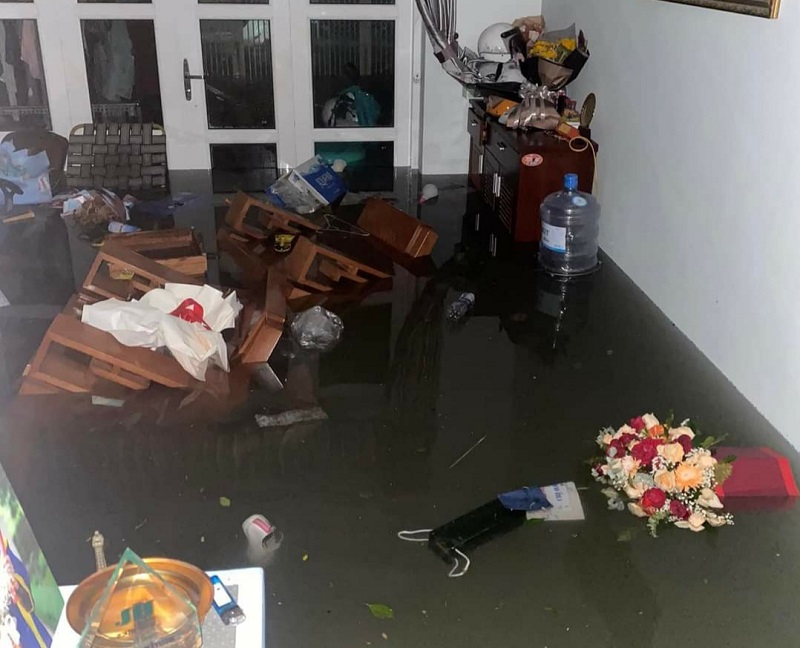
Đà Nẵng vừa trải qua trận lụt lịch sử. Nhiều người dân Thành phố phải thốt lên rằng, đây là trận ngập lụt chưa từng thấy. Vậy, trận ngập lụt kinh hoàng này đến từ những nguyên nhân nào?
Marjorie Taylor Greene in Michigan this month.Brittany Greeson for The New York Times
A political revival
In February 2021, Representative Marjorie Taylor Greene of Georgia was dealt what would typically be considered a knockout blow in Washington politics: She lost her seats on House committees, where Congress does much of its work, because she had supported the QAnon conspiracy theory and spread other dangerous misinformation on social media.
Analysis by Steven Jiang, Beijing Bureau Chief, CNN Updated 4:54 AM EDT, Mon October 17, 2022
Editor’s Note: A version of this story appeared in CNN’s Meanwhile in China newsletter, a three-times-a-week update exploring what you need to know about the country’s rise and how it impacts the world. Sign up here.
BeijingCNN —
During China’s National Day holiday in early October, several expatriate friends and I took our young children – who are of mixed races and tend to stand out in a Chinese crowd – to the Great Wall on the outskirts of Beijing.
As we climbed a restored but almost deserted section of the ancient landmark, a few local families on their way down walked past us. Noticing our kids, one of their children exclaimed: “Wow foreigners! With Covid? Let’s get away from them…” The adults remained quiet as the group quickened their paces.
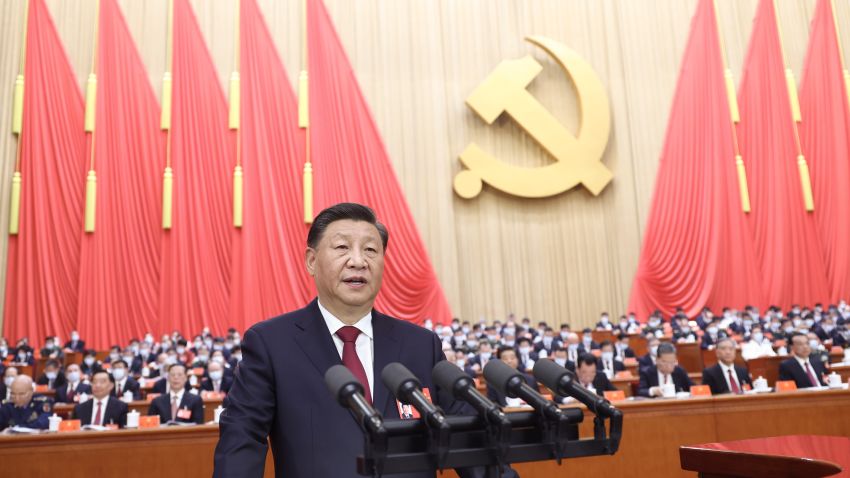
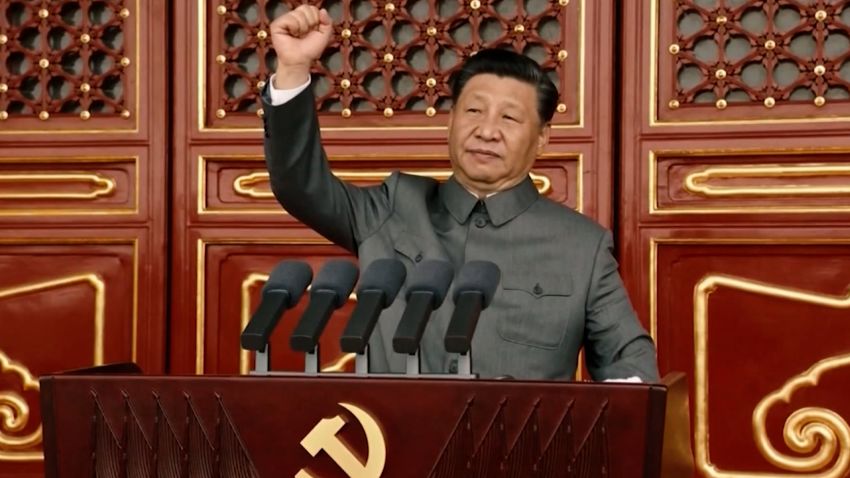
Understanding the big picture is timely as Xi is poised to break convention to assume a third term as the head of the Chinese Communist Party – the real source of his power instead of the ceremonial presidency – at the ruling party’s twice-a-decade national congress, which opened in Beijing on Sunday.
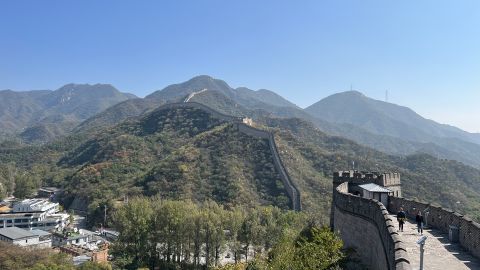
The view of the Great Wall of China on October 7, 2022. Steven Jiang/CNN
The Great Wall, a top tourist attraction that normally draws throngs of visitors during holidays, stood nearly empty when we went thanks to Xi’s insistence – three years into the global pandemic – on a policy of zero tolerance for Covid infections while the rest of the world has mostly moved on and reopened.
China’s borders have remained shut for most international travelers since March 2020, while many foreigners who once called the country home have chosen to leave. With the highly contagious Omicron variant raging through parts of the country, authorities had discouraged domestic travel ahead of National Day holiday. They are also sticking to a playbook of strict quarantine, incessant mass testing and invasive contact tracing – often locking down entire cities of millions over a handful of cases. Unsurprisingly, holiday travel plummeted during the so-called “Golden Week” along with tourism spending, which fell to less than half of that in 2019, the last “normal” year.
And it’s not just one industry: Pessimism blankets other sectors, from automobile to real estate, as the world’s second-largest economy falters.
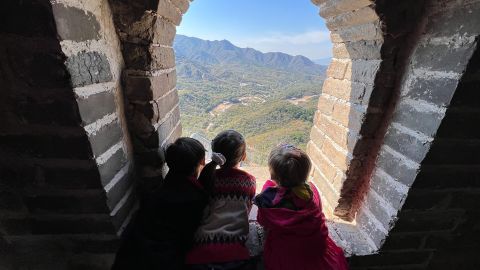
Children visit the Great Wall of China on October 6, 2022. Steven Jiang/CNN
Xi’s biggest challenge
The Chinese economic slowdown poses a massive political challenge for Xi, whose party’s legitimacy in the past few decades has relied on rapid growth and rising incomes for 1.4 billion people. It’s also a harsh reality check for the international community: the world’s longtime growth engine is sputtering, just as the prospect of a global recession emerges.
But Xi’s costly “zero-Covid” intransigence is a natural outcome of the unprecedented amount of power he has amassed. For many Chinese officials, this policy is less about science and more about political loyalty to the country’s most powerful leader in decades.
Online videos abound of local health workers swabbing fruits, animals and even shoes for Covid testing despite the absence of sound scientific basis. China’s only Covid-related deaths in September were 27 people who were killed when their bus crashed on its way to a quarantine facility. Still, officials nationwide have doubled down on enforcing draconian rules, especially ahead of the party congress, helped by the world’s most sophisticated surveillance technologies.
China had boasted more security cameras than any other country even before Covid. Now, in the age of smartphones, mandatory apps allow the government to check people’s Covid status and track their movement in real time. Authorities can easily confine someone to their home by remotely switching the health app to code red – and they did just that on several occasions to stop potential protesters from taking to the streets.
Whether physical lockdowns or digital manipulation, these measures born out of “zero-Covid” have proven such effective means of control in a system obsessed with social stability that many worry Xi and his underlings will never ditch the policy. A series of recent articles published by the party’s mouthpieces had reinforced such concern by stressing the policy’s “correctness” and “sustainability,” even before Xi hailed “zero-Covid” as a resounding success story in his two-hour speech Sunday. And state media fills its coverage with depictions of the “grim reality” in foreign countries where leaders supposedly turn a blind eye to mass fatalities and suffering caused by Covid – in contrast to China’s apparent triumph in saving lives with “minimal overall cost.” For years, Xi’s cyber police have been fortifying the country’s so-called “Great Firewall” – perhaps the world’s most extensive internet filtering and censorship system that blocks and deletes anything deemed “harmful” by the party. Now supported by artificial intelligence, censors quickly scrub clean any posts seen as contradicting the party line – including on Covid.
This potent mix of propaganda and control under Xi appears to have had its desired effect on a large segment of Chinese society, creating a buffer for the leadership by convincing enough people of the superiority of China’s system even as millions of their fellow countrymen grow resentful of “zero-Covid.” But this approach, combined with prolonged border closure and escalating geopolitical tensions, also provides fertile ground for xenophobia.
The local child’s remarks on the Great Wall reflected that. But the true danger of the “blame the foreigners” sentiment comes when adults in powerful positions take advantage of it in the face of mounting pressure on the domestic front.
Here’s Xi Jinping’s vision to make China great again 03:04 – Source: CNN
Make China great again?
Since his ascent to the top in 2012, Xi’s ruling philosophy has become increasingly clear: Only he can make China great again by restoring the party’s – thus his – omnipresence and dominance, as well as the country’s rightful place on the global stage.
With China’s increasing economic and military might, coexistence with the West has given way to confrontation with the United States and its allies. Gone are the days of “hiding your strength and biding your time” – Chinese diplomats under Xi are proud warriors training fire on anyone who dares to question their government.
Underpinned by rising nationalism, China has started flexing military muscle beyond its shores. Tensions over Taiwan poses a real threat of war in Asia, as few doubt that “reunification” with the self-governed democratic island – long claimed by the Communist leadership despite having never ruled it – would be seen as the crown jewel of Xi’s legacy. That outward power projection goes hand in hand with China’s sense of besiegement in a US-led world order, which Xi has made no secret of trying to reshape along with other autocrats like Russian President Vladimir Putin. Until that happens, though, the Chinese strongman’s instinct and demand for total control at home seem to have meant the erection of ever-higher barriers – in the real world and cyberspace – to keep out pesky outsiders, the perceived source of dangerous viruses and ideas.
A history paper released recently by a government-run research institute has gone viral as it, like Xi, upended a long-held consensus. Instead of denouncing the isolationist policy adopted by China’s last two imperial dynasties as a cause of their backward turn and eventual collapse, the authors defended its necessity to protect national sovereignty and security when faced with Western invaders.
The emperors of those dynasties, who also rebuilt parts of the Great Wall, failed to reverse their country’s decline back then. But the tools at their disposal were no match to the high-tech ones in the hands of China’s current ruler. Xi seems confident that his “walls” – among other things – will help him realize his oft-cited ultimate goal: the great rejuvenation of the Chinese nation.
Whether or not he succeeds, the world will feel the impact for years to come.
Giáo dục giới tính và tình dục toàn diện (GDGTTDTD) là một quá trình dạy và học tích hợp trong chương trình giáo dục về các khía cạnh nhận thức, tâm lý, thể chất và xã hội của giới tính và tình dục. GDGTTDTD hướng tới trang bị cho trẻ em và thanh thiếu niên các kiến thức, kỹ năng, thái độ và giá trị cần thiết để giúp các em: nhận thức được sức khoẻ, lợi ích và giá trị con người của bản nhân mình; hình thành các mối quan hệ xã hội và quan hệ tình dục trên cơ sở tôn trọng lẫn nhau; nhận thức được lựa chọn của mình ảnh hưởng tới bản thân và người khác như thế nào; nhận thức cũng như đảm bảo việc bảo vệ các quyền của mình trong suốt cuộc đời.
LTS. Gần 20 năm tâm huyết với các vấn đề trên dòng Mekong cũng như đồng bằng sông Cửu Long (ĐBSCL), bác sĩ Ngô Thế Vinh không chỉ là một nhà văn với hai tác phẩm Cửu Long cạn dòng, Biển Đông dậy sóng và Mekong – dòng sông nghẽn mạch, ông còn là một nhà hoạt động môi trường bền bỉ. Ông đã có những chuyến đi dọc dòng Mekong dài 4.800km, từ Tây Tạng đổ xuống Biển Đông. Người Đô Thị có cuộc phỏng vấn ông Ngô Thế Vinh về các vấn đề nóng bỏng hiện nay trên dòng Mekong và ĐBSCL.
Thưa, dù đã 17 năm trôi qua, từ những chuyến đi dọc dòng sông Mekong dài 4.800km, bức tranh sống động mà ông “phác họa” về những tác hại khủng khiếp do các con đập thủy điện gây ra cho đời sống người dân lưu vực sông Mekong đến nay vẫn nóng hổi tính thời sự. Từ những dự cảm rất sớm về những hậu quả do các đập thủy điện gây ra trên dòng Mekong và cho ĐBSCL nói riêng, ông nhận định gì về thực trạng hiện nay?
Năm 2000, khi nói “Cửu Long cạn dòng”, nhiều người xem đó là phát biểu “nghịch lý” bởi đó là năm có lụt lớn ở miền Tây. Một vị tu sĩ đang tất bật lo việc cứu trợ, mới nghe tên cuốn sách đã phát biểu: “Đang lũ lụt ngập trời với nhà trôi người chết mà lại nói “Cửu Long cạn dòng” là thế nào?” Nhưng cần hiểu rằng lũ và hạn tương ứng với mùa mưa và mùa khô là chu kỳ tự nhiên đã có hàng ngàn năm trên dòng Mekong và các vùng châu thổ, và đến nay thì mức độ càng trầm trọng và gay gắt.
Chúng ta không thể đổ lỗi hết cho “thiên tai”, mà cần can đảm gọi cho đúng tên những yếu tố “nhân tai” bởi do chính con người gây ra qua suốt quá trình phát triển không bền vững và có tính tự hủy từ nhiều thập niên qua, đã làm gãy đổ sự cân bằng của cả một hệ sinh thái vốn phức tạp nhưng cũng hết sức mong manh của dòng Mekong.
Băng qua Biển Hồ đến khu Bảo tồn sinh thái Tonle Sap (nguồn: tư liệu Ngô Thế Vinh)
“Thách thức quan trọng với sự phát triển bền vững của Việt Nam hiện nay là công nhận và coi trọng vai trò cũng như đóng góp của các tác nhân phi lợi nhuận, thiện nguyện và các tác nhân khác cho khối xã hội và xã hội nói chung”, bà Tôn Nữ Thị Ninh, Chủ tịch Quỹ Hòa bình và Phát triển TP.HCM, nhận định.
Hình ảnh người dân xếp hàng nhận gạo tại cây “ATM gạo” đầu tiên trên đường Vườn Lài, quận Tân Phú. “Ông chủ ATM gạo” là doanh nhân Hoàng Tuấn Anh. Sau mô hình “ATM gạo”, “ATM khẩu trang” trong đợt dịch lần thứ 4 này, Hoàng Tuấn Anh tiếp tục phát động mô hình “ATM Oxy” nhằm kịp thời hỗ trợ cho những bệnh nhân COVID-19 cách ly tại nhà trở nặng, phải cần đến máy thở. Ảnh: Trung Dũng
Quỹ Hòa bình và Phát triển TP.HCM (HPDF) vừa công bố Báo cáo Khảo sát thực tiễn hệ sinh thái thiện nguyện tại Việt Nam(*) . Báo cáo được thực hiện trong bối cảnh Việt Nam đang thiếu nhận thức chung và hiểu biết cơ bản về toàn bộ hệ sinh thái thiện nguyện, trong đó có sự hiện diện đa dạng của một loạt chủ thể và các bên liên quan trải rộng khắp toàn khối cộng đồng thiện nguyện – một chuỗi các loại hình hoạt động, từ hình thức thiện truyền thống đến thể chế thiện nguyện lớn nhỏ, cho đến trách nhiệm xã hội doanh nghiệp (CSR) và thiện nguyện doanh nghiệp, đến kinh doanh vì xã hội, và đầu tư tạo tác động cho xã hội, môi trường. Điều này dẫn đến một thực tế là vai trò của khối xã hội/ phi lợi nhuận chưa được các cơ quan nhà nước và dư luận nói chung nhìn nhận một cách thích đáng như một yếu tố then chốt vào sự phát triển bền vững của Việt Nam.



 Laos will be hard-pressed to meet its external debt obligations. Photo: Faceboo



 CVD
CVD 