At a cost of $37 billion, Indonesia could retire its coal power plants as early as 2040 and reap economic, social and environmental benefits from the shift, a new analysis by nonprofit TransitionZero shows.
Replacing coal with renewables will create a windfall of new jobs, which would outweigh coal closure job losses by six to one, according to the analysis.
The analysis has also identified three coal plants in Indonesia that are the most suitable for early retirement, as they have lower abatement costs and are the most polluting.
JAKARTA — Indonesia’s plan to retire its coal-fired power plants and replace them with renewable energy by 2050 is not only feasible, but, when environmental costs are considered, will be less costly than relying on coal to power the Indonesian economy, according to a new analysis.
Indonesia is often dubbed as the last bastion for coal, as its power sector remains heavily reliant on the fossil fuel — about 70% of its generated electricity came from coal in 2021. Indonesia is also the world’s biggest thermal coal exporter.
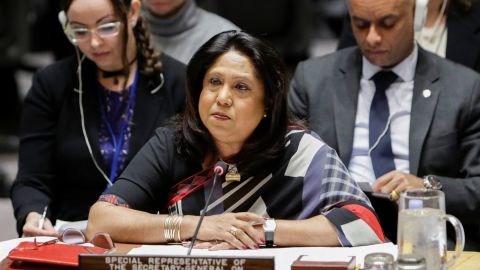
Pramila Patten, Special Representative of the UN Secretary-General on Sexual Violence in Conflict, at a Security Council meeting in New York in 2018.Xinhua/ShutterstockCNN —
Russia is using rape and sexual violence as part of its “military strategy” in Ukraine, a UN envoy said this week.
The claim follows data released by a panel of UN experts recently that verified “more than a hundred cases” of rape or sexual assault incidents reported in Ukraine since February.
“When you hear women testify about Russian soldiers equipped with Viagra, it’s clearly a military strategy,” Pramila Patten, UN Special Representative on Sexual Violence in Conflict, said in an interview with AFP on Thursday.
A Russian nuclear missile during the military parade in Moscow’s Red Square in 2020, marking the 75th anniversary of the end of World War II. Mikhail Svetlov/Getty ImagesThe world is on the cusp of a new era where nuclear weapons are likely to play a more prominent role. Read more on Project-Syndicate.org
Truss’s Departure Kicks Off Another UK Leadership Contest
Lawmakers from the ruling Conservative Party in the United Kingdom (UK) will hold a preliminary vote (FT) on Monday to choose candidates to succeed Liz Truss, who announced her resignation yesterday. Party members will then choose from the final two candidates in an online poll next Friday. The victor will become the UK’s fourth prime minister in four years and take the helm of a country rattled by inflation and market turmoil under Truss’s six week tenure. Ex–finance minister Rishi Sunak, who opposed Truss’s controversial tax cuts, is expected to stand for the role. Former Home Secretary Suella Braverman, an immigration hard-liner, and former Prime Minister Boris Johnson could also join (The Economist) the race. Markets have calmed after Truss’s second finance minister reversed her budgetary plans, but the Conservative Party still trails the opposition Labour Party by around 30 percent in opinion polls.
Human Rights Council Fifty-first session 12 September–7 October 2022 Agenda items 2 and 3 Annual report of the United Nations High Commissioner for Human Rights and reports of the Office of the High Commissioner and the Secretary-General
Promotion and protection of all human rights, civil, political, economic, social and cultural rights, including the right to development
The right to privacy in the digital age Report of the Office of the United Nations High Commissioner for Human Rights*
The present report, submitted pursuant to Human Rights Council resolution 48/4, discusses recent trends and challenges concerning the right to privacy. The report focuses, in particular, on: (a) the abuse of intrusive hacking tools; (b) the key role of encryption in ensuring the enjoyment of the right to privacy and other rights; and (c) wide-spread monitoring of public spaces. It highlights the risk of creating systems of pervasive surveillance and control that may undermine the development of vibrant and rightsrespecting societies.
I. Introduction
II. Surveillance of personal devices and communications
On some of the most significant issues of the day, including how the United States should respond to Russia’s invasion of Ukraine, Americans across party lines are in agreement, albeit often for different reasons.
“the Author BORIS BONDAREV worked as a diplomat in the Russian Ministry of Foreign Affairs from 2002 to 2022, most recently as a counsellor at the Russian Mission to the United Nations Office in Geneva. He resigned in May to protest the invasion of Ukraine.”
For three years, my workdays began the same way. At 7:30 a.m., I woke up, checked the news, and drove to work at the Russian mission to the United Nations Office in Geneva. The routine was easy and predictable, two of the hallmarks of life as a Russian diplomat.читать статью по-русски (Read in Russian)
February 24 was different. When I checked my phone, I saw startling and mortifying news: the Russian air force was bombing Ukraine. Kharkiv, Kyiv, and Odessa were under attack. Russian troops were surging out of Crimea and toward the southern city of Kherson. Russian missiles had reduced buildings to rubble and sent residents fleeing. I watched videos of the blasts, complete with air-raid sirens, and saw people run around in panic.
As someone born in the Soviet Union, I found the attack almost unimaginable, even though I had heard Western news reports that an invasion might be imminent. Ukrainians were supposed to be our close friends, and we had much in common, including a history of fighting Germany as part of the same country. I thought about the lyrics of a famous patriotic song from World War II, one that many residents of the former Soviet Union know well: “On June 22, exactly at 4:00 a.m., Kyiv was bombed, and we were told that the war had started.” Russian President Vladimir Putin described the invasion of Ukraine as a “special military operation” intended to “de-Nazify” Russia’s neighbor. But in Ukraine, it was Russia that had taken the Nazis’ place
“That is the beginning of the end,” I told my wife. We decided I had to quit.
Resigning meant throwing away a twenty-year career as a Russian diplomat and, with it, many of my friendships. But the decision was a long time coming. When I joined the ministry in 2002, it was during a period of relative openness, when we diplomats could work cordially with our counterparts from other countries. Still, it was apparent from my earliest days that Russia’s Ministry of Foreign Affairs was deeply flawed. Even then, it discouraged critical thinking, and over the course of my tenure, it became increasingly belligerent. I stayed on anyway, managing the cognitive dissonance by hoping that I could use whatever power I had to moderate my country’s international behavior. Tiếp tục đọc “The Sources of Russian Misconduct – A Diplomat Defects From the Kremlin”→
As countries prepare to gather at COP27 in Sharm el-Sheik, Egypt to advance the Paris Agreement on climate change, attention turns once again to its building blocks: countries’ 2030 climate commitments, known as nationally determined contributions (NDCs).
While the Paris Agreement established three global goals — limit global temperature rise to well below 2 degrees C (3.6 degrees F) and ideally 1.5 degrees C (2.7 degrees F), promote adaptation and resilience, and align financial flows with low-emissions, climate-resilient development — NDCs are the foundation. In its NDC, each of the Paris Agreement’s 194 Parties must lay out its aims to reduce emissions. Many also include plans for adapting to climate impacts and the financial requirements needed for implementation.
Countries must strengthen their NDCs on a regular, five-year cycle. Most submitted their initial commitments in 2015 and updated them by 2021. A new, stronger round of NDCs is due in 2025.
WRI’s Climate Watch platform tracks more than 200 indicators on all NDCs. The new State of NDCs report analyzed this data to draw out key trends and evaluate where the NDCs now stand. The key takeaway? Countries are making incremental progress on strengthening their NDCs, but what we really need to achieve the goals of the Paris Agreement is urgent transformational change.
Here’s what we know and what countries should keep in mind as they formulate new NDCs by 2025:
U.S. Attorney Breon Peace said at a news conference Oct. 18, 2022, that Lafarge and its Syrian subsidiary were responsible for providing significant funds to ISIS. (Timothy A. Clary/AFP/Getty Images)
NEW YORK — Global cement company Lafarge will pay the U.S. government nearly $780 million for conspiring with Islamic State militants to run a production plant in war-ravaged Syria during its civil war — a move that helped bolster the terrorist group’s meager finances, officials said Tuesday.
A top executive of Lafarge, which was acquired by Swiss-based Holcim in 2015, pleaded guilty in the U.S. District Court in Brooklyn to a count of conspiring to provide material support to foreign terrorist organizations, admitting that Lafarge knowingly engaged in a deal with Islamic State, also known as ISIS, and the al-Nusrah Front (ANF), a Syrian Islamist militia, in 2013 and 2014.
The guilty plea marked the first time a corporation was prosecuted under a U.S. statute that prohibits a person or entity from assisting foreign terrorist groups, officials said. The Justice Department has a broad ability to bring such cases in U.S. courts even if the conduct generally occurred abroad but also involves at least one wire transaction locally.
Justice Department officials said Tuesday that the two groups obtained at least $6 million in payments from Lafarge. The payoffs allowed Lafarge to operate the plant in the Northern region of Syria, near the Turkish border, and bought them protection from the militias.
The Islamic State also made more than $3 million directly through the sale of cement it obtained at the end of Lafarge’s operation there starting in late 2014.
In total, Lafarge agreed to forfeit $687 million and pay $91 million in criminal fines to the United States.
U.S. District Judge William F. Kuntz, who accepted Lafarge’s guilty plea, said the case “impacts global communities [and] the national security of the United States,” as well as victims of the terrorists.
Lafarge, which is based in France, had dealings with ISIS at a time when the group was responsible for capturing and killing journalists and aid workers in the devastated region.
Justice Department officials said the company paid for access to the plant and for protection from ISIS at a time when other corporations were fleeing Syria.
The Islamic State even issued stamped driving permits for Lafarge workers to get access to the plant.
“To the brothers at the checkpoints of Qarah Qawzak Bridge, may Allah keep you safe,” a translation of the permit read. “Kindly allow the employees of Lafarge Cement Company to pass through after completing the necessary work and after paying their dues to us.”
U.S. Attorney Breon Peace said at a news conference Tuesday that Lafarge and its Syrian subsidiary were responsible for providing significant funds to ISIS, which “otherwise operated on a shoestring budget.”
“This conduct by a Western corporation was appalling and has no precedent or justification,” Peace said.
Deputy Attorney General Lisa Monaco said greedy intentions by Lafarge fueled rampant violence.
“In its pursuit of profits, Lafarge and its top executives not only broke the law, they helped to finance a violent reign of terror that ISIS and [ANF]imposed on the people of Syria,” Monaco said.
In France, six former executives and Lafarge are facing pending criminal charges in connection with their relationships in Syria. Those six people were referred to in court papers in the New York case but were not named.
“We deeply regret that this conduct occurred and have worked with the U.S. Department of Justice to resolve this matter,” Lafarge said in a statement.
The conduct did not involve “Lafarge operations or employees in the United States and none of the executives who were involved in the conduct are with Lafarge or any affiliated entities today,” the statement also said.
President Xi Jinping loomed large over the opening of the Chinese Communist Party’s 20th National Congress on October 16, 2022. He is all but guaranteed to emerge from the party congress with a history-making third five-year term, and he is widely expected to tighten his hold over the party by placing political allies in key positions.
Xi kicked off the party gathering with a landmark speech that stretched for nearly two hours. His address, an abridged version of the full party congress report, focused heavily on domestic issues but also provided a useful glimpse into how Xi and the party leadership view the world and China’s place in it. Xi’s address (and the full report) struck a different tone from the last one Xi delivered at the 19th Party Congress in 2017. While Xi still voiced confidence that China’s power and prospects are on the rise, he also doled out stark warnings about the growing threats and challenges that China faces.
Indonesia has grand plans for Jakarta—a new capital on Borneo, a giant bird-shaped sea wall to protect Jakarta itself—but they don’t solve the underlying problem.
JAKARTAApart from the narrow, unpaved road, the two-meter-high concrete coastal wall is the only thing that separates Suhemi’s small restaurant in North Jakarta from the sea. Her family depends on that wall. Growing up here in the Muara Baru neighborhood in the 80s and 90s, Suhemi used to play on the beach in front of her house. But by the 2000s the beach had disappeared, and the sea frequently inundated the neighborhood.
In 2002, the government built the coastal wall, to give the residents peace of mind and time—a respite from the steady sinking of the land under the city and the steady rising of the sea. But just five years later, in 2007, the wall proved no match for the worst floods in Jakarta’s modern history. Driven by a storm coming off the Java Sea and torrential rains, the floods claimed 80 lives around the city and caused hundreds of millions of dollars of damage.
In Muara Baru, the storm surge collapsed the wall, and the sea flooded Suhemi’s house.
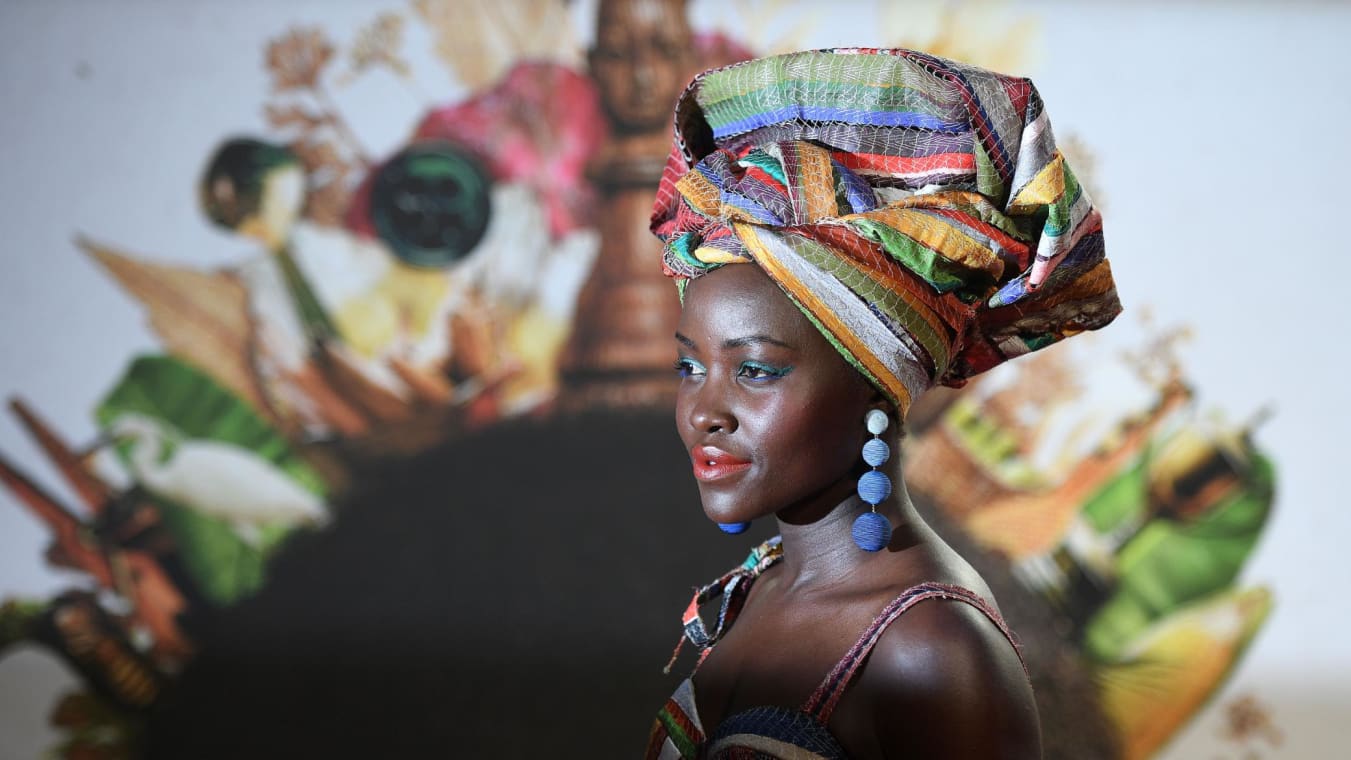
ew accessories have lived as complicated a life as the headscarf. The versatile fabric has been chosen by and impressed upon people for political, religious and practical purposes for centuries. It has been favored by revolutionaries and royalty alike. It can be either conservative or rebellious. Beyond its utilitarian origins as a source of protection from the elements, the headscarf remains at the center of contentious debate about women’s rights, identity, power and class.
In recent history, conversations about the headscarf have often centered on its use in Islam and the prejudice Muslim women have faced.
In 2013, Nazma Khan founded World Hijab Day — a day for both Muslim and non-Muslim women to experience wearing a headscarf. Celebrated on February 1, the initiative began in response to the bullying Khan, originally from Bangladesh, experienced growing up in theBronx, New York. “In middle school, I was ‘Batman’ or ‘ninja.’ When I entered university after 9/11, I was called Osama bin laden or terrorist. It was awful,” reads a statement on the World Hijab Day’s website. “I figured the only way to end discrimination is if we ask our fellow sisters to experience hijab themselves.”
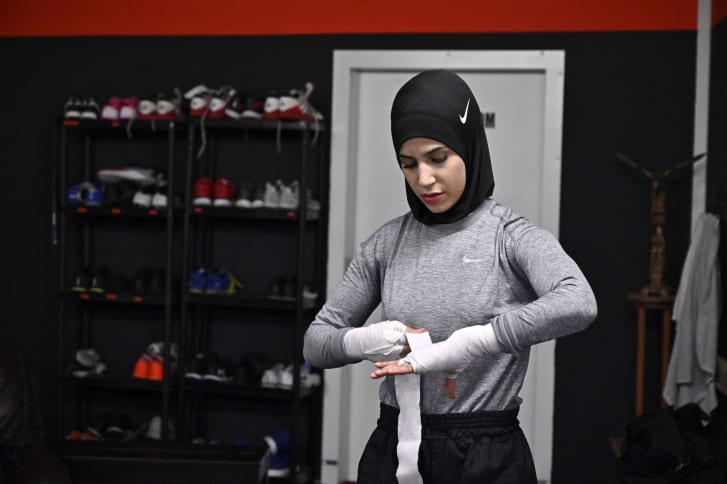
German boxer Zeina Nassar has fought to wear the hijab in the ring. Credit: Tobias Schwarz/AFP/Getty Images
Throughout history, the headscarf has sat atop the heads of culture defining women — and men — from monarchs including Queen Victoria and Queen Elizabeth II to the daring flappers of the 1920s. Ranging from patterned prints to luxe fabrics to simple sheaths, the fashion item is wrapped in centuries of interpretation.
“There’s a reason why the (head)scarf has transcended time,” said Lynn Roberts, vice president of advertising and public relations at fashion outfitter Echo Design Group, over the phone from New York City. “When you’re wearing one, people pay attention.”
TTCT – Thị trường trái phiếu doanh nghiệp đang đứng trước nguy cơ suy thoái trên diện rộng sau giai đoạn tăng trưởng quá nóng.
Ảnh: Harvard Business Review
Tiếp sau sự kiện Tân Hoàng Minh, các lãnh đạo của Tập đoàn Vạn Thịnh Phát mới đây bị cáo buộc có hành vi gian dối trong việc phát hành, mua bán trái phiếu trái quy định của pháp luật để chiếm đoạt tiền của nhà đầu tư trong giai đoạn 2018-2019. Sự kiện này có thể kích hoạt tâm lý tháo chạy trên thị trường tài chính.
Nguy cơ mất khả năng thanh toán trên thị trường trái phiếu ngày một lớn dần. Mới đây, Công ty cổ phần VKC Holdings thông báo tạm hoãn thanh toán lãi trái phiếu vào ngày 9-9 cho các trái chủ của đợt chào bán quy mô 200 tỉ đồng thực hiện cuối năm 2021.
Lý do được đưa ra là công ty phát hiện nhiều sai phạm nghiêm trọng trong quản lý tài chính và phát hành lô trái phiếu của ban lãnh đạo trước đây. Dù vậy, quyền lợi của trái chủ như thế nào thì VKC vẫn không đưa ra câu trả lời.
October 19, 2022, By German Lopez. The New York Times – Good Morning
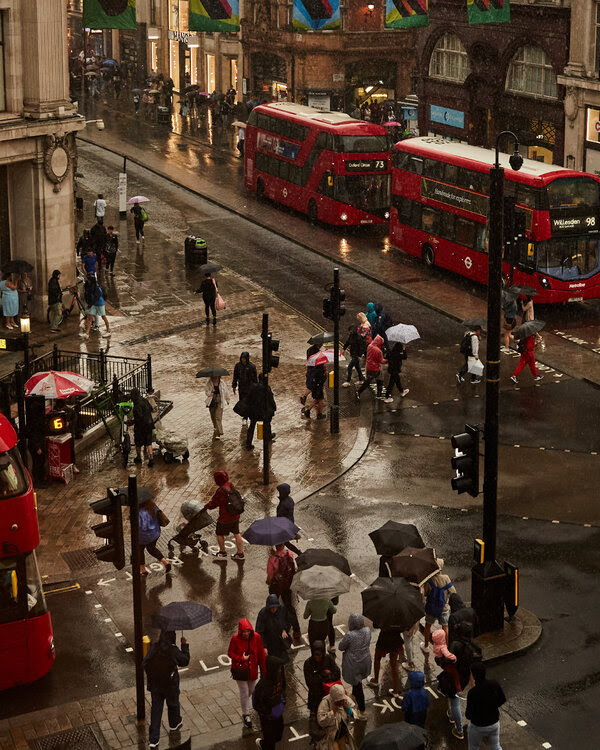
Oxford Circus in London this year.Alice Zoo for The New York Times
Global costs
Political and economic crises typically have multiple causes. But many right now are driven by one main factor: the rising cost of living.
In Britain, Prime Minister Liz Truss is facing calls to resign after just six weeks in office over a now-abandoned tax cut plan that experts warned would worsen inflation, if not wreak economic havoc. Europe is bracing for skyrocketing energy costs this winter. In the U.S., the Federal Reserve is considering more aggressive steps to bring down price increases, but its moves could also cause a recession, as The Times reported yesterday.
Quy hoạch đô thị và những giải pháp phi công trình được nhà quy hoạch Nguyễn Đỗ Dũng phân tích với Người Đô Thị như một trong những lời giải cho bài toán “biến” ngập lụt từ thách thức trở thành sức mạnh đô thị của TP.HCM.
Người đi đường ở TP.HCM đánh vật với dòng nước sau trận mưa lớn chiều 26.9 vừa qua. Ảnh: Zing
Đầu tư gần 30.000 tỉ đồng từ năm 2008, nhiều khu vực trước đây ở TP.HCM được ví như “rốn ngập” nay đã không còn nữa, nhưng những tuyến đường chưa từng ngập giờ trở thành “sông”. Tương tự, số điểm ngập bắt đầu tăng trở lại (năm 2008: 126 điểm ngập, năm 2011: 58 điểm, năm 2015 còn 23 điểm ngập, năm 2016 tăng 59 điểm).
Tuy nhiên theo các chuyên gia, con số này vẫn chưa phản ánh hết thực trạng. Cùng với kinh nghiệm và nghiên cứu của mình, theo ông nguyên nhân chính nào dẫn đến tình trạng này?





 CVD
CVD 