Rome Statute of the International Criminal Court – Đạo luật Rome của Tòa Hình sự Quốc tế (Dẫn nhập và Phần I)

Dịch sang tiếng Việt: PhạmThu Hương & Trần Đình Hoành

Mục lục >>

Rome Statute of the International Criminal CourtĐạo luật Rome của Tòa Hình sự Quốc tế
PREAMBLEDẪN NHẬP

 The States Parties to this Statute,

Conscious that all peoples are united by common bonds, their cultures pieced together in a shared heritage, and concerned that this delicate mosaic may be shattered at any time,

Mindful that during this century millions of children, women and men have been victims of unimaginable atrocities that deeply shock the conscience of humanity,

Recognizing that such grave crimes threaten the peace, security and well-being of the world,

Affirming that the most serious crimes of concern to the international community as a whole must not go unpunished and that their effective prosecution must be ensured by taking measures at the national level and by enhancing international cooperation,

Determined to put an end to impunity for the perpetrators of these crimes and thus to contribute to the prevention of such crimes,

Recalling that it is the duty of every State to exercise its criminal jurisdiction over those responsible for international crimes,

Reaffirming the Purposes and Principles of the Charter of the United Nations, and in particular that all States shall refrain from the threat or use of force against the territorial integrity or political independence of any State, or in any other manner inconsistent with the Purposes of the United Nations,

Emphasizing in this connection that nothing in this Statute shall be taken as authorizing any State Party to intervene in an armed conflict or in the internal affairs of any State,

Determined to these ends and for the sake of present and future generations, to establish an independent permanent International Criminal Court in relationship with the United Nations system, with jurisdiction over the most serious crimes of concern to the international community as a whole,

Emphasizing that the International Criminal Court established under this Statute shall be complementary to national criminal jurisdictions,

Resolved to guarantee lasting respect for and the enforcement of international justice,

Have agreed as follows:
Các Quốc gia Thành viên của Đạo luật này,

Ý thức rằng mọi dân tộc hợp nhất với nhau bằng những liên kết chung, văn hóa của họ hợp lại với nhau trong một di sản chung, và đều lo ngại bức tranh tinh xảo này có thể bị vỡ bất kỳ lúc nào,

Quan tâm rằng trong thế kỷ này, hàng triệu trẻ em, phụ nữ và đàn ông là nạn nhân của những tàn ác không thể tưởng tượng nổi, gây sốc dữ dội cho lương tâm nhân loại,

Thừa nhận rằng những hình tội nghiêm trọng như vậy đe dọa hòa bình, an ninh và an sinh của thế giới,

Khẳng định rằng những hình tội nghiêm trọng nhất, mà cộng đồng quốc tế nói chung quan tâm, phải bị trừng phạt và việc truy tố hiệu lực phải được đảm bảo bằng các biện pháp ở cấp quốc gia và bằng cách tăng cường hợp tác quốc tế,

Quyết tâm chấm dứt việc không trừng phạt các thủ phạm của những hình tội này và, do đó, góp phần ngăn chặn những hình tội đó,

Nhớ rằng nhiệm vụ của mọi Quốc gia là hành xử thẩm quyền tài phán hình sự đối với những kẻ chịu trách nhiệm về những hình tội quốc tế,

Tái xác nhận các Mục đích và Nguyên tắc của Hiến chương Liên hợp quốc, và đặc biệt rằng mọi Quốc gia sẽ kiềm chế đe dọa hoặc dùng vũ lực vi phạm sự toàn vẹn lãnh thổ hoặc độc lập chính trị của bất kỳ Quốc gia nào, hoặc làm bất kỳ điều gì mâu thuẫn với các Mục đích của Liên hợp quốc,

Nhấn mạnh ở đây rằng chẳng có gì trong Đạo luật này được coi là ủy quyền cho bất kỳ Quốc gia Thành viên nào can thiệp vào xung đột vũ trang hoặc vào công việc nội bộ của bất kỳ Quốc gia nào,

Kiên quyết, vì những mục tiêu này và vì các thế hệ hiện tại và tương lai, thành lập một Tòa Hình sự Quốc tế thường trực và độc lập trong liên hệ với hệ thống Liên hợp quốc, có thẩm quyền tài phán đối với những hình tội nghiêm trọng nhất mà cộng đồng quốc tế nói chung quan tâm.

Nhấn mạnh rằng Tòa Hình sự Quốc tế được thành lập theo Đạo luật này sẽ bổ sung cho thẩm quyền tài phán hình sự của các quốc gia,

Quyết định đảm bảo sự tôn trọng lâu dài, và việc thực thi, công lý quốc tế,

Đã đồng ý như sau:
PART 1.
ESTABLISHMENT OF THE COURT
PHẦN 1.
THÀNH LẬP TÒA
Article 1
The Court


An International Criminal Court (“the Court”) is hereby established. It shall be a permanent institution and shall have the power to exercise its jurisdiction over persons for the most serious crimes of international concern, as referred to in this Statute, and shall be complementary to national criminal jurisdictions. The jurisdiction and
functioning of the Court shall be governed by the provisions of this Statute.
Điều 1
Tòa


Tòa Hình sự Quốc tế (“Tòa”), do đây, được thành lập. Tòa sẽ là một định chế lâu dài và sẽ có quyền hành xử thẩm quyền tài phán đối với những người vi phạm những hình tội nghiêm trọng nhất mà quốc tế quan tâm, như được nêu ra trong Đạo luật này, và sẽ bổ sung cho thẩm quyền tài phán hình sự của các quốc gia. Thẩm quyền tài phán và hoạt động của Tòa sẽ được điều hành bởi các điều khoản của Đạo luật này.
Article 2
Relationship of the Court with the United Nations


The Court shall be brought into relationship with the United Nations through an agreement to be approved by the Assembly of States Parties to this Statute and thereafter concluded by the President of the Court on its behalf.
Điều 2
Liên hệ của Tòa với Liên hợp quốc


Tòa sẽ được đưa vào liên hệ với Liên hợp quốc thông qua một thỏa thuận được Hội đồng các Quốc gia Thành viên của Đạo luật này phê duyệt và sau đó được Chủ tịch Tòa thay mặt Tòa ký kết.
Article 3
Seat of the Court


1. The seat of the Court shall be established at The Hague in the Netherlands (“the host State”).

2. The Court shall enter into a headquarters agreement with the host State, to be approved by the Assembly of States Parties and thereafter concluded by the President of the Court on its behalf.

3. The Court may sit elsewhere, whenever it considers it desirable, as provided in this Statute.
Điều 3
Trụ sở Tòa


1. Trụ sở Tòa được thành lập tại The Hague [La Hay] ở Hà Lan (“Quốc gia chủ nhà”).

2. Tòa sẽ ký một thỏa thuận về trụ sở với Quốc gia chủ nhà, được Hội đồng các Quốc gia Thành viên phê duyệt và sau đó được Chủ tịch Tòa thay mặt Tòa ký kết.

3. Tòa có thể đặt ở nơi khác, bất cứ khi nào Tòa muốn, như được quy định trong Đạo luật này.
Article 4
Legal status and powers of the Court


1. The Court shall have international legal personality. It shall also have such legal capacity as may be necessary for the exercise of its functions and the fulfilment of its purposes.

2. The Court may exercise its functions and powers, as provided in this Statute, on the territory of any State Party and, by special agreement, on the territory of any other State.

Điều 4
Địa vị pháp lý và quyền hành của Tòa


1. Tòa có tư cách pháp nhân quốc tế. Tòa cũng có năng lực pháp lý có thể cần thiết cho việc hành xử các chức năng của Tòa và cho việc thực hiện các mục đích của Tòa.

2. Tòa có thể hành xử các chức năng và quyền hành của mình, như được quy định trong Đạo luật này, trên lãnh thổ của bất kỳ Quốc gia Thành viên nào và, theo thỏa thuận đặc biệt, trên lãnh thổ của bất kỳ Quốc gia nào.

Censors silence popular influencer around Tiananmen Square Massacre anniversary

foreignpolicy

June 4, the anniversary of the 1989 Tiananmen Square massacre—in which People’s Liberation Army (PLA) forces killed hundreds and perhaps thousands of protesters as well as crushing demonstrations across the country—is a fraught moment in China. In Hong Kong, the public once freely memorialized the massacre. This year, authorities again used the national security law passed in 2020 to block gatherings; six people were arrested.

In mainland China, the anniversary claimed an unexpected victim: e-commerce influencer Li Jiaqi, widely known as the “Lipstick Brother” or “Lipstick King.” During a livestream on June 3, Li was presented with a cake that resembled a tank. Censors promptly pulled the show offline, and it hasn’t returned, with Li’s team citing “technical difficulties.” Early June is a prime time for online shopping ahead of June 18, China’s second-biggest day for online sales. But Li’s name now returns blank results on search platforms, even on e-commerce sites.

Tiếp tục đọc “Censors silence popular influencer around Tiananmen Square Massacre anniversary”

America’s Rise to Power, With Michael Mandelbaum

The President’s Inbox

Michael Mandelbaum, Christian A. Herter professor emeritus of American foreign policy at Johns Hopkins University, sits down with James M. Lindsay to discuss the continuities and changes in U.S. foreign policy over the last two and a half centuries.

June 7, 2022 — 35:53 min

Host

James M. Lindsay

Senior Vice President, Director of Studies, and Maurice R. Greenberg Chair Full Bio

@JamesMLindsay

Subscribe

Apple Podcasts

Spotify

Google Podcasts

Stitcher

Episode Guests

Michael Mandenbaum

Show Notes

Michael Mandelbaum, Christian A. Herter professor emeritus of American foreign policy at Johns Hopkins University, sits down with James M. Lindsay to discuss the continuities and changes in U.S. foreign policy over the last two and a half centuries.

Books Mentioned on the Podcast

Michael Mandelbaum, The Four Ages of American Foreign Policy: Weak Power, Great Power, Superpower, Hyperpower (2022)

Michael Mandelbaum, The Rise and Fall of Peace on Earth (2019)

Unpacking the IPEF: Biden’s First Big Trade Play

The Joe Biden administration has unveiled its Indo-Pacific Economic Framework, but it doesn’t look like a traditional trade deal and could end up falling short of its ambitions.  

Article by Inu Manak, Council on Foreign Relations

Last updated June 8, 2022 3:39 pm (EST)

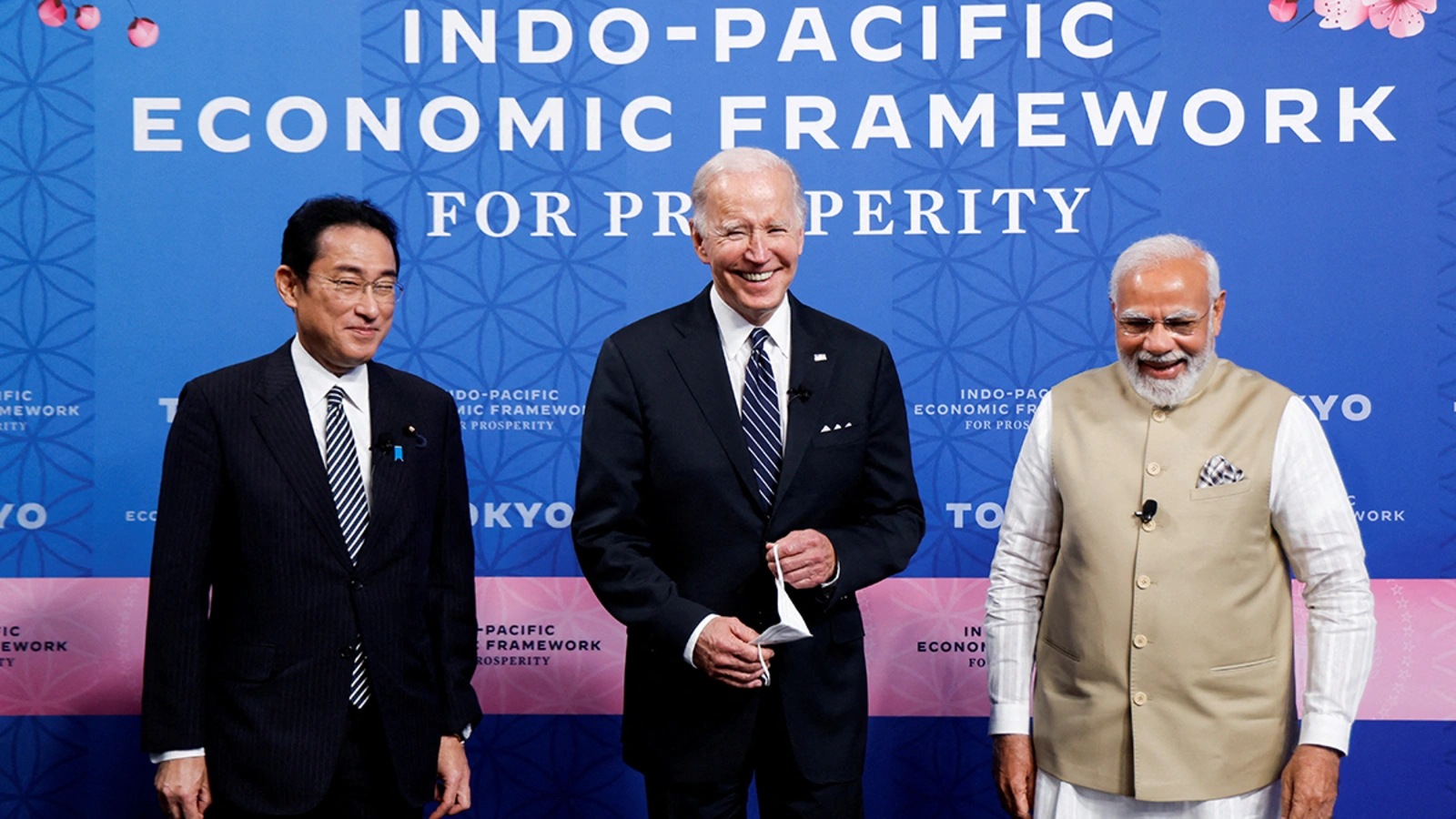
From left to right, Japanese Prime Minister Fumio Kishida, U.S. President Joe Biden, and Indian Prime Minister Narendra Modi attend the Indo-Pacific Economic Framework (IPEF) launch event in Tokyo in May 2022.
From left to right, Japanese Prime Minister Fumio Kishida, U.S. President Joe Biden, and Indian Prime Minister Narendra Modi attend the Indo-Pacific Economic Framework (IPEF) launch event in Tokyo in May 2022. Jonathan Ernst/Reuters

In late May, the Joe Biden administration launched its first major trade initiative: the Indo-Pacific Economic Framework (IPEF). The IPEF is billed as an effort to expand U.S. economic leadership in the Indo-Pacific region. This was also the objective of the Trans-Pacific Partnership (TPP), a trade deal that was negotiated during the Barack Obama administration. But President Donald Trump withdrew from the TPP in 2017, and the Biden administration has made clear that it does not intend to reenter that trade pact, which is now renamed the Comprehensive and Progressive Agreement for Trans-Pacific Partnership, or CPTPP.

Tiếp tục đọc “Unpacking the IPEF: Biden’s First Big Trade Play”

The World Health Assembly Takes Steps Toward Global Health Reforms

Countries began to reshape global health governance but left themselves room to change course

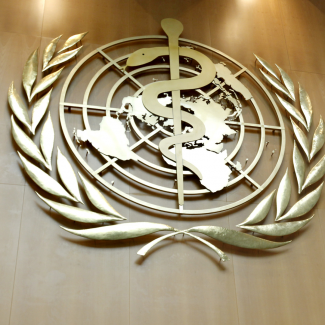
Gold-colored World Health Organization (WHO) logo mounted on a brown paneled wall at the United Nations headquarters, Geneva, Switzerland.

World Health Organization (WHO) logo, United Nations headquarters, Geneva, Switzerland. REUTERS/Denis Balibouse/File Photo

by David P. Fidler June 3, 2022 thinkglobalhealth.org

The annual meeting of the World Health Assembly (WHA) concluded on May 28. At the gathering, member states of the World Health Organization (WHO) made many decisions, some of which stood out as potential turning points for global health. The WHA did not ignore COVID-19, but member states primarily grappled with challenges that the pandemic created and that must be addressed beyond COVID-19. However, member states demonstrated as much caution as resolution in some of the most prominent decisions taken. This wariness creates uncertainty about the importance of these decisions as the WHO labors to put global health governance on more solid post-pandemic footing.

Tiếp tục đọc “The World Health Assembly Takes Steps Toward Global Health Reforms”

New era of Vietnamese cartoons wins young hearts

VNN – Update: February, 20/2022 – 09:02|

A scene in historical animation Nữ Tướng Mê Linh (The Heroines). Photo courtesy of the Việt Nam Cartoon Company

By Lương Thu Hương

Though 2021 posed a year of challenges due to the COVID-19 pandemic, the nation’s animation industry went from strength to strength, receiving an abundance of awards and millions of hits on YouTube.

Việt Nam Cartoon Studio (the Việt Nam Cartoon Joint Stock Company) last year completed its production plan, having 16 films approved by the Cinema Department under the culture ministry for distribution.

The films produced by the company were diverse, rich in forms of expression and contained many unique features.

Tiếp tục đọc “New era of Vietnamese cartoons wins young hearts”

Asia Pacific: How leaders are big on talk but little on action

Transparency Int’l – 01 April 2016

If there was one common challenge to unite the Asia Pacific region, it would be corruption. From campaign pledges to media coverage to civil society forums, corruption dominates discussion. Yet despite all this talk, there’s little sign of action. Between Australia’s slipping scores and North Korea’s predictably disastrous performance, the 2015 index shows no significant improvement. Has Asia Pacific stalled in its efforts to fight corruption?

This year’s poor results demand that leaders revisit the genuineness of their efforts and propel the region beyond stagnation.

Tweet this

The good

The public desire for change is huge. In India, Sri Lanka and elsewhere, we’ve seen a host of governments coming to power on anti-corruption platforms. As corruption continues to dominate media coverage across and beyond the region, increasing interest in the issue has sparked a raft of new research into both public and private sector corruption.

The bad

So why this picture of zero progress? Despite boastful efforts on petty corruption, Malaysia’s 1MBD scandal brought the crux of the challenge into sharp focus: is political leadership genuinely committed to fighting corruption throughout society? The Malaysian prime minister’s inability to answer questions on the US$700 million that made its way into his personal bank account is only the tip of the iceberg.

In India and Sri Lanka leaders are falling short of their bold promises, while governments in Bangladesh and Cambodia are exacerbating corruption by clamping down on civil society. In Afghanistan and Pakistan a failure to tackle corruption is feeding ongoing vicious conflicts, while China’s prosecutorial approach isn’t bringing sustainable remedy to the menace. This inability to tackle root causes holds true across the region – witness, for example, Australia’s dwindling score in recent years.

Malaysia’s 1MBD scandal brought the challenge into sharp focus: is political leadership genuinely committed to fighting corruption throughout society?

Tweet this

What needs to happen

Reversing corruption is clearly not solely down to governments, but they’re the ones with the largest role and the power to create enabling environments for others. This year’s poor results demand that leaders revisit the genuineness of their efforts and propel the region beyond stagnation. They must fulfil promises, and ensure efforts aren’t undermined in practice. Anti-corruption commissions are a prime example here: while their creation across the region is commendable, ongoing political interference and inadequate resources has meant many are unable to fulfil their mandate. This has to be addressed.

Bribery or personal connections?

When and why people pay bribes or use personal connections

Illustration by Meel Tamphanon

transparency – 24 November 2020

Across Asia, the use of personal connections to get ahead is a common practice.

In addition to paying bribes for the services they need, people use their family or social contacts to skip the line or gain quicker and better access to schools and hospitals, and “speed up” government paperwork such as driver’s licenses or birth certificates..

How much you can increase the speed and quality of your service often depends on how much you can pay or who you know.

In the Global Corruption Barometer — Asia, we asked people about how and why they paid bribes or used personal connections when accessing public services across Asia.

Tiếp tục đọc “Bribery or personal connections?”

The Fourth Industrial Revolution: a seductive idea requiring critical engagement

Published: June 8, 2022 2.58pm BST The Conversation

Authors

  1. Ruth Castel-Branco, Research Manager, University of the Witwatersrand
  2. Hannah J. Dawson, Senior Researcher, Southern Centre for Inequality Studies, University of the Witwatersrand

Disclosure statement

The authors do not work for, consult, own shares in or receive funding from any company or organisation that would benefit from this article, and have disclosed no relevant affiliations beyond their academic appointment.

Partners

University of the Witwatersrand provides support as a hosting partner of The Conversation AFRICA.

View all partners

CC BY NDWe believe in the free flow of information
Republish our articles for free, online or in print, under Creative Commons licence.

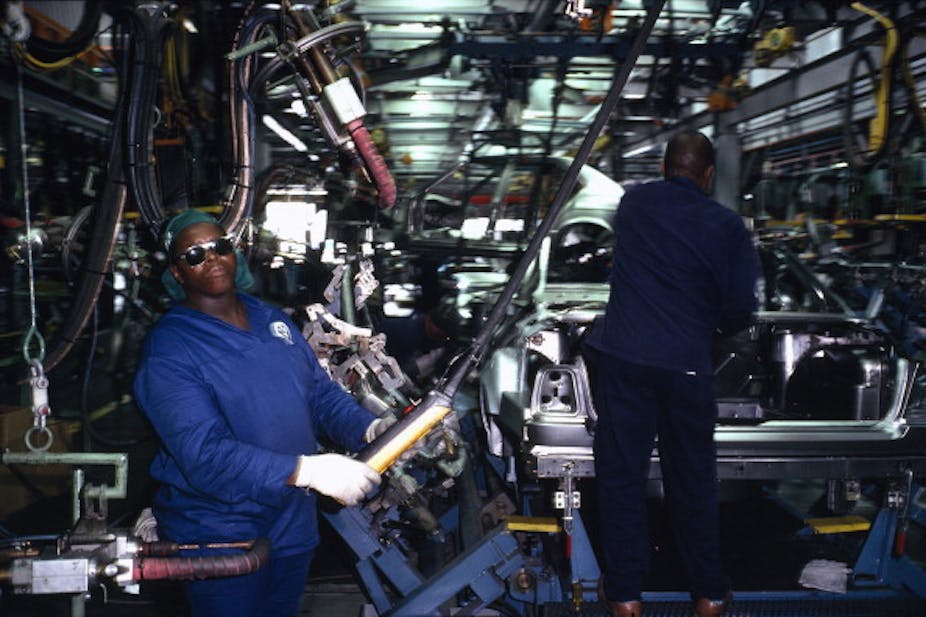
Technological innovation can indeed be beneficial for the working class. Photo by JNS/Gamma-Rapho via Getty Images

Narrative frames are fundamental to unifying ideologies. They frame what is possible and impossible, which ideas can be accepted and which must be rejected. In her book, Digital Democracy, Analogue Politics, storyteller and political analyst Nanjala Nyabola examines the framing of the Fourth Industrial Revolution narrative in this light.

Tiếp tục đọc “The Fourth Industrial Revolution: a seductive idea requiring critical engagement”

Countering Russia’s kleptocrats: What the West’s response to the assault on Ukraine should look like

Kleptocracy in Russia has thrived thanks to the complicity of advanced economies, who are now waking up to its dangers

Image: ev / Unsplash

transparency.org – 04 March 2022

In the wake of Russia’s attack on Ukraine, the international community is scrambling to deter President Vladimir Putin and his cronies – and to help end the military aggression as soon as possible.

Among other measures, European Union member countries, Canada, United Kingdom and the United States have all announced targeted sanctions against Kremlin-linked individuals and businesses – many of whom are suspected of large-scale corruption.

In a kleptocratic system such as today’s Russia, going after the elites can be meaningful. The vast wealth that Russian kleptocrats have amassed – and continue to enjoy – has helped President Putin tighten his grip on power, exert illicit influence over the affairs of other nations and embolden his geopolitical ambitions.

Tiếp tục đọc “Countering Russia’s kleptocrats: What the West’s response to the assault on Ukraine should look like”

PODCAST – Asia Stream: The Philippine Election — Dynasty and Disinformation

nikkeiNearly 50 years after Ferdinand Marcos Sr. declared brutal martial law, the Philippines is poised to elect his son. Has history been forgotten?

Nikkei staff writersMay 7, 2022 03:26 JST

NEW YORK — Welcome to Nikkei Asia’s podcast: Asia Stream.

Every week, Asia Stream tracks and analyzes the Indo-Pacific with a mix of expert interviews and original reporting by our correspondents from across the globe.

New episodes are recorded biweekly and available on Apple PodcastsSpotify and all other major platforms, and on our YouTube channel.

This week, we focus on one of Asia’s most dynamic but flawed democracies: the Philippines. With the election just days away, we get under the hood of the electoral system and investigate the powerful role that dynasties play in the country, with a special focus on Ferdinand Marcos Jr., the front-runner on the cusp of taking power. We then take into account that other essential, if dangerous, tenet of modern Philippine democracy: disinformation, and how it is being used to gain support among the country’s most vulnerable populations.

Tiếp tục đọc “PODCAST – Asia Stream: The Philippine Election — Dynasty and Disinformation”

Singapore’s dengue ’emergency’ is a climate change omen for the world

By Heather Chen, CNN

Updated 0213 GMT (1013 HKT) June 7, 2022

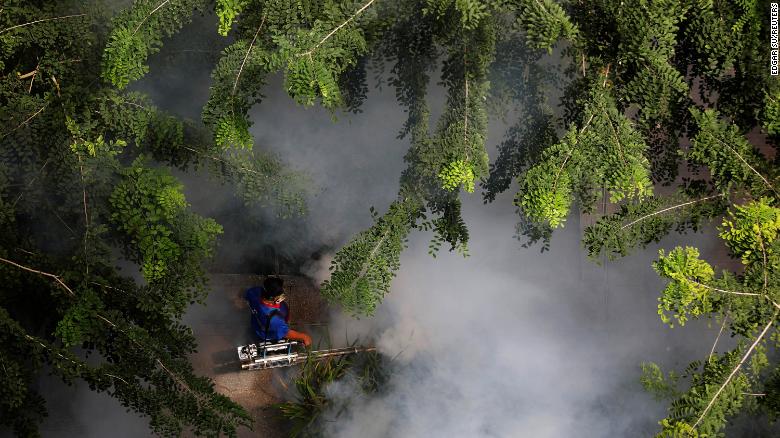
A worker fogs a housing estate for mosquitoes in Singapore on August 27, 2020.

A worker fogs a housing estate for mosquitoes in Singapore on August 27, 2020.

(CNN)Singapore says it is facing a dengue “emergency” as it grapples with an outbreak of the seasonal disease that has come unusually early this year.

The Southeast Asian city-state has already exceeded 11,000 cases — far beyond the 5,258 it reported throughout 2021 — and that was before June 1, when its peak dengue season traditionally begins.

Experts are warning that it’s a grim figure not only for Singapore — whose tropical climate is a natural breeding ground for the Aedes mosquitoes that carry the virus — but also for the rest of the world. That’s because changes in the global climate mean such outbreaks are likely to become more common and widespread in the coming years.

Tiếp tục đọc “Singapore’s dengue ’emergency’ is a climate change omen for the world”

PODCAST – Asia Stream: Asia’s Inflation Dilemma

Rising prices are hurting wallets across the world. The crisis is particularly bad in Sri Lanka and Turkey, and in Japan, people are facing inflation for the first time in decades.

Nikkei staff writersMay 20, 2022 07:38 JST

NEW YORK — Welcome to Nikkei Asia’s podcast: Asia Stream.

Every episode, Asia Stream tracks and analyzes the Indo-Pacific with a mix of expert interviews and original reporting by our correspondents from across the globe.

New episodes are recorded biweekly and are available on Apple PodcastsSpotify and all other major platforms, and on our YouTube channel.

Tiếp tục đọc “PODCAST – Asia Stream: Asia’s Inflation Dilemma”

Inside a Vaccination Point in Vietnam Nearly 100 Years Ago

Wednesday, 23 February 2022. Written by Saigoneer.

Saigoneer.com

A century ago, the colonial government was active in inoculating Vietnamese citizens against a variety of diseases.

While Vietnam’s recent massive COVID-19 vaccine efforts have proven a great success in reducing deaths and returning the country to some semblance of normalcy, it is hardly the first time a government here has stepped in to inoculate the population against dangerous contagions. About 100 years ago, the French managed a vigorous campaign to inoculate indigenous Vietnamese against a variety of diseases such as smallpox, cholera and tuberculosis as part of larger health and sanitation initiatives. 

Tiếp tục đọc Inside a Vaccination Point in Vietnam Nearly 100 Years Ago

Myanmar’s environment hit by rare earth mining boom

Pristine parts of northern Kachin State are under threat as demand grows for high-tech devices that rely on rare earth.

mekongeye.com

Kachin State’s Chipwi Township in northernmost Myanmar is known for its pristine forests and crystal-clear water.

But 10 years ago, local residents started noticing the patches of land that had been cleared on the lush mountains surrounding their town, which borders China’s Yunnan province. It started with one patch of land, where all the trees were cut down. Then others followed.

Soon locals saw heavy machinery being moved through their town, heading to those barren plots of land. Then workers started flooding in. They excavated the ground and left open pits, many filled with chemically-laced water, in areas once rich in woodland. The water near those sites was no longer clean.

It became obvious at that stage that the newcomers were looking for something underneath the ground – rare earth, which contains elements widely used in high-tech products like smartphones, computer components, electric vehicles and solar cells.  

Tiếp tục đọc “Myanmar’s environment hit by rare earth mining boom”