The World Responsible for Myanmar Becoming Failed State: National Unity Government foreign minister Minister of Myanmar

National Unity Government foreign minister Daw Zin Mar Aung. / The Irrawaddy

By THE IRRAWADDY 1 April 2022

Challenging the regime’s legitimacy at home and abroad, Myanmar’s shadow National Unity Government (NUG) foreign minister Daw Zin Mar Aung, 45, has engaged with foreign governments and parliaments, international aid agencies and Myanmar’s many armed groups.

However, the elected lawmaker from the ousted National League for Democracy and winner of the 2012 International Women of Courage Award said international assistance is largely limited to moral support.

She exclusively tells The Irrawaddy about the importance of international support, including funding and arms, Myanmar’s friends and foes and how it receives different treatment from Ukraine.

It has been more than a year since the revolution against military rule was launched. We heard the revolution has received no assistance from foreign countries. Why is that?

It is mainly because the international community regards the crisis as a domestic issue if we compare it with the Ukraine war. It is widely believed that countries should not interfere in domestic affairs.

Yangon in February last year protests after the military coup.

Tiếp tục đọc “The World Responsible for Myanmar Becoming Failed State: National Unity Government foreign minister Minister of Myanmar”

Đụng đâu xâu đó

HUY THỌ 19/6/2022 16:00 GMT+7

TTCTVFF cần một kế hoạch dài hơi và bài bản cho các đội tuyển trẻ, nhất là ở khâu tuyển chọn HLV.

Mặc dù không lọt vào được bán kết U23 châu Á, nhưng màn trình diễn ấn tượng của các cầu thủ Việt Nam dưới tay HLV Gong Oh Kyun được khen ngợi rất nhiều, nhất là bởi lối chơi táo bạo, không sợ thua – một lối đá phù hợp với sân chơi trẻ, nhằm rèn luyện cho tương lai. 

 Ảnh: VFF

Chính vì tạo được thiện cảm, nên khi nghe tin có khả năng ông Gong hết việc để làm ở VN, dư luận khá bức xúc. 

Tiếp tục đọc “Đụng đâu xâu đó”

A looming threat

NYT Russia’s invasion of Ukraine has civilians in Taiwan taking China’s aggression more seriously.

Civilians participating in a battle simulation during a combat medic training workshop near Taipei in May. Since the war in Ukraine began, a growing number of Taiwanese have been making their own preparations for war.
Civilians participating in a battle simulation during a combat medic training workshop near Taipei in May. Since the war in Ukraine began, a growing number of Taiwanese have been making their own preparations for war.Credit…Lam Yik Fei for The New York Times
Ian Prasad Philbrick

By Ian Prasad Philbrick

June 19, 2022, 7:26 a.m. ET

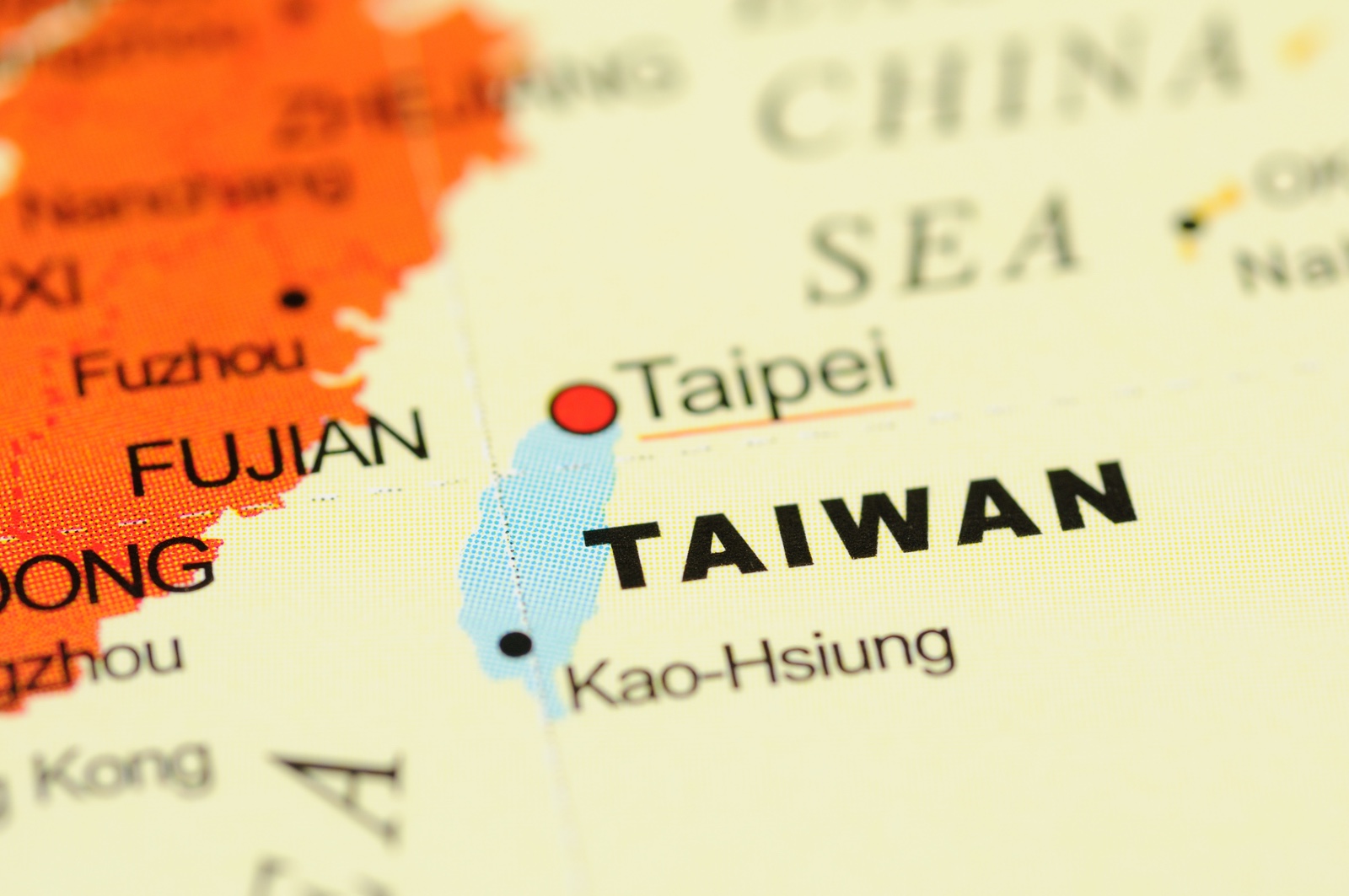
Taiwan has spent more than seven decades under the threat of an invasion: China sees the island as a breakaway part of its territory. In the months since Russia invaded Ukraine, Taiwanese citizens have come to view a Chinese incursion as a more serious possibility than ever. My colleague Amy Qin, who’s based in Taipei, Taiwan’s capital, recently reported on how the island is preparing. I called her to learn more.

Tiếp tục đọc “A looming threat”

Sahel (Africa) violence could drive more refugees toward Europe

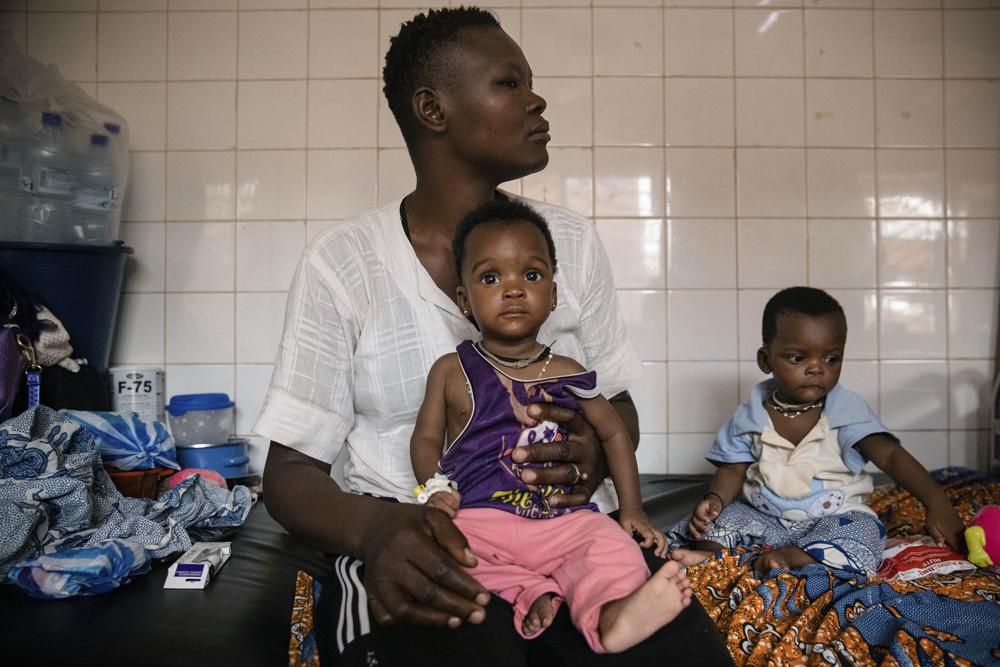
FILE- In this April 15, 2022 file photo, malnourished children wait for treatment in the pediatric department of Boulmiougou hospital in Ouagadougou, Burkina Faso. The U.N. is warning that 18 million people in Africa’s Sahel region face severe hunger in the next three months. Two U.N. agencies are citing the impacts of war in Ukraine, the coronavirus pandemic, climate-induced shocks and rising costs – and warning that people may try to migrate out of the affected areas. (AP Photo/Sophie Garcia, File)

GENEVA (AP) — The head of the U.N. refugee agency says “Europe should be much more worried” that more people from Africa’s Sahel region could seek to move north to escape violence, climate crises like droughts and floods and the impact of growing food shortages caused by Russia’s invasion of Ukraine.Filippo Grandi, the U.N. High Commissioner for Refugees, called for more efforts to build peace in the world as conflicts and crises like those in Ukraine, Venezuela, Myanmar, Syria and beyond have driven over 100 million people to leave their homes — both within their own countries and abroad.

UNHCR, the U.N.’s refugee agency, on Thursday issued its latest “Global Trends” report, which found over 89 million people had been displaced by conflict, climate change, violence and human rights abuses by 2021. The figure has since swelled after at least 12 million people fled their homes in Ukraine to other parts of the country or abroad following Russia’s Feb. 24 invasion.

This year, the world is also facing growing food insecurity — Ukraine is a key European breadbasket and the war has greatly hurt grain exports

The African Union, whose continent relies on imports of wheat and other food from Ukraine, has appealed for help to access grain that is blocked in Ukrainian silos and unable to leave Ukrainian ports amid a Russian naval blockade in the Black Sea.

As one political generation fades, who will take their place?

foreignpolicy.com – JUNE 16, 2022, 5:00 PM

Demonstrators carry pictures of former Pakistani President Pervez Musharraf, during a protest in Karachi on Dec. 24, 2019. RIZWAN TABASSUM/AFP VIA GETTY IMAGES

This week brought news that the health of two former South Asian leaders has taken a turn for the worse. Former Pakistani President Pervez Musharraf, who ruled the country as a military dictator for nearly a decade in the 2000s, is hospitalized with a rare and incurable disease that causes organ damage. In Bangladesh, former Prime Minister Khaleda Zia, who served two separate terms, had a heart attack.

That many South Asian leaders have reached old age speaks to the relative improvement in the region’s political stability, after decades when executions by coup or assassinations were not uncommon in some countries. Former Indian Prime Minister Manmohan Singh and former Pakistani Prime Minister Nawaz Sharif have each recently experienced health issues. India lost one former prime minister in 2018, and Pakistan has lost two former leaders since 2020.

Tiếp tục đọc “As one political generation fades, who will take their place?”

Biden’s Defense Chief Puts Alliances at Center Stage of U.S. Defense

foreignpolicy – JUNE 16, 2022, 5:16 PM

A 10-day world tour ended with a meeting of NATO defense ministers in Brussels.

By Jack DetschForeign Policy’s Pentagon and national security reporter, and Robbie Gramer, a diplomacy and national security reporter at Foreign Policy

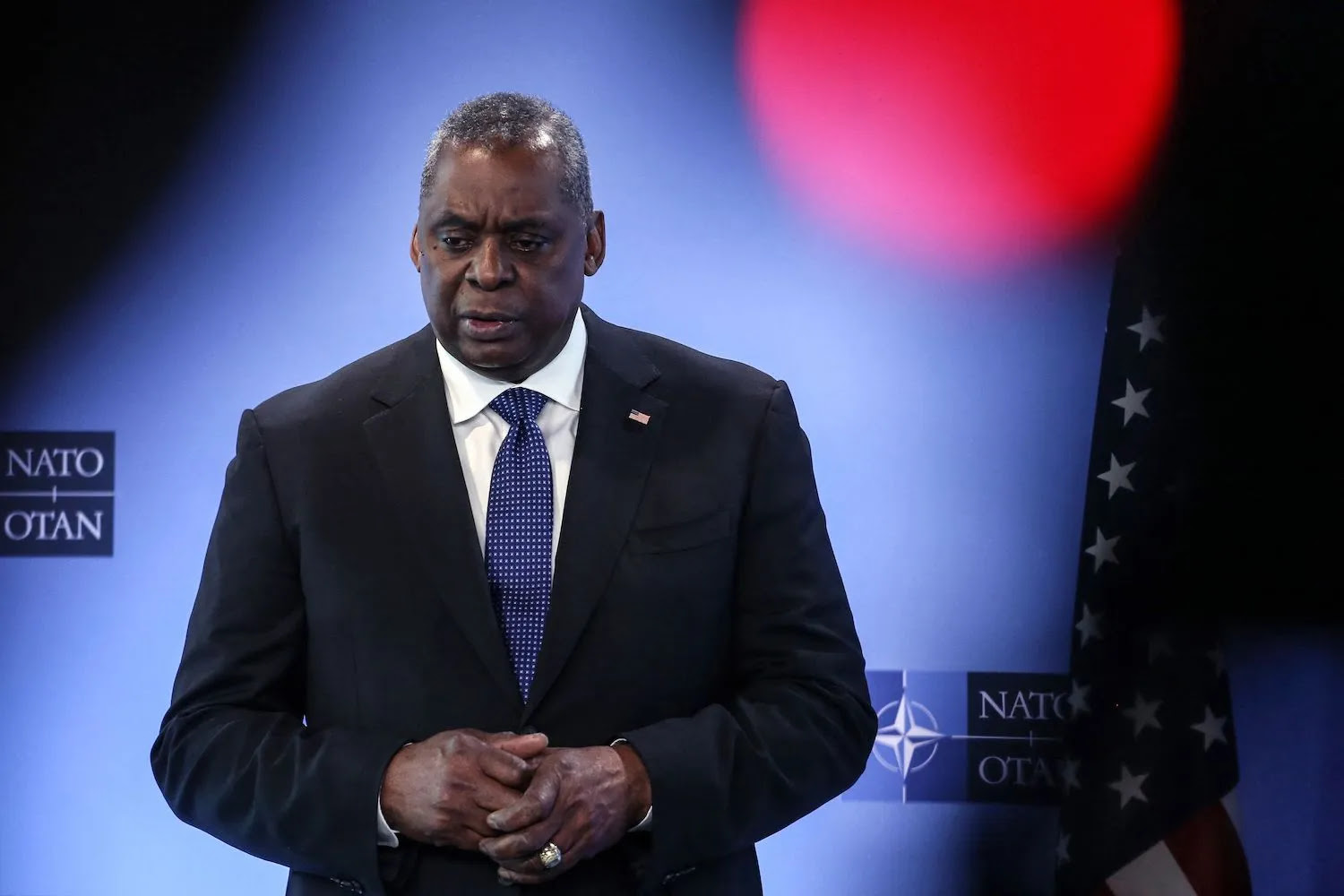
U.S. Defense Secretary Lloyd Austin makes a statement on the second day of a NATO defense ministers’ meeting at the NATO headquarters in Brussels on June 16. VALERIA MONGELLI/AFP VIA GETTY IMAGES

BRUSSELS—NATO nations are preparing to significantly bulk up the 30-country alliance’s forces in Eastern Europe, NATO Secretary-General Jens Stoltenberg said today, part of a plan to stand tall in the face of Russia’s military revanchism as Europe faces its most serious security threat from the Kremlin since the Cold War with Russia’s full-scale invasion of Ukraine.

“Russia’s aggression is a game-changer, so NATO must maintain credible deterrence and strong defense,” Stoltenberg said.

“This will mean more NATO forward-deployed combat formations to strengthen our battlegroups in the eastern part of our alliance. More air, sea, and cyber defenses, as well as prepositioned equipment and weapon stockpiles,” he added.

Tiếp tục đọc “Biden’s Defense Chief Puts Alliances at Center Stage of U.S. Defense”

Security and Economic Challenges for Taiwan in Cross-Strait Relations

Home » Security and Economic Challenges for Taiwan in Cross-Strait Relations

Taiwan

Security and Economic Challenges for Taiwan in Cross-Strait Relations

Chien-pin Li is Professor of Political Science and Dean of the College of Humanities and Social Sciences at Sam Houston State University. Before his current position, he taught at Kennesaw State University for 26 years, and was a founding member of the China Research Center. He received his Ph.D. in Political Science from the University of Iowa and was an Associate Research Fellow at Academia Sinica (Taipei, Taiwan), a Senior Fellow at the Atlantic Council of the United States (Washington, D.C.) and a Research Fellow at the Pacific Cultural Foundation (Taipei, Taiwan). His teaching and research interests focus on East Asian political economy, including trade disputes, trade negotiations, and regional integration. He is the author of Rising East Asia: The Quest for Governance, Prosperity, and Security (2020) and has published articles in Asian Survey, Pacific Review, Issues & Studies, International Studies Quarterly, and other journals. 

More articles by the Author »

Print Friendly, PDF & Email

The security and economic landscape in the Indo-Pacific is increasingly difficult to navigate. While trade agreements such as the Comprehensive and Progressive Agreement for Trans-Pacific Partnership, the successor to the Trans-Pacific Partnership or TPP, and the Regional Comprehensive Economic Partnership signal an interest to cooperate in a region full of economic vibrancy, competition and rivalry between great powers cast significant uncertainty over the peace and stability in the region. The paradoxical trends in economic and security affairs are particularly evident in cross-Strait relations between Taiwan and China.

Tiếp tục đọc “Security and Economic Challenges for Taiwan in Cross-Strait Relations”

What next? Ukraine’s allies divided over Russia endgame

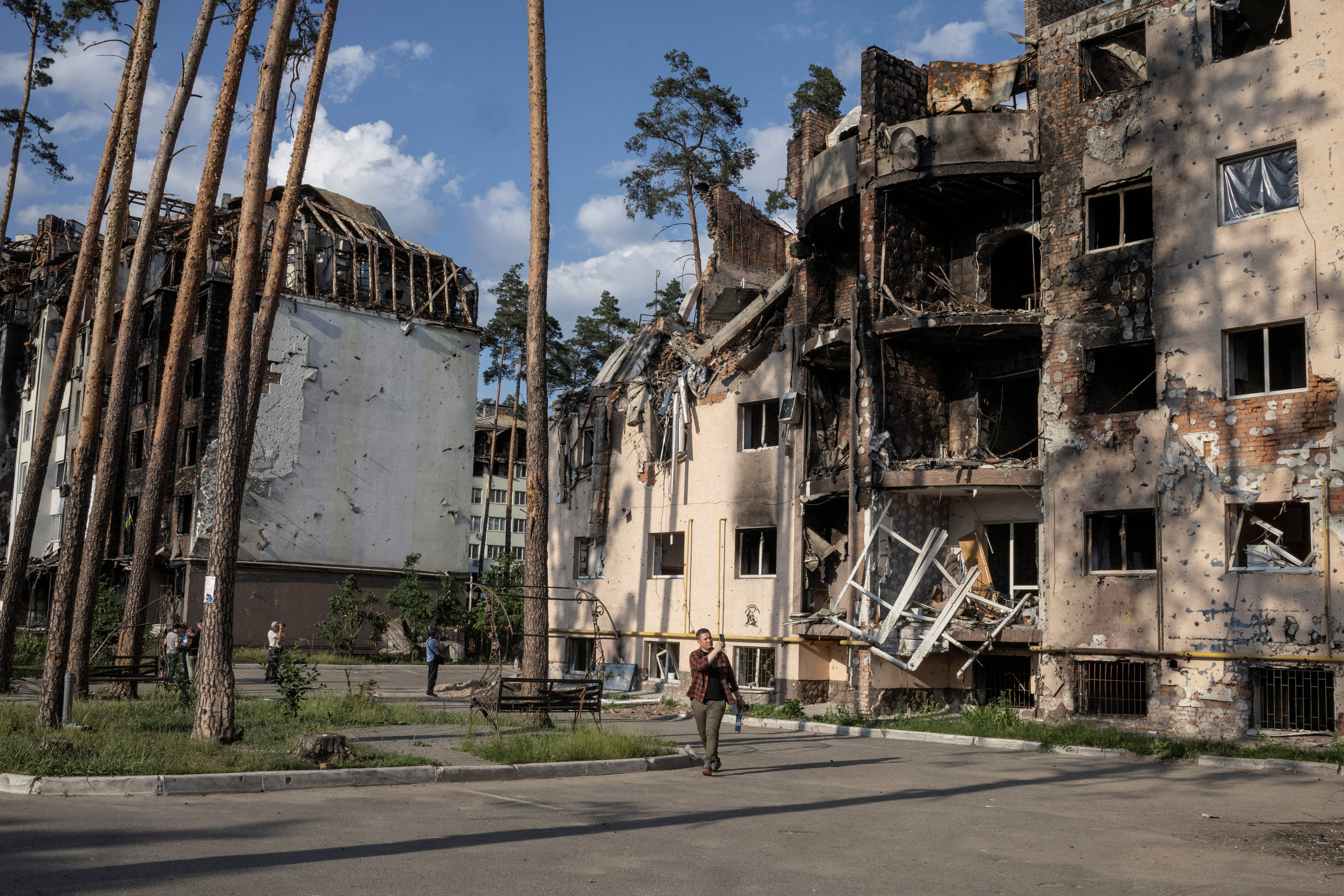
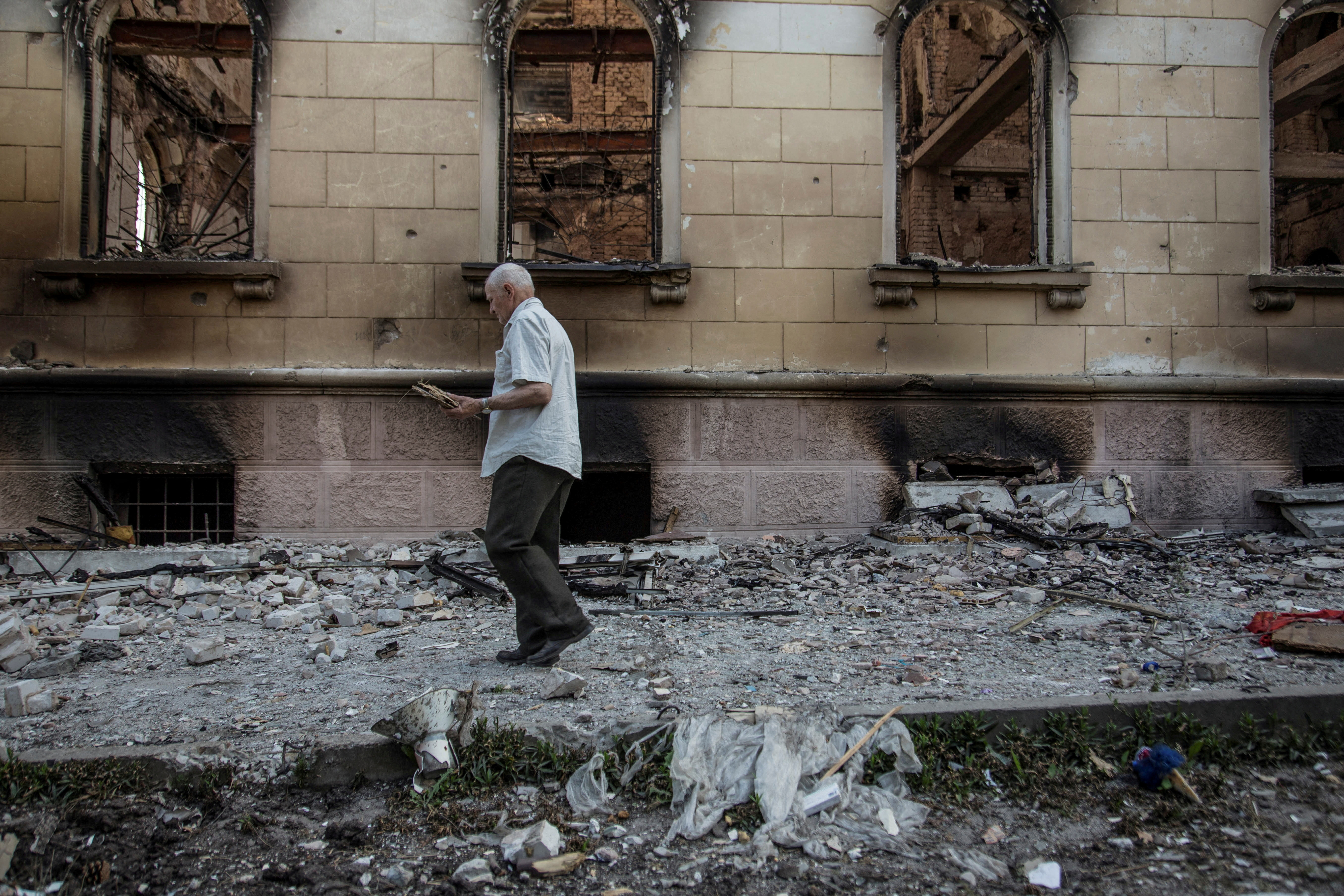
People look at destroyed buildings in Irpin, outside Kyiv, as Russia's attacks on Ukraine continues
Russia's attack on Ukraine continues, in Lysychansk

1/3

People look at destroyed buildings in Irpin, outside Kyiv, as Russia’s attacks on Ukraine continues, June 9, 2022. REUTERS/Marko Djurica/File Photo

Reuters

PARIS/BERLIN/WASHINGTON, June 13 (Reuters) – Is it better to engage with Russian President Vladimir Putin over his invasion of Ukraine or to isolate him? Should Kyiv make concessions to end the war, or would that embolden the Kremlin? Are ramped up sanctions on Russia worth the collateral damage?

These are some of the questions testing the international alliance that swiftly rallied around Ukraine in the days after the Russian invasion but that, three months into the war, is straining, officials and diplomats told Reuters.

Tiếp tục đọc “What next? Ukraine’s allies divided over Russia endgame”

China’s Threat of Force in the Taiwan Strait

By Raul “Pete” PedrozoTuesday, September 29, 2020, 9:16 AM lawfareblog

A view of Taiwan’s Kaohsiung Harbor, which faces the Taiwan Strait. (Flick/Formosa Wandering, https://flic.kr/p/9aCnHR; CC BY-NC 2.0, https://creativecommons.org/licenses/by-nc/2.0/)

Raul "Pete" Pedrozo

Captain Raul (Pete) Pedrozo, U.S. Navy (Ret.), is the Howard S. Levie Chair on the Law of Armed Conflict and Professor of International Law in the Stockton Center for International Law at the U.S. Naval War College. He was a Peer Reviewer for the International Committee of the Red Cross Commentary of 2017 on the Convention (II) for the Amelioration of the Condition of Wounded, Sick and Shipwrecked Members Of the Armed Forces at Sea (1949) and is currently one of two U.S. representative to the International Group of Experts for the San Remo Manual on the Law Applicable to Armed Conflicts at Sea, produced by the International Institute of Humanitarian Law. Prior to his retirement from the Navy he served as the senior legal advisor to Commander, U.S. Pacific Command and was a Special Assistant to the Under Secretary of Defense for Policy, Office of the Secretary of Defense. Pedrozo is co-author of the forthcoming, “Emerging Technology and the Law of the Sea” (Oxford University Press).

________

On Sept. 18 and 19, People’s Liberation Army combat aircraft on 40 occasions intentionally crossed the median line in the Taiwan Strait that separates mainland China from the island of Taiwan. Taiwan President Tsai Ing-wen immediately condemned the provocation as a “threat of force.”

The center line in the Taiwan Strait (also known as the median line, middle line or Davis Line, named after Brig. Gen. Benjamin Davis, commander of Task Force 13 in Taipei and famed commander of the World War II Tuskegee Airmen) has its origins in the 1954 U.S.-Taiwan Mutual Defense Treaty. The treaty was one link in the chain of U.S. collective defense arrangements in the Western Pacific—which included agreements with the Republic of the Philippines, Australia, New Zealand, Japan and the Republic of Korea—designed to resist further communist subversive activities directed against their territorial integrity and political stability. Pursuant to Article V of the Mutual Defense Treaty, an armed attack in the treaty area, which included Taiwan and the Pescadores (or Penghu) Islands, directed against the territory of either party would be considered a danger “to its own peace and safety” and each party “would act to meet the common danger in accordance with its constitutional processes.” An addendum to the treaty established a buffer zone into which U.S. aircraft were not allowed to enter.

Tiếp tục đọc “China’s Threat of Force in the Taiwan Strait”

Ukraine’s ‘Nuremberg Moment’ Amid Flood of Alleged Russian War Crimes

So many crimes are being documented that they need a new court.

foreignpolicy.com

By Robbie Gramer, a diplomacy and national security reporter at Foreign Policy, and Amy Mackinnon, a national security and intelligence reporter at Foreign Policy

An aerial view of crosses, floral tributes, and photographs of the victims of the battles for Irpin and Bucha that mark the graves in a cemetery in Irpin, Ukraine, on May 16.

JUNE 10, 2022, 3:48 PM

As Russia continues its assault on Ukraine, top Biden administration officials are working behind the scenes with the Ukrainian government and European allies to document a tsunami of war crimes allegedly committed by Russian forces.

Putin’s War

How the world is dealing with Russia’s invasion of Ukraine.

But the sheer volume of the documented war crime cases could be too overwhelming for Ukraine’s justice system as well as for the International Criminal Court (ICC), raising questions of how many cases will be brought to trial and how many accused Russian war criminals could ultimately face justice.

Tiếp tục đọc “Ukraine’s ‘Nuremberg Moment’ Amid Flood of Alleged Russian War Crimes”

Rome Statute of the International Criminal Court – Đạo luật Rome của Tòa Hình sự Quốc tế (Phần 2 – Từ Điều 5 đến Điều 8bis)

Dịch sang tiếng Việt: PhạmThu Hương & Trần Đình Hoành

Mục lục >>
Dẫn nhập và Phần 1 >>

Tiếp tục đọc “Rome Statute of the International Criminal Court – Đạo luật Rome của Tòa Hình sự Quốc tế (Phần 2 – Từ Điều 5 đến Điều 8bis)”

‘This could happen to any of us’: Graphic video of men stomping on a woman’s head shakes China to the core 

‘This could happen to any of us’: Graphic video of men stomping on a woman’s head shakes China to the core

View In BrowserCNNNectar Gan 

‘This could happen to any of us’: Graphic video of men stomping on a woman’s head shakes China to the core ----------

Tata, a 34-year-old in the Chinese city of Chengdu, was scrolling through her social media feed at her office desk on Friday afternoon when she came upon a harrowing video that shook her to the core. 

In surveillance footage, three women are shown sharing a meal in a barbeque restaurant when a man approaches their table and places his hand on the back of one of the women. The woman pushes him away, but the man refuses to back off and reaches out again for her face. As she pushes away his hand, the man slaps her and pushes her to the ground as she struggles to fend him off. 

Her friends try to help her, but they too are attacked by the man and his friends, who rush into the restaurant as the violence breaks out. The group of men then drag the first woman through the door by her hair, smashing her with bottles and chairs and repeatedly stomping on her head as she lays on the sidewalk, her clothes stained with blood. 

The video was so graphic and the assault so savage that Tata had to pause it midway. “Immediately I was filled with outrage and horror. I could totally empathize with her — the terror she must have felt in that moment,” she said, asking to only be referred to by her English name. “

And this could happen to any of us.” The shock and anger reverberated widely as the video spread like wildfire on Chinese social media. By the evening, the attack — which took place around 2:40 a.m. Friday in the northern city of Tangshan — had ignited a nationwide uproar, drawing hundreds of millions of views and dominating online discussions throughout the weekend. Many were appalled that a woman was so brutally beaten simply because she rejected a man’s sexual harassment. Others lashed out at the police for failing to take action until the incident went viral. 

Following the outcry, the Tangshan police issued a statement Friday saying they had identified the suspects and were “sparing no effort” to arrest them. By Saturday afternoon, all nine suspects involved in the assault had been apprehended, the police said, including four who had fled about 600 miles (965 kilometers) south to Jiangsu province. 

Two women were hospitalized with non-life-threatening injuries and were in stable condition, according to police. 

The attack also rekindled debate about violence against women and gender inequality in China, which critics contend remains a highly patriarchal society with pervasive misogyny despite growing awareness of gender issues among young women. “What happened at the Tangshan barbecue restaurant was not an isolated social incident, but part of systemic gender violence. We need to … acknowledge that we still live in an environment that supports, encourages, and drives men to engage in gender-based violence against women,” said a widely shared social media article. 

In recent years, a series of incidents of horrific violence against women have sparked outrage. Last year, a Tibetan vlogger died after her ex-husband set her on fire while she was live-streaming to her fans on social media. The ex-husband was sentenced to death in October. 

Earlier this year, a mother of eight was shown in a video chained by her neck in a shed in rural Jiangsu province. After repeated initial denials, authorities eventually admitted that she was a victim of human trafficking. “Of course we should take legal action to punish individual attackers and perpetrators. But without addressing systemic gender oppression, without changing the social norms that promote machismo and encourage violence, we’re just going to continue our anger in the next incident,” the social media article said. 

But such discussions did not appear to sit well with the Chinese government, which has long cracked down on China’s feminist movement by arresting and silencing activists and censoring online debates. The article, which was published on WeChat, along with other social media posts about gender issues, have been scrubbed from the internet. Weibo, China’s Twitter-like platform, said in a statement Saturday that it had blocked 992 accounts for breaches including “deliberately provoking gender confrontation” when discussing the Tangshan attack. Weibo’s official account shared some of the posts from the users they blocked, which included violent and derogatory language towards Chinese women. Other censored Weibo posts captured by CNN, however, were from users voicing concerns about violence against women and urging people to “keep speaking up.” Some state media reports initially downplayed the man’s act of sexual harassment as “trying to strike up a conversation,” drawing backlash from female readers. Authorities and state media have sought to portray the attack as an isolated event, shifting the focus away from gender issues to local gang violence.

Five of the suspects had criminal records, ranging from offenses of illegal detainment to intentional harming of others, according to state-run China National Radio. On Sunday, Tangshan authorities launched a two-week campaign to crack down on organized crime. 

Lv Pin, a prominent Chinese feminist now based in New York, said by detaching the Tangshan attack from the lens of gender, the Chinese government is distancing itself from the responsibility it should take for failing to address the problems of gender inequality and violence in society. “When we talk about systematic problems, the responsibility should lie with the government. But now, the government is using its crackdown (on organized crime) to shore up its legitimacy. This type of campaign-style crackdown will not address the problem of gender violence,” she said. Feng Yuan, the founder of Beijing-based women’s rights advocacy group Equality, said to eliminate systematic gender violence, China should start with incorporating more content about gender equality in education. “It is not only about teaching kids slogans and abstract concepts, but showing them how to apply them in real life — such as showing mutual respect for one another,” she said. Law enforcement should also shed its passivity when it comes to dealing with cases involving gender violence, Feng said. “In many domestic violence cases, the police response was often perfunctory, while a large number of sexual assault cases were easily dismissed on the ground that there was not enough evidence,” she said. The relatively light punishment for gender violence has also failed to deter transgressors.

Following the Tangshan attack, social media users recirculated state media reports on a similar incident that took place in 2020. In eastern Zhejiang province, a 25-year-old woman was beaten by a group of men till she passed out at a restaurant after she rejected a man’s sexual harassment. She was hospitalized for 15 days, while the men were detained for 10 to 13 days. No further charges were brought. Tata, the office worker in Chengdu, said the attack on the female diners in Tangshan showed that gender violence can happen to anyone. “Chinese women have long suffered from victim shaming in gender violence, but the girls who were assaulted in Tangshan are ‘perfect’ victims. They did not go out alone and they were not scantily clad,” she said, referring to accusations that are often leveled at victims of sexual assault in China. “All they did was try to protect themselves and their friends. But even though they did everything right, they were still subjected to such brutal violence — that’s what scares many of us.”Nectar Gan is China Reporter for CNN International in Hong Kong. She covers the changes taking place in China, and their impact on the world.
Tiếp tục đọc “‘This could happen to any of us’: Graphic video of men stomping on a woman’s head shakes China to the core “

Rome Statute of the International Criminal Court – Đạo luật Rome của Tòa Hình sự Quốc tế

Download English version at the ICC website >>

Dịch sang tiếng Việt: PhạmThu Hương & Trần Đình Hoành

(Trọn bộ – version Jan. 11, 2023)

Download English-Vietnamese pdf >>

Tiếp tục đọc “Rome Statute of the International Criminal Court – Đạo luật Rome của Tòa Hình sự Quốc tế”

China Alarms US With Private Warnings to Avoid Taiwan Strait

  • China officials dispute strait is international waters: person
  • Defense chiefs clashed over Taiwan at Singapore security forum

Shangri-La Defense Talks Focus on TaiwanUnmuteShangri-La Defense Talks Focus on Taiwan

By Peter Martin, Bloomberg.com

18:01 GMT+7, 12 tháng 6, 2022Updated on

Chinese military officials in recent months have repeatedly asserted that the Taiwan Strait isn’t international waters during meetings with US counterparts, according to a person familiar with the situation, generating concern within the Biden administration. 

The statement disputing the US view of international law has been delivered to the American government by Chinese officials on multiple occasions and at multiple levels, the person said. The US and key allies say much of the strait constitutes international waters, and they routinely send naval vessels through the waterway as part of freedom of navigation exercises. 

Tiếp tục đọc “China Alarms US With Private Warnings to Avoid Taiwan Strait”

A Transactional Mindset Won’t Win in the Indo-Pacific

June 10, 2022 Matthew P. Goodman, Senior Vice President for Economics, CSIS

Responding to widespread criticism of the Biden administration’s paltry offer of funding for Southeast Asian partners at a recent summit, a wise friend offered a colorful metaphor: “If we’re dating and I sense that you’re being transactional, then I want you to take me to the best restaurant in town and get the priciest bottle of wine. If you want a long-term relationship, buy me a cheap bottle of Chianti and we can sit on the roof and watch the sunset.”

My friend is right: no amount of money will win hearts and minds in the vital Indo-Pacific region unless it comes with a credible demonstration of long-term commitment to the region.

Tiếp tục đọc “A Transactional Mindset Won’t Win in the Indo-Pacific”